
A Hand and a Name, and a Voice – Yad Vashem

Since I’ve returned from Israel with my family, friends and acquaintances stop and ask me:”So, how was your trip?”
As much as I like talking about the trip, it is just so hard to sum up Israel in a quick conversation in the produce aisle. My husband is also experiencing the same when asked this question at work. How was the trip? Well, in a word: life-altering? Or, how about, transformative?
To start retelling a multi-generation trip of a lifetime to Israel, unfortunately one has to start with the hard things first. It is only from these low points: visiting the Har Herzl National cemetery, and then the Yad Vashem Holocaust Memorial, can one only understand the miracle that is Israel and how hard we have to work to never, ever take for granted the existence of this tiny country.
Before I take you to the heights of happiness of three generations celebrating a Bar Mitzvah, drinking fresh pomegranate juice, dancing on the beaches of Tel Aviv, or welcoming Shabbbat with thousands of Jews at the Western Wall, I must take you to the depths of sorrow.
It was a very hard first day. We first toured Mt. Herzl cemetery, Israel’s equivalent of Arlington National cemetery. Among Israel’s deceased prime ministers and other dignitaries lie the graves of the many fallen soldiers who paid the ultimate sacrifice during Israel’s wars.

Here, there is no rank. Privates are not separated from generals. The word “Nofel” – to fall – appears next to ages: 18, 22, 23, 25, young people cut down serving their country in the prime of life. The freedom to walk casually in Israel’s city streets or flowering mountainsides, we owe to them.
As part of officer training, it is common to see Israel Defense Force soldiers coming to pay their respects to those who served:

After this visit, we toured Yad Vashem, Israel’s memorial to the Holocaust.
The imposing concrete triangular prism architecture of the museum adds to the physical experience of the museum.

The triangular prism of the main exhibit hall is as powerful as the evidence within it. The viewer just wants to make it to that distant light at the end
This is the central hallway: grey, dark, lit only by overhead skylights. On the sides of this triangular structure is the progression of evidence of the annihilation of 6 million Jews. How the Holocaust was engineered through cultivating a centuries-long culture of hate against European Jewry that culminated with the Nazis war against the Jews from 1939-1945. In this short amount of time, the Nazis murdered six million Jews, one-third of European Jewry.
The viewer zigs and zags through each exhibit. There is no cutting straight through to that light at the end. One must enter each gallery. And with each turn, you know the story will just get worse.
Sometimes, one can just get numb to the enormity of the Holocaust. The numbers of vicitms. How many were murdered from this shtetl or how many were deported from this city. Especially if you have seen the photos, confronted the numbers, and heard the testimonies of survivors for the better part of your life.
That is why within this exhibit, the story of one voice, of one victim, is powerful enough to shatter the anonymity of the number 6,000,000 and bring the narrative to one person, one name, who was lost.
On a wall was a small framed poem of a boy, age 14. He wrote: When I grow up to be 20, I will fly free away from here like a bird. I want to travel all over the world and cruise over the seas, and just be free.
The boy was murdered at Auschwitz at age 17.
Then, another voice, the voice of my daughter, who made her own discovery.
She was chanting Torah. Her Torah portion. From a battered, water-stained Torah robbed by the Nazis, to be used one day in a museum Hitler intended to create for an extinct people.
She said, this is my Torah portion, I can totally read it and make out the letters. It was also to be the same reading we would in a few days chant for the Jerusalem celebration of my son’s Bar Mitzvah, just days later.
What were the odds that this tarnished, damaged Torah scroll would be open to this very passage? How many kids in that dark time did not live to see their own Bnei Mitzvah? The tears refused to keep flowing.
So, you see, the Nazis did not fulfill their final solution. We are still here. We still live. We got through the darkness and made it into the light to behold the view of Jerusalem on a clear sunny day:

Oh Chanukkah, Oh Chanukkah … in Israel!
Here is a blog post on the furthest place I’ve traveled. The plane ride is noisy and crowded, but I’ve traveled there four times and I’ll do it again as soon as time and money permits. With the earliest chanukkah ever recorded in just two weeks, I thought this would be an appropriate post for this challenge:
I’ve spent all of my chanukkahs in America. As a Jewish kid, yes, the omnipotence of Christmas can test anyone’s Jewish identity and make even those with the strongest feel a bit left out. You can totally relate to Adam Sandler‘s song. You are that only kid on the block without a Christmas tree.
As I got older, I grew to understand that, yes, Chanukkah is a minor Jewish holiday. No, it’s not even in the Torah. Yes, Jews have our major holidays in the fall.
But, still, come December, you can’t help but feel a bit marginalized.
Except in Israel. Because there’s a whole country that is Jewish, just like you and me……
Chanukkah in Israel is the little things, like peeking into a Jerusalem apartment window to watch a mother lift her baby to see the chanukkah candles.
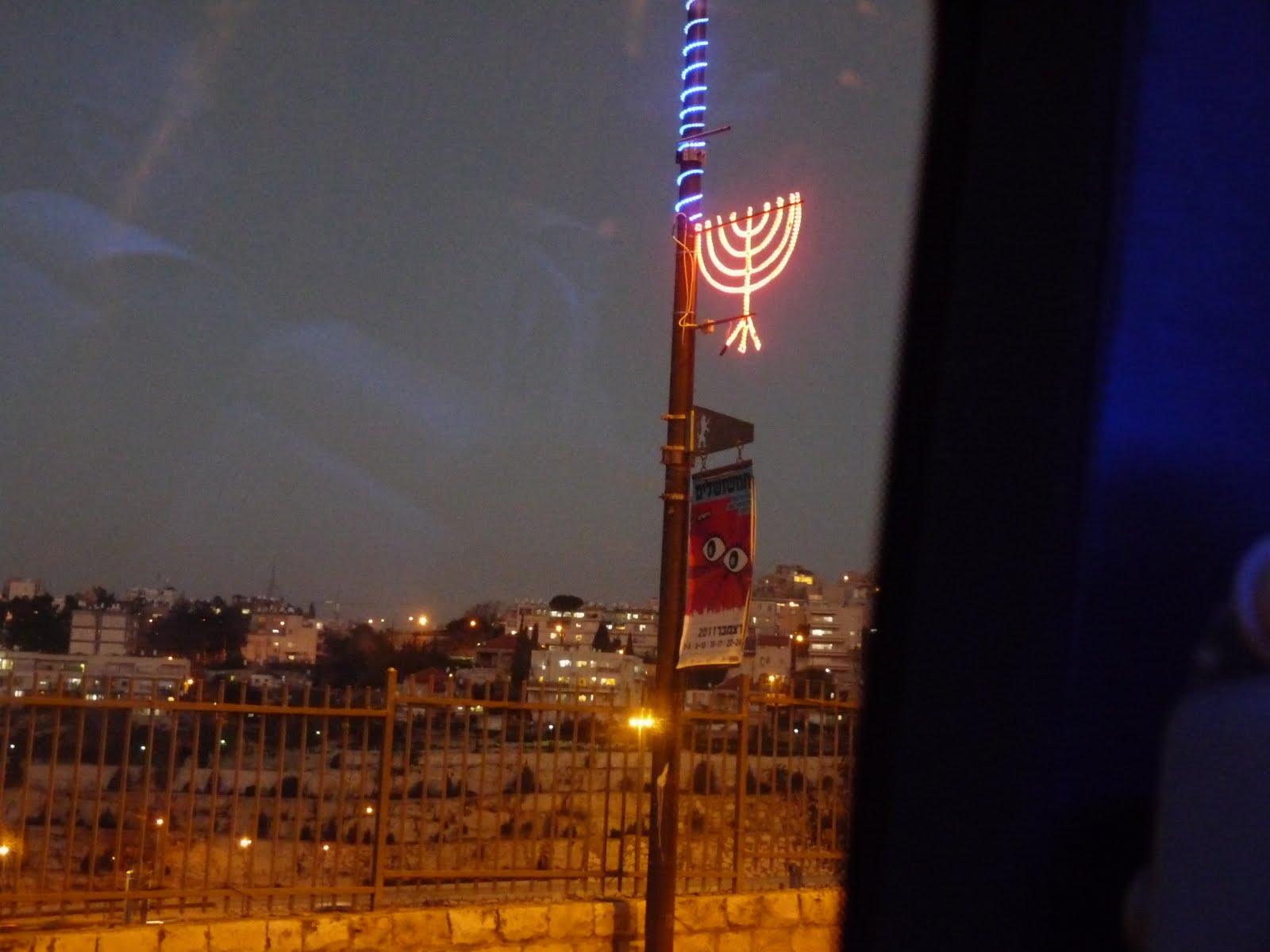
Chanukkah is big, as every corner on every street is decorated with Chanukkiot. No, not menorahs. A menorah is the seven-branched candelabra, and though it is the symbol of Israel, the chanukkia, the nine-branched candelabra, is for chanukkah:

Chanukkah in Israel is walking through the Western Wall Tunnels where Judah Maccabee and his army used to reclaim Jerusalem and the Temple from the Assyrian Greeks in 165 B.C.E.

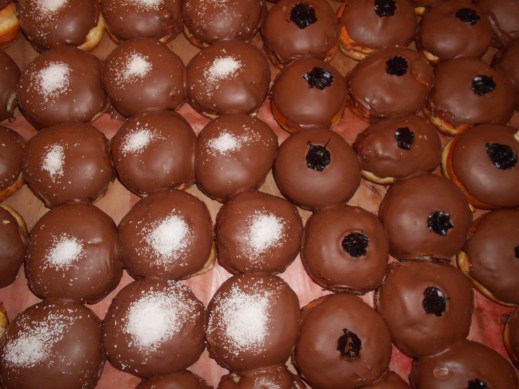
Chanukkah in Israel is sufganiyot piled high in every bakery window.
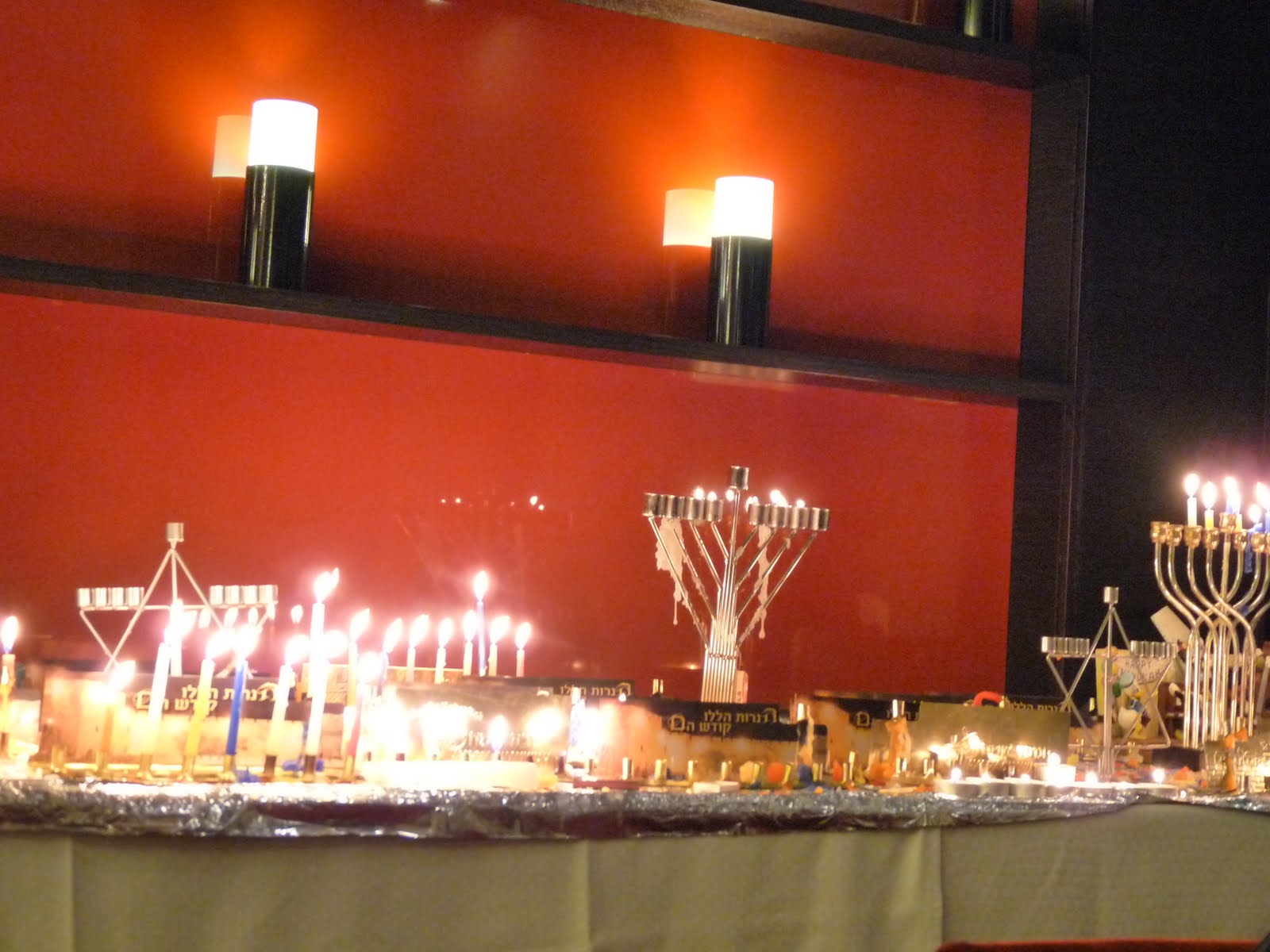
Chanukkah in Israel is lighting the chanukkiah in the hotel lobbies amidst the glow of so many others:

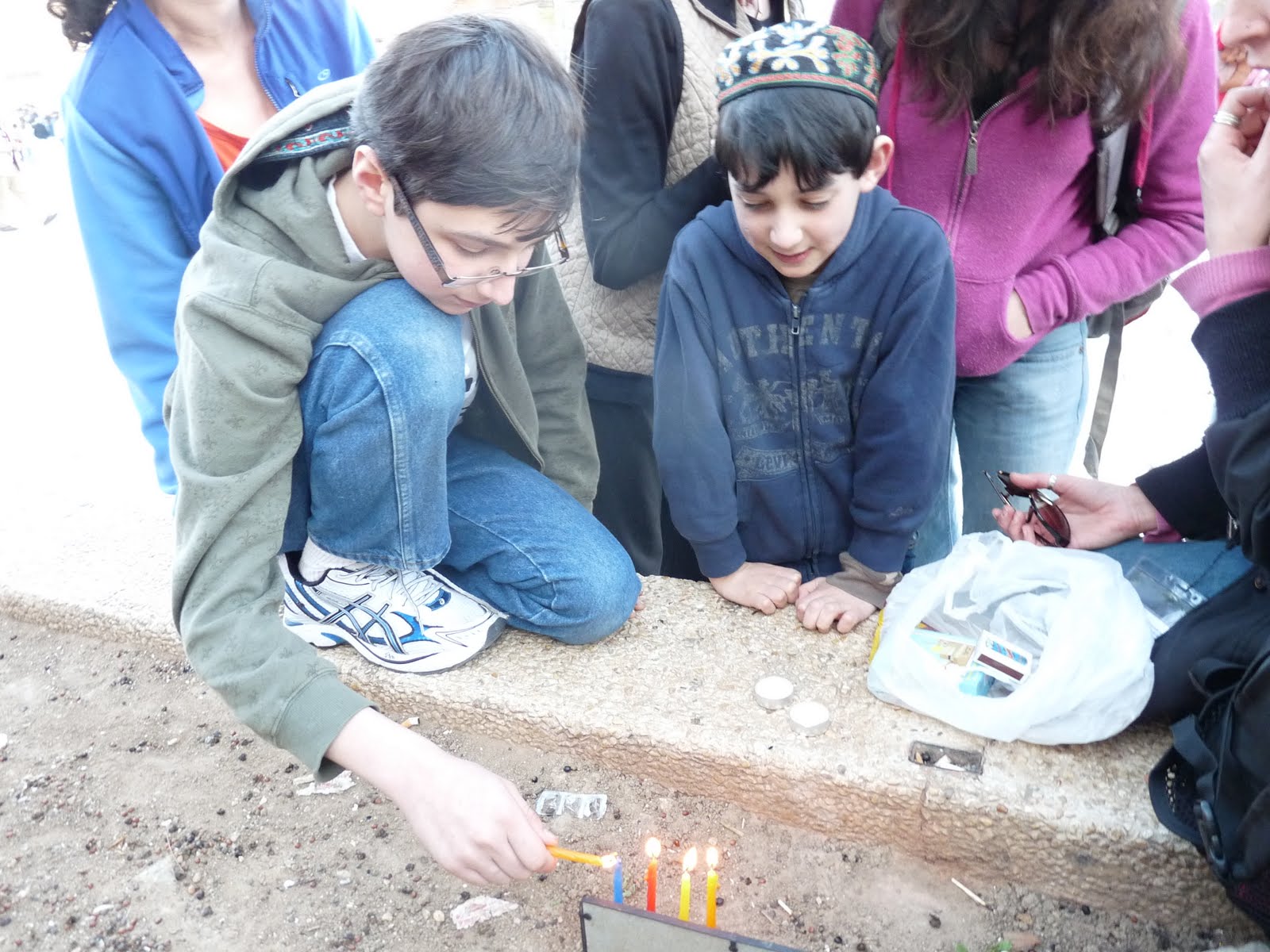
lighting chanukkah candles by the Kotel
Chanukkah in Israel is digging in a cave thought to be used by the Maccabees, where coins have been found with an insignia of Assyrian King Antiochus on them.

exploring a cave in Tel Maresha Archeological Dig Site
Most of all, Chanukkah is filled with smiling kids:

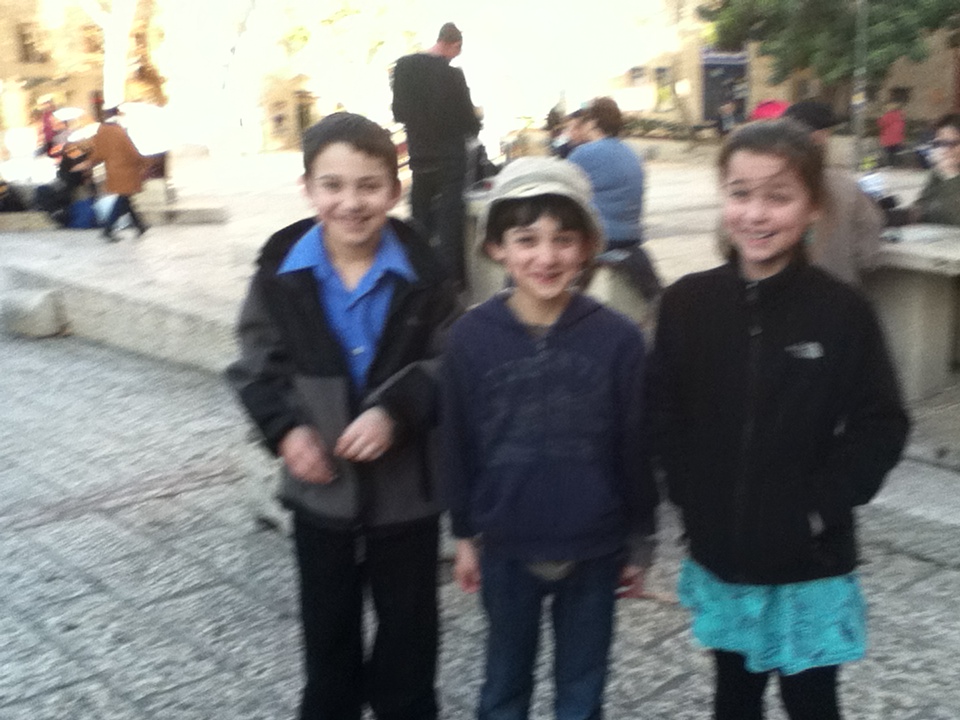
meeting up with friends from home

Where Jesus Walked: Via Dolorosa, Jerusalem
In Judaism, if Israel is the Jewish state, then Jerusalem is Judaism’ holiest city and its eternal united capital. But it is also holy to all faiths. As recognition of this, ever since Israel reunified Jerusalem after capturing it from the Jordanians after the 1967 Six-Day War, it has made sure that all of Jerusalem’s religious sites are open, safe and accessible to all religions.
This is why though I am a practicing Jew and a Jewish educator, for one of my first post-Israel posts, I wanted to show you the walk of the Via Dolorosa. As you look at these photos, keep in mind how preserved and maintained are these stations. Keep in mind that my family walked the streets of the Old City safe and without fear because of the constant present of the Israeli Defense Forces. Keep in mind that all religious sites in Jerusalem are open and accessible to all faiths. This was not the case before 1967.
The week our family visited Israel was during Christmas. We saw thousands of Christian Pilgrims walking Jesus’ final steps:
About Me
Kreativ Blogger

Versatile Blogger Award


 Stacy Gittleman