
It’s Heritage Day at my Son’s School. What are we, anyway?

A note came home in my son’s backpack to state that today, this Friday, the school would be celebrating “International Heritage Day.” Third through fifth grade in my town is a time when students study the cultures of many countries. My child this year studied the cultures of Egypt, Japan, Australia. In successive years they will study about China and ancient civilizations from Greece to Rome to the Inca and Mayan Indians in social studies.
As a culmination and celebration of all this international study, third graders in my son’s school were asked to wear a hat that represents the culture of their immigrant ancestry.
Like most self-respecting Ashkenazi Jews, my family has roots in Russia and Poland. And, if you want to find some real exotic roots in my family, I believe my paternal grandmother was from Vienna, Austria.
But the Polish and Russians never looked upon my ancestors as their fellow countrymen. We were just: Jews. Yids. Pretty much second class citizens. That’s why Jews from Poland and Russia came over in droves to the United States – for economic if not religious freedom.
In my house, we don’t have any connection to Russian or Polish culture. How we identify, ethnically, is through Jewish culture.
So, what hat to use? The Moroccans have the Fez. The Mexicans, the Sombrero and the French, the beret, the Italians have the Fedora (acually, my older son has taken up wearing the fedora because he is so very dapper).
So, this brings me back to the question: What country do we identify?
I should have just put a Yankee Doodle style hat on my son’s head. We are Americans. But are we something else as well? Is Judaism a people? A religion? A Culture?
With what other country do we identify?
I could have chosen an Israeli Kibbutznik style hat, but that would be so … 1950’s.

So outdated. And, as much love as we have for our spiritual homeland, we are not Israeli.
So of course, to show off our heritage, we selected this one.

A kippah, in the Bukharan style, that we purchased this winter in Jerusalem as we made our way to the Western Wall.
This is the hat of our heritage.
Misbehavin’ at the Eastman Theater


I grew up in a town where many if not most people get up and dance at a rock concert.
New Yorkers are known to be a bit rowdy and I pride myself in my own rowdiness the older I get. It proves I’m still alive
Yes, I know how to sit well-behaved at a symphony or an opera, but at a rock concert, or even a Broadway show with a rocking musical score, many if not all audience members where I grew up get up where they are seated and DANCE.
I just got out of a concert that I can say I have been looking forward to since I got my tickets on January 27. But no, I’ve actually been waiting to see Bonnie Raitt AND Marc Cohn for over 20 years now.
Her Grammy-winning album, Nick of Time, came out the year I graduated college and started my first job at a tiny weekly newspaper in New Jersey. I would play it on analog tape back and forth in my first car, my dad’s 1982 Toyota station wagon, back and forth from New Brunswick to Hunterdon County, every day for months. My roommate and I cleaned house to the upbeat songs. I cried myself to sleep to the sadder songs like “Too Soon to Tell.” It was after this introduction to Ms. Raitt’s newest album that my roommate said that her mom said that I had to listen to Bonnie Raitt’s old stuff. So I got Collection. And I became hooked on that too and developed a love for blues music.
Then, several years later, I moved out to California to be with the man who would soon become my husband. The year we became engaged, Marc Cohn released his self-titled debut album. We were driving on a windy California road and “True Companion” came on the radio. That beautiful song became our wedding song.
These two artists have a lot of meaning in my life. So, hell yeah, if I’m going to be a little loud. I might be compelled by one of Ms. Raitt’s signature blues riffs to get up out of my seat and wiggle a bit. A LOT.
But as Bonnie played one of the more up numbers of the night, “Come to Me,” I noticed that hardly anyone was dancing in their places.
Is it our northern location? Is it the lack of sunlight that mellows out Rochesterians so much that they don’t get out of their seats at rock concerts?
And, Ms. Rait: Was it us? Would you have played some more rocking songs to close out your last set at the Eastman Theater tonight if the audience were not so ….
DEAD??
Would you have closed with “Thing Called Love” or “Love Me Like a Man” instead of a cover version of Van Morrrison’s “Crazy Love” if you got a more up vibe from the sleepy audience?
There were some women, myself included, who tried to do their part and could just not stay seated. Women feed off each other on things like this. Once one woman gets up, another one or two feel validated and do the same. The woman sitting next to me agreed about the lack of life in the audience, and we both declared we were not dead yet and YES we were going to dance.
Then, as a more mellow song followed and we sat down, we actually got scolded by an usher for DANCING at a concert.
The blue-haired, polka dot-shirted bespectacled usher, who was sitting for FREE in the last row behind me, said to me:
“You are being very rude and inconsiderate. I cannot see the performance if you stand.”
If I were younger, a scolding by an older authority would have reduced me to tears.
But now?
I’m being bad?
Finally, at age 44?
YESSSSSS!!!
Hey, Little old lady usher with the polka-dotted shirt and white eyeglass chain:
Did you even know who this woman was on stage? Do you have all of her albums? Did you listen to “Nick of Time” and “Luck of the Draw” till you knew every word and every guitar lick when you were in your 20’s?
Bonnie, my heroine, who at age 61 was playing on stage, in high heels and skinny jeans and playing that slide guitar STILL like nobody’s business;
Bonnie, who in her 2000 induction speech to the Rock n Roll Hall of Fame encouraged women to “get out of the kitchen and into the kick-ass fire” of playing rock and blues, Bonnie would have been very proud of me, thank you very much, and to NOT dance and sing and whoop it up would have been an act of disrespect to Ms. Raitt, not to an usher who didn’t even PAY for her seat behind me!
So, Ms. Raitt, if you ever do read this blog, I must apologize for the overheated Eastman Hall and the majority of the audience, who kind of sat there like wet wash cloths and didn’t give you and your hard-working band do justice to get off their asses and dance!
And Rochester, next time you are at a rock concert, give the musicians the justice they deserve and GET UP AND DANCE!!!
This Memorial Day, Skip the Sales. Visit a Graveyard.
I have a Facebook friend who lives right around the corner from me. In the privacy of our own kitchens, we use Facebook all day to stave off the isolation that comes with being a freelance writer or a painter. We chat and exchange ideas and opinions, sometimes the same, sometimes different, on Facebook nearly every day but rarely get together in real life. A teacher and avid photographer as well as mother and artist, Carol blogs at watchmepaint.
This week, when Carol graciously shared my column about finding the true meaning of Memorial Day on her Facebook page, she added a comment saying she would pay her respects by visiting a little-known cemetery in Brighton where there are graves that predate the Civil War. She described where it was to me and I still could not picture how a graveyard could exist hidden away one of Rochester’s busiest highways. So, being it was a gorgeous morning in May, I posted back “Take me with you!”
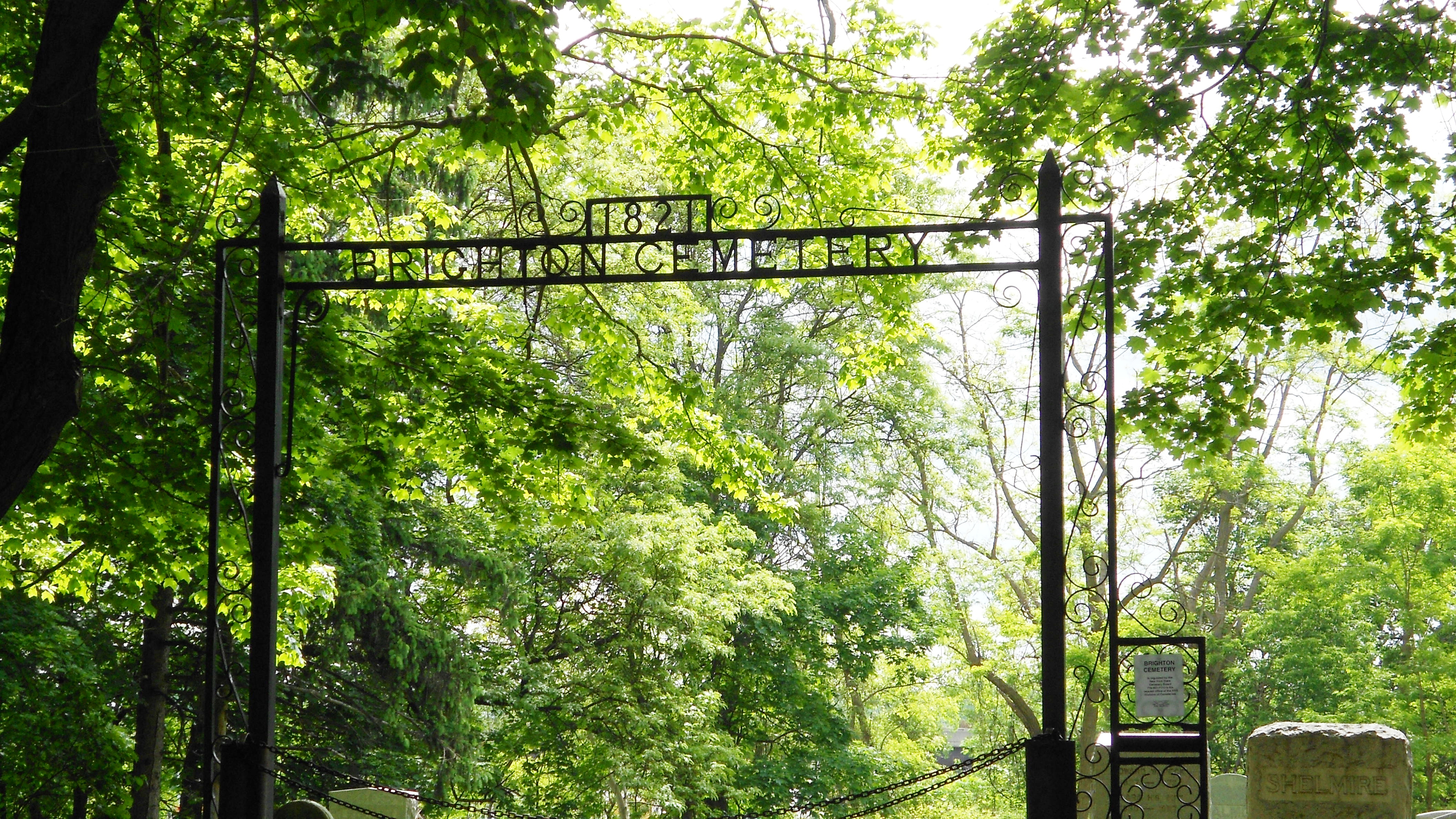
Every town has an old cemetery. The Brighton Cemetery, walking distance from our neighborhood, was founded in 1821 with some of its earliest graves dating back to 1814. Though the name served its purpose at the time, this part of Brighton was annexed to the City of Rochester in 1905. The cemetery now sits in Rochester’s 21st Ward, or for my reference point, three blocks away from the East Avenue Wegmans.
it is located on Hoyt Place off Winton Avenue:
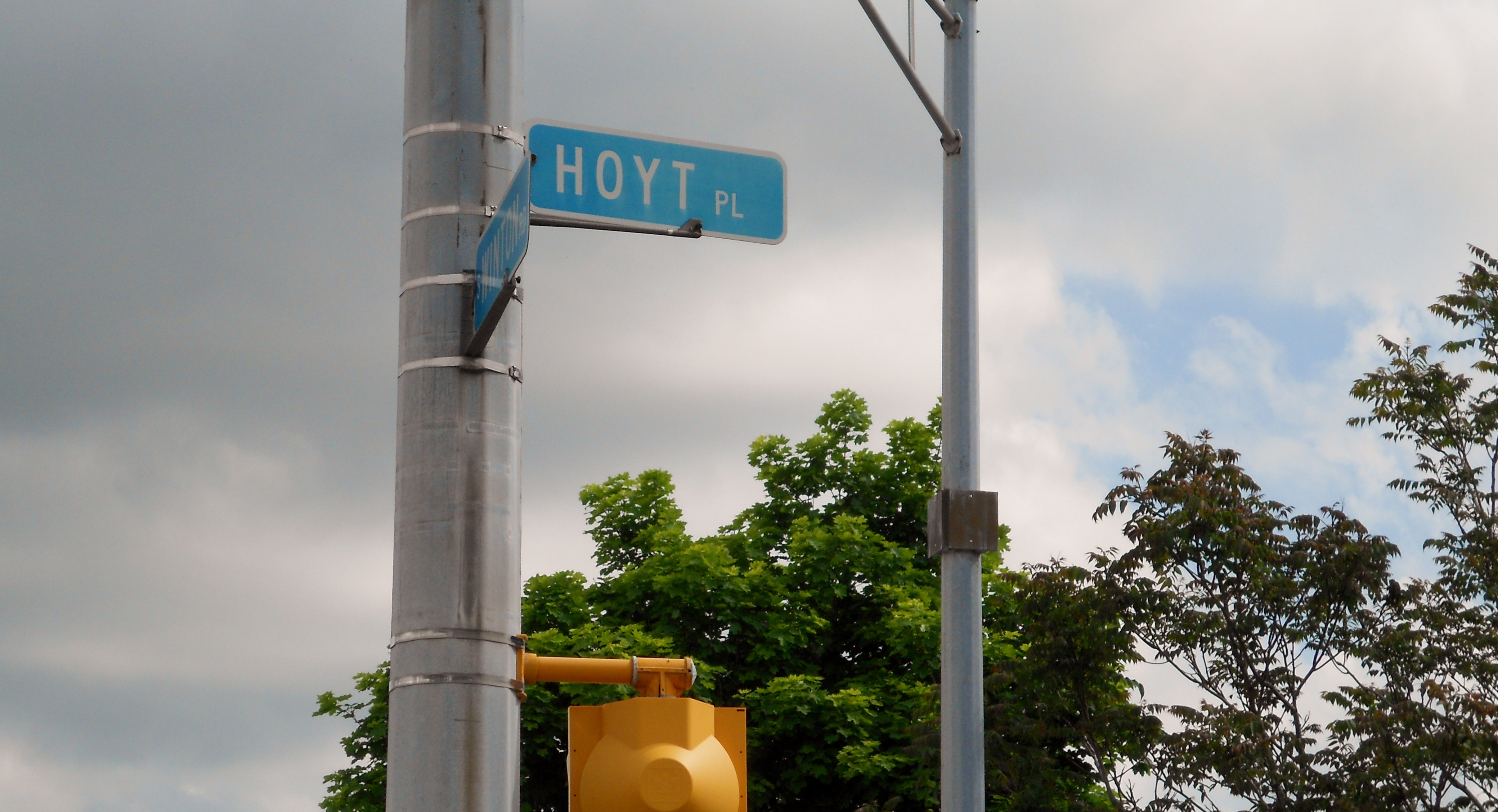
How many times have you passed this tiny street on your way to pick up some milk at Wegmans on East Ave?
This is a street I’ve driven past thousands of times without ever knowing what mysteries it contained. It is a street that time seemed to have forgotten, paved in the 1820s at the time of the building of the Erie Canal. As time passed, this part of the Erie Canal gave way to Route 490.
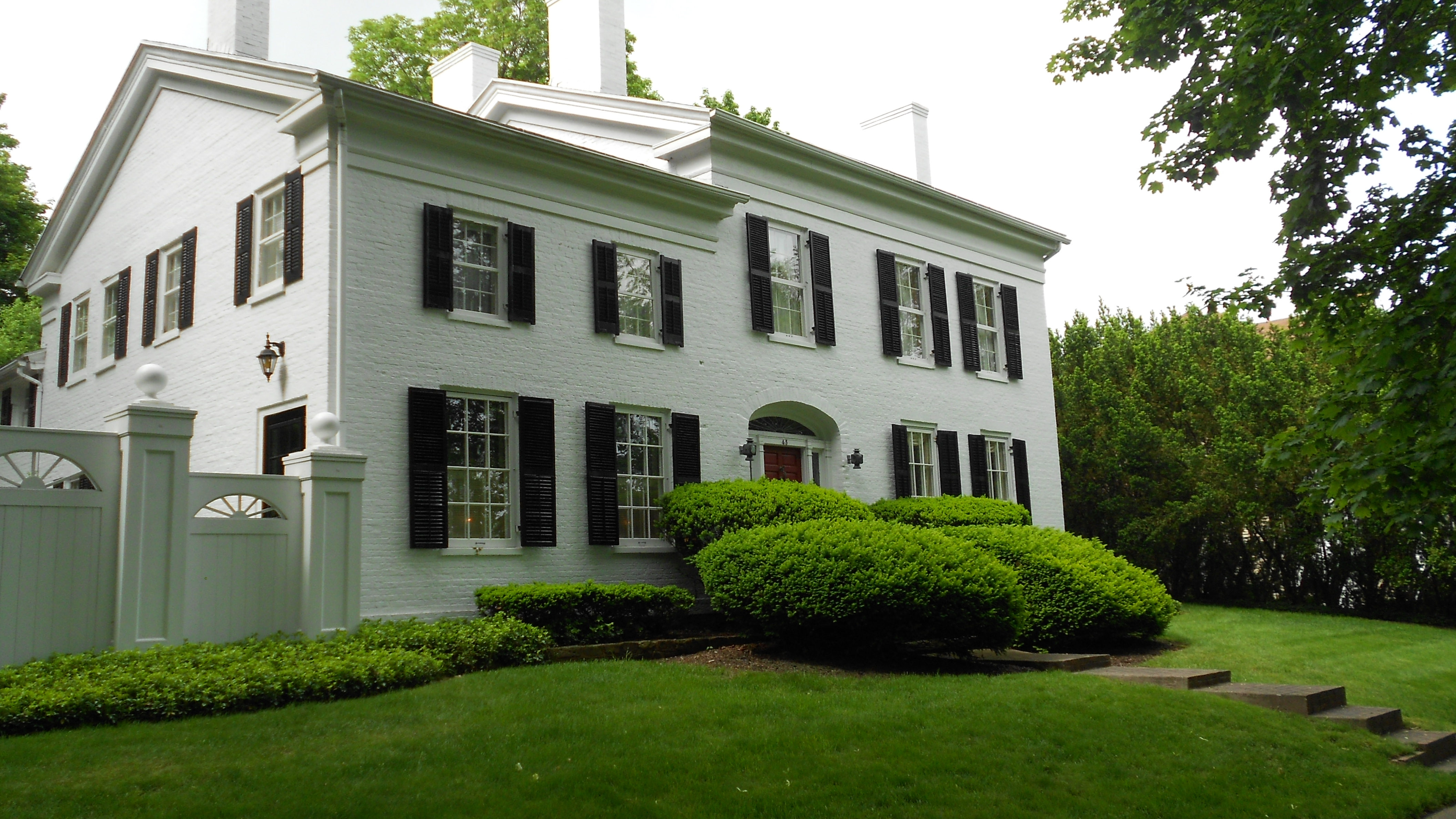
Tucked away into this street are centuries old mansions:
And then.. the Brighton Cemetery:
This week leading up to Memorial Day, find an old forgotten cemetery in your town. Dust off a gravestone to see who is buried there. You will be surprised to see that the many streets in your town just very well may be named for the names on the graves you find there.
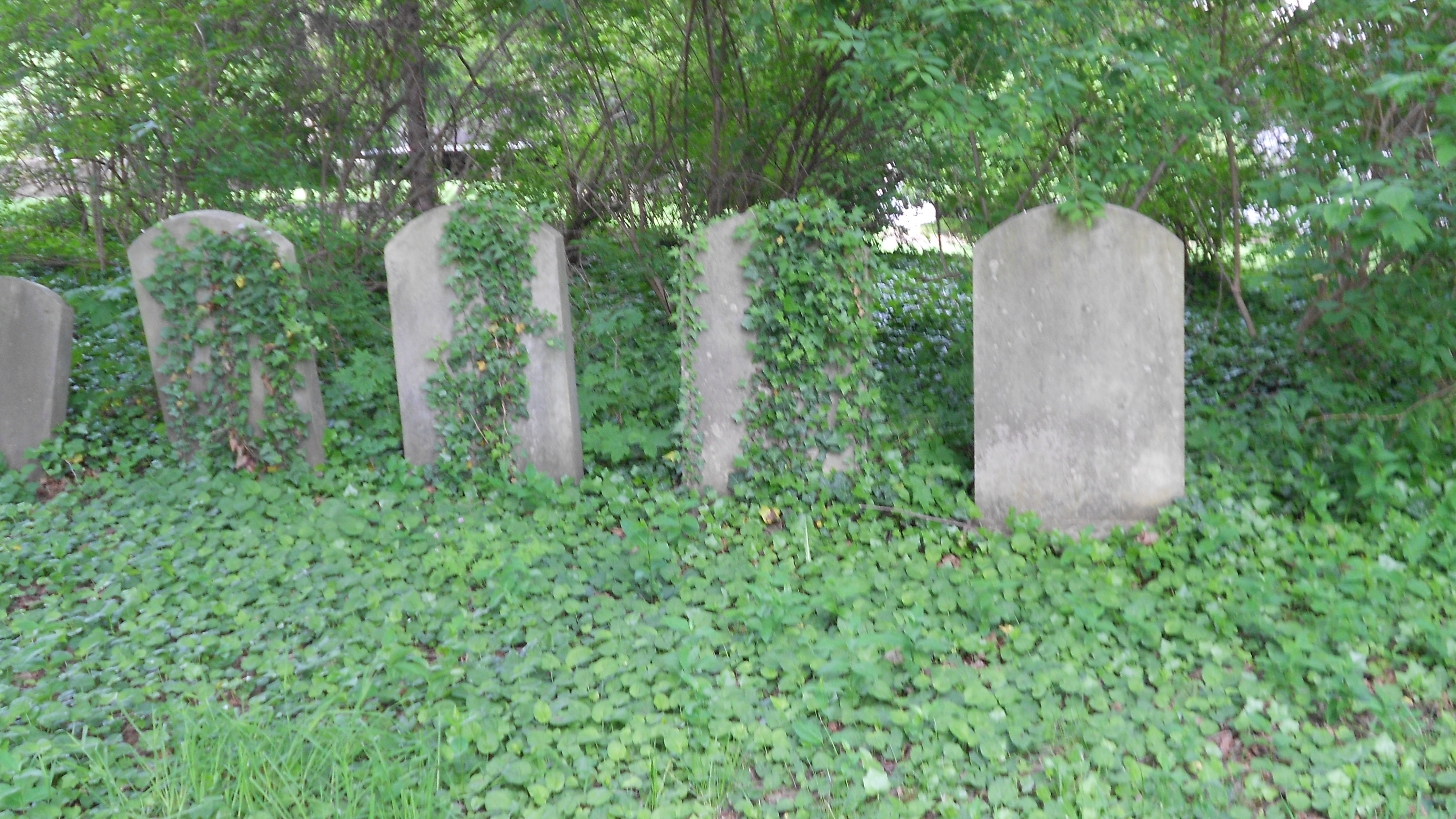

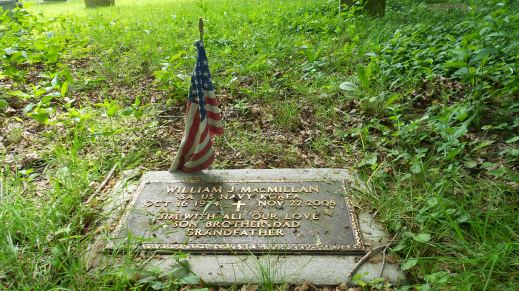
And, if you see a grave marked with a flag, take some time to care for it. If the flag has toppled over, prop it back into the ground. Brush off the grass clippings that may be clinging to the stone. Read who the person was and the wars in which he fought.

Isn’t this a far better way of observing this holiday than, say, taking advantage of a mattress sale?
Three Videos to Watch about how Israel honors its Memorial and Independence Days
I teach Hebrew school in the afternoons to sixth graders.
As a teacher, my greatest wish is for my students, my budding Jewish scholars, to ask deep meaningful questions about God, Judaism and our 5,000 year old tradition.
Can you guess what their most asked question is when their hands go up in my class, after being in public school all day?
If you guessed: “Can I go to the bathroom?” or “Can I get a drink of water,” or “Are we going to get a chance to play?” you would be on the right track; except my students need to pose their question in Hebrew.
But today, when they asked me, I turned their questions back on them: Are you really thirsty? How badly do you need that drink? And … what if there was just nowhere to go to the bathroom?
This week, as in Israel, Jews have come off the sorrow of observing Yom HaShoah, Holocaust Remembrance Day. It will be a challenge for these kids — the last generation to have any access to the first-account testimony from survivors — to get a comprehension of the enormity of the loss and the depths of cruelty suffered by the Jews who endured and who did not endure through the Holocaust.
But perhaps they could understand it through their own most basic needs, the needs of kids just like them during the darkest years of humanity. They looked at pictures of kids starving on the streets of the Warsaw Ghetto, asking for food when there was none. They read an account of a girl who “stole” an icicle to get water to drink when there was none. They read about kids in hiding who asked for a bathroom but there was none; too risky.
Of course I let my students go get a drink of water and go to the bathroom, but when posed with these questions about survival and enduring the unendurable, they thought twice today before they asked.
Over the last week, Israelis have been on an emotional roller coaster ride: They observe Holocaust Remembrance Day, then Yom HaZikaron, Israel’s Memorial Day, then move right into the triumph and joy (and yes, barbecues) of Yom Ha’atzmaut – Israel Independence Day. But how to convey these emotions to Jewish American kids who are tired after a long day of school on a rainy and cold April Day?
Youtube, of course!
Here are three videos I showed my students today. The first shows Israeli soldiers, strong, young and proud, singing Ani Ma’amin – I believe. A song that was sung as an act of spiritual resistance by the Jews in the concentration camps even as they faced death:
One of my students said, this song makes me want to cry. Crying about the Holocaust is okay, I said. It’s part of the learning.
This video shows how Israelis honor their fallen soldiers, by observing a complete two minutes of stillness by the sound of a siren. Even cars on the highway stop:
After seeing this, one of my students said “This is how we should honor Memorial Day in America!”
Finally, the singing of Hatikvah (The Hope), the Israeli National Anthem, and this is not your typical Hatikvah:
Funny, but when watching these videos, not a single hand went up to ask to go to the bathroom.
Happy Birthday, Israel!
What to do when you are the “not-quite-Out-of-Town guests?”


semi-finals at a Bat Mitzvah Hula Hoop Contest. How long can she spin 12 hoops at once?
To anyone reading this who lives in a BIG metro area like Los Angeles, New York City, Toronto…. let me ask you this:
If you are invited to a wedding/Bar Mitzvah/christening/fill-in-the-blank life occasion across town with a religious service in the morning and party at night,do you get a hotel room for the weekend?
I didn’t think so.
If you are the planner of a big life event occasion and invite many out-of-town guests, do you pull out all the stops in providing them with extra special treatment: (reserve a block of hotel rooms, extra dinners and brunches, goodie bags in their hotel rooms)?
Of course you do, they are the out-of-towners!
This past weekend, my whole family was invited to the Bat Mitzvah of a friend my son made in Camp Ramah. My daughter is friends with the girl’s sister, and our two families have developed this great Camp Ramah connection over the years. We were very honored to be invited to this happy occasion as a family. There are too many sad occasions in life that we juggle our lives to attend,so why not do a little schlepping for the happy ones?
As a kid growing up in Staten Island, I remember going to weddings and bar mitzvahs, and later on youth group dances “out on the Island” – in this case Long Island. My dad had a special name for this stretch of suburbia that juts out into the Atlantic Ocean. It didn’t matter where your destination was on the Island. Any trip from SI to LI was to a place called “all the way out” on the Island.
I remember the traffic as we traveled and my dads angry muttering at the wheel. There was traffic on the Belt. The BQE. The LIE. And the GCP. (If you don’t know what these stand for, you are not from NYC.) It would take what seemed hours to get anywhere. And still does.
In reality, the distance in miles was only 40 miles or so, but it was the traffic that made the journey take hours. But never did my parents think about getting a hotel room or consider staying overnight. Because LI was still considered “in town.” I remember drowsy drives back to the other island, Staten Island, when my brother and I would fall asleep in the back in our party clothes, my parents singing doo-wop oldies tunes to their heart’s content in the front seat.
Drive over an hour in the New York Metro Area, you are still in the New York Metro area.
Drive over an hour in Rochester, you are in Buffalo
So, at the beginning of the weekend, when we parted with friends at a Friday night dinner and announced to our Rochester friends we were headed to Buffalo for a Bat Mitzvah, they actually said to us “Have a nice trip!”
When you are transplantednorth, traveling an hour to go for a visit is nothing. Staying at a hotel overnight was out of the question.But the question remained, how were we going to pull this day off?
The day came with logistical challenges. We left our house very early Saturday morning to get to the synagogue in Buffalo**. We had to pack two extra sets of clothes for each family member, one casual outfit for hanging around the hotel, and then more formal attire for the evening party. Plus bathing suits because the kids were invited to swim in the hotel pool, so that meant toiletries too, but where to shower?
When we got to Buffalo, we sat through a very nice warm service and at the luncheon reception, known as the kiddush, we made fast friends with several couples who all were from out-of-town to bring their children, also campers, to celebrate their friends’ Bat Mitzvah. I told them we were “from” Rochester, but as conversations went on, our native accents revealed themselves.
As we relaxed that afternoon in the hotel lobby, one of the dads spoke up and asked my husband and I: “You didn’t grow up in Rochester, did you? Where are you really from?”
That night, after eating and dancing to the sounds provided by a DJ company called the Bar Mitzvah Boys – who are from Rochester – we didn’t get home until 1 a.m. For my husband and I, it was now our turn to stay awake and sing while the kids slept in the back all the way home.
**Yes, we drive on Shabbat. Conservative Judaism has a decree that allows one to drive if it is to worship at a synagogue. There was some irony to all this, because once we arrived in Buffalo, we had nowhere to go and nothing to do but read and chat with some real “out-of-town” guests who invited us to spend the afternoon at their hotel. So, we did drive, but in the end had a very relaxing Shabbat.
Strike a Pose Just Like A Prayer: Will you Pray this Superbowl Sunday?
Madonna the singer who asked us to “strike a pose” in Vogue, the one who claims to study Kabbalah, will perform the halftime show for Superbowl Sunday.
The other day in my mid-week afternoon Hebrew school class, one boy, after feeling triumphant for correctly reading and translating some Hebrew vocabulary on the whiteboard, struck a kneeling pose ala Denver Broncos Quarterback Tim Tebow.
It seems like spirituality and sports are teaming up more and more. Which I find ironic, because inside houses of worship, my synagogue included, worshippers are becoming more sparse with each passing year. One main reason? Attending religious services on a Saturday or Sunday morning is going head-to-head with scheduled team sports.
I know Tebowing is all the rage these days. Blogger Keith Brown had a recent post showing people Tebowing around the world. Tebowing at the Wall of China. And at the Vatican. And the Western Wall in Jerusalem! Getting down on one knee is hardly striking a Jewish pose of prayer. For one to really strike a pose of piety in Judaism, one needs to look like this:

Yes, it takes a bit longer to put on Tefilin than kneel on one knee.
So, is it okay to pray for one’s team? Does God really care who wins?
In today’s article in New York Blueprint, a website that chronicles events and happenings in the New York Jewish community, rabbis sounded off on the issue of praying for a sports team. While some said that any prayer is important if it is for something you believe in, other rabbis said prayer should be saved for something that has a real consequence.
Many churches and synagogues will open their doors this weekend not only for services, but for people to gather and watch the game. Perhaps, any draw that brings people into a house of worship may ease the way for that sports fan to renew their involvement with their congregation.
Aside from praying for one’s team to win, let’s pick some real reasons to pray:
Let’s pray that no players sustain concussions, broken bones, or life-threatening injuries on the field.
Let’s pray that everyone coming home from a Superbowl Party drives home sober.
For me, my world will keep spinning no matter which team wins. Instead, I will pray for several of my friends, all moms of young children, who are battling cancer.
I will also pray for the safety, and mere existence, of Israel.
I had a troubled sleep last night after watching the news that, fearing for its own existence, Israel is gearing up for a military strike against Iran this spring. They fear it might be too late to stop Iran from building a nuclear bomb.
Israel, staring down into the abyss of another Holocaust, is tired of waiting for sanctions to work. Israel cannot wait for the world to act.
So, I will be praying that somehow, a peaceful intervention will put an end to Iran’s nuclear ambitions for good; and that no nation will have the capacity – or the will – to wish to wipe another country “off the map.”
The email in the Wall
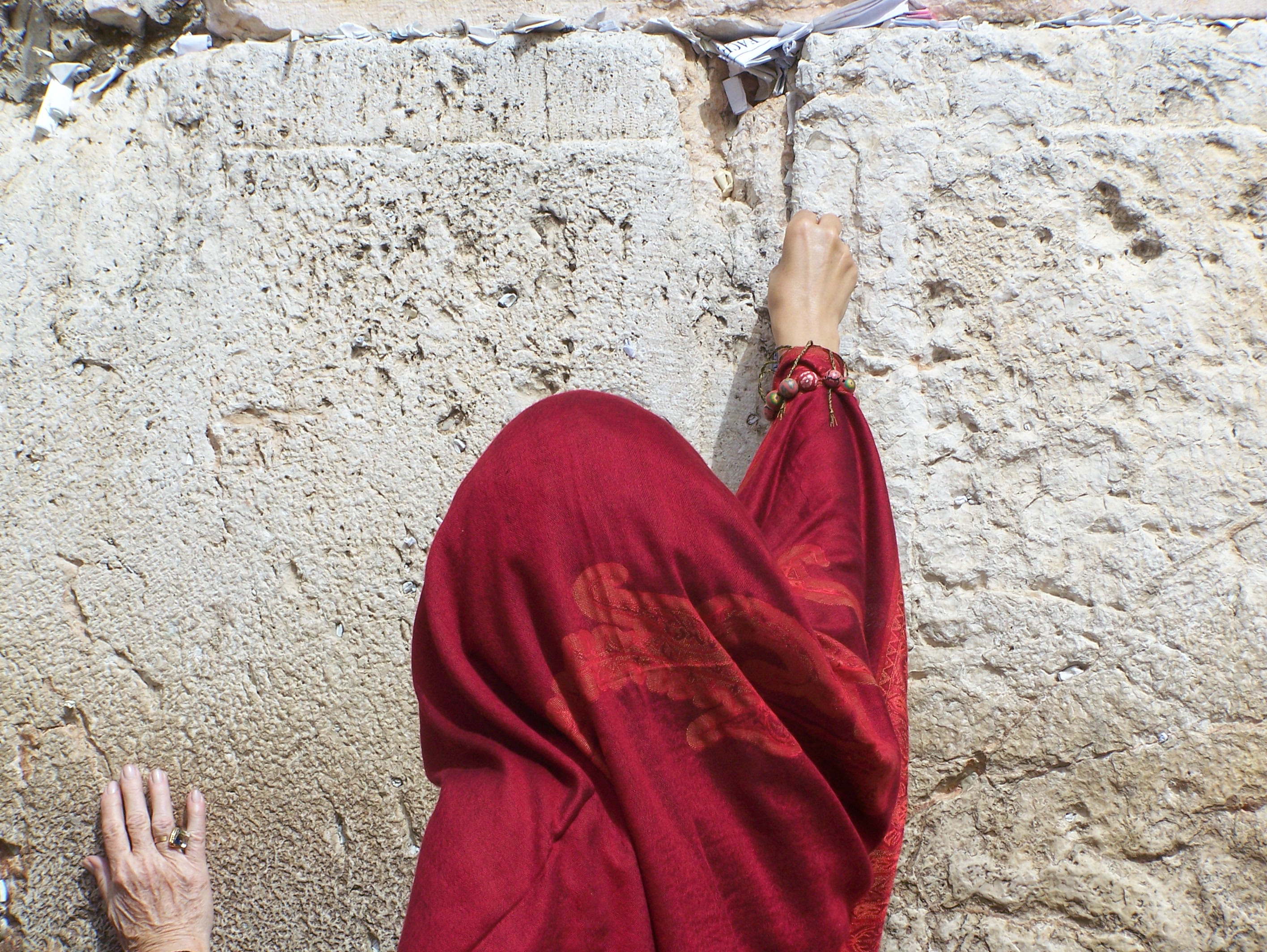 I’ve been making final arrangements for my son to have his Bar Mitzvah at the “Masorti Kotel,” a part of the Kotel off to the side of the main Kotel Plaza that is known as Robinson’s Arch. This is the designated spot in the Kotel Plaza that allows for a mixed prayer group of men and women.
How do I know the final arrangements are official? The rabbi of whom I am in correspondence with in Jerusalem cc’ed his email to “hakotel.” Yes, the Holiest spot to Judaism in the world was kept in the loop that my son will be called to the Torah in Jerusalem. Now it’s really official.
There is no way of documenting in words what emotions my family will be experiencing when my son, his brother and sister, parents and both sets of grandparents along with friends and a few surprise guests will come to Robinson’s arch to pray in honor of Nathan’s Bar Mitzvah. We’ve been planning this moment since around his birth.
But this story goes back perhaps even farther, it’s a story of the power of prayer and placing a note in the Western Wall, and how Gd answers these notes in Gd’s own time.
Once upon a time, a boy and a girl met one summer at Camp Ramah in the Berkshires. They met through mutual friends on a cracked tennis court. The girl kept missing every shot, and the boy didn’t seem to mind chasing all these balls and retrieving them for her.
The boy really liked the girl. Loved the girl. But the girl just wanted to be friends.
That winter, the boy visited Israel with his family. They visited the Kotel, or the Western Wall. The holiest place in all of Judaism where Jews for centuries pour out their hearts in prayer for a united Jerusalem, for a rebuilt Jerusalem. The boy wrote a note to Gd asking that the girl would one day fall in love with him, his family would be blessed with health, and (a bit of a more material and earthly ask), that he would make it into the Engineering program at MIT.
Within a month of writing that note, the girl (who would be me) turned him down when asked to prom. Within a month, the boy’s sister became seriously ill with meningitis and lapsed into a coma. And, the rejection letter from MIT showed up soon after that.
That boy felt like he was truly being punished by the Divine.
Not to worry. Gd answers prayers. Just not in the instant we would like them to be granted.
The sister of the boy recovered and thrived, went to MIT and went on to finish an MBA at Columbia University, has a tri-athlete husband and four beautiful children, and a thriving cupcake business!
Nine years later the girl that turned down the boy for prom came around and they were married before 247 guests!
The boy in the story is my husband. Whenever we are having an argument, or whenever my husband is getting on my nerves like when he doesn’t like the way I load the dishwasher, I think back to his note in the Kotel, realize that our marriage is meant to be by Gd, so I let it slide.
Now, I’m going back to the Kotel again, the fourth time in my life. No two trips to Israel or the Kotel are ever the same. Each time you go there, you are a different person perhaps at a different phase in your life. So, I’m going not only with my family, but I will also be going as a messenger taking along the notes my students wrote to place in the Kotel.
Most of them.
As my students started their note writing, they had many questions: How will Gd know it’s me? What should I write? How long does it have to be? Can I ask for anything…. anything? Is this a wish, or is this a prayer? And, will it come true, what I ask? How do they keep all the notes from falling out of the cracks?” …. and so on.
I guess this is a lesson to myself that it is hard for a child to know exactly how to compose a prayer of one’s own to be placed in such a holy place when one has only an abstract concept of the place itself. These students have only the most fledgling connections with Israel, let alone an understanding of the emotional impact that a united Jerusalem, and access to Judaism’s holiest site, has on the Jewish psyche. But they did their best, and I answered their questions as best as I could.
A note in the Kotel can express thanks to Gd for the health of family and friends. A note to the Kotel can ask to heal broken friendships or relationships. A note to the Kotel can ask to be provided for, and to never know hunger but one should not ask for “Lots of Money and an iPhone.” A note to the Kotel can ask for world peace and haters of peace, for their plans to be destroyed. But a note should never ask for the death of your enemies, let alone a family member. Gd is not your hitman. These notes will not be placed, nor do they deserve a place in such a holy place.
Am I a Bad Jew? An open letter to Benjamin Netanyahu

 Dear Bibi,
I am writing to you somewhere within the American diaspora. In a few weeks, my husband and I will be taking our children and our parents on our first family trip to Israel. When we get there, I hope that the Israelis we meet there don’t think that we are devoid of any Judaism or Jewish life back in evil America.
Let me explain. I just viewed some commercials made by the Israeli government warning them of the risk of assimilation, of losing their Jewish identity if they move to and remain in America. The Jewish Federations of America, along with most American Jews, took offense.
A lot of controversy has been stirred by this ad campaign trying to lure Israelis living in America to come back home to Israel if they want their own children to remain Jewish.
To those of you not familiar with it, here is an example of such an ad. Basically, an Israeli grandma and Grandpa in Israel are skyping with their family in America. The grandparents, seated in a living room with a lit Chanukkiah (candles for chanukkah, it’s NOT a menorah) in the background, ask their granddaughter what holiday she is celebrating. She joyfully shouts (to her parents’ dismay) “Christmas!”
(this ad has been removed as I write this post)
Here is what I know, good and bad, about Jewish life in America and Jewish life in Israel.
- Israel, you have no better friends in the world than the Jews of America.
- I am involved with the Partnership2Gether program in my city. Each time we are visited by our Israeli counterparts, friendships are forged and dialogues begin about Jewish identity on both sides of the sea.
- The Israelis making their first visit to America greatly admire how hard American Jews have to work to maintain our Jewish ties. Yes, we are pulled in many directions trying to balance secular commitments with the religious. But yes, we enjoy the freedom we have of making our own choices.
- The Israelis who came here greatly admire the role of women in synagogue life. Some of them for the first time saw women serving as rabbis. Some of them for the first time had the honor of being called to the Torah for an aliyah.
- Israelis who visited America expressed their disgust with extremist religious strains that take an “all or nothing” approach to observing mitzvot to the point that rather than trying to observe Judaism to their own comfort level, they have abandoned any Jewish practice at all.
- Yes, some of my middle-school aged Hebrew school students are from intermarriages. And many of them struggle with their identity, especially in December. But we have to respect that non-Jewish parents who love their children made the hard choice and the sacrifice to raise their child in a religion that is not their own. It is a choice they believe in and many try to learn about Judaism right along with their children.
- My students ask if they are a “bad Jew” if their family doesn’t light Shabbat candles every Friday night. They ask if they are a bad Jew if they help their non-Jewish parent set up Christmas lights. What can I possibly tell them? I can’t. All I can teach them are the tools and the mechanics of Hebrew language and the religion. It is up to the individual parents and families to apply or not apply, these teachings in the privacy of their homes.
- Am I a bad Jew if I find myself this time of year humming a Christmas tune? Not really, as Christmas permeates every facet of American culture between October 31 and December 25. For impressionable Jewish American children, it is all the more impossible to ignore. I teach my students and my own children that it is okay to admire the lights and decorations, but know it is not our holiday.
Bibi, I’ll be in Israel all of Chanukkah. Why don’t fly over to the states and spend your Chanukkah in America and see how hard Jewish Americans work to say “no, Christmas is not our holiday. In spite of being a minority, we choose to worship our God and practice our religion the way we choose.”
Isn’t that after all the message of Chanukkah?
If we knew you were coming… the art of the R.S.V.P.

 A friend of mine recently took on a community outreach job where she has to arrange free events for a local non-profit organization.
The carefully targeted invitees are sent invitations both by snail mail and e-mail. The invitations are sent in a timely manner and indicate the event is free but space is limited and one must RSVP to attend.
There is a handy email address to send a response, a mailer to mail back, and a website to also let the event organizer of ones decision of attending or not attending.
At such a recent family friendly event, I watched my friend fly around the event venue in a panic. Around 25 families responded that they would be coming. Double that amount had lined up outside the door, waiting to come in. She feared she did not have enough forks or plates, or food ordered for the unexpected who showed up. Would she run out of craft supplies and disappoint some unsuspecting children. After all, it wasn’t their fault if their parents failed to R.S.V.P. And, in an event with a purpose to create inclusiveness, it would be wrong and off-putting to turn people away.
Do you R.S.V.P. yes or no to every invite you receive?
To an event planner, that yes or no response makes the difference between having enough pre-cut craft pieces or not having enough. It is the difference between having enough juice boxes for the kids whose parents responded or having to turn people away with kids who may have wanted to do a craft project and a juice box but didn’t respond and feeling badly about it. And, if you don’t RSVP to an event like a wedding that requires head counts by the caterer or table seating arrangements, you may quickly fall off invitee lists of the future.
This problem seems systematic in my community, I wonder if this goes on everywhere. Are the e-vites that appear in our overloaded e-mail and social networking in boxes not as significant as the invitations that are mailed to us the old-fashioned way?
Now, am I innocent of the crime of not RSVPing to something, and then showing up? Absolutely not.
A few months ago, I had plans to attend what I thought was an informal learning session after Saturday morning services at my synagogue. What I, in my hurry in reading the email, failed to see that it was a LUNCH and learn, and one had to RSVP.
I didn’t RSVP
As a result, I felt like a heel. An idiot.
I had no premade name tag. No table tent had been carefully prepared by an administrative assistant who made ones for those who made it their business to RSVP in a timely manner.
There was food. None of it was ordered for me. Because they didn’t think I was coming.
So, I took no food. Not until after all the people who had the decency to respond had theirs first. Even though people said no worries, I should go up and help myself. No, I thought. I didnt’ RSVP properly. It served me right.
So, if you get in your email or social networking inbox an event, remember there are people behind that invite who have a lot of details to take care of, budgets to stay within, name tags to print and a finite number of sandwiches to order.
Even if you have to say ‘no,’ a regret is far more appreciated than no response at all.
Speak trippingly on the tongue – the complete works of Shakespeare in 90 minutes at Pittsford Mendon HS

 Make use of
time, let not advantage slip.
William Shakespeare
As a columnist who has to write ahead, I am always thinking two weeks into the future. But, in the whirlgig of time, I was not in time on writing an advance for a great high school play taking place this weekend. But this sounds too auspicious of an event, and I had too good a time looking up Shakespeare quotes not to share. Thanks to all my friends on Facebook who fed me with witty Shakespearean quotes and sources for this post:
The Sutherland High School players present a fall comedy, The Complete Works of Shakespeare Abridged. This parody incorporates all the plays written by William Shakespeare into one show and will be on the SHS stage October 27, 28, and 29 at 7:30 p.m. Tickets are available at the door for $10 each.
“This is different from anything I’ve ever done before,” said Colin Perinello, a senior who will major in musical theatre next fall at a college to be determined.
“In one sentence, I have to use a high falsetto voice when I say Juliet’s line, then have to drop to a deeper voice in a Scottish accent when I am the narrator. Sometimes, I mix up my voices and roles, so what comes out is a twisted Juliet with a Scottish accent. Let’s just say it is a very humourous outcome,” he said.
In our world of 140 character tweets, it’s refreshing to know that there are still high school kids out there who will put on puffy shirts, tights and kilts and learn the poetry of Shakespeare. But, in this age of short attention-span theatre, this play indeed makes “use of time” to “let not advantage slip” as snippets of all 37 Shakespearean plays are squeezed into this upcoming 90 minute performance.
This weekend, I’m planning on seeing the movie Anonymous, a movie with a premise that Shakespeare never wrote a word. Shakespeare: was he or wasn’t he? But in the end, does it matter?
About Me

Kreativ Blogger

Versatile Blogger Award


 Stacy Gittleman