
Chocolate, Love, Olives and Lemons

I love the land of Israel. I only wish that in this land, there could be more straight roads.
It was about the sixth day of our tour of Israel. We had left sacred Jerusalem for a tour of the more secular, serene northern region of Israel, full of fields, mountains and seaside scenery.
After a morning jeep ride, our family got back in our minibus and we began our long and winding climb climb climb to the top of Mount BenTal, one of the highest points of Israel. Here, there is a lookout point where Israelis fought the biggest tank battle against invading Syrian armies in the 1973 Yom Kippur War.
Thank you to Jewish Virtual Library for this source of information:
In the Yom Kippur War of 1973, Mount Bental was the site of one of the largest tank battles in history. Mount Bental is a key strategic point for Israel due to its advantageous observation point. Israel knew it count not risk losing this mountain, nor any of the Golan Heights . The Syrians attacked the Golan with 1,500 tanks and 1,000 artillery pieces. Israel countered with only 160 tanks and 60 artillery pieces. The long stretch of valley in between Mount Bental and Mount Hermon became known as the Valley of Tears. The 100 Israeli tanks were reduced to seven under extreme enemy fire. However, the Israelis managed to take down 600 Syrian tanks in the process. The Syrians eventually retreated, but not without inflicting heavy casualties on Israel.
In the backdrop of all this very recent history, mount Bental is also a great place to have lunch.
High atop on Mount Bental is Cafe Annan (anan means cloud in Hebrew). A great play on words, Israel’s highest restaurant is named after the former UN Secretary General.
There, we were treated to steaming bowls of sweet potato soup, salads, tuna and grilled mozzarella sandwiches, bagels, and great cups of hot coffee.
Afterwards, we walked among the bunkers where Israeli troops fought off invading Syrian army during the Yom Kippur War.

Mom walking through the bunkers where IDF soldiers defended Mount BenTal from Syria
The mountaintop also affords a great view of Har Hermon, blessed this winter with snow:

the family with Mount Hermon and Syria in the background
And right into Syria. Damascus is only 60 kilometers away.

The Israel/Syria border
My son the Bar Mitzvah boy was nearly eaten by a rusting metallic giant insect, made out of scrap metal from leftover Syrian tanks:

Then, we boarded the bus and went down the winding road to our next stop, the de Karina Chocolate Factory. A small factory created by Argentinian immigrants, de Karina specializes in micro batches of different kinds of confections we all had an opportunity to taste and then make our own chocolates in a workshop. We all had fun getting our hands dirty, except for my dad. My dad doesn’t even like to get his hands dirty eating french fries or barbecued chicken. He can dissect every piece of meat from a chicken breast like a steely surgeon. So you can see the disgust on his face when we all were up to our elbows in melted chocolate:

I however, didn’t mind in the least:

As we were waiting for our chocolate creations to cool, we had a chat with our chocolatier guide, Sigi. When he found out my in-laws were from Long Island, his face lit up:
“Are you near Syosset? That’s where my girlfriend lives!” exclaimed Sigi with a big grin.
“How do you know a girl from Syosset?” We asked.
“I met her when she came on birthright trip when I was still in the army!”
A match made through birthright. My heart melted like chocolate.
Then, it was onto another winding road to an Olive Oil Factory in the Katzrim village. Israel has no shortage of Olives. Groves of olives are everywhere. As it happens, we were in Israel the very week of Chanukkah, when we celebrate the miracle of the olive oil that burned in the newly restored temple for eight days.

An ancient Olive Oil Press at Capernaum Vista Olive Mill
It was about the end of this tour that my day started going, well, downhill. I had already started feeling the effects from a day riding a jeep and riding through the winding hills of the Golan. I am sure that chocolate tasting and then olive oil sampling were not much help either.
On the winding way back to our hotel on Kibbutz Halavi, I tried to remember tips to ease motion sickness. Look to a still horizon. Don’t talk. Don’t move. Deep breaths.
No help.
Our driver had to pull over about twice for me. The second time was in the thick of the afternoon traffic rush in Tiberias. I lost sight of the horizon of the Sea of Galilee to the houses and buildings of this ancient and thriving town in Israel’s north. I also lost my lunch, chocolates and olive oil.
Our guide Vivi (have I told you yet about the incredible guide Vivi?) hopped off the bus and held back my hair as I puked into the street curb. I was completely humiliated and apologized for making the bus stop so much on account of my weak constitution.
“Aeyn Ba’ayah,” she said, no problem, in Hebrew.”This happens all the time, I’ve seen it all,” she said. Indeed, Vivi has 13 years of experience leading small and large tours through Israel.
Out of nowhere, our driver Eli also came to my aid and handed me a freshly-halved lemon. The lemon’s zingy scent was instantly refreshing and reminded me of how an Arab shopkeeper decades ago revived my brother on a hot August day in Jerusalem in 1982 with a lemon.
I guess Eli had this lemon stored away for this very occasion. Israeli guides and their drivers are prepared for anything and keep their tourists in very good hands.
I spend the rest of the drive sucking on the lemon, rubbing it on my forehead and inhaling its citrus aroma. And I felt much, much better.
Riding a Jeep in the Golan Heights

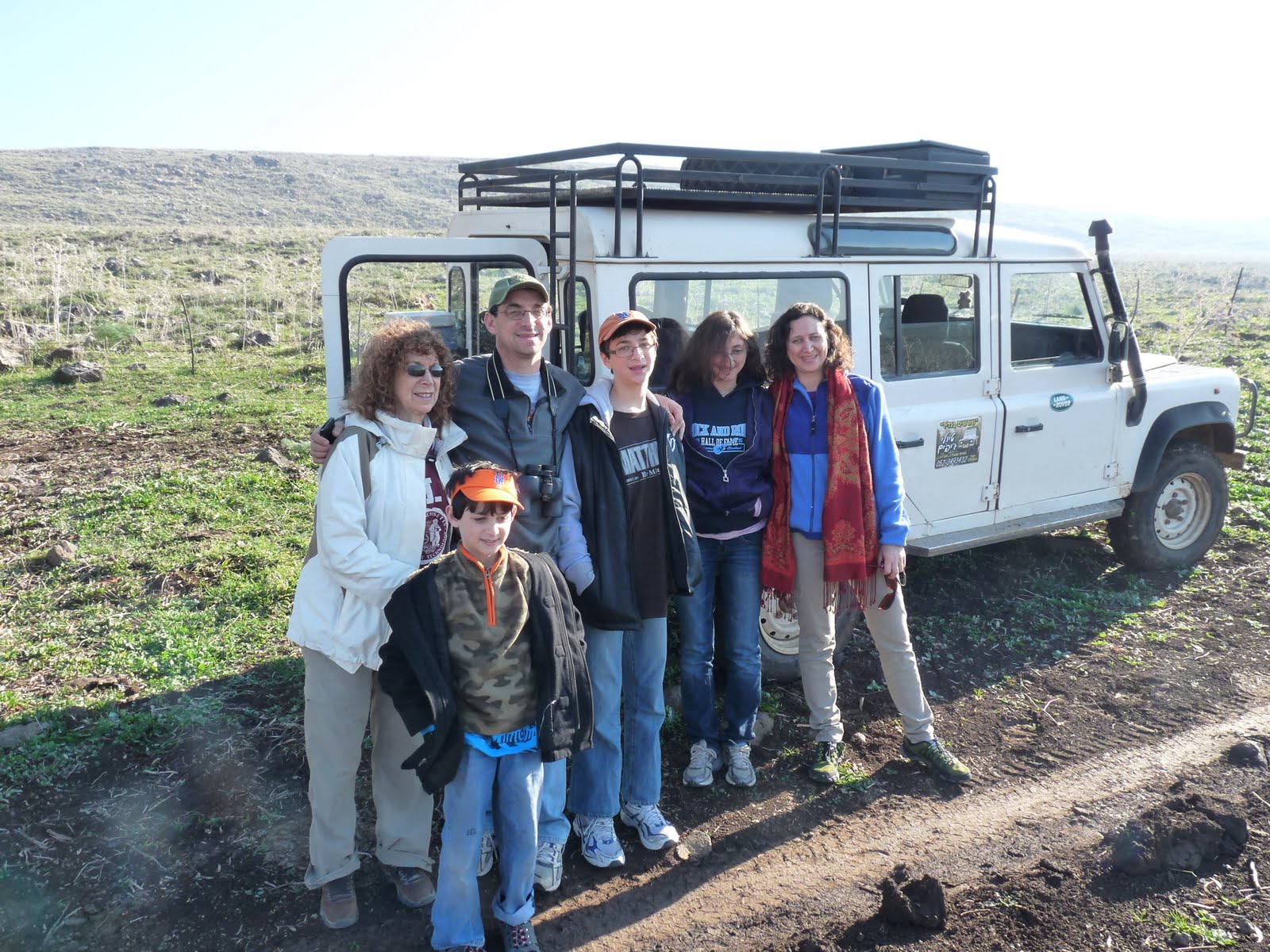
Taking a break in the Golan Heights
There is not one big vacation that comes to mind that I didn’t suffer from some kind of motion sickness.
I do not do well with motion. When I asked my friends back home who had been on one of these jeep rides in Israel how it was, they described it like being on a roller coaster.
I do not do roller coasters. Even stop-and-go traffic makes me ill.
But I am still glad I embarked on a two-hour jeep ride through the Golan Heights. Like anything else in Israel, every tourist activity, even a seemingly carefree jeep ride, is an opportunity to learn and further reinforce the fact that land, water and security are never things taken for granted.
The scenery along the ride was beautiful. The recent winter rains keep pastures and fields green.

Fields of Wheat
Cows graze along the pastures. The rainfall in the winter provides grass for the cows, which then provides milk, butter and other dairy products for the Israelis.
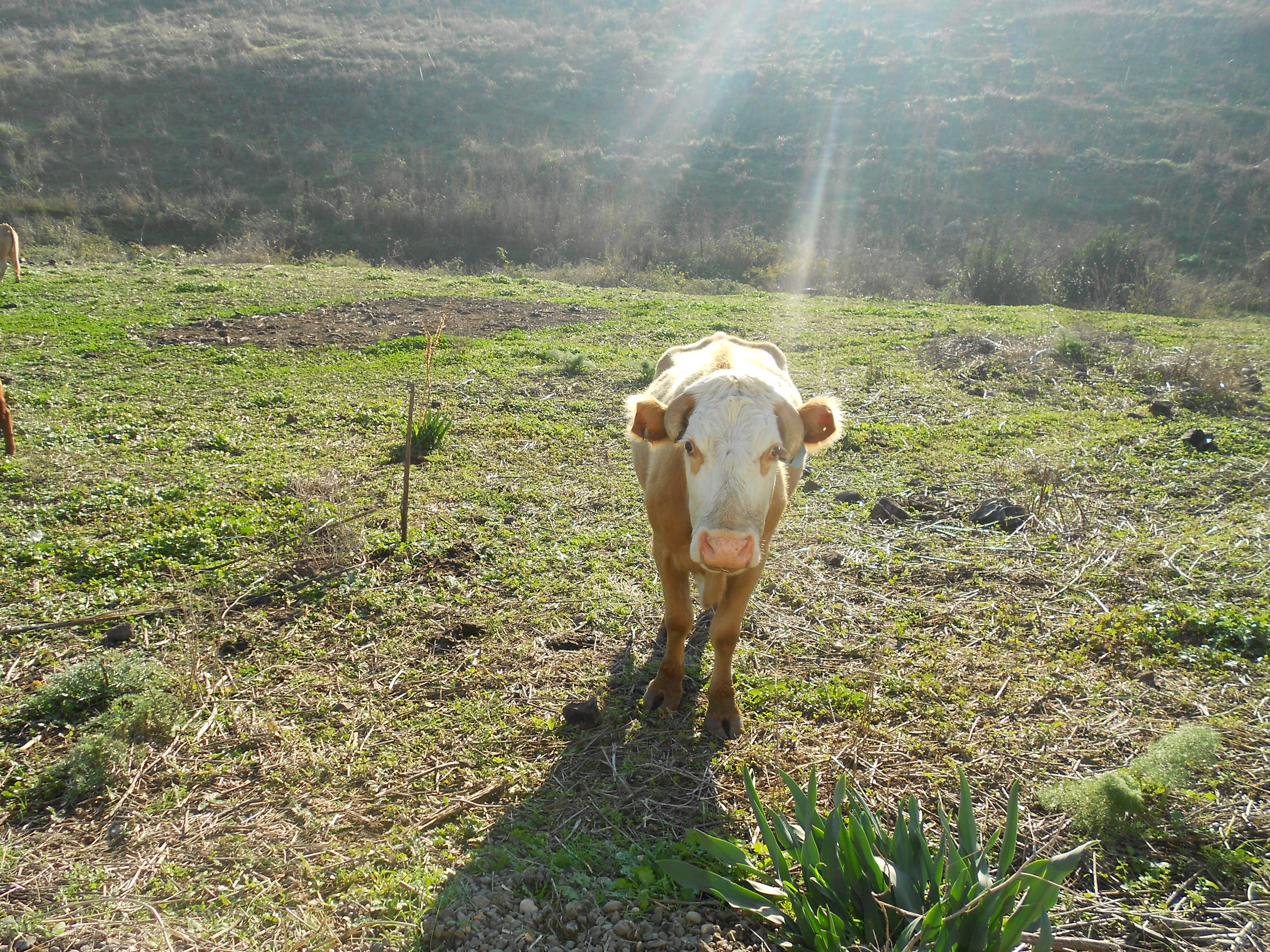
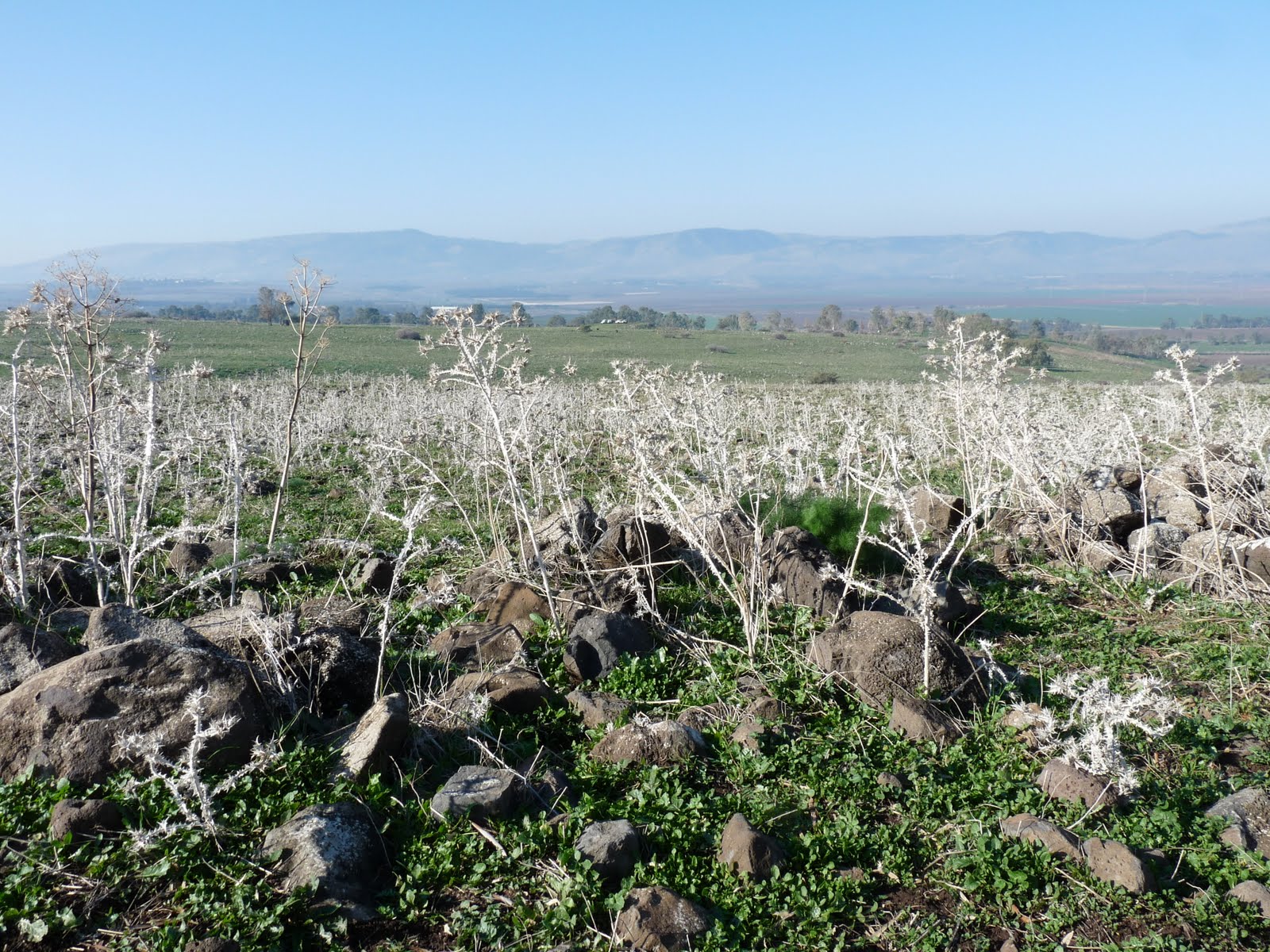
A view from the Golan Heights looking down into the Hula Valley. The mountains Lebanon is in the distance.
But, within that beauty is a constant reminder that it wasn’t too long ago that the people below lived in constant fear when the Syrians controlled the Golan Heights.
The Golan Heights are high bluffs that were captured by Israel from Syria during the 1967 Six Day War.
Fact: Israel is not hungry for more land. They are hungry for safe, defensible borders. So, why then, does Israel not give it back? First of all, what country in the history of the world has ever been put upon to give back land it won in a war? Where are the Golan Heights and why are they strategically important to Israel?
According to JewishVirtualLibrary, from 1948-67, when Syria controlled the Golan Heights, it used the area as a military stronghold from which its troops randomly sniped at Israeli civilians in the Hulah Valley below, forcing children living in villages to sleep in bomb shelters. In addition, many roads in northern Israel could be crossed only after probing by mine-detection vehicles. In late 1966, a youth was blown to pieces by a mine while playing football near the Lebanon border. In some cases, attacks were carried out by Yasir Arafat’s Fatah, which Syria allowed to operate from its territory. For more on the Golan Heights, go to JewishVirtualLibrary
If you need a visual to get oriented to this region, here is a map that shows you just why the Golan is important to Israel’s security. Our jeep toured through the tiny green area. With the current situation in Syria and a Lebanese government that is controlled by Iranian backed Hizbullah, the map shows that Israel is set within one very rough neighborhood:

If you still don’t understand why the Golan Heights are essential to Israel’s security, I’ll let our jeep driver, Avihu Hardy Yessod-Hamala speak for himself.
Avihu is a stout, strong man in his mid-50s with the ruddy complexion of a man who farms for a living. A retired pilot from Israel’s Air Force, Avihu is a fourth generation Israeli. In the early 1900’s, philanthropist Baron Edmond James de Rothschild commissioned Avihu’s great-grandfather to come to Israel because of his expertise as an agriculturist. Once in Israel, he helped pre-state Israel’s first wave pioneers learn how to turn northern swampland into farmland as part of Rothschild’s Jewish Colinization Association.
Avihu still lives in the same village in the fertile Hula Valley that his great-grandfather helped found. The region serves as resting point for 500 million birds that migrate each year from Europe to Africa. Avihu’s family grows fruit like peaches, plums, pears and pomegranates that are sold locally in Israel and exported to Europe.
Avihu remembers as a child the dangers his villagers faced every day they went into the fields. Syrians had a stronghold and fortresses in the hills we drove along. From that vantage point, the farmers in the fields were like fish in a barrel. Very easy to shoot.
When Avihu was 14, the Six-Day War broke out. Avihu remembers sleeping in those bunkers mentioned above. He remembers his village being shelled.
In some of the fields, there are still active mines though the war ended over 40 years ago. The Syrians refuse to tell Israel where the mines are in these fields, so vast parts of land are wired off with warning signs in Hebrew, English and Arabic. As we took a break sipping freshly prepared mint and honey tea that Avihu made for us in a portable kettle, we could not help but reflect on the beauty – and the still lingering danger – that surrounded us.

Acre Eye Candy
Acre, or Akko, is an Arab port city in the north of Israel. It is a city that was built and rebuilt by the Crusaders, and then the Ottomans. Parts of the old walled city are being excavated til this day.
You can look up the history of Akko. I’m just going to show you some nice pictures that will speak for themselves.
Where Getting Rained out can be a Blessing

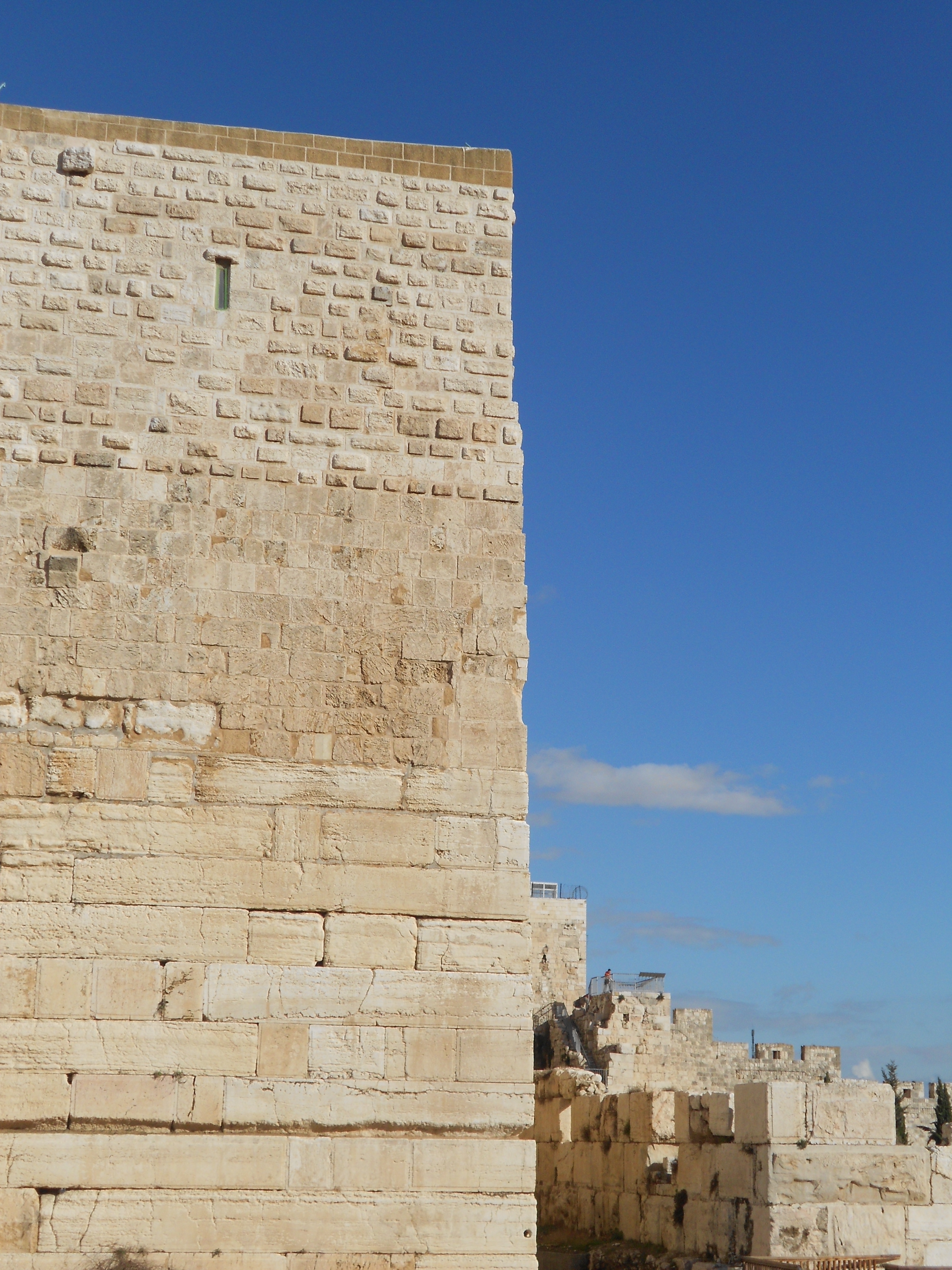
You see that blue sky above the ancient white stones? Beautiful, yes? And not a cloud in the sky. It hardly ever rains here. This is Israel. So, who would imagine our family celebration would be rained out?
Back in July, I went through all the right channels in Israel to reserve my family a time slot at the Davidson Archeological Center (in the above picture) for a second Bar Mitzvah celebration for my son. I pictured a sun-soaked day like the one above. I packed khakis and open toed sandals and cotton button-down shirts for the boys. No ties. Very Israeli. For my daughter and I, flowing thin ankle length skirts. And sandals.
All the while, we’ve been praying for rain each Shabbat. In Judaism, Jews have a special prayer we say between the High Holidays and Passover:
Mashiv Haruach U’Morid Hagashem
Bless you Gd who causes the wind to blow and the rain to fall.
Of course, praying for rain is good for anyplace, but especially Israel. They don’t have the Nile River. Or the Great Lakes. Their main source of water for crops, for their showers and drinking needs, is rain.
Our prayers were answered. And, yes, we felt very blessed in a country that only receives 19.4 inches of rain all year. The rain drenched Jerusalem the day of our celebration. When rain falls in Jerusalem, the sidewalks, made of that white limestone, become very slippery. The rain made it impossible to take out a Torah Scroll in an outdoor setting.
So, inside we went to the Fuschberg Center for Conservative Judaism where we worshipped with ironJew Rabbi Matthew Field officiating:

- My parents, daughter, Nathan and Rabbi Matthew Field

Before our trip , many asked me if we would have Nate’s Bar Mitzvah at the Kotel.
I said no.
I already had that experience – pretty much a slap in the face – at my own “Bat Mitzvah” at the Kotel. Being that I was a girl, I didn’t have to really do anything. But my dad got an aliyah and I got to wave from him from the women’s section.
I have absolute respect for those who pray at the Kotel. I utter my deepest prayers there too. But for me, as a woman, the Kotel is a place for individual reflection and personal prayer. I’m not asking this place to change. It is the Kotel, after all.
But for my family celebration, I wished to have a completely egalitarian service where our family: us, kids, parents, and grandparents, could stand together to celebrate. I also wanted my daughter and I to have a chance to read Torah in Jerusalem.
And we did.
The next day, we returned to the Davidson Archeological Park to explore an area excavated to show how King Herod built an enormous arch (named Robinson’s Arch for the American Archeologist who discovered this place on the Southern edge of the Western Wall) to create a bridge between the upper part of Jerusalem to the Temple Mount.
If you are looking to have an egalitarian service, this is the place. And, pray for good weather of the sunny variety:


Tunneling Through time under the Western Wall
After years of waiting, finally I got to take a tour of the passageways below the Western retaining Wall of the Temple Mount, Jerusalem.
In 1967, when Israel reunified Jerusalem after capturing the Old City from the Jordanians, the Jewish Quarter of the Old city lay in ruins. For nineteen years, Jews had been kept away from their holiest site from the Jordanians. Jordan had destroyed most of the synagogues in the Jewish Quarter. Most of the Western Wall, the remnant of the Holy Temple that stood two thousand years ago and was destroyed in 70 AD, was buried in rubbish.
When Israel recaptured the Old City from Jordanian rule, Israeli authorities pledged that they would restore the Old city and do extensive renovations along the Western Wall, and then continue these restorations to the Southern Wall of the Temple Mount. After decades of painstaking excavations, the tunnels were opened to the public in 2002.
For complete details on the history of these excavations, click here.
When most people think of the Western Wall, this image comes to mind:

Actually, this is only a small portion of the enormous Western Wall that King Herod (truly the Donald Trump of his day) had constructed as a retaining wall to expand the Temple Mount to support the Second Temple.
Today, this massive wall is buried and where over the centuries, the Moslem Quarter of the Old City was built over the rubble.
So, we began our journey under the Western Wall at the extreme left corner of the above photo:
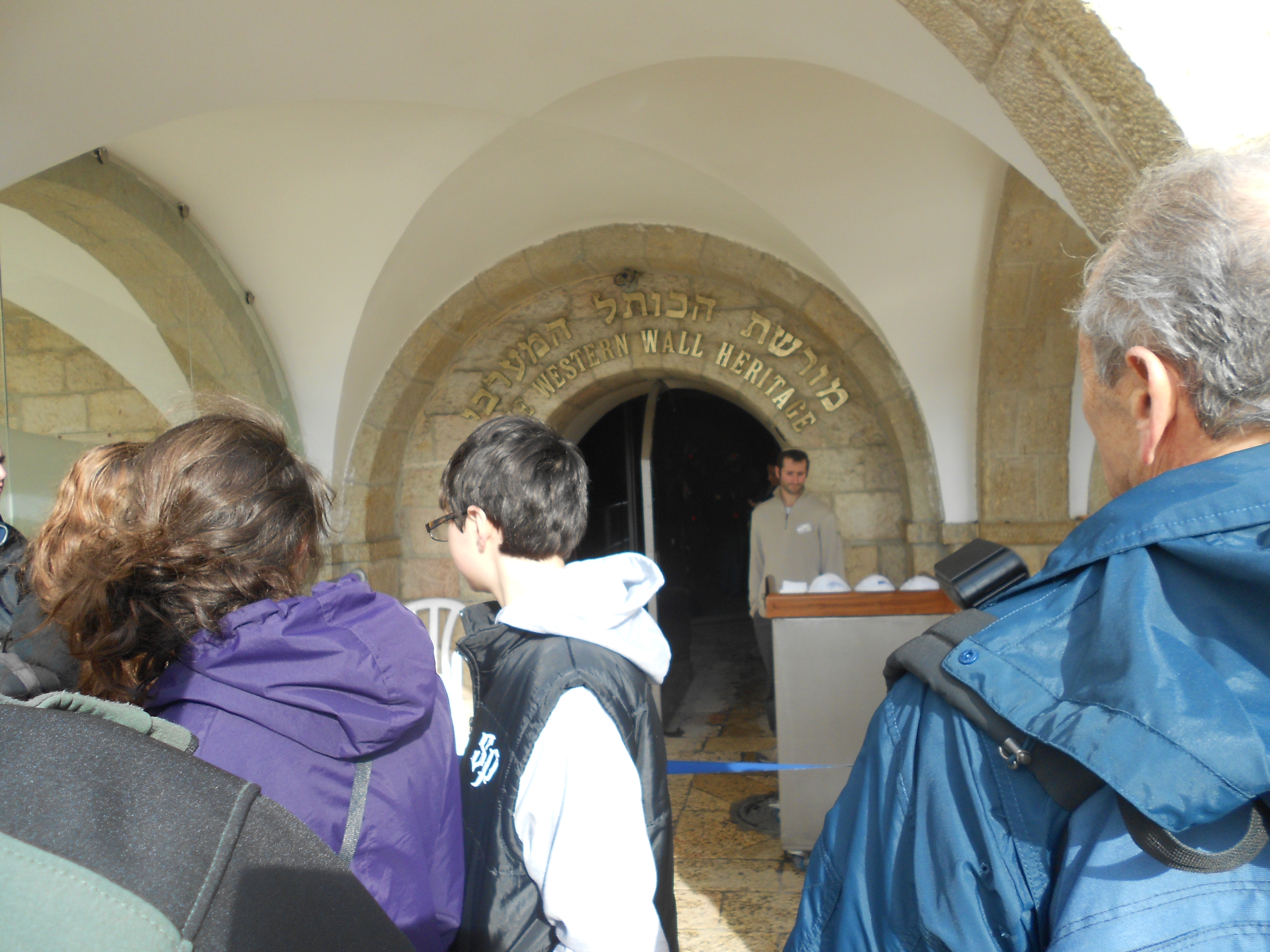
Appropriately, for Chanukkah, our guide was Mattisyahu (no, not that one), originally from Atlanta, who used Toby as a volunteer:

Toby helping out Mattisyahu demonstrate the massive size (40 feet long) each Herodian stone for the foundation of the Temple Mount
Below the surface, there are narrow passageways, but there are also cavernous rooms. The visitor is taken back to the First Century, the heyday of Jerusalem at the time of the Second Temple.
The Western Wall Tunnels provide an odd mixture of tourists 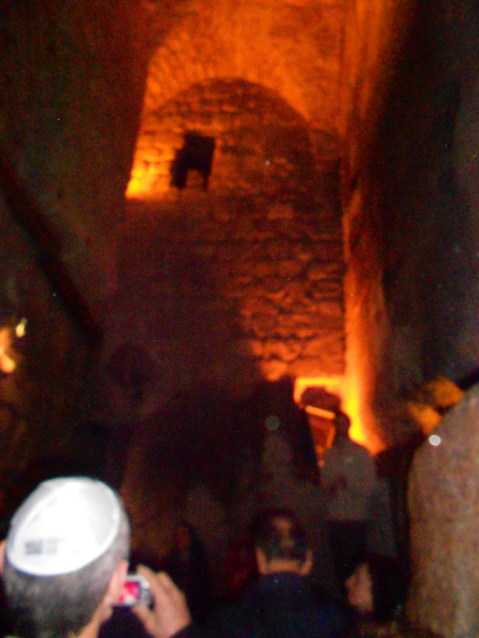
devout women wishing to pray in the quiet subterranean solitude,
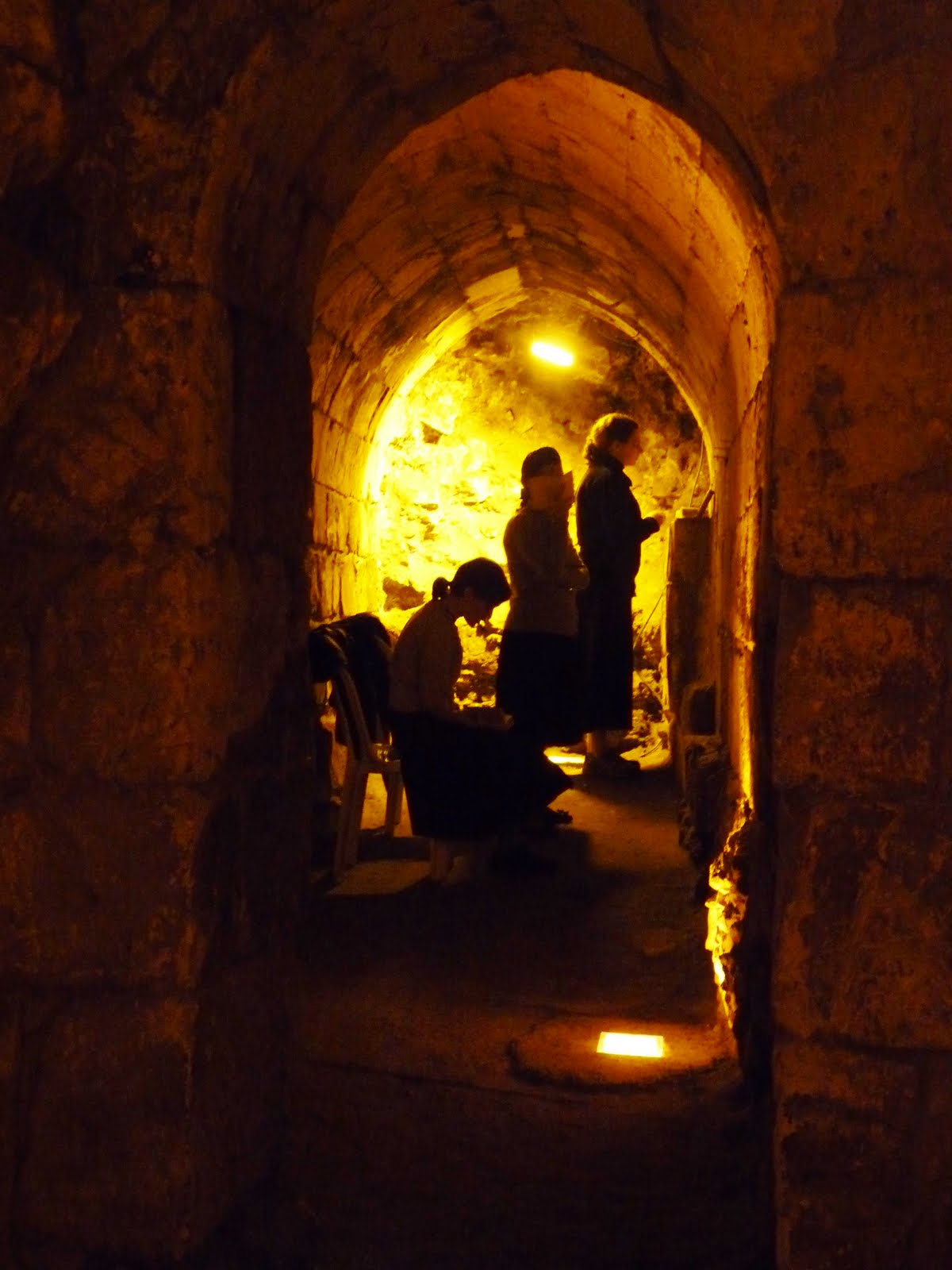
As close as they can get: women of the Western Wall Tunnels
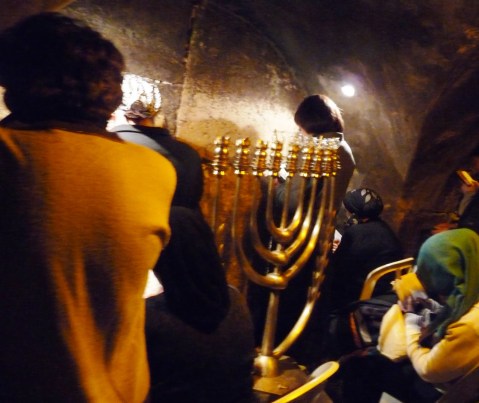 and construction workers. In the distance, down a tunnel not yet open to the public, there are the noises of hammers and drills as further excavations are meticulously conducted as to not disturb the houses in the Moslem Quarter overhead. There are new discoveries made every day.
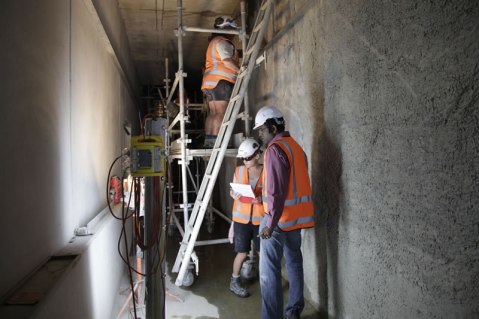
Down here, even construction work is holy.
A Hand and a Name, and a Voice – Yad Vashem

Since I’ve returned from Israel with my family, friends and acquaintances stop and ask me:”So, how was your trip?”
As much as I like talking about the trip, it is just so hard to sum up Israel in a quick conversation in the produce aisle. My husband is also experiencing the same when asked this question at work. How was the trip? Well, in a word: life-altering? Or, how about, transformative?
To start retelling a multi-generation trip of a lifetime to Israel, unfortunately one has to start with the hard things first. It is only from these low points: visiting the Har Herzl National cemetery, and then the Yad Vashem Holocaust Memorial, can one only understand the miracle that is Israel and how hard we have to work to never, ever take for granted the existence of this tiny country.
Before I take you to the heights of happiness of three generations celebrating a Bar Mitzvah, drinking fresh pomegranate juice, dancing on the beaches of Tel Aviv, or welcoming Shabbbat with thousands of Jews at the Western Wall, I must take you to the depths of sorrow.
It was a very hard first day. We first toured Mt. Herzl cemetery, Israel’s equivalent of Arlington National cemetery. Among Israel’s deceased prime ministers and other dignitaries lie the graves of the many fallen soldiers who paid the ultimate sacrifice during Israel’s wars.

Here, there is no rank. Privates are not separated from generals. The word “Nofel” – to fall – appears next to ages: 18, 22, 23, 25, young people cut down serving their country in the prime of life. The freedom to walk casually in Israel’s city streets or flowering mountainsides, we owe to them.
As part of officer training, it is common to see Israel Defense Force soldiers coming to pay their respects to those who served:

After this visit, we toured Yad Vashem, Israel’s memorial to the Holocaust.
The imposing concrete triangular prism architecture of the museum adds to the physical experience of the museum.

The triangular prism of the main exhibit hall is as powerful as the evidence within it. The viewer just wants to make it to that distant light at the end
This is the central hallway: grey, dark, lit only by overhead skylights. On the sides of this triangular structure is the progression of evidence of the annihilation of 6 million Jews. How the Holocaust was engineered through cultivating a centuries-long culture of hate against European Jewry that culminated with the Nazis war against the Jews from 1939-1945. In this short amount of time, the Nazis murdered six million Jews, one-third of European Jewry.
The viewer zigs and zags through each exhibit. There is no cutting straight through to that light at the end. One must enter each gallery. And with each turn, you know the story will just get worse.
Sometimes, one can just get numb to the enormity of the Holocaust. The numbers of vicitms. How many were murdered from this shtetl or how many were deported from this city. Especially if you have seen the photos, confronted the numbers, and heard the testimonies of survivors for the better part of your life.
That is why within this exhibit, the story of one voice, of one victim, is powerful enough to shatter the anonymity of the number 6,000,000 and bring the narrative to one person, one name, who was lost.
On a wall was a small framed poem of a boy, age 14. He wrote: When I grow up to be 20, I will fly free away from here like a bird. I want to travel all over the world and cruise over the seas, and just be free.
The boy was murdered at Auschwitz at age 17.
Then, another voice, the voice of my daughter, who made her own discovery.
She was chanting Torah. Her Torah portion. From a battered, water-stained Torah robbed by the Nazis, to be used one day in a museum Hitler intended to create for an extinct people.
She said, this is my Torah portion, I can totally read it and make out the letters. It was also to be the same reading we would in a few days chant for the Jerusalem celebration of my son’s Bar Mitzvah, just days later.
What were the odds that this tarnished, damaged Torah scroll would be open to this very passage? How many kids in that dark time did not live to see their own Bnei Mitzvah? The tears refused to keep flowing.
So, you see, the Nazis did not fulfill their final solution. We are still here. We still live. We got through the darkness and made it into the light to behold the view of Jerusalem on a clear sunny day:

Oh Chanukkah, Oh Chanukkah … in Israel!
Here is a blog post on the furthest place I’ve traveled. The plane ride is noisy and crowded, but I’ve traveled there four times and I’ll do it again as soon as time and money permits. With the earliest chanukkah ever recorded in just two weeks, I thought this would be an appropriate post for this challenge:
I’ve spent all of my chanukkahs in America. As a Jewish kid, yes, the omnipotence of Christmas can test anyone’s Jewish identity and make even those with the strongest feel a bit left out. You can totally relate to Adam Sandler‘s song. You are that only kid on the block without a Christmas tree.
As I got older, I grew to understand that, yes, Chanukkah is a minor Jewish holiday. No, it’s not even in the Torah. Yes, Jews have our major holidays in the fall.
But, still, come December, you can’t help but feel a bit marginalized.
Except in Israel. Because there’s a whole country that is Jewish, just like you and me……
Chanukkah in Israel is the little things, like peeking into a Jerusalem apartment window to watch a mother lift her baby to see the chanukkah candles.
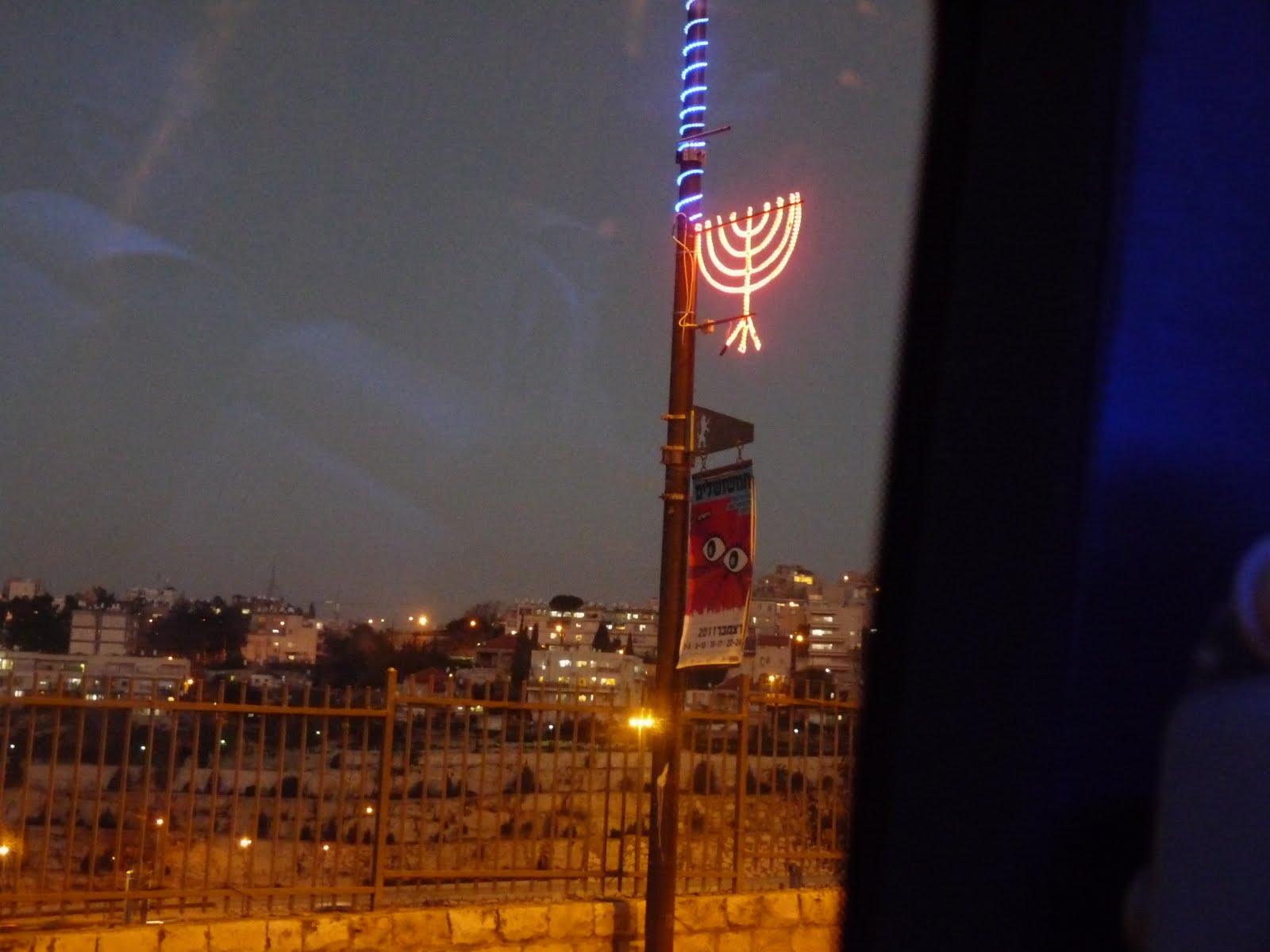
Chanukkah is big, as every corner on every street is decorated with Chanukkiot. No, not menorahs. A menorah is the seven-branched candelabra, and though it is the symbol of Israel, the chanukkia, the nine-branched candelabra, is for chanukkah:

Chanukkah in Israel is walking through the Western Wall Tunnels where Judah Maccabee and his army used to reclaim Jerusalem and the Temple from the Assyrian Greeks in 165 B.C.E.

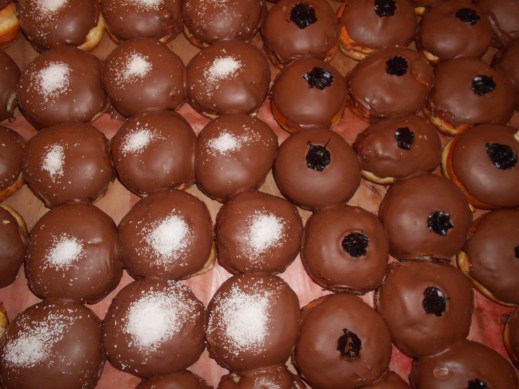
Chanukkah in Israel is sufganiyot piled high in every bakery window.
Chanukkah in Israel is lighting the chanukkiah in the hotel lobbies amidst the glow of so many others:
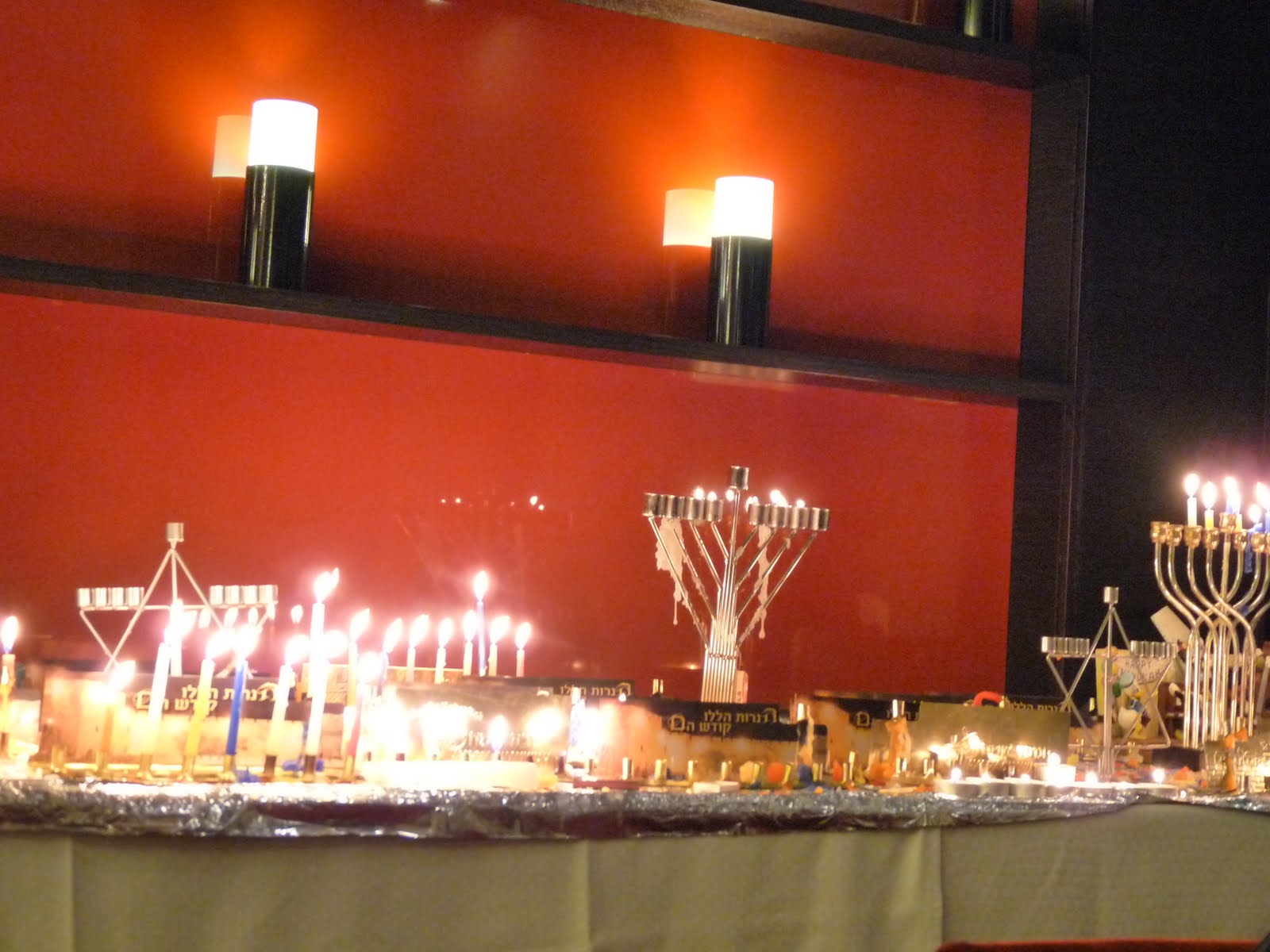

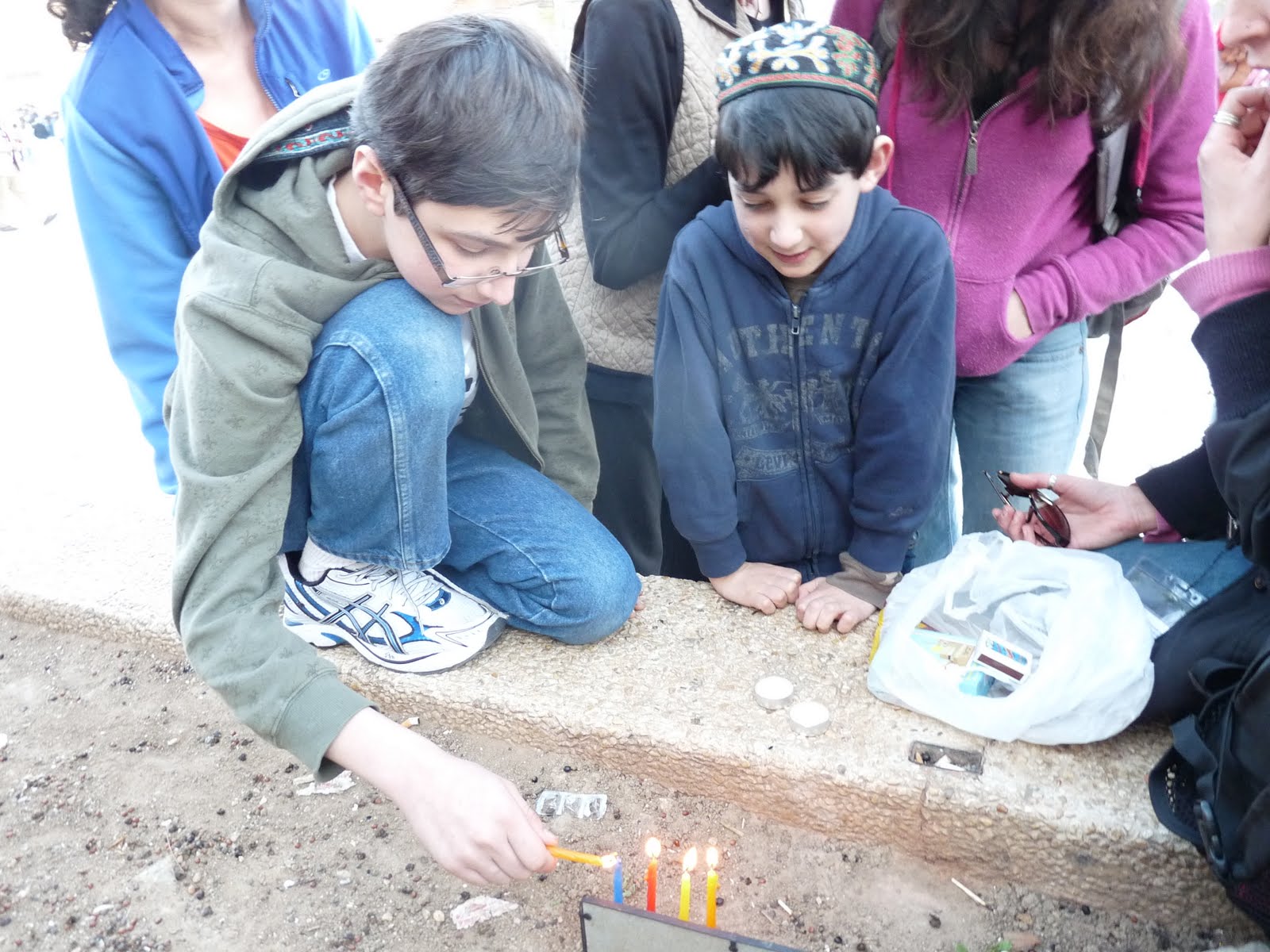
lighting chanukkah candles by the Kotel
Chanukkah in Israel is digging in a cave thought to be used by the Maccabees, where coins have been found with an insignia of Assyrian King Antiochus on them.

exploring a cave in Tel Maresha Archeological Dig Site
Most of all, Chanukkah is filled with smiling kids:

meeting up with friends from home

Where Jesus Walked: Via Dolorosa, Jerusalem
In Judaism, if Israel is the Jewish state, then Jerusalem is Judaism’ holiest city and its eternal united capital. But it is also holy to all faiths. As recognition of this, ever since Israel reunified Jerusalem after capturing it from the Jordanians after the 1967 Six-Day War, it has made sure that all of Jerusalem’s religious sites are open, safe and accessible to all religions.
This is why though I am a practicing Jew and a Jewish educator, for one of my first post-Israel posts, I wanted to show you the walk of the Via Dolorosa. As you look at these photos, keep in mind how preserved and maintained are these stations. Keep in mind that my family walked the streets of the Old City safe and without fear because of the constant present of the Israeli Defense Forces. Keep in mind that all religious sites in Jerusalem are open and accessible to all faiths. This was not the case before 1967.
The week our family visited Israel was during Christmas. We saw thousands of Christian Pilgrims walking Jesus’ final steps:
Pride, and Shame, in Israel
When I return to the United States, I promise to create individual blog posts about the many aspects of our Israel trip, but there is an underlying vibe in Israeli society today that is making news that I cannot go on any longer without mentioning.
Let me preface all this by saying how overall, I have absolute love for my (that’s MY) spiritual homeland. It is ancient. It is wi-fi’d high tech and hydrophonic modern. Every rock and stone tells a history of the Jewish people and the other civilizations that have come and gone here. I am not a tourist here, though I am living in hotels out of my suitcase. I can get by somewhat with my Hebrew. My kids and I have friends here. Though I am here right now I am already longing to come back again, and wonder how long will that be, and when will I ever be able to stay here for more than 10 or 14 days at a time?
I take pride that my children are walking through their history. More than any mid-afternoon Hebrew school class can offer, they have all week been immersed in hearing people speak Hebrew all around them, witnessing the miracle of chanukkah in the land that chanukkah happened, walking through the tunnels the Maccabees forged to reclaim and rededicate the temple.
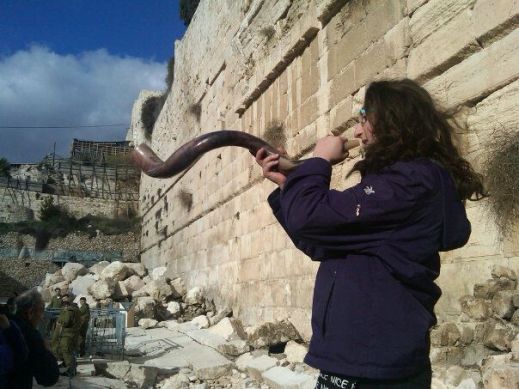
How can I not be proud when I witness how much Israel has changed since my last visits? In 1967, most of Jerusalem’s old city, reclaimed from Jordan, lay in ruins. Now: synagogues have been rebuilt. Archeologic wonders like the excavations revealing access to all the length of the Western Wall of the Great Temple and then the Davidson Archeological Center giving access to all visitors the Southern Wall of the Temple Mount; the fact that my daughter blew her new Shofar in the very place that the Kohanim priests blew their horns to mark the end of Shabbat at Sundown on Saturday night:

The pride of how Israel has preserved artifacts of not only its own ancient peoples but of the cultures of Greeks, Romans, Ottomans, Byzantines, and so many that tried to conquer and occupy Jerusalem. You want to see ancient sites? Greek? Roman? Byzantine? Come to Israel, it’s a historian’s one stop shopping place.
And then the pride of being at the Kotel on Friday night with thousands of Jews celebrating Shabbat and Chanukkah, blessing my children at Judaism’s holiest spot, how could I not feel pride at what Israel and the Jewish people have accomplished?
But then….
I was first very disturbed that first night at the Kotel. As Shabbat descended, men and women gathered to pray on their respective sides of the Kotel. And, like most times at the Kotel, I noticed women standing on chairs, looking over the mechitza, or separation wall, to wave to husbands, sons…
Then, a man came over to them. Shouted to them “Modesty, Modesty!” Get down! Get out of here!”
Slapping their hands. Slapping them. Shooing them away like they were children. Is this how a Torah Jew is supposed to treat the mothers and Daughters of Israel?
Then, more news reports.
- Haredi men saying that women may not walk on the same sidewalks as men in certain towns like Ben Shemesh.
- Haredi men spitting on a seven year old girl and calling her a prostitute because she was not dressed modestly enough in their eyes (the girl was orthodox and she was wearing a long sleeved blouse and a knee length skirt.)
We spend the last two nights at Kibbutz Halavi. A beautiful Kibbutz, a beautiful hotel. But many of the guests were ultra Orthodox Jews. Would it be too much for these, our fellow Jewish bretheren, to return a smile when I gave it to them, to even ask where we were from and make some small chat? Have they forgotten the mitzvah of greeting people with a cheerful disposition? Have they fogotten in their zealousness of making sure that every piece of lettuce and every cut of meat is under the correct hekshcer (kosher certification) that every Jew is responsible for one another and the meaning of Kibbutz is to gather together?
Have they forgotten the words, Henei Matov U Ma Naim, Shevet Achim Gam Yachad – How wonderful it is to gather and sit and be together like brothers?
The direction of religious extremism in Israel is the wrong direction.
The email in the Wall
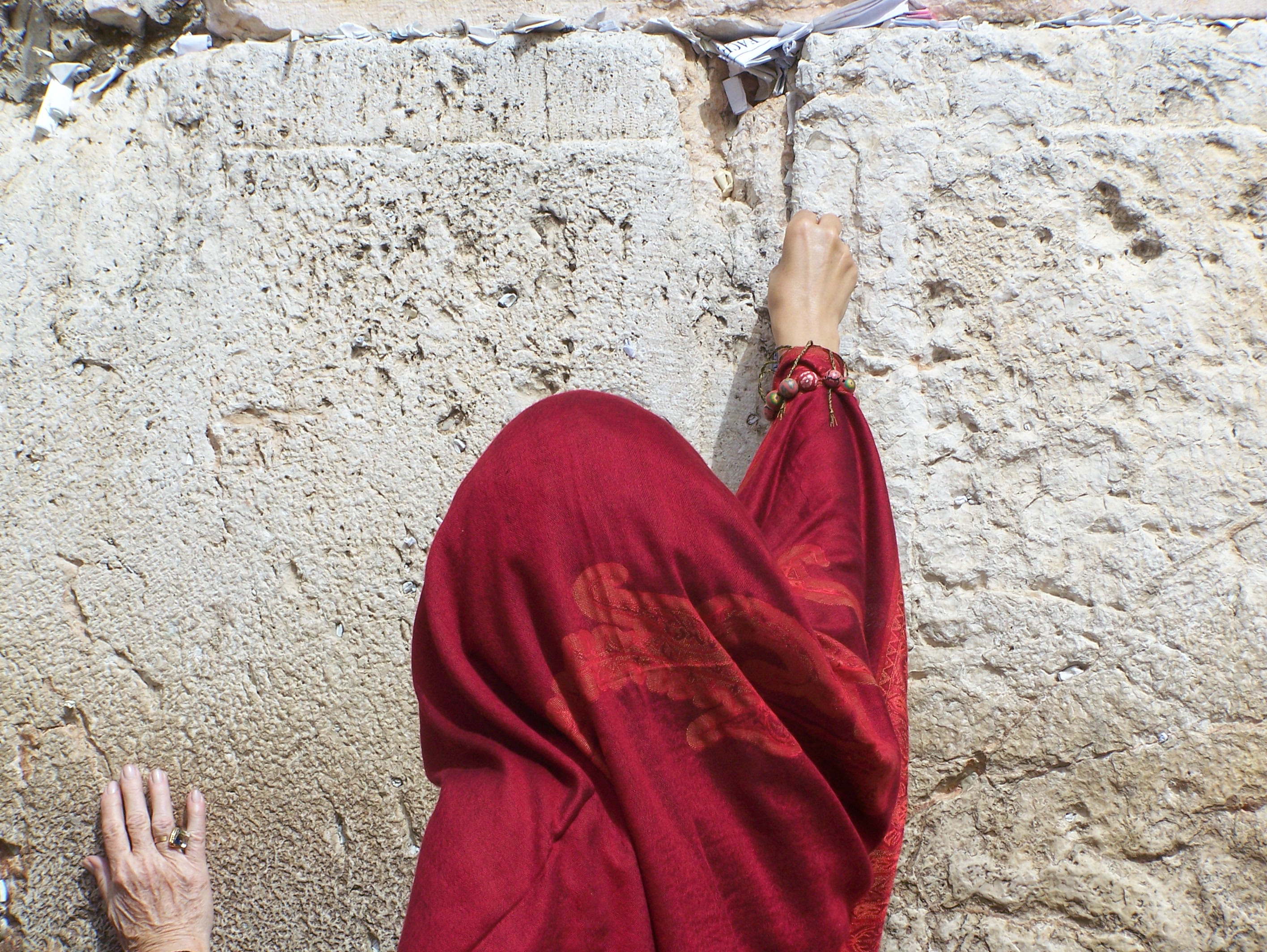 I’ve been making final arrangements for my son to have his Bar Mitzvah at the “Masorti Kotel,” a part of the Kotel off to the side of the main Kotel Plaza that is known as Robinson’s Arch. This is the designated spot in the Kotel Plaza that allows for a mixed prayer group of men and women.
How do I know the final arrangements are official? The rabbi of whom I am in correspondence with in Jerusalem cc’ed his email to “hakotel.” Yes, the Holiest spot to Judaism in the world was kept in the loop that my son will be called to the Torah in Jerusalem. Now it’s really official.
There is no way of documenting in words what emotions my family will be experiencing when my son, his brother and sister, parents and both sets of grandparents along with friends and a few surprise guests will come to Robinson’s arch to pray in honor of Nathan’s Bar Mitzvah. We’ve been planning this moment since around his birth.
But this story goes back perhaps even farther, it’s a story of the power of prayer and placing a note in the Western Wall, and how Gd answers these notes in Gd’s own time.
Once upon a time, a boy and a girl met one summer at Camp Ramah in the Berkshires. They met through mutual friends on a cracked tennis court. The girl kept missing every shot, and the boy didn’t seem to mind chasing all these balls and retrieving them for her.
The boy really liked the girl. Loved the girl. But the girl just wanted to be friends.
That winter, the boy visited Israel with his family. They visited the Kotel, or the Western Wall. The holiest place in all of Judaism where Jews for centuries pour out their hearts in prayer for a united Jerusalem, for a rebuilt Jerusalem. The boy wrote a note to Gd asking that the girl would one day fall in love with him, his family would be blessed with health, and (a bit of a more material and earthly ask), that he would make it into the Engineering program at MIT.
Within a month of writing that note, the girl (who would be me) turned him down when asked to prom. Within a month, the boy’s sister became seriously ill with meningitis and lapsed into a coma. And, the rejection letter from MIT showed up soon after that.
That boy felt like he was truly being punished by the Divine.
Not to worry. Gd answers prayers. Just not in the instant we would like them to be granted.
The sister of the boy recovered and thrived, went to MIT and went on to finish an MBA at Columbia University, has a tri-athlete husband and four beautiful children, and a thriving cupcake business!
Nine years later the girl that turned down the boy for prom came around and they were married before 247 guests!
The boy in the story is my husband. Whenever we are having an argument, or whenever my husband is getting on my nerves like when he doesn’t like the way I load the dishwasher, I think back to his note in the Kotel, realize that our marriage is meant to be by Gd, so I let it slide.
Now, I’m going back to the Kotel again, the fourth time in my life. No two trips to Israel or the Kotel are ever the same. Each time you go there, you are a different person perhaps at a different phase in your life. So, I’m going not only with my family, but I will also be going as a messenger taking along the notes my students wrote to place in the Kotel.
Most of them.
As my students started their note writing, they had many questions: How will Gd know it’s me? What should I write? How long does it have to be? Can I ask for anything…. anything? Is this a wish, or is this a prayer? And, will it come true, what I ask? How do they keep all the notes from falling out of the cracks?” …. and so on.
I guess this is a lesson to myself that it is hard for a child to know exactly how to compose a prayer of one’s own to be placed in such a holy place when one has only an abstract concept of the place itself. These students have only the most fledgling connections with Israel, let alone an understanding of the emotional impact that a united Jerusalem, and access to Judaism’s holiest site, has on the Jewish psyche. But they did their best, and I answered their questions as best as I could.
A note in the Kotel can express thanks to Gd for the health of family and friends. A note to the Kotel can ask to heal broken friendships or relationships. A note to the Kotel can ask to be provided for, and to never know hunger but one should not ask for “Lots of Money and an iPhone.” A note to the Kotel can ask for world peace and haters of peace, for their plans to be destroyed. But a note should never ask for the death of your enemies, let alone a family member. Gd is not your hitman. These notes will not be placed, nor do they deserve a place in such a holy place.
About Me
Kreativ Blogger

Versatile Blogger Award


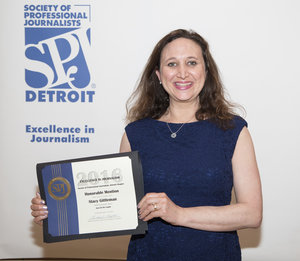
 Stacy Gittleman