
Where Jesus Walked: Via Dolorosa, Jerusalem
In Judaism, if Israel is the Jewish state, then Jerusalem is Judaism’ holiest city and its eternal united capital. But it is also holy to all faiths. As recognition of this, ever since Israel reunified Jerusalem after capturing it from the Jordanians after the 1967 Six-Day War, it has made sure that all of Jerusalem’s religious sites are open, safe and accessible to all religions.
This is why though I am a practicing Jew and a Jewish educator, for one of my first post-Israel posts, I wanted to show you the walk of the Via Dolorosa. As you look at these photos, keep in mind how preserved and maintained are these stations. Keep in mind that my family walked the streets of the Old City safe and without fear because of the constant present of the Israeli Defense Forces. Keep in mind that all religious sites in Jerusalem are open and accessible to all faiths. This was not the case before 1967.
The week our family visited Israel was during Christmas. We saw thousands of Christian Pilgrims walking Jesus’ final steps:
Am I a Bad Jew? An open letter to Benjamin Netanyahu
 Dear Bibi,
I am writing to you somewhere within the American diaspora. In a few weeks, my husband and I will be taking our children and our parents on our first family trip to Israel. When we get there, I hope that the Israelis we meet there don’t think that we are devoid of any Judaism or Jewish life back in evil America.
Let me explain. I just viewed some commercials made by the Israeli government warning them of the risk of assimilation, of losing their Jewish identity if they move to and remain in America. The Jewish Federations of America, along with most American Jews, took offense.
A lot of controversy has been stirred by this ad campaign trying to lure Israelis living in America to come back home to Israel if they want their own children to remain Jewish.
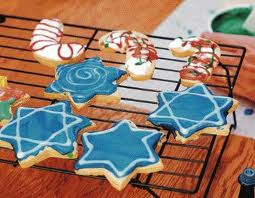
To those of you not familiar with it, here is an example of such an ad. Basically, an Israeli grandma and Grandpa in Israel are skyping with their family in America. The grandparents, seated in a living room with a lit Chanukkiah (candles for chanukkah, it’s NOT a menorah) in the background, ask their granddaughter what holiday she is celebrating. She joyfully shouts (to her parents’ dismay) “Christmas!”
(this ad has been removed as I write this post)
Here is what I know, good and bad, about Jewish life in America and Jewish life in Israel.
- Israel, you have no better friends in the world than the Jews of America.
- I am involved with the Partnership2Gether program in my city. Each time we are visited by our Israeli counterparts, friendships are forged and dialogues begin about Jewish identity on both sides of the sea.
- The Israelis making their first visit to America greatly admire how hard American Jews have to work to maintain our Jewish ties. Yes, we are pulled in many directions trying to balance secular commitments with the religious. But yes, we enjoy the freedom we have of making our own choices.
- The Israelis who came here greatly admire the role of women in synagogue life. Some of them for the first time saw women serving as rabbis. Some of them for the first time had the honor of being called to the Torah for an aliyah.
- Israelis who visited America expressed their disgust with extremist religious strains that take an “all or nothing” approach to observing mitzvot to the point that rather than trying to observe Judaism to their own comfort level, they have abandoned any Jewish practice at all.
- Yes, some of my middle-school aged Hebrew school students are from intermarriages. And many of them struggle with their identity, especially in December. But we have to respect that non-Jewish parents who love their children made the hard choice and the sacrifice to raise their child in a religion that is not their own. It is a choice they believe in and many try to learn about Judaism right along with their children.
- My students ask if they are a “bad Jew” if their family doesn’t light Shabbat candles every Friday night. They ask if they are a bad Jew if they help their non-Jewish parent set up Christmas lights. What can I possibly tell them? I can’t. All I can teach them are the tools and the mechanics of Hebrew language and the religion. It is up to the individual parents and families to apply or not apply, these teachings in the privacy of their homes.
- Am I a bad Jew if I find myself this time of year humming a Christmas tune? Not really, as Christmas permeates every facet of American culture between October 31 and December 25. For impressionable Jewish American children, it is all the more impossible to ignore. I teach my students and my own children that it is okay to admire the lights and decorations, but know it is not our holiday.
Bibi, I’ll be in Israel all of Chanukkah. Why don’t fly over to the states and spend your Chanukkah in America and see how hard Jewish Americans work to say “no, Christmas is not our holiday. In spite of being a minority, we choose to worship our God and practice our religion the way we choose.”
Isn’t that after all the message of Chanukkah?
Can 9/11 ever be just another day? And what will I tell my students?

Making the past relevant: students at a Jewish summer camp learning about one sad event, the destruction of the Holy Temple, through the tragedy of 9/11
What a challenging day to make a first impression. On the tenth anniversary of the September 11, 2001 terrorist attacks, right around the time when the towers crumbled, I will be standing before my class of newly minted seventh graders. I will have to save face and cheerfully smile at my new students and welcome them to a new year of Jewish learning.
All the while, I know at this time I would usually be crying. All the while, I know, in truth, my students would rather be sleeping in on a Sunday morning. I’m wondering if any other Jewish educators of middle school aged children and older are feeling the way I do; about how to get through this first day.
Let’s hope I don’t lose it and get all teary-eyed in those first introductory moments about an event that happened when my new students were barely out of diapers. After all, ten years to a 13-year-old is a very long time.
I can hear the conversation in the Hebrew School carpool ride home tomorrow: “…..my new teacher, like, cried on the first day. Ewww.”
For better or worse, time does go on and obligations do not stop just because of a date. Over the years, the date of 9/11 shifted around the days of the week. There have been weddings and homecomings, meetings and business trips. Sometimes, the anniversary falls in the middle of the week. Sometimes it happens on a Tuesday, the very day of the attacks.
What do I usually do between 8:45 and 9:00 a.m. on the anniversary of 9/11? I’m usually alone. Everyone else in the family has left for school and work. I feel as I should watch the real-time replay of those horrible moments, as CNN plays it every year. Sometimes, I watch it. Most years, I hide in my laundry room in the basement and have a good cry. Then I get on with my day.
What do I usually do the first day of a new school year with my new kids? I go over expectations. Together, we make a list of class rules. I review classroom procedures and what we will be learning. Also, we have some ice breaker games to get acquainted.
Can we ignore the events of a decade ago and go on with business as usual? Talking about something as painful as 9/11 on our very first day will be a very difficult thing to do, but just as difficult to ignore. I don’t think crying in front of them, or showing the slightest tear will be an option. Not while we are still strangers.
It’s not that difficult subjects don’t arise in Hebrew school. In fact, it’s these really sensitive topics that have motivated my past students. They really open up and we have amazing conversations. (That’s what I love about the seventh grade, they never cease to surprise you on what they can handle.)
Kids in the seventh grade are ready to not to be kids anymore. After all, it’s the year of their B’nei Mitzvah, their coming of age. They want to talk and they told me last year that sheltering them does them a disservice anyway.
I remember last year, sitting on the floor with my seventh graders, discussing the Holocaust with them and how the lessons they learned from the Shoah still mean something to them today. But that discussion happened on one of the last days of school, not the first.
So, come Sunday, I’ll stick to my plan. Unless the plan needs to change. In the Talmud, the rabbis instruct to “go with the way a child wants to learn.”
So, if the topic comes up, I’ll share. I’ll tell them that a decade ago, I was in the middle of filling out my own Rosh Hashanah cards, wishing friends and family a happy New Year when the planes hit. I’ll tell them that I wrestled with the choice of sending those cards out at all, but in the end I did. Because that Rosh Hashanah, praying for the New Year seemed more important than ever before.
So if I have to scrap my whole lesson so we can gather on the floor, open up and talk about how to approach the madness and the sadness of this day, so be it.
Then, perhaps the next week, they will derive some meaning during Tefilot, or prayers.
They really will thank G-d for sustaining them and giving them the energy for waking to a new day.
They really will thank G-d for making them free and not a slave.
They really thank G-d for strenghening us with courage.
Under the Purim Moon in Israel – 2008
It was just St. Patrick’s Day in America this week. I couldn’t help but notice all the people decked out in green, so publicly and outwardly showing their Irish pride. People were wearing the green and donning shamrocks in schools and restaurants and supermarkets.
Strangely enough, this visible expression of pride in one’s ethnic identity reminded me of the revelry and costumes of the people of Israel as they celebrate Purim. Purim is a story of kings, queens, and villans. A holiday of reversals. A holiday of masks, costumes, and feasting. And like St. Patrick’s Day, there is some drinking involved too!
In America, Jewish holiday celebrations take place mainly inside synagogues and Jewish community centers. But in Israel, the planet’s only country with a Jewish majority, all Jewish holidays spill onto the streets and shops. And Purim in Israel is one big nationwide party. A party celebrating a victory over wickedness that could hold true today. There was a wicked man in Persia back then that we defeated. There is a wicked man in modern-day Persia, or Iran now. Both of these men pledged to destroy the Jewish people. One wicked man defeated. Many more to go.
What could have been a day of great sadness for the Jews turned out to be a day of great joy. And, we are commanded to be joyous, intoxicated even, on Purim. So drunk in fact, that on Purim in Israel there are special parades called Ad Lo Yada, meaning in English, “That you Shouldn’t know,” meaning on Purim you should be so happy (drunk) you should not be able to distinguish between Mordechi or Haman (boooooo!). Friend or Foe.
Last night I looked up and saw the Supermoon. While this moon was indeed one of the fullest full moons I had ever seen, it did not surprise me that there was a full moon. Purim, always falls under a full moon in March. Or, more precisely, the 15 of the Hebrew month of Adar.
As I gazed at this body of luminescence, I took a deep sigh and reminisced about where I saw it three years ago. 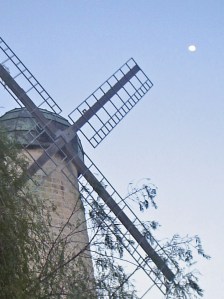 This was the moon I saw hovering over Jerusalem’s Yemin Moshe neighborhood. Okay, from my amateur photo, it was not as big as the supermoon, but it was special all the same.
I thought about all I saw and ate and felt when I was in Israel. I thought about the people who opened their homes and families to me who hardly knew me. I thought about waving the American flag in a Purim Parade and listening to the cheers from the people along the route. I thought about the traffic jam I got caught in. The reason for the traffic jam? Israelis were clogging the streets because they were delivering baskets of Purim food to their neighbors. That’s the kind of country Israel is – one big family.
Then, I caught a bit of CNN’s Piers Morgan’s interview with Israel’s Prime Minister Benjamin Netanyahu. During commercial breaks, the same old images were shown to the world of Israel: The Kotel, The Dome of the Rock.
Excuse me, Piers, but you were in Israel during PURIM!
Are these tired images all you really can show about Israel? Must Israel always be covered with conflict in the backdrop? If you got out on the streets of Tel Aviv or Modi’in or Jerusalem, if you could do one sidebar story, you would have wandered the streets and been treated to the following faces:

Halvah for sale for the Purim Feast

my friend's brother, decked out for Purim, celebrating with a feast at his home

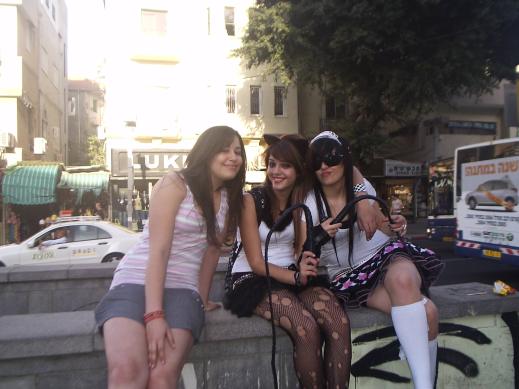
teen girls dressing up and having fun in Tel Aviv

mom and kids wait for bus outside of old city, Jerusalem
Will showing these images make Israelis seem just too normal, too human for media coverage? Would it portray Israel too much for what Israelis are, a people who love to live, who love to celebrate?
Until the media in America show photos like this of Israel, I’ll just have to share my own. And I’ll be taking more. Because we just booked our next trip for this December. Even though it is the first day of spring, I can’t believe I’m saying this, but I can’t wait until the winter.
Sisters are Doing it For Themselves – but we can do better

Women, we need your voice and leadership in Judaism
To my dear readers,
This blog post focuses on synagogue life inside Conservative Judaism. If you follow a different faith and don’t wish to read on and get bogged down in all the Jewish lingo, I will completely understand. But, if you want to read on and offer your point of view on women participation in religious life, Jewish or not, read on and chime in with your comments.
Last Saturday afternoon, after many warm hugs and handshakes on a job well done, and a shot of chocolate schnapps over a Kiddush lunch with my volunteer co-chair, I finally breathed a sigh of relief.
I co-chaired Sisterhood Shabbat at my synagogue as part of a nationwide celebration of women and women participating in synagogue life. The service went splendidly with many firsts for our congregation: The first part of the service was led by our congregation’s first woman rabbi. During the Torah service, the Torah was capably lifted by a woman who is a weightlifting fitness instructor. My co-chair and I felt a great sense of accomplishment that we had risen to the challenge to find a woman to lead every part of the service. Every woman who volunteered rose to the occasion as well and did their parts beautifully.
What troubles me is who will lead in the years and decades to come.
My concern over the last few months as I helped put this service together was on two fronts:
- The sparse feeling that I get when I see the increasingly empty blue seats week after week indicates the dwindling number of families who take the time to be with their community on Shabbat mornings. I get a little concerned about the future of my synagogue and the future of Conservative Judaism as a whole.
- I also was troubled by the number of women who I approached to participate who were not comfortable leading services or not comfortable with their knowledge of Hebrew. Among those who politely said no to participating were Jewish educators themselves. This level of discomfort, the scarcity of women who are comfortable enough to lead services, comes after nearly two decades of the Conservative movement counting women in a minyan and allowing full participation in synagogue life.
Sisters, we have to do better. If we truly want to see egalitarian Judaism survive and flourish, if we have the privilege of being counted in a minyan, than we owe it to ourselves and our daughters to push out of our comfort levels and learn to lead.
Is this a challenge? Of course it is. But it is not impossible. Look how far women have come.
- Don’t be afraid of not being comfortable leading services. We all need to start somewhere. Know that however you do, your community deeply appreciates that you participated in this mitzvah, or good deed, of leading your community.
- There are so many resources available for learning. If enough people voice interest and commitment, synagogues will happily create classes or sessions with our clergy. I didn’t learn to read Torah until I was 38 years old. Why? Because when I was a kid, girls “didn’t have to” learn Torah. But I knew even as a child that I would someday learn.
- If you are more comfortable learning at home and are tech savvy, there are online programs galore to help. For example, Siddur Audio walks you through nearly every page of the Siddur Sim Shalom prayerbook of the Conservative Judaism movement. You can even download mp3 clips and listen to them on your iPod to learn.
Lastly, don’t be afraid of making mistakes or screwing up. Or the butterflies in your stomach. I get nervous – complete with sweaty palms – nearly every time I read Torah. I often say to myself right before I read, why am I putting myself through this? But I know why I do it: it’s good for the community, and reading Torah is really good for your brain!
But it is not an exercise in perfection, rather an act in participation, because if you falter, there are people right beside you who are there to help. That is why it is called a kehilah kedosha – a holy community.
A Small Chanukkah Miracle at Checkout Aisle Number Eight


“Are you doing anything special this Hanukkah?”
I guess Steve the check-out cashier figured out I was Jewish. After all, from my grocery cart, I unloaded a bag of potatoes, onions, some Chanukkah napkins, blue and white M&Ms and a box of beeswax candles.
“Not much,” I replied. “Just going to my son’s band concert tonight, and then down to New York City for a family occasion.” I didn’t want to say it was for a Bat Mitzvah. That’s just too complicated if you don’t know what a Bat Mitzvah is.
“Ooooh, New York City! That’s where they seriously get into Chanukkah! I mean, the big menorah displays, and the food — the matzah ball soup! Even in the diners, they make French toast out of challah down in New York City,” he went on.
Now, you don’t have to be Jewish to love matzah ball soup or challah French toast. And, I am pretty sure, you can get challah French toast up here in Rochester.
But the sentimentality in his voice towards matzah ball soup, the way he so dreamily spoke of the menorahs as he scanned my clementines and sweet Mayan onions, I had to ask:
“Um, are you Jewish?”
Now, this is not a question I would ask a complete stranger. But around this time of year, when the enormity of Christmas seeps into every crevice of the American landscape, Jews have this desire to connect to one other, to stick together. Judaism as a topic of conversation is a subject that would be avoided by the most disenfranchised, unaffiliated Jew for most of the year. But talking about one’s Jewish identity in the face of Christmastime, is, like a plate of freshly fried potato latkes, on the table and up for grabs.
At any other time of year, a suburban housewife and a 20something college kid working in a grocery store wouldn’t openly discuss being Jewish. But that night, right before the lighting of the first Chanukkah candle, amidst the Christmas Muzak playing and the Christmas tree displays twinkling, it felt like the right time.
As he carefully bagged my groceries with the expertise only possessed by a Wegmans employee, Steven continued to tell me his plans for the Festival of Lights.
“Yeah, there’s this Chanukkah celebration thing going on at the University of Rochester tonight. From – you know – Hillel? I think I might check it out. I haven’t gone to many Hillel events, but I think I should check it out.”
“Good for you!” I replied. This did my heart good. I told him that I worked for the Hillel – the organization that supports Jewish life on college campuses around the world – a number of years back. With so many negative statistics out there pointing out the demise of Jewish practice among today’s young American Jews, Steven telling me of his plans to do something Jewish, to be with other Jews that night, just made me feel all warm inside.
Chanukkah is such a small holiday in importance on the Jewish calendar. But it celebrates something so big – the world’s first fight for religious freedom. It was the first time a people – though meek and small – said NO to an occupying power. Judah Maccabee and his brothers were the first who had the chutzpah — the balls, if you will — to say, NO! We will not stop being Jewish. We will not stop teaching our children how to be Jewish. You can put up statues of your idols, you can outlaw Jewish practice, you can threaten us, but we will survive.
And survive we did, and we have, in spite of history. And in spite of the dreary outlook for the American Jewish landscape, Steven, the college kid who worked at Wegmans, was going to go out of his way to celebrate Chanukkah, to celebrate being Jewish.
Happy Chanukkah to Steven and to all who celebrate freedom.
About Me
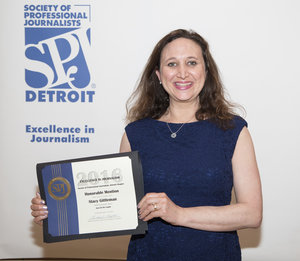
Kreativ Blogger

Versatile Blogger Award


 Stacy Gittleman