
The Passover-Israel Connection

It would be funny if it were not so tellingly sad.
After weeks of rehearsing Passover songs for a school wide Seder and in anticipation of April break, I knew my students would be feeling a bit burned out. But still, there was so much left to teach about Passover, especially the idea of redemption and how for modern Jews, Israel is our redemption. However, as our generations get further away from knowing a time before there was the existence of the modern Jewish State, one can take Israel, and teaching for Israel for granted. In afternoon supplementary Hebrew schools, where hours are shaved for time’s sake, teachers must focus most of their time just teaching Hebrew reading. There is little time to teach Israel.
So, in the final Hebrew school hours before Pesach, I wanted to part with my students with thinking about the Israel-Pesach Connection with a slide show. (if you want a copy of this slide show, please send me an email at stacy.gittleman@yahoo.com and I’ll happily send it along.)
I put a picture up from my laptop projector of the following people. Can you name them?
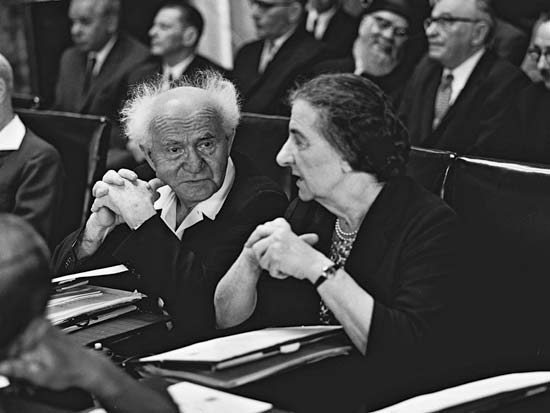
Now, to give them credit, I said I was going to show students slide show presentation from photos that were mostly ones I took in Israel, and told them that most of the photos were mine, but others were those I found on the Internet.
I just didn’t tell them which were which.
So, when I put this picture up and asked if anyone knew who these folks might be, I got some pretty interesting answers:
“Umm…. they must be husband and wife.”
“Are they your parents?”
No. No, I corrected them. These people are two of Israel’s most influential leaders in the formation of a Jewish state. Can you name them now?
Still no answers.
“Children, the man is David Ben Gurion, the first prime Minister of Israel and the woman is Gol-“
“Oh, now I know! Is that Golda Meir, the first woman Israeli prime minister?”
“Yes, that’s right!” Now we were getting somewhere.
The next hand flew up.
“Did you… meet them?”
So, in the final weeks of Hebrew school after Pesach, I realize I have my work cut out for me. I’m pretty sure I knew who David Ben Gurion and Golda Meir were by the end of the sixth grade. And I knew that, like Moses, these pioneers of the modern state of Israel went to European leaders in the 1930’s asking to let their people go to emigrate to the British Palestine Mandate to escape Hitler’s mad plan for the Jews.
When I get back to class, even though there are only weeks to go, I will put up photos up of Ben Gurion and Golda Meir. And Moshe Dayan. And Menachem Begin. And Rabin and Sharon.
Because, just as we tell our children the story of the Exodus from Egypt, and just as we vow to never forget the horrors of the Holocaust, so must we tell our children the history of the formation of the modern State of Israel. We must somehow weave that right into our Seder narrative just as we sing Dayenu and Adir Hu.
One great resource that I found online this week is the Israel 365 Hagaddah. It is 60 pages of the traditional hagaddah text combined with beautiful Israel photography plus specially marked “Israel moments” to highlight at your Seder. I hope that just some of this amazing Hagaddah makes it to your family’s Seder celebration.
Pesach Sameach. Happy Passover. And next year in Jerusalem.
Window Shopping in Tel Aviv, Windows Shattering in Ashdod
As the violence between Israel and her neighbors in the Gaza strip heats up, I have been glued to not CNN for updates, but the news feed on my Facebook page from The Jerusalem Post. I am relying on the Jerusalem Post and accounts from my friends in Israel to give me the scoop on the latest to what is going on there. I have given up on US media on getting any story related to Israel right. The latest picture on the JPost newsfeed brought back memories of my last nights in Israel spent in Tel Aviv.
When you think of Israel these days, I bet that fashion does not come to mind. No, no, you say, nothing is ever reported from Israel except conflict and war. What else can possibly be going on there?
A lot. Fashion, for one. Israel is entering the international stage for its fashion design. Israeli designer Ronen Chen’s can be found all over the world. Tel Aviv Fashion exec Molly Grad is one of Israel’s top female executive at Gottex Swimwear.
Tel Aviv designers teamed up with designers from Milan, its sister city, to put together Tel Aviv Fashion Week last November Some Milan designers included Milan’s Roberto Cavalli.
On our last nights in Israel this past December, we spent time wandering the streets in Tel Aviv, particularly the fashion district on Northern Dizengoff Street. The stores were closed, and that was a fortunate thing for my wallet because I knew I had no need to buy any of these clothes. Never mind my suitcases must have been already over the weight limit because of all the artwork, books and souvenirs I already purchased.
But the styles were oh so beautiful:




So, this is why this morning’s picture of a bombed fashion boutique in Ashdod really resonated with me.
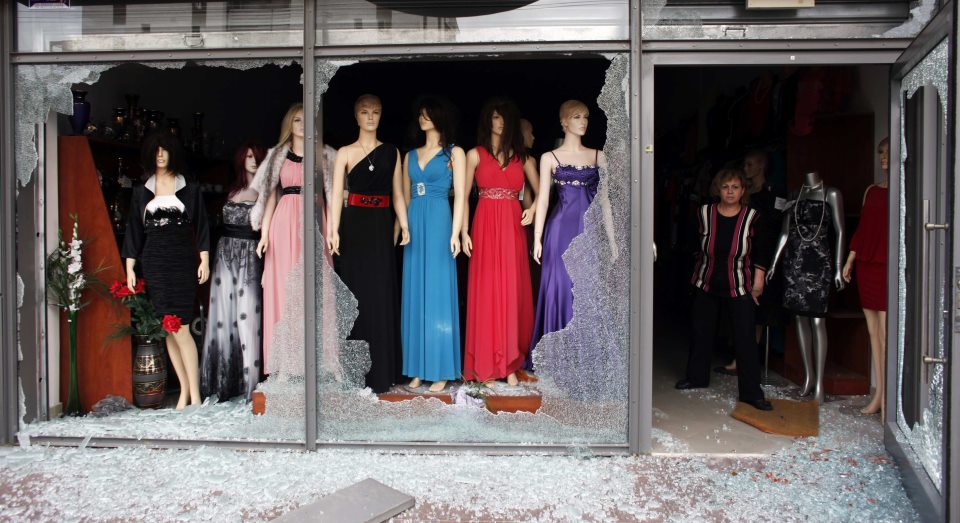
Rockets from Gaza hit clothing store in Ashdod, 40 kilometers south of Tel Aviv. Photo by Jerusalem Post staff photographer Nir Elias
This is a picture that I bet will never make it into US papers. It is not until you walk the streets in Israel, until you drive along her crowded yet modern highways, feel the beauty and the utter vulnerability of the land that you can really understand what is going on there and what Israel needs to do to survive. And thrive.
Israel, I stand with you.
America, if you want to know what is going on in Israel, do yourself a favor and get your news from The Jerusalem Post.
Israel: a Human Problem?
With Israel-Apartheid week happening this week across college campuses, I wanted to bring to you some of the thoughts that are going around and what we are up against. Do you agree with this blogger? Is Israel a Human Problem? This is almost as salacious as when in 2001 French ambassador to Britain Daniel Bernard called Israel a “shitty little country.”
Is Israel a failed experiment? … do we displace little Arab boys?
What do you think?
One Quiet, Mosaic-Tiled Border
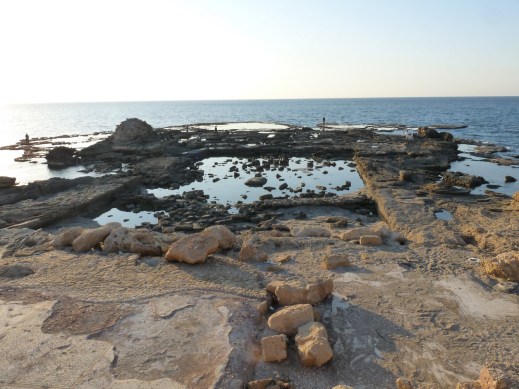
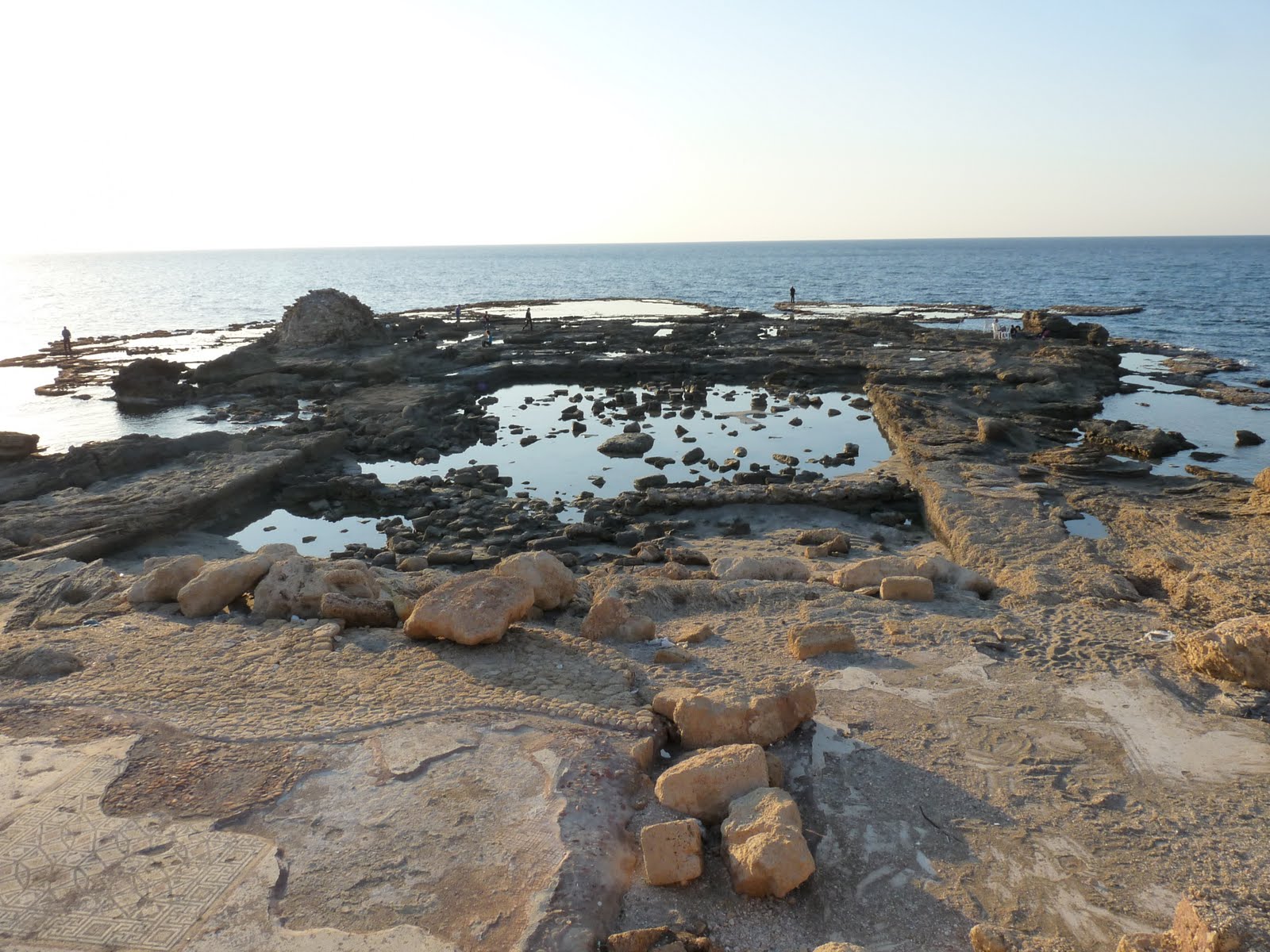
“Hmmmm, this is interesting. I was just here six months ago and this was all covered in sand. Come, check it out.”
I was in the ancient city of Caesarea on the tail end of an 11-day family trip to Israel. Our guide Vivi led us over to a ledge overlooking a fenced-off excavation site on the Mediterranean Sea.
If we stood in this very spot about… 2000 years ago, we would be overlooking the patio of King Herod’s prime real estate beachfront palace, watching him sunbathe by his freshwater pool. Umbrella drink in hand.
Vivi directed our gaze to the remains of a mosaic-tiled floor (see lower left corner on the above photo) that King Herod himself walked upon, perhaps after finishing his water aerobics class. These remains, hidden from the world for centuries, were such a new discovery that this was the first time our seasoned tour guide had seen them.
Archeological eurekas like this are happening all over Israel – in Akko, in Beit Shean, in the Old City in Jerusalem. Israeli archeologists are not just interested in uncovering Israel’s Hebrew and Jewish past, but the history of every empire that conquered and then crumbled here through the ages.
Greek, Roman, Ottoman, Crusader. No matter the era, Israel makes sure to preserve the artifacts of every past civilization that stood on her soil.
At the same time, Israel struggles to make sure that its flag and its people will be conquered no more.
Archeological discoveries, medical advances in cancer and heart disease research, the boom of Israeli high-tech startup companies — this is what is possible in an Israel with defensible borders.
I’ve been home in Rochester for six weeks. Last night, I listened with about 200 others to a presentation about the news in the Middle East given by Israeli professor, think tank advisor, and political commentator Dr. Reuven Hazan sponsored by the Jewish Federation of Greater Rochester.
Considering the ever changing situation in this part of the world, we wondered where he could possibly start. Consider the week’s Middle East headlines.
- More rioting in Syria as the Syrian government massacres its own citizens, even those lying already wounded in a hospital; US and Britain remove diplomats;
- US Citizens arrested and detained in Egypt;
- The Palestinian Authority and Hamas vow to form a reconciliation government;
- Iran’s supreme leader Ayatollah Ali Khamenei endorsed a new doctrine explaining why it would be ‘legally and morally justified’ to commit genocide and wipe Israel off the map.
Within all this turmoil, Dr. Hazan tried to focus on the positive, internal news of Israel. Within the chaotic Arab Spring, surrounded by 21 Arab Nations, Israel is the calm eye of the storm.
- The current Israeli government has been stable since 2009.
- Israelis, who once held security and preventing terrorist attacks as their top priority, are now acting more like their American counterparts in the Occupy Wall Street movement. They want fair housing prices and an even distribution of wealth, just like the 99 percent here do.
- Never before in the history of Israel have the hawks of the Likud party and the doves of the Labor party danced so closely together. They understand that in the 21st Century, land that was always held in regard as a buffer zone for national security against wars fought with soldiers and tanks can no longer keep Israel safe in wars fought with long range SCUD or nuclear missiles.
But still, the need for defensible borders will always remain. Israel is a skinny country. In a weight obsessed world, Israel can’t afford to lose its girth.
To illustrate just how skinny Israel is at its narrowest pre-1967 borders, Hazan explained just how skinny Israel’s narrowest point (9.3 mi) really is: If you poured yourself a cup of coffee for work by the coast and your commute was at the other side of this 9-mile drive, your coffee would still be piping hot.
So, within these borders, Israel watches the developments of its neighbors embroiled in its Arab Spring, and she is very scared.
The border between Egypt and Israel is once again active. Money that could be spent on social issues is instead being used to bolster security. A gas pipeline supplying Israel with fuel from Egypt, as part of the Israel/Egypt peace agreement, has been blown up and disrupted no more than five times in the last six months, evidence that the rioters of the new Egypt want no ties with Israel.
Jordan, another bordering country that has received life giving water and agricultural technology from Israel as a result of peace agreements, cannot control the throngs of people in the streets that recently greeted and cheered a visiting leader of Hamas.
Finally, when questioned about Iran, Dr. Hazan sternly warned us that time with Iran is running out.
An attack on Iran to stop a nuclear genocide would be most successful if Israel could depend on the US for military action. But if necessary, Israel will go it alone. Will the world condemn Israel if it strikes Iran? Sure. But, Israel would rather be condemned and stay in existence than be wiped out and be the world’s darling.
As I listened to those words, I thought back to that moment of overlooking King Herod’s pool. In the face of extinction, Israel is continually digging up its ancient past and busy building its high-tech present, all the while threatened by Iran for its existential future. No matter what sacrifices it makes for peace, no matter how much land it gives back, its sunny coastline with its mosaic tiled floor may very well be the Jewish state’s only peaceful border.
Strike a Pose Just Like A Prayer: Will you Pray this Superbowl Sunday?
Madonna the singer who asked us to “strike a pose” in Vogue, the one who claims to study Kabbalah, will perform the halftime show for Superbowl Sunday.
The other day in my mid-week afternoon Hebrew school class, one boy, after feeling triumphant for correctly reading and translating some Hebrew vocabulary on the whiteboard, struck a kneeling pose ala Denver Broncos Quarterback Tim Tebow.
It seems like spirituality and sports are teaming up more and more. Which I find ironic, because inside houses of worship, my synagogue included, worshippers are becoming more sparse with each passing year. One main reason? Attending religious services on a Saturday or Sunday morning is going head-to-head with scheduled team sports.
I know Tebowing is all the rage these days. Blogger Keith Brown had a recent post showing people Tebowing around the world. Tebowing at the Wall of China. And at the Vatican. And the Western Wall in Jerusalem! Getting down on one knee is hardly striking a Jewish pose of prayer. For one to really strike a pose of piety in Judaism, one needs to look like this:

Yes, it takes a bit longer to put on Tefilin than kneel on one knee.
So, is it okay to pray for one’s team? Does God really care who wins?
In today’s article in New York Blueprint, a website that chronicles events and happenings in the New York Jewish community, rabbis sounded off on the issue of praying for a sports team. While some said that any prayer is important if it is for something you believe in, other rabbis said prayer should be saved for something that has a real consequence.
Many churches and synagogues will open their doors this weekend not only for services, but for people to gather and watch the game. Perhaps, any draw that brings people into a house of worship may ease the way for that sports fan to renew their involvement with their congregation.
Aside from praying for one’s team to win, let’s pick some real reasons to pray:
Let’s pray that no players sustain concussions, broken bones, or life-threatening injuries on the field.
Let’s pray that everyone coming home from a Superbowl Party drives home sober.
For me, my world will keep spinning no matter which team wins. Instead, I will pray for several of my friends, all moms of young children, who are battling cancer.
I will also pray for the safety, and mere existence, of Israel.
I had a troubled sleep last night after watching the news that, fearing for its own existence, Israel is gearing up for a military strike against Iran this spring. They fear it might be too late to stop Iran from building a nuclear bomb.
Israel, staring down into the abyss of another Holocaust, is tired of waiting for sanctions to work. Israel cannot wait for the world to act.
So, I will be praying that somehow, a peaceful intervention will put an end to Iran’s nuclear ambitions for good; and that no nation will have the capacity – or the will – to wish to wipe another country “off the map.”
Acre Eye Candy
Acre, or Akko, is an Arab port city in the north of Israel. It is a city that was built and rebuilt by the Crusaders, and then the Ottomans. Parts of the old walled city are being excavated til this day.
You can look up the history of Akko. I’m just going to show you some nice pictures that will speak for themselves.
Where Getting Rained out can be a Blessing

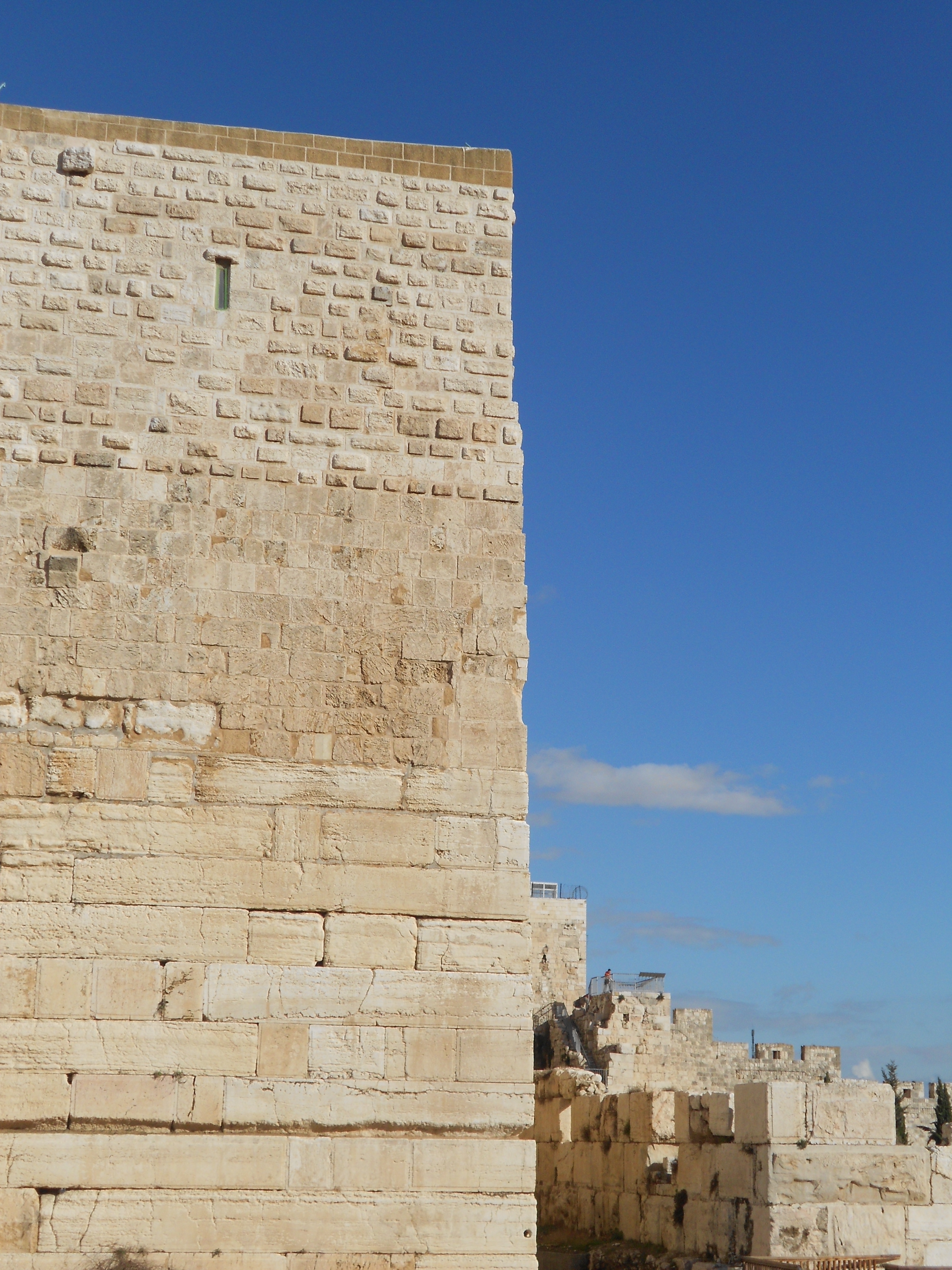
You see that blue sky above the ancient white stones? Beautiful, yes? And not a cloud in the sky. It hardly ever rains here. This is Israel. So, who would imagine our family celebration would be rained out?
Back in July, I went through all the right channels in Israel to reserve my family a time slot at the Davidson Archeological Center (in the above picture) for a second Bar Mitzvah celebration for my son. I pictured a sun-soaked day like the one above. I packed khakis and open toed sandals and cotton button-down shirts for the boys. No ties. Very Israeli. For my daughter and I, flowing thin ankle length skirts. And sandals.
All the while, we’ve been praying for rain each Shabbat. In Judaism, Jews have a special prayer we say between the High Holidays and Passover:
Mashiv Haruach U’Morid Hagashem
Bless you Gd who causes the wind to blow and the rain to fall.
Of course, praying for rain is good for anyplace, but especially Israel. They don’t have the Nile River. Or the Great Lakes. Their main source of water for crops, for their showers and drinking needs, is rain.
Our prayers were answered. And, yes, we felt very blessed in a country that only receives 19.4 inches of rain all year. The rain drenched Jerusalem the day of our celebration. When rain falls in Jerusalem, the sidewalks, made of that white limestone, become very slippery. The rain made it impossible to take out a Torah Scroll in an outdoor setting.
So, inside we went to the Fuschberg Center for Conservative Judaism where we worshipped with ironJew Rabbi Matthew Field officiating:

- My parents, daughter, Nathan and Rabbi Matthew Field

Before our trip , many asked me if we would have Nate’s Bar Mitzvah at the Kotel.
I said no.
I already had that experience – pretty much a slap in the face – at my own “Bat Mitzvah” at the Kotel. Being that I was a girl, I didn’t have to really do anything. But my dad got an aliyah and I got to wave from him from the women’s section.
I have absolute respect for those who pray at the Kotel. I utter my deepest prayers there too. But for me, as a woman, the Kotel is a place for individual reflection and personal prayer. I’m not asking this place to change. It is the Kotel, after all.
But for my family celebration, I wished to have a completely egalitarian service where our family: us, kids, parents, and grandparents, could stand together to celebrate. I also wanted my daughter and I to have a chance to read Torah in Jerusalem.
And we did.
The next day, we returned to the Davidson Archeological Park to explore an area excavated to show how King Herod built an enormous arch (named Robinson’s Arch for the American Archeologist who discovered this place on the Southern edge of the Western Wall) to create a bridge between the upper part of Jerusalem to the Temple Mount.
If you are looking to have an egalitarian service, this is the place. And, pray for good weather of the sunny variety:


Pride, and Shame, in Israel
When I return to the United States, I promise to create individual blog posts about the many aspects of our Israel trip, but there is an underlying vibe in Israeli society today that is making news that I cannot go on any longer without mentioning.
Let me preface all this by saying how overall, I have absolute love for my (that’s MY) spiritual homeland. It is ancient. It is wi-fi’d high tech and hydrophonic modern. Every rock and stone tells a history of the Jewish people and the other civilizations that have come and gone here. I am not a tourist here, though I am living in hotels out of my suitcase. I can get by somewhat with my Hebrew. My kids and I have friends here. Though I am here right now I am already longing to come back again, and wonder how long will that be, and when will I ever be able to stay here for more than 10 or 14 days at a time?
I take pride that my children are walking through their history. More than any mid-afternoon Hebrew school class can offer, they have all week been immersed in hearing people speak Hebrew all around them, witnessing the miracle of chanukkah in the land that chanukkah happened, walking through the tunnels the Maccabees forged to reclaim and rededicate the temple.
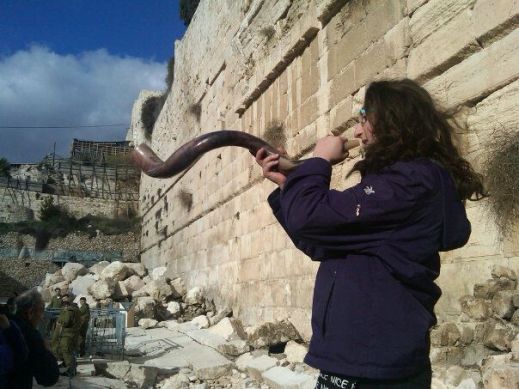
How can I not be proud when I witness how much Israel has changed since my last visits? In 1967, most of Jerusalem’s old city, reclaimed from Jordan, lay in ruins. Now: synagogues have been rebuilt. Archeologic wonders like the excavations revealing access to all the length of the Western Wall of the Great Temple and then the Davidson Archeological Center giving access to all visitors the Southern Wall of the Temple Mount; the fact that my daughter blew her new Shofar in the very place that the Kohanim priests blew their horns to mark the end of Shabbat at Sundown on Saturday night:

The pride of how Israel has preserved artifacts of not only its own ancient peoples but of the cultures of Greeks, Romans, Ottomans, Byzantines, and so many that tried to conquer and occupy Jerusalem. You want to see ancient sites? Greek? Roman? Byzantine? Come to Israel, it’s a historian’s one stop shopping place.
And then the pride of being at the Kotel on Friday night with thousands of Jews celebrating Shabbat and Chanukkah, blessing my children at Judaism’s holiest spot, how could I not feel pride at what Israel and the Jewish people have accomplished?
But then….
I was first very disturbed that first night at the Kotel. As Shabbat descended, men and women gathered to pray on their respective sides of the Kotel. And, like most times at the Kotel, I noticed women standing on chairs, looking over the mechitza, or separation wall, to wave to husbands, sons…
Then, a man came over to them. Shouted to them “Modesty, Modesty!” Get down! Get out of here!”
Slapping their hands. Slapping them. Shooing them away like they were children. Is this how a Torah Jew is supposed to treat the mothers and Daughters of Israel?
Then, more news reports.
- Haredi men saying that women may not walk on the same sidewalks as men in certain towns like Ben Shemesh.
- Haredi men spitting on a seven year old girl and calling her a prostitute because she was not dressed modestly enough in their eyes (the girl was orthodox and she was wearing a long sleeved blouse and a knee length skirt.)
We spend the last two nights at Kibbutz Halavi. A beautiful Kibbutz, a beautiful hotel. But many of the guests were ultra Orthodox Jews. Would it be too much for these, our fellow Jewish bretheren, to return a smile when I gave it to them, to even ask where we were from and make some small chat? Have they forgotten the mitzvah of greeting people with a cheerful disposition? Have they fogotten in their zealousness of making sure that every piece of lettuce and every cut of meat is under the correct hekshcer (kosher certification) that every Jew is responsible for one another and the meaning of Kibbutz is to gather together?
Have they forgotten the words, Henei Matov U Ma Naim, Shevet Achim Gam Yachad – How wonderful it is to gather and sit and be together like brothers?
The direction of religious extremism in Israel is the wrong direction.
The email in the Wall
 I’ve been making final arrangements for my son to have his Bar Mitzvah at the “Masorti Kotel,” a part of the Kotel off to the side of the main Kotel Plaza that is known as Robinson’s Arch. This is the designated spot in the Kotel Plaza that allows for a mixed prayer group of men and women.
How do I know the final arrangements are official? The rabbi of whom I am in correspondence with in Jerusalem cc’ed his email to “hakotel.” Yes, the Holiest spot to Judaism in the world was kept in the loop that my son will be called to the Torah in Jerusalem. Now it’s really official.
There is no way of documenting in words what emotions my family will be experiencing when my son, his brother and sister, parents and both sets of grandparents along with friends and a few surprise guests will come to Robinson’s arch to pray in honor of Nathan’s Bar Mitzvah. We’ve been planning this moment since around his birth.
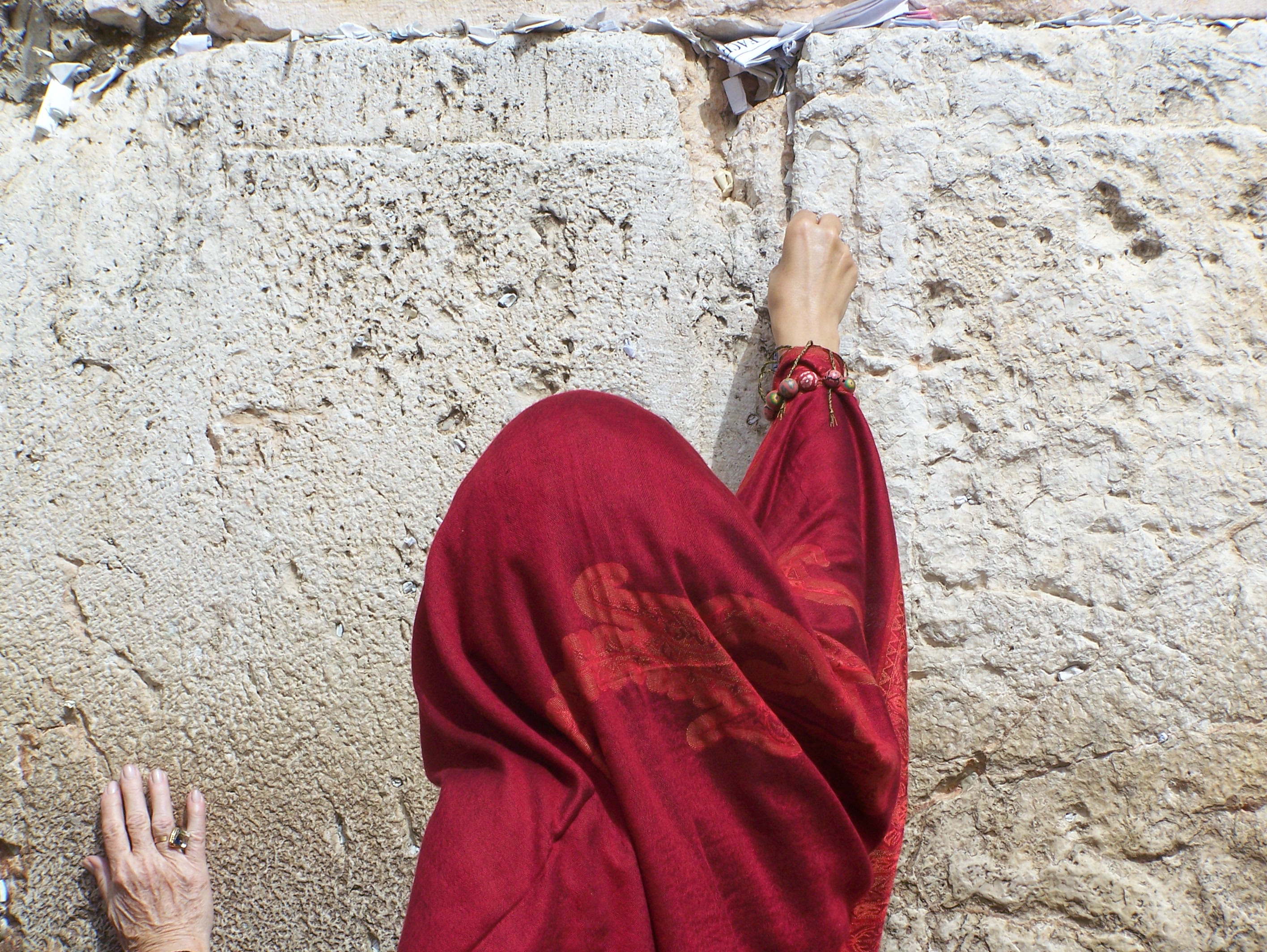
But this story goes back perhaps even farther, it’s a story of the power of prayer and placing a note in the Western Wall, and how Gd answers these notes in Gd’s own time.
Once upon a time, a boy and a girl met one summer at Camp Ramah in the Berkshires. They met through mutual friends on a cracked tennis court. The girl kept missing every shot, and the boy didn’t seem to mind chasing all these balls and retrieving them for her.
The boy really liked the girl. Loved the girl. But the girl just wanted to be friends.
That winter, the boy visited Israel with his family. They visited the Kotel, or the Western Wall. The holiest place in all of Judaism where Jews for centuries pour out their hearts in prayer for a united Jerusalem, for a rebuilt Jerusalem. The boy wrote a note to Gd asking that the girl would one day fall in love with him, his family would be blessed with health, and (a bit of a more material and earthly ask), that he would make it into the Engineering program at MIT.
Within a month of writing that note, the girl (who would be me) turned him down when asked to prom. Within a month, the boy’s sister became seriously ill with meningitis and lapsed into a coma. And, the rejection letter from MIT showed up soon after that.
That boy felt like he was truly being punished by the Divine.
Not to worry. Gd answers prayers. Just not in the instant we would like them to be granted.
The sister of the boy recovered and thrived, went to MIT and went on to finish an MBA at Columbia University, has a tri-athlete husband and four beautiful children, and a thriving cupcake business!
Nine years later the girl that turned down the boy for prom came around and they were married before 247 guests!
The boy in the story is my husband. Whenever we are having an argument, or whenever my husband is getting on my nerves like when he doesn’t like the way I load the dishwasher, I think back to his note in the Kotel, realize that our marriage is meant to be by Gd, so I let it slide.
Now, I’m going back to the Kotel again, the fourth time in my life. No two trips to Israel or the Kotel are ever the same. Each time you go there, you are a different person perhaps at a different phase in your life. So, I’m going not only with my family, but I will also be going as a messenger taking along the notes my students wrote to place in the Kotel.
Most of them.
As my students started their note writing, they had many questions: How will Gd know it’s me? What should I write? How long does it have to be? Can I ask for anything…. anything? Is this a wish, or is this a prayer? And, will it come true, what I ask? How do they keep all the notes from falling out of the cracks?” …. and so on.
I guess this is a lesson to myself that it is hard for a child to know exactly how to compose a prayer of one’s own to be placed in such a holy place when one has only an abstract concept of the place itself. These students have only the most fledgling connections with Israel, let alone an understanding of the emotional impact that a united Jerusalem, and access to Judaism’s holiest site, has on the Jewish psyche. But they did their best, and I answered their questions as best as I could.
A note in the Kotel can express thanks to Gd for the health of family and friends. A note to the Kotel can ask to heal broken friendships or relationships. A note to the Kotel can ask to be provided for, and to never know hunger but one should not ask for “Lots of Money and an iPhone.” A note to the Kotel can ask for world peace and haters of peace, for their plans to be destroyed. But a note should never ask for the death of your enemies, let alone a family member. Gd is not your hitman. These notes will not be placed, nor do they deserve a place in such a holy place.
Am I a Bad Jew? An open letter to Benjamin Netanyahu

 Dear Bibi,
I am writing to you somewhere within the American diaspora. In a few weeks, my husband and I will be taking our children and our parents on our first family trip to Israel. When we get there, I hope that the Israelis we meet there don’t think that we are devoid of any Judaism or Jewish life back in evil America.
Let me explain. I just viewed some commercials made by the Israeli government warning them of the risk of assimilation, of losing their Jewish identity if they move to and remain in America. The Jewish Federations of America, along with most American Jews, took offense.
A lot of controversy has been stirred by this ad campaign trying to lure Israelis living in America to come back home to Israel if they want their own children to remain Jewish.
To those of you not familiar with it, here is an example of such an ad. Basically, an Israeli grandma and Grandpa in Israel are skyping with their family in America. The grandparents, seated in a living room with a lit Chanukkiah (candles for chanukkah, it’s NOT a menorah) in the background, ask their granddaughter what holiday she is celebrating. She joyfully shouts (to her parents’ dismay) “Christmas!”
(this ad has been removed as I write this post)
Here is what I know, good and bad, about Jewish life in America and Jewish life in Israel.
- Israel, you have no better friends in the world than the Jews of America.
- I am involved with the Partnership2Gether program in my city. Each time we are visited by our Israeli counterparts, friendships are forged and dialogues begin about Jewish identity on both sides of the sea.
- The Israelis making their first visit to America greatly admire how hard American Jews have to work to maintain our Jewish ties. Yes, we are pulled in many directions trying to balance secular commitments with the religious. But yes, we enjoy the freedom we have of making our own choices.
- The Israelis who came here greatly admire the role of women in synagogue life. Some of them for the first time saw women serving as rabbis. Some of them for the first time had the honor of being called to the Torah for an aliyah.
- Israelis who visited America expressed their disgust with extremist religious strains that take an “all or nothing” approach to observing mitzvot to the point that rather than trying to observe Judaism to their own comfort level, they have abandoned any Jewish practice at all.
- Yes, some of my middle-school aged Hebrew school students are from intermarriages. And many of them struggle with their identity, especially in December. But we have to respect that non-Jewish parents who love their children made the hard choice and the sacrifice to raise their child in a religion that is not their own. It is a choice they believe in and many try to learn about Judaism right along with their children.
- My students ask if they are a “bad Jew” if their family doesn’t light Shabbat candles every Friday night. They ask if they are a bad Jew if they help their non-Jewish parent set up Christmas lights. What can I possibly tell them? I can’t. All I can teach them are the tools and the mechanics of Hebrew language and the religion. It is up to the individual parents and families to apply or not apply, these teachings in the privacy of their homes.
- Am I a bad Jew if I find myself this time of year humming a Christmas tune? Not really, as Christmas permeates every facet of American culture between October 31 and December 25. For impressionable Jewish American children, it is all the more impossible to ignore. I teach my students and my own children that it is okay to admire the lights and decorations, but know it is not our holiday.
Bibi, I’ll be in Israel all of Chanukkah. Why don’t fly over to the states and spend your Chanukkah in America and see how hard Jewish Americans work to say “no, Christmas is not our holiday. In spite of being a minority, we choose to worship our God and practice our religion the way we choose.”
Isn’t that after all the message of Chanukkah?
About Me

Kreativ Blogger

Versatile Blogger Award


 Stacy Gittleman