
Swirls of Color or Standardized Dots? Keep Arts in Schools
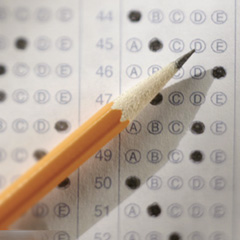
What picture inspires you more.
This?
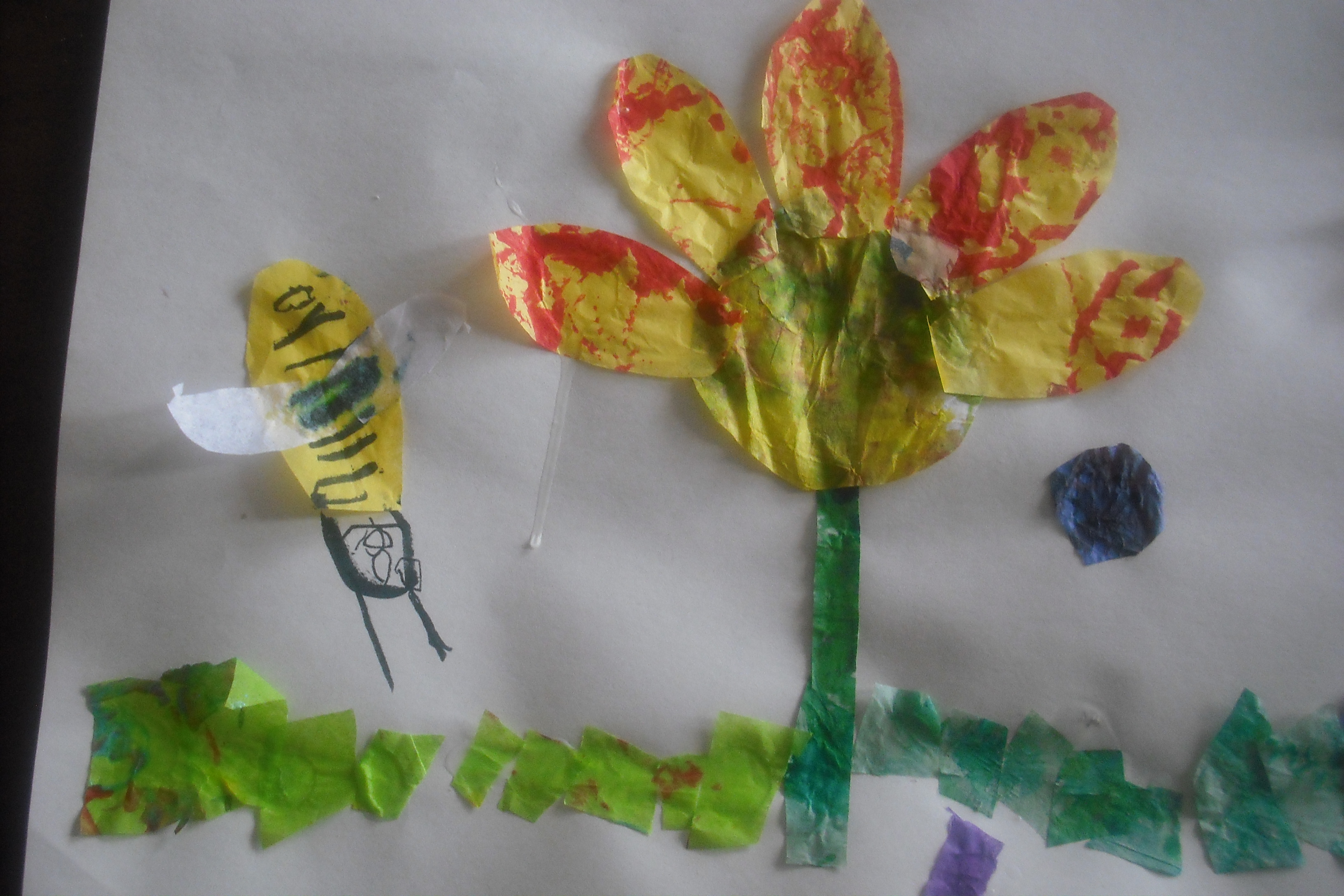
Or this?
If public school budgets continue to shave and slash away at the arts, the black and white dots of those “No Child Left Behind” standardized tests are all that will be left of our children’s public school education. Teaching to the test leaves no room for imagination, creativity, real thinking or problem solving. What it has resulted in is burned-out stressed-out teachers and students.
This is according to an independent documentary called “Race To Nowhere” that is sparking a grassroots movement to reshape how we educate our public school students. I look forward to seeing a screening of this independent movie in Rochester, NY, at Nazareth College on April 4. The movie screening is being sponsored in part by a private Jewish day school, Hillel Community Day School.
The film challenges parents, educators, and policy makers with this question: Are we doing right by our children? Is the pressure to succeed in standardized tests really preparing our children to become capable, inspired and motivated individuals ready to tackle college or the workforce?
When school budgets get tight, the arts are the first to get cut. In fact, schools in the Rochester area are seeking to reduce some of their arts budgets by 50 percent.
Is music, art and sculpture really that expendable? Is painting, singing, and playing an instrument such a frivolous part of a child’s education that it should be considered a fluffy extra that can be easily eliminated from his academic career?
Absolutely not, according to Americans for the Arts. Young people who consistently participate in comprehensive, sequential, and rigorous arts programs are:
- 4 times more likely to be recognized for academic achievement
- 3 times more likely to be elected to class office within their schools
- 4 times more likely to participate in a math and science fair
- 3 times more likely to win an award for school attendance
- 4 times more likely to win an award for writing an essay or poem*
When was the last time your child stood at an easel and held a brush full of paint? Or perhaps, in the spirit of abandoning everything for creativity’s sake, she ditched the brush and instead joyfully found herself up to her elbows in paint, as her hands and fingers glided across the paper.
Indeed, art is messy. When was the last time you let your kid get messy at home with some paint or clay? Overheard once in a preschool hallway: “I’m so glad they paint here at school, because at home, we don’t let him do that.”
Might as well draw a dagger through a teacher’s heart.
Video games and television are not messy. But they don’t do much to fire up the brain neurons either.
Art on the other hand unlocks creativity in children that leads to story telling, pattern recognition, and understanding other cultures. It is simply the expression of life that makes life enjoyable. Art enables quiet kids to tell stories. Art calms and centers otherwise boisterious kids. It is a positive way for them to control the environment around them. A blank piece of paper or a lump of play dough can become a whole universe that they can master.
The above picture was created by a very precocious preschooler who patiently sat, cut and created a composition. Imagine what that same child can do when she gets older in an art class?
If a child is not going to be exposed to the earts in their earliest school years, then where will they get the opportunities? If arts are cut in public schools, there are private arts classes that parents can enroll their chilren in most towns and communities. But they cost money. So, cut the arts in public schools, and access to arts will only be possible to the families who can afford them.
And the rest? GThe only drawing less priveleged kids are going to do in school are the dots and circles they create on a standardized test.
Stuck at the Airport with Kids? Here’s what to do!
 As I write this, the curse of the Philadelphia International Airport has struck my family once again. I last saw my husband through half-asleep eyes as he kissed me goodbye at 4 a.m. last Sunday. A conference out in California was taking him away during our February “vacation.” My vacation home with the three children. He is now stuck in Philadelphia. I’ve shoveled nine inches of snow off our driveway. I really don’t know when he will be home.
I am sure that the curse of delayed or canceled flights due to the weather is not reserved just for those in the Philadelphia airport. No, with this winter, and this winter vacation coming to a close at the same time another snowstorm rattles our air traffic patterns, our story is not unique.
So this blog post is dedicated to all of you out there who have been stuck at an airport with children.
I really think that going away to get a few days of sunshine over February break is just not worth it in our age of “Welcome to the Hellish Skies.” Indeed, we did a few years ago make an attempt at a Florida getaway. But due to storms, we instead had a 13-hour destination vacation to the Philadelphia International Airport!
My son, an avid New York Mets fan, was dressed head to toe in Orange and Blue Mets paraphernalia. He cowered the whole time in his jacket, hood pulled up all the way. He actually believed that because he loved the Mets and hated the Phillies, someone in the airport of the City of Brotherly Love was going to kill him.
Our efforts to escape the cold of Rochester for just one week had failed. We missed our connecting flight from Philadelphia to West Palm Beach. Every flight to southern Florida was booked and overbooked for the next three days.
As we looked at the flight board, we slowly came to the harsh realization that the palm trees of our vacation dreams had been yanked out by the roots. We could stay in the airport as standby refugees, or head back to cold icy Rochester. We were not going anywhere.
But then I had an epiphany. I realized, Hey! We are still on vacation! Vacation can be a state of mind, even if you did not make it to the Sunshine State.
So here are my hard-earned tips of what to do you if you are on a 13-hour standby hoping in vain to get your flight to paradise:
- Immediately go to the “customer service” line and demand you get a pillow. Take two or three and don’t feel guilty. The airline has ruined your original vacation destination and they owe it to you to make you as comfortable as possible.
- Forget the food court. You are on vacation and deserve the best of airport dining. In our case, it was Applebees. Any frugalities of ordering from a restaurant menu with children- like sharing – should be lifted. We were on vacation. Kids, if you want a beverage other than water, go for it! That naturally blue-colored smoothie? Go for it!
- As far as the adults in your party, order an alcoholic beverage. You are going to need it.
- After your meal, order dessert. Those desserts that stare at you all throughout your meal from those triangular placards placed strategically on the table. Remember, this may be your only vacation meal!
- After your meal, don’t bother checking on your flight status. You know you are not boarding any time soon, if you board at all.
- Find out if the airport you are stranded in has a Sharper Image or a Brookstones. Loiter there for an hour or so. Spend most of this time on one of their massage chairs. Ignore looks from salesperson.
- Is the hot stuffy airport getting to your children? Do what my kids did and let them pretend that the bathroom is their own personal water park. Cool off by dunking your child’s head in the sink. Just like dunking into the pool at grandma and grandpa’s condo. How refreshing!
- Around 10:00 p.m., entire sections of the airport should be clear enough to let your kids run completely wild. Make sure you pack a jumprope and maybe some in-line skates in addition to some healthy and sugary snacks.
- At 11 p.m or later, if you are still waiting on standby in a nearly empty airport, abandon the rule about indoor voices. And the no running rule. And the no climbing and jumping on furniture rule. Moms, that glass of wine at Applebees must have worn off by now. Use the extra space to do a little yoga stretching to relieve the stress.
Airport authorities, if you cannot tolerate the wildness of unruly children, who have spent over 10 hours cooped up in your airport, you should have done more to get good, hardworking parents to their original vacation destinations. Airlines, you should have done the decent thing and not have overbooked your flights. So go ahead kids and parents, make all the outdoor voices, and screams, and wild laughter you can conjure up. This is family time!
YOU ARE ON VACATION, REMEMBER?
A Share in Community Supported Agriculture: Let the Adventure Begin

This week, a friend and I put down the down-payment on an epicurean adventure we will be taking this summer.
Why is it an adventure?
Because we have signed on and invested in a local farm, and all the risks that go with farming. We are taking a bet on Mother Nature that she will bestow upon our local farm the perfect conditions for growing a bountiful crop this summer.
Because this summer, we will have to get very creative with kale and beets.
The rising demand for locally-grown produce and sustainable farming methods has created opportunities for developing a connection between enterprising young farmers and suburbanites through a movement called Community Supported Agriculture, or CSA.
In December 2001, one source reported a net total of 761 CSA farms registered with USDA. By 2007, an agricultural census conducted by the USDA tallied 12,549 farms that marketed products by way of community supported agriculture (CSA).
Most of these CSA farms are located in California and Texas. Right now, in New York State, there are about 200 farms that use CSA as a method to market their crops.
Oe of them is the East Hill Farm CSA in Middlesex. It is the project of the Rochester Folk Art Guild a sustainable community of artisans and farmers who have worked and created on this farm since the 1960’s.
Though the ground is still covered with snow, the East Hill Farm managers are busy ordering vegetable seeds, recruiting volunteers and processing CSA membership applications. Over half of the farm’s 80 shares have already been sold. A membership for 20 weeks of produce costs $500, or $490 if purchased before March 1. Shares include a wide variety of vegetables, as well as fruit in the later part of the season.
Information on getting a CSA share can be found at www.easthillcsa.org or by calling the JCC at (585) 461-2000. At the website, one can even sign up for a “CSA buddy” to split a share if a boxful of veggies every week may be just too much to consume.
The East Hill Farmers represent a new generation of farmers who may not necessarily have a background growing up on a parent’s or grandparent’s farm. What they do have is a passion for growing food with organic and sustainable techniques.
Cordelia Hall grew vegetables as a child in a community garden and then became part of the “guerilla” urban gardening trend while she was a student at Boston University. Now in her third year as co-manager of the farm, she has observed and worked on farms in Tanzania, New Zealand and Mexico.
Thomas Arminio, another suburbanite-turned-farmer at East Hill, said his experience in farming has taught him that timing plantings just right is crucial for having successful crops. A native of New Jersey, he is looking forward to growing interesting varieties of melons and root vegetables along with heirloom tomatoes, beets, Swiss chard and lettuces.
So, this summer, I can actually say I have become acquainted with the people who will grow my food, because I interviewed them for my column and this blog post. You just can’t say that buying a plastic-wrapped package of hothouse tomatoes from a big box warehouse store or the supermarket.
As I get my box of veggies for the week, I’ll write about what I got, and what I made, so stay tuned.
Snow Blower vs. Snow Shovel
So here we go again. Another week, another snow storm.
And this time, Rochester isn’t going to get off Scott-free like we have so far this winter. As we await the next deluge of snow, I know you are all sick of it. But up here in Rochester, we’ve only had 77 inches fall this winter. Only. But only in terms of “lake effect” showers and flurries. Never a mention of a storm. Just enough snow to fall each day to cover the ugly grey snow. And not enough to justify a snow day.
But our day may be coming this week. Finally!
This is a piece I wrote a few years back that I figure would be very timely right about now. I know it’s tough, but do try to enjoy and appreciate the quiet and beauty of the snow. Because in a few months, we’ll be wishing for some cool weather.
We actually do have a snow blower. A Toro Powerlite snow blower that our relatives gave to us as a housewarming gift when my husband and I moved to Rochester from New Jersey with our two small children nearly a decade ago. It is nestled on the left side of our Tudor’s tiny one-car garage – a garage that was built to fit 1920’s model cars, not today’s SUVs or minivans. Over the years, it has certainly served us well. My husband uses the snow blower on mornings when he has to get out early On early winter mornings I often wake to the sound of him repeatedly pulling on its cord to get it whirring to a shuddering start, the smell of the gasoline seeping upward from the garage directly overhead to our bedroom.
But I left the snow blower in the garage today and opted for my ergonomic snow shovel. If I used the snow blower, I wouldn’t have delighted in the soundlessness that a snowstorm creates, the snow’s ability to absorb noise in our motorized world. I wouldn’t have had the chance to watch the snow change from white to the slightest tinge of blue when it is pushed aside by the shovel’s blade. Or hear the chickadees chirping in the backyard and think about how I may at some point want to train them to feed out of my hand.
The snowy weather does get a bit old here in Rochester, here at January’s end when at least two more months of snow await us and with the knowledge that we could not afford plane tickets to Florida for this year’s February break.
You can’t stir a sleepy child out of bed at January’s end with the exclamation of
“Look! It snowed last night”.
Maybe you can get away with that in November, or even mid-December, when snow is still a novelty. But when one’s alarm has been buzzing before dawn since November, and grass and brick and garden beds have not been seen for over a month, the child looks at you as if to say “big freaking deal, MOM” and rolls over in a vain attempt for one more minute of sleep.
We are not bears. And we cannot sleep all winter. So out we go into it. Whether it is to school, work, food shopping, we must.
And you know something? If you are wearing enough layers, and there is no bitter wind to bite your face, shoveling snow by hand, and then taking a walk in it can be very invigorating, just about as invigorating as the Zumba class that I decided to blow off today. As I walk, I turn my feet outwards, and then in, just like that boy in Ezra Jack Keat’s beloved children’s book. (Need I tell you the name?) I think about diverting my children from the television and getting them into the snow to play as they get off the schoolbus. I feel the gentleness of the flakes hit against my hat. And when the one other person out walking today in my neighborhood passes me, we smile at each other knowingly, as if we are privy to a very well kept secret.
As I turn home, an enormous truck with an eight-foot high snowplow turns the corner and packs the snow bank blocking our driveway even higher. Okay, there is no romanticizing anymore, and I head to my garage to start up the noisy, smelly snow blower.
The First Christmas in 87 Years Without a Neighbor

No one lives here anymore, but a wreath was still placed upon the door
Do you believe that houses have feelings? I think they must. If they are old enough, and if they hold decades of family memories, of laughter and conversations and arguments, and now they are quiet, I think they must.
The house next door has got to feel very lonely this Christmas. For the first time since it was built, in 1925, it stands empty. No tree. No family cooking dinner inside. No rush to open presents. Inside linger memories of 87 Christmases. It must be waiting for the time it will once again be loved and lived in by another family.
My neighbor sadly passed away shortly before Thanksgiving.
The first time I met Charles “Bud” Strobel; he knocked on my door and politely asked if he could use my telephone. His was out of service, and he had to make an urgent phone call. At the time, Bud was a real estate attorney working on a house closing. At the time, Bud was 90 years old.
Bud lived to be 102. Bud lived independently in the house that was his wife’s parent’s home for nearly all of those 102 years. He lived a life that set examples for us all to follow. He always greeted us cheerfully from his walkway and bestowed other-era salutations to my children like “Hello chum!” and “How are you, my Huckleberry friend?”
Bud, according to his daughter’s beautifully written eulogy, was very athletic in college and throughout most of his life. Even into his nineties, my husband and I could see a sihlouette of him lifting small handweights through his bedroom curtain.
No matter the season, he took daily walks around the neighborhood. Using a cane and a walker in recent years did not deter him from getting out for a stroll. He drove his car until he reached his mid nineties. He always left the house dressed in khakis and cashmere sweaters to socialize with his friends at the Rochester Yacht Club.
One winter night, his daughter from South Carolina called me, worried that her dad was not answering his phone. Indeed, his car was not in the garage. It turns out that he was out for dinner at the yacht club with his “younger” friends who were in their 70s and 80s.
Bud loved the gardens around his house though he didn’t do much to care for them. That was his wife’s passion. After she died in 1997, her flowers and roses seemed to thrive on benign neglect.
From her bed, as she lay dying, she watched the pink flowers of our crabapple tree bloom. Bud said seeing that tree bloom gave her great pleasure in her final days.
Each spring Bud came out of his house to mournfully gaze at the pink of the tree. We could only imagine he was thinking of his wife as the petals fell to make a pink carpet on the lawn.
I never met Bud’s wife, as we moved here in 1999, the first family to move onto the block with kids in a generation. In some ways, like my gardening, Bud said I reminded him of his wife. He said that she and I were both “demon gardners.”
After the first year of tolerating these thorny barberry bushes that separated our properties, I asked if he would be receptive to removing them and replace them with a perennial flower garden.
In his dry sense of humor, he quipped, “My mother-in-law planted those bushes decades ago. I’ve always disliked them. She’s long gone, so I can’t see why they can’t go now too!”
This narrow garden became a vehicle for many conversations between Bud and I in the summer. Each spring, he would come out of his house and ask me “Hey demon gardner, what are you going to plant this year?” And I would show him my bags of spring bulbs or the perrineals in pots I would plant.
I’m going to miss Bud. He spent the last year of his live living down south near his daughter and he died peacefully there.
The end of Bud’s life means the end of three generations, maybe four, who had memories in that home. Those memories, and the house that houses them, is a hefty bag to unload. Even now, that there is no one in the house, his daughters hung a wreath on the door before heading back south after Bud’s funeral.
Bud was a good neighbor and though I know I was busy with raising my kids for all the years we lived next door, I hope he thought we were good neighbors too.
I don’t know what is going to happen to the house. I don’t know how or when Bud’s family, who live in Texas and South Carolina, will return to Rochester to go through 87 years worth of stuff and put his house on the market. And, after 87 years, the house will need some love and TLC and a good hefty rennovation before it finds a buyer.
So, even though I’m not Christian, all I want for Christmas – for next Christmas – are new neighbors.
Ice Cubes in the Toilet and other Tips to make a Snow Day
 Tonight, my kids will most likely go to bed wearing their pajamas inside out. The youngest will have tucked a spoon underneath his pillow. My daughter told me that at middle school, the bets were already on at school today as to whether tomorrow would be a snow day. After all, that storm that slammed the midwest has now put Rochester in a “persistent band of lake effect snow.” And here in Rochester, we may be getting 1-2 feet of this lake effect snow. All this snow, yet not a single weather report has used the word “storm” or “blizzard.”
When my oldest children were very small, I feared that they would grow up without having a chance to play in the snow. Their first winters in New Jersey passed with hardly a flake. Then, we moved to Rochester.
Moving to the snowiest metropolitan area in the lower 48 meant that we would have plenty of chances for snowball fights and snowman building. We also needed to adjust our perception of what constitutes a significant snowfall.
You see, we started our family in New Jersey, in the land of 2-inch snowfall snow days. One morning, when my daughter attended preschool at the Scotch Plains JCC, I bundled her up, along with her infant brother, to go to preschool. I traversed 2-inch snow-covered roads, only to find the building was closed.
Fast forward to a year later, One morning, after a three-inch overnight snowfall, I actually called my daughter’s preschool – this time at the JCC of Greater Rochester – to see if it was open.
I think I heard the director silence a chuckle as she politely told me that schools here don’t close unless there is at least 18 inches of snow.
For schoolchildren and adults alike, nothing is more exciting than the possibility of a snow day. And when I moved to Rochester, I thought that we would be having a lot of those days that are like gifts from God. Snow days are like God’s way of telling you to slow down, sleep in, stay warm, bake cookies.
Well, the Rochester School District seems to care little about what God wants, because nary a snow day have we had since living up here in the snowbelt.
It’s been 11 years and my husband has yet to have a snow day from work. No, wait. The only “snow day” at his job had been in the summer. Why? It wasn’t because of snow. Contrary to popular belief, it does NOT snow in Rochester in July.
It was a tree that fell on a transformer and blew the power out at his office.
So, on snowy days, my husband braves the snow. He plows himself out of the driveway in the dark of the morning, and then plows to get back in the driveway in the dark of the evening.
Rochesterians are very lucky to have the equipment it takes to fight against Old Man Winter. Brighton tax dollars – more than half a million each year — are hard at work so in the early morning hours, I can hear the sounds of snowplows large and small clearing our roads and sidewalks.
So, before I go to bed tonight, I will check the forecast one more time. And if I hear those blessed three words “Brighton Schools Closed” on the radio tomorrow morning , I know will be too excited to go back to sleep.
But I know school will be on tomorrow.
In spite of the spoons
and the inside-out pajamas.
and the ice cubes placed in the toilet.
Because, in reality, it’s just too early in the season to cancel school tomorrow. After all, technically, it is still Autumn. And this is Rochester.
A Small Chanukkah Miracle at Checkout Aisle Number Eight


“Are you doing anything special this Hanukkah?”
I guess Steve the check-out cashier figured out I was Jewish. After all, from my grocery cart, I unloaded a bag of potatoes, onions, some Chanukkah napkins, blue and white M&Ms and a box of beeswax candles.
“Not much,” I replied. “Just going to my son’s band concert tonight, and then down to New York City for a family occasion.” I didn’t want to say it was for a Bat Mitzvah. That’s just too complicated if you don’t know what a Bat Mitzvah is.
“Ooooh, New York City! That’s where they seriously get into Chanukkah! I mean, the big menorah displays, and the food — the matzah ball soup! Even in the diners, they make French toast out of challah down in New York City,” he went on.
Now, you don’t have to be Jewish to love matzah ball soup or challah French toast. And, I am pretty sure, you can get challah French toast up here in Rochester.
But the sentimentality in his voice towards matzah ball soup, the way he so dreamily spoke of the menorahs as he scanned my clementines and sweet Mayan onions, I had to ask:
“Um, are you Jewish?”
Now, this is not a question I would ask a complete stranger. But around this time of year, when the enormity of Christmas seeps into every crevice of the American landscape, Jews have this desire to connect to one other, to stick together. Judaism as a topic of conversation is a subject that would be avoided by the most disenfranchised, unaffiliated Jew for most of the year. But talking about one’s Jewish identity in the face of Christmastime, is, like a plate of freshly fried potato latkes, on the table and up for grabs.
At any other time of year, a suburban housewife and a 20something college kid working in a grocery store wouldn’t openly discuss being Jewish. But that night, right before the lighting of the first Chanukkah candle, amidst the Christmas Muzak playing and the Christmas tree displays twinkling, it felt like the right time.
As he carefully bagged my groceries with the expertise only possessed by a Wegmans employee, Steven continued to tell me his plans for the Festival of Lights.
“Yeah, there’s this Chanukkah celebration thing going on at the University of Rochester tonight. From – you know – Hillel? I think I might check it out. I haven’t gone to many Hillel events, but I think I should check it out.”
“Good for you!” I replied. This did my heart good. I told him that I worked for the Hillel – the organization that supports Jewish life on college campuses around the world – a number of years back. With so many negative statistics out there pointing out the demise of Jewish practice among today’s young American Jews, Steven telling me of his plans to do something Jewish, to be with other Jews that night, just made me feel all warm inside.
Chanukkah is such a small holiday in importance on the Jewish calendar. But it celebrates something so big – the world’s first fight for religious freedom. It was the first time a people – though meek and small – said NO to an occupying power. Judah Maccabee and his brothers were the first who had the chutzpah — the balls, if you will — to say, NO! We will not stop being Jewish. We will not stop teaching our children how to be Jewish. You can put up statues of your idols, you can outlaw Jewish practice, you can threaten us, but we will survive.
And survive we did, and we have, in spite of history. And in spite of the dreary outlook for the American Jewish landscape, Steven, the college kid who worked at Wegmans, was going to go out of his way to celebrate Chanukkah, to celebrate being Jewish.
Happy Chanukkah to Steven and to all who celebrate freedom.
Over the River and Through the Woods: Tips from Thankful Road Warriors

How do you get from here to there?
Thank goodness for Thanksgiving. The long weekend affords most of us a breather from modern life’s breakneck pace. We pause to focus on coming together with family and friends, preparing a meal, tossing a football and sleeping late in your own bed.
But, if you are like my family – transplants – Thanksgiving means hitting the road. Or, heaven forbid, the airports. That is the only way the family-coming-together aspect of the holiday happens for us.
In our case, traveling is not as idyllic as over the river and through the woods. It’s more like Down the Thruway and over the Outerbridge Crossing to Staten Island We Go. Where there are hardly any woods left to go through.
For eleven years now, we have traveled to see our family every Thanksgiving but one. This is another consequence of being Transplantednorth. If you leave the area where one’s family roots are still entrenched, the roads are rarely traversed the other way. It’s just expected. We are the only part of the family “upstate.” We left. Everyone else still lives Home — the New York Metro Area. Or, in a term I only learned when transplantednorth – “downstate.”
And on Thanksgiving, just as the larger planet pulls on its smaller orbiting moons, down the Thruway we go.
One especially hectic year, we stayed in Rochester for Thanksgiving. The weather was beautiful – warm even — and we spent a relaxing weekend feasting and playing into the evening at the Brighton Town Hall playground. I prepared perhaps the only Thanksgiving feast I will ever make. I made the turkey on the barbecue. I made a chestnut stuffing ala Martha Stewart. Everything tasted delicious. But the lonely looks on my childrens’ faces taught me a lesson: Thanksgiving tables are too empty without grandparents, aunts, uncles and cousins.
So, after traveling for 11 years with two and then three kids in tow, I have become thankful for a thing or two on what I have learned and would like to share them with you, especially if you are a novice at parenting on the go:
- I am thankful that cries for Sippy cup refills and diaper changes have been replaced by three contented souls in the back who can pass snacks to each other, operate the remote to the car DVD player, and participate in family sing downs and games of 20 Questions.
- I am thankful for every rest stop we have discovered between here and there, especially to kind workers who have supplied us with buckets, hoses and slop sinks for carsickness cleanups. Really, if you do have a kid that gets sick in the car, find a truck stop like the Flying J Travel Plazas that have showers and washing machines. The folks there are all too kind to help you in your distress.
- I am thankful that we finally come “home,” we have relatives who bound down steps and out into driveways to greet us, no matter the lateness of the hour.
In our 11 years of travelling down to New York City, here are my family’s dos and don’ts when traveling the Western New York-to-New York City Route:
- DO strap everything down very carefully. On our first trip back to Rochester, on a windy, windy passage of Route 78 in New Jersey, our Peg Perego Stroller came loose and flew off our roof rack. One minute, there it was, and then it was on the side of the road, thankfully killing or injuring no one in its catapulted flight.
- If you are traveling with very young children that might become carsick, but may not alert you at the most opportune time that they will become carsick, DO pack a puke kit. This kit includes a roll of paper towels, a bottle of Lysol all-purpose liquid cleaner, and a change of clothes that is easily accessible.
- If traveling with those same small children, DO invest in one of those Art Cart on the Go Tables that can be placed over a child’s lap. The Art Cart has legs that double as side pockets that keep paper, crayons and markers handy. Or, in the worst case scenario, those pockets also can come to the aid of the carsick child. I speak from experience.
- For a meal break, DO stop in Scranton or Dickson City, Pa. It is exit 191 A or B on Route 81. Home of The Office, it is a great little town to stop for meals. If we hit Scranton for lunch or dinner, we eat at Tonalteca. The place is clean, the decor features hand crafted carved booths from Mexican artisans, and there are plenty of choices for vegetarians. The guacamole is outstanding. And, for those of you who get stir crazy in the car, they play great salsa music in the bathroom. If they have the security camera going by the sinks in the ladies room, they might have footage of me doing some salsa steps I learned in Zumba for all I know. Anything to work off that guacamole.
- DON’T stop in the Poconos for any reason. There really is no place to stop. The gas stations for bathrooms have nothing more than outhouses or bathrooms around back that you have to carry in those huge keys for admittance. And, if you see a billboard for The Cheesecake Factory, don’t believe it. No, it isn’t The Cheesecake Factory, the upscale eatery. It’s just – a cheesecake factory. So, unless you want to sit in your car with your family consuming a cheesecake for a meal, ignore the sign and keep driving.
- DO find the small village of Whitney Point along Route 81 and stop at Aiellos Italian Restaurant for the best pizza you can find in Western NY. And I am not saying this is good pizza for Western New York. I mean, this is thin-crust Brooklyn Pizza that somehow found its way to Western New York. And, the quaint restaurant in the back will be decked in its Christmas decorations this time of year. You won’t want to miss out on this.
And as for traffic…..
- DON’T be anywhere near Binghamton or Syracuse on Sunday afternoon if you can at all avoid it: college kids coming back from Thanksgiving break.
- DON’T go near the Delaware Water Gap if you don’t want to get stuck in traffic during peak hours
- DON’T go over the George Washington Bridge or traverse the Cross Bronx Expressway. Ever.
Safe travels to you and a very happy Thanksgiving.
Sorry Yemen, your mail bombs didn’t stop the Global Day of Jewish Learning

Chef Tal Renan cooks up vegetarian food - just like he made for Oprah
The foiled Yemen plot to bomb synagogues in Chicago occurred so closely to two occasions on the Jewish calendar – one historic and one contemporary – you have to wonder if the timing was planned or if it was an eerie coincidence. Had some terrorist in Yemen checked a calendar to see if something important was coming up on the calendar within the global Jewish community?What if the terrorists from Yemen did intentionally plan the bombing of Jewish institutions one week before the Global Day of Jewish Learning, which was planned in 350 communities around the world? What if it had succeeded, as terror plots did against Jewish institutions in Mumbai, Buenos Aires, and Casablanca?In the spirit of this learning event that celebrated asking Big Questions, I’ll add mine: If the Yemen bombing had succeeded, would Jewish learning and teaching on November 7th still had happened?Thankfully, this time, we will never know. This past weekend, synagogues and Jewish community centers all over the world were brimming with people listening, speaking, dancing, drumming, and of course eating, in a Jewish way. The Global Day of Jewish learning was held in honor of an esteemed Jerusalem Rabbi, who on this day will finish five decades of work interpreting the Talmud, a sacred book of Jewish commentary, making it accessible and more understandable to today’s Jews. So no, in honor of this milestone that took a half-century to reach, we weren’t staying home on account of a package. We were ready to learn and tackle questions, in my community and others, like
-
What is Jewish Mysticism?
-
Why do Jewish holidays happen late or early, but never on time?
-
How can God be both loving and mysterious?
And, in my household….
-
When will the newest version of Shalom Sesame Come out?
In my community, we came out to listen to keynote speaker Rabbi Lawrence Kushner, author many books, including I’m God and You’re Not, wich was released this Fall We learned about Jewish vegetarian cooking from Chef Tal Ronen, who has cooked for Oprah Winfrey and the Dali Lama. Our kids learned Krav Maga, the Israeli martial arts, and explored Psalm 150 through drumming with percussionist Mike Mason.A separate track was offered for area Jewish educators, where we learned to fascinate our students with the art of storytelling, how to weave the narrative of Israel into any lesson, and how to excite and engage Jewish kids who, let’s be honest, may not be thrilled about coming to Hebrew School in the first place.The second occurrence on the Jewish calendar so close to these planned bombs from Yemen will be commemorated tomorrow. On November 9, 1938, the Nazis unfurled Kristalnacht, their own terror campaign, on the Jews of Germany. On the Night of Broken Glass, 1,350 Jewish synagogues were burnt to the ground or destroyed; over 91 Jews were killed; 30,000 Jews were thrown into concentration camps; 7,000 Jewish businesses were destroyed; and thousands of Jewish homes were ransacked. It was the beginning of the end of European Jewry in the 20th Century.It may seem like a date that is far in the past, but in light of the foiled attacks from Yemen, it brings it all too close to home.One thing that did keep the 600,000 Jews of Los Angeles away from their day of Jewish Learning was poor planning. Unfortunately, the LA Day of Jewish Learning was cancelled because of low enrollment. Why? A long-held community day of good deeds (mitzvot) was planned for the same day and the community just couldn’t compete with itself.Someone wasn’t checking their calendars.
Bye-bye Tar Beach, Hello Green Roof

Growing up in Brooklyn, if you couldn’t make it to the real beach on a hot summer day, all you had to do was go up to Tar Beach. Did you go to Tar Beach?
“It was really hot up there,” my mom told me on a recent visit, as she told me about how she and her friends would spend hours up on the roof using sun-reflectors even to maximize their tans. Ahh, the good old days!
Tar roofs, though hot and contributors to global warming, made great song material, though, you must admit.
The Drifters sang about the sun burning the tar up on the roof in “Under the Boardwalk” and how to forget all your cares “Up on the Roof.” Elton John sat up on his roof and kicked off some moss in “Your Song.”
Perhaps Elton should have cooled his boots for a moment and left the moss alone. Growing plants on roofs — from vegetable gardening to sophisticated sod membranes that soak up urban water runoff and cool the air — are becoming a required building material in cities like Toronto and Chicago.
I know that tar roofs are not exclusive to Brooklyn, no matter how Brooklyn-centric my point of reference may be. In fact, cities like Chicago, where new laws are in place requiring new buildings to have green roofing materials, the temperature on a tar roof can be 78 degrees hotter than that on a green roof.
Walk across any asphalt parking lot on a summer day and then walk across a green lawn. You don’t have to be a scientist writing a big fat feasibility study to understand how black top paved surfaces and roofs heat the earth and green areas have the potential to cool it.
In Rochester, NY, The Harley School is employing this technology as one long-term science project and can boast that they are the area’s first school to have a green roof. This sustainable technology will not only act as a natural insulator, keeping the school warmer in winter and cooler in summer, but it will teach its high school students about how buildings affect the environment.
The tar roofs of the past, according to environmentalists, are the bane of city living because they create urban heat islands and contribute vastly to water runoff. Rather than being just a green trend, cities such as Chicago and Toronto require roofs of new buildings to include cooling, greenhouse-gas absorbing plants.
The Harley School on Oct. 18 installed two 10 x 10 ft. plots of hearty winter grass on the roof of their building on 1981 Clover St. The school spent $2,000 for materials and also received an in-kind installation and materials donation from Zaretsky & Associates landscapers in Western New York. In order to grow a section of green roofing, school engineers had to assess if the school’s roof could withstand the additional weight of a weatherproof membrane barrier, two inches of topsoil, the weight of the growing plants, and the water they will retain. The grassy roof serves as a natural insulator and will keep the building cooler in the summer and warmer in the winter. School officials expect to reap the benefits of these initial costs within 3-10 years.
Peter Hentschke, a science teacher who will be working with Harley’s upper classmen on researching the impact of the green roof, said the project provides students with hands-on learning. The students will develop mathematical methods and equations to determine how much energy their school saves by comparing temperatures of the school’s different roofing materials. They will also calculate how water runoff is affected by the green roof.
“Rooftop plants catch rainwater and runoff that would have ultimately run into the sewer and overburden water treatment centers. The students are tracking current rainwater runoff with water gauges and will track this throughout the school year,” he said.
Chris Hartman, Harley’s social and environmental sustainability coordinator said the students are “all fired up” about learning about the green roof because it has real-world implications.
“The Harley students are really in the driver’s seat of this project. They know that it is cool to have a green roof, but the challenge will be to come up with the methodology to show how green roofs have an impact in the world around them,” said Hartman. He added that students hope to share the data from the green roof with their classmates, and perhaps local colleges such as the University of Rochester and Rochester Institute of Technology.
If we all started growing green things on our roofs, perhaps by the time these kids graduate college, our cities would from above look less like Tar Beach and more like the ancient hanging gardens of Babylonia. I wonder what songs they will inspire by then.
About Me

Kreativ Blogger

Versatile Blogger Award


 Stacy Gittleman