
What’s that Purple Thing from the CSA and what do I do with it? – CSA week 4

Joining a CSA Farm is like a box of chocolates. You just never know what you’re going to get.
The adventures of my first summer with a CSA continue. Here is what I’ve learned so far:
- Don’t expect to live on what you get in your CSA share. In spring and early summer, you’ll still have to supplement your local produce with things like peppers and other salad vegetables
- Locally grown produce from a Northeast CSA will not include summer plums and peaches and berries, so you will still have to buy that at the supermarket
- Expect to get a lot of Kale. Learn different ways to prepare it, you’ll be surprised how much you like it.
- Don’t expect vine-ripened tomatoes until at least late July
This week, like last, we received a bunch of sugar snap peas. 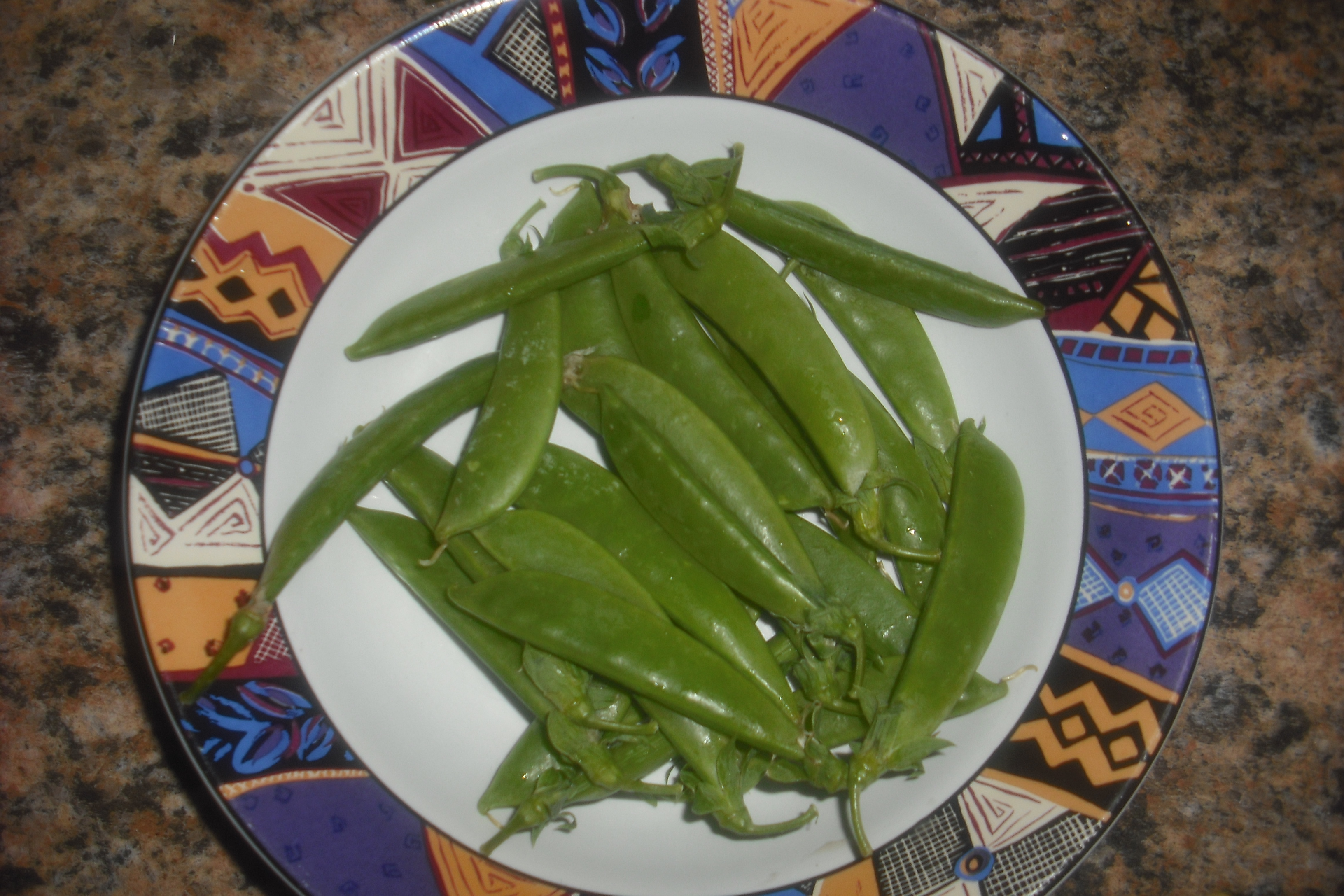
They can be prepared in stir-frys and salads, but my family likes them best raw. Easy enough.
We also received some beautiful purple basil which I shredded and used as a topping for pasta. It’s also good in Thai cooking. 
But last week, after getting back from a great trip to see the family back in NYC, I went to pick up our family’s half of the share from our friends. They took the basil because they knew I have a ton of it in my own garden.
What they gave me was this:

This weird, bulbous thing is called Kohlrabi. It’s pronounced: Call Robbie. It looks like it could have grown on futuristic farm on Venus. Just the sight of it made my sons laugh. I have never had Kohlrabi, neither did our CSA partners, so they let me be the brave one and try it first.
So what to do if you encounter Kohlrabi in your CSA share this summer:
- First you peel the purple away. I thought this was a bit disappointing because it was the vegetable’s purpleness that made it so intriguing to my kids. Underneath, you will find a white flesh, like a turnip.
- Slice it thinly with a sharp knife. Kohlrabi is tough!
- Toss it with Olive oil Salt & Pepper and place it on a single baking sheet in the oven at 400 degrees. It has a sweet taste and the texture of roasted potatoes
- Make a Kohlrabi Green Apple Slaw, as featured in A Veggie Venture
- Make a Kohlrabi puree, as recommended by Farmgirl’s blog
I will wait patiently for the mounds of zucchini and tomatoes we’ll get in our CSA share. But in the meantime, I’ll have fun with this strange vegetable that looks like it was grown on another planet.
Arugula Pizza and other creations from my CSA box: Week Two

 The first thing my friend asked when we arrived to split our first harvest from our East Hill Farms CSA was:
“Where’s the tomatoes?”
Actually, what he said was “Ma kara? Eiphoh ha tomatoes?” But for those of you who do not understand Hebrew, I’ve translated it for you.
This was a question of serious concern from my friend, a native Israeli. And Israelis take their tomato-cucumber salads very seriously.
This is the thing that one must understand when joining a local CSA, or Community Supported Agriculture farm: In early June, in Western New York, those coveted red, vine ripened tomatoes don’t exist. At least, not the kind that don’t grow in hothouses.
For those, we have to be patient.
But, here are some things I have made from our first helping of CSA vegetables from the East Hill Farm, plus the earliest herbs I’ve grown and picked in my own garden:
Lettuce – Not the durable, homogenous pale Romaine hearts you get in a plastic bag at the supermarket. But tender, sweet tasting lettuce. Naturally, these went immediately into a salad.
Kale –Hmmmm, that’s bitter stuff, you may think. But if you join a CSA, be prepared to get a lot of Kale. It really does taste great and is packed with nutrients. It’s best sauteed with olive oil & garlic (the fresh kind provided by the CSA) for a warm salad. Drizzle it with Balsamic Vinegar and toss it with walnuts.
Bok Choy – I sauteed them with garlic and ginger.
Pea Shoots – I sautéed these right along with the Bok Choy.
Finally, something that did not come from my CSA but my own garden.
Arugula. Since I have blogged about growing arugula, I have received nearly 100 hits for people searching for arugula on the web.
One night, after shuttling my sons to and from their back-to-back baseball games, I decided not to cook but instead ordered in a pizza.
To jazz up my pizza, I went to my garden. I picked out some baby arugula leaves.Washed them well. Plopped them on top of a pizza slice. Fantastic.
It’s not too late to plant arugula. In fact, it’s the right time to start some arugula seeds now, in a partially shady spot, to enjoy later this summer.
And, have no fear, judging from the yellow flowers that are forming on my tomato plants, I am sure those red globes of sumer deliciousness will be arriving very soon.
A Share in Community Supported Agriculture: Let the Adventure Begin

This week, a friend and I put down the down-payment on an epicurean adventure we will be taking this summer.
Why is it an adventure?
Because we have signed on and invested in a local farm, and all the risks that go with farming. We are taking a bet on Mother Nature that she will bestow upon our local farm the perfect conditions for growing a bountiful crop this summer.
Because this summer, we will have to get very creative with kale and beets.
The rising demand for locally-grown produce and sustainable farming methods has created opportunities for developing a connection between enterprising young farmers and suburbanites through a movement called Community Supported Agriculture, or CSA.
In December 2001, one source reported a net total of 761 CSA farms registered with USDA. By 2007, an agricultural census conducted by the USDA tallied 12,549 farms that marketed products by way of community supported agriculture (CSA).
Most of these CSA farms are located in California and Texas. Right now, in New York State, there are about 200 farms that use CSA as a method to market their crops.
Oe of them is the East Hill Farm CSA in Middlesex. It is the project of the Rochester Folk Art Guild a sustainable community of artisans and farmers who have worked and created on this farm since the 1960’s.
Though the ground is still covered with snow, the East Hill Farm managers are busy ordering vegetable seeds, recruiting volunteers and processing CSA membership applications. Over half of the farm’s 80 shares have already been sold. A membership for 20 weeks of produce costs $500, or $490 if purchased before March 1. Shares include a wide variety of vegetables, as well as fruit in the later part of the season.
Information on getting a CSA share can be found at www.easthillcsa.org or by calling the JCC at (585) 461-2000. At the website, one can even sign up for a “CSA buddy” to split a share if a boxful of veggies every week may be just too much to consume.
The East Hill Farmers represent a new generation of farmers who may not necessarily have a background growing up on a parent’s or grandparent’s farm. What they do have is a passion for growing food with organic and sustainable techniques.
Cordelia Hall grew vegetables as a child in a community garden and then became part of the “guerilla” urban gardening trend while she was a student at Boston University. Now in her third year as co-manager of the farm, she has observed and worked on farms in Tanzania, New Zealand and Mexico.
Thomas Arminio, another suburbanite-turned-farmer at East Hill, said his experience in farming has taught him that timing plantings just right is crucial for having successful crops. A native of New Jersey, he is looking forward to growing interesting varieties of melons and root vegetables along with heirloom tomatoes, beets, Swiss chard and lettuces.
So, this summer, I can actually say I have become acquainted with the people who will grow my food, because I interviewed them for my column and this blog post. You just can’t say that buying a plastic-wrapped package of hothouse tomatoes from a big box warehouse store or the supermarket.
As I get my box of veggies for the week, I’ll write about what I got, and what I made, so stay tuned.
Bye-bye Tar Beach, Hello Green Roof

Growing up in Brooklyn, if you couldn’t make it to the real beach on a hot summer day, all you had to do was go up to Tar Beach. Did you go to Tar Beach?
“It was really hot up there,” my mom told me on a recent visit, as she told me about how she and her friends would spend hours up on the roof using sun-reflectors even to maximize their tans. Ahh, the good old days!
Tar roofs, though hot and contributors to global warming, made great song material, though, you must admit.
The Drifters sang about the sun burning the tar up on the roof in “Under the Boardwalk” and how to forget all your cares “Up on the Roof.” Elton John sat up on his roof and kicked off some moss in “Your Song.”
Perhaps Elton should have cooled his boots for a moment and left the moss alone. Growing plants on roofs — from vegetable gardening to sophisticated sod membranes that soak up urban water runoff and cool the air — are becoming a required building material in cities like Toronto and Chicago.
I know that tar roofs are not exclusive to Brooklyn, no matter how Brooklyn-centric my point of reference may be. In fact, cities like Chicago, where new laws are in place requiring new buildings to have green roofing materials, the temperature on a tar roof can be 78 degrees hotter than that on a green roof.
Walk across any asphalt parking lot on a summer day and then walk across a green lawn. You don’t have to be a scientist writing a big fat feasibility study to understand how black top paved surfaces and roofs heat the earth and green areas have the potential to cool it.
In Rochester, NY, The Harley School is employing this technology as one long-term science project and can boast that they are the area’s first school to have a green roof. This sustainable technology will not only act as a natural insulator, keeping the school warmer in winter and cooler in summer, but it will teach its high school students about how buildings affect the environment.
The tar roofs of the past, according to environmentalists, are the bane of city living because they create urban heat islands and contribute vastly to water runoff. Rather than being just a green trend, cities such as Chicago and Toronto require roofs of new buildings to include cooling, greenhouse-gas absorbing plants.
The Harley School on Oct. 18 installed two 10 x 10 ft. plots of hearty winter grass on the roof of their building on 1981 Clover St. The school spent $2,000 for materials and also received an in-kind installation and materials donation from Zaretsky & Associates landscapers in Western New York. In order to grow a section of green roofing, school engineers had to assess if the school’s roof could withstand the additional weight of a weatherproof membrane barrier, two inches of topsoil, the weight of the growing plants, and the water they will retain. The grassy roof serves as a natural insulator and will keep the building cooler in the summer and warmer in the winter. School officials expect to reap the benefits of these initial costs within 3-10 years.
Peter Hentschke, a science teacher who will be working with Harley’s upper classmen on researching the impact of the green roof, said the project provides students with hands-on learning. The students will develop mathematical methods and equations to determine how much energy their school saves by comparing temperatures of the school’s different roofing materials. They will also calculate how water runoff is affected by the green roof.
“Rooftop plants catch rainwater and runoff that would have ultimately run into the sewer and overburden water treatment centers. The students are tracking current rainwater runoff with water gauges and will track this throughout the school year,” he said.
Chris Hartman, Harley’s social and environmental sustainability coordinator said the students are “all fired up” about learning about the green roof because it has real-world implications.
“The Harley students are really in the driver’s seat of this project. They know that it is cool to have a green roof, but the challenge will be to come up with the methodology to show how green roofs have an impact in the world around them,” said Hartman. He added that students hope to share the data from the green roof with their classmates, and perhaps local colleges such as the University of Rochester and Rochester Institute of Technology.
If we all started growing green things on our roofs, perhaps by the time these kids graduate college, our cities would from above look less like Tar Beach and more like the ancient hanging gardens of Babylonia. I wonder what songs they will inspire by then.
The Stinger and the Honey, and the Bitter and the Sweet
 Preschool teachers have the honor of experiencing many sweet firsts in a very young child’s life. For some of them, it is the first time they are being cared for by someone other than a parent or a relative, and we are honored to earn their trust and love. As a preschool teacher, you may also witness the first time a child stands at an easel, brandishing one, sometimes two paintbrushes, to combine blue and yellow to make a green, refrigerator-worthy masterpiece.
And even still, you can be with a child the first time they go potty in a place that isn’t in their own home.
Unfortunately, there are a few bitter firsts that come up from time to time. Today, a little boy in was stung in the classroom while he was building blocks with his friends. The bee entered the classroom most likely through our open window on this warm October day. I am sure that bee did not want to be in the classroom, just as much as the children (and teachers) wanted it out of the classroom.
But our little student indeed got stung. At first he bawled and held up his finger, so we quickly checked for a stinger (no stinger), checked for visible signs of an allergic reaction (because you never know if a child is allergic to bee stings until they are stung), and ran his finger under a stream of cold water. A few minutes went by before we realized that he had been stung a second time, this time with the stinger in tact, on the back of his neck.
He cried for his mom as we removed the stinger, iced his neck, and tried to soothe him. At the same time, we had to keep seven other kids happy and calm, so we called in another teacher for reinforcement.
Then a very unexpectedly sweet thing happened. I must interrupt my story to tell you that we were pretty late in setting up for snack before the whole sting operation went down. It had been raining all week and this was the first day we had a chance to play outside. By the time we returned to the classroom after an extended time playing outdoors, snacktime was overdue.
Have you been around three and four-year-old children waiting for a snack?
But these little people did not complain their snack was late. One by one, they went over to their stung friend, who was now sucking his thumb sitting on my co-teacher’s lap, and gave him a hug to feel better. The boy calmed down, and was completely recovered within the next ten minutes thanks to the healing magic of crackers and juice.
Do you recall the first time you were stung by a bee? I hope that it was not too unpleasant a memory and it didn’t give you hives or require an epipen shot or a trip to the emergency room.
Over snack, I told my friend the very first time I was stung:
I was about seven and a wasp and I collided as I ran from my back yard to my front stoop. Right on my neck, just like my little friend.
I remember me screaming and my grandfather picking me up and carrying me to the backyard, where my mother quickly applied some ice – and a pumice made of salt and meat tenderizer.
After the surprise and the shock, I was actually pretty insulted that a bee – a creature of the natural world that I loved – would sting me. Didn’t the bee love me back, I asked my parents and grandparents through the tears?
The impression the boy took away from this story, as told by his mom was that Morah Stacy (that’s me — Morah is teacher in Hebrew) doesn’t like bees.
My little friend, that’s just not true at all.
It took me a while – deacades perhaps — to get over my fear and develop an appreciation and love of bees. I’m not saying I will become a beekeeper, like many people are doing these days to thwart off the devastation of bee colony collapse. It’s just that since I have become an avid gardener, I am content to work right beside those bees happily buzzing and collecting nectar and pollen for their hives.
And I’ve come to appreciate how much we rely on these creatures for our food and think how scary it is that in recent years, the US bee populations have decreased by almost 40 percent. And as much as my little students are afraid of bees, it’s scarier to think about what will happen to their world and future without them.
There is a famous Israeli folk song that in English goes: like the bee that brings the honey, needs a stinger to compete, so our children learn to use the bitter with the sweet.
Next time you go to swat a bee, please think twice.
Full Sun in the Community Garden
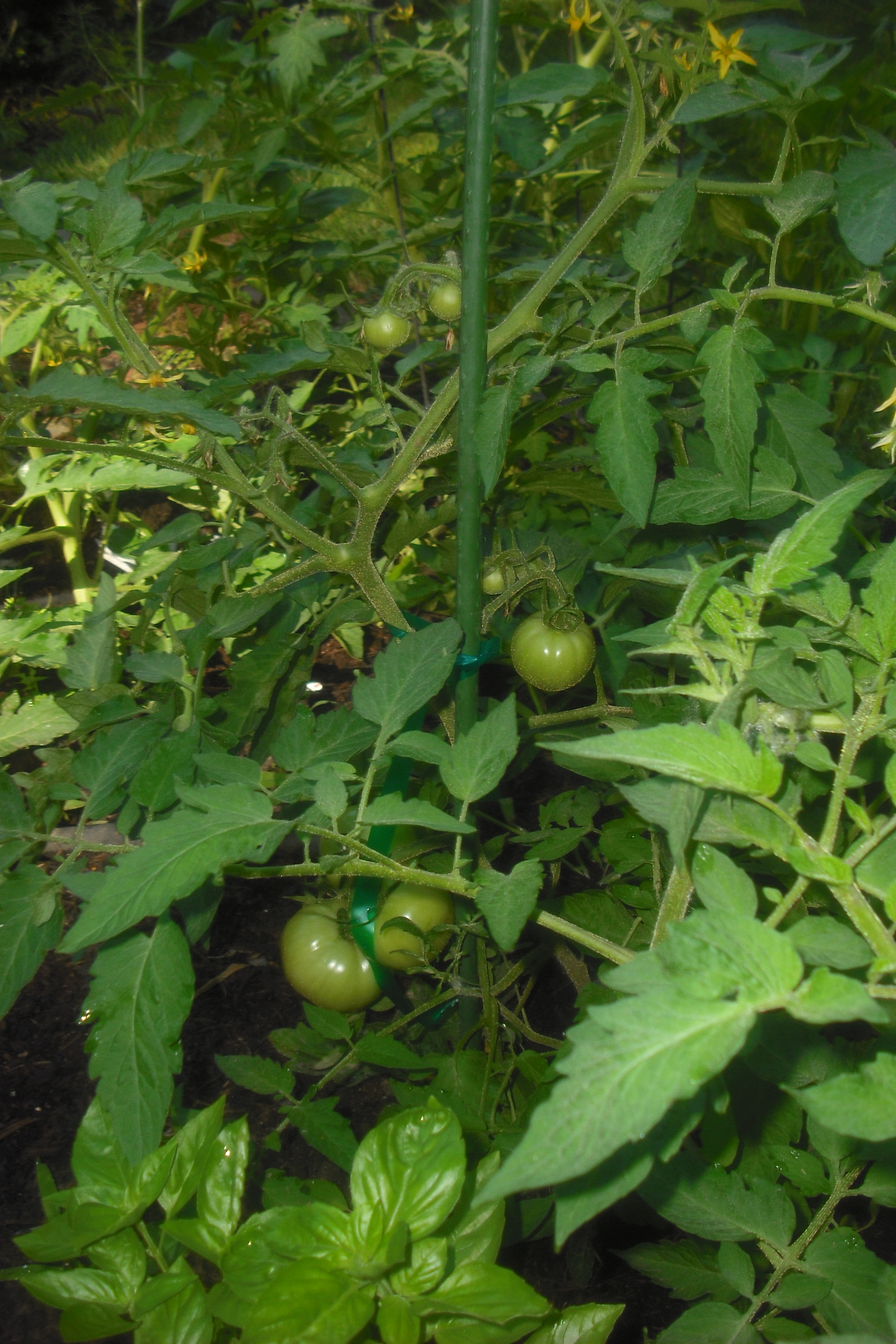
in my shady garden, my tomatoes dream of a sunny hillside in Tuscany

The Gate to the Brighton Community Garden - and 12 hours of sunshine
At a recent dinner gathering, a friend placed a beautiful mixed green salad on the table and proclaimed that she grew every tender leaf. She and many others living in Brighton are experiencing the pride and joy that comes from working a piece of land at the Brighton Community Garden. And many for the first time, can appreciate what full sun can do do a crop of vegetables.
The Brighton Community Garden is located on Westfall Rd. adjacent to the historic Buckland House. In its second year, it has expanded to 100 10’ by 10’ plots that Brighton residents rent for $25 for the season. Four of these plots, I am told are being used to grow food for a local food cupboard, enhancing the town’s mission of greener and sustainable living.
Brighton residents who live in older neighborhoods enjoy streets with gas lighting, sidewalks, and very large old trees. Growing vegetables, especially those coveted sun-ripened tomatoes, is difficult in dappled sunlight. I have obsessed about the trajectory of the sun and how it moves on my property ever since my first hopeful summer. Each spring, I had high hopes that the sun would burst through the overhead branches and quickly ripen the tomatoes and pumpkin vines that stretched eagerly to meet it. By the time the summer solstace passes, I am usually stuck with green tomatoes until very late August.
This is why neighbors attempt to grow sun hungry tomatoes and rambling raspberry bushes any place the sun may peek through, like strips of property by the curb or alongside a driveway.
It wasn’t until I went for a walk in the community garden did I understand what full sun does. You mean you can have ripened tomatoes before the first frost? Enough eggplants and zuchinni that you are begging strangers to take them off your hands?
As I explored the garden, I saw creatively landscaped plots with decorative garden markers, hand crafted scarecrows, and stone paths between rows of climbing pea and cucumber vines. Others were a bit sparse and badly in need of weeding.
Of course, vegetable plants require regular watering. During my visit, several people on breaks from work quickly entered their plot in office work clothes to water. For irrigation, the town places several rain barrels throughout the garden. They are filled either by a hose, or hopefully, rainfall. Gardeners bring watering cans to these buckets to water their crops.
Brighton resident Sue Gardiner-Smith has been instrumental in the town’s efforts in sustainable gardening. She is growing potatoes, peppers and zinnias among other produce with her teen-aged son. In addition to the garden, she and others in the town have had discussions with Brighton officials about someday founding a Community Supported Agriculture farm on the property of the old Groos Farm. Next year, I just might apply for a plot of my own. If you are interested in Brighton’s sustainable gardening or farming efforts, or just want to grow a garden in true full sun, send an email to brightoncommunitygarden@gmail.com.
About Me

Kreativ Blogger

Versatile Blogger Award


 Stacy Gittleman