
I pop eese I po peeeze – It’s time to make Watermelon Ice Pops

First, I have to tell you that my inspiration to write this blog stems from three sources:
222 Million Tons – This is the amount of food we waste each year. This food blog wants to put a change to that by offering delicious recipes and ways to take action on how to waste less food;
Your Kind of Salad: Another food blog where I found this beautiful recipe for watermelon pops;
and, my daughter.
If you were confused at the headline of this blog posting, you are not alone.
When my daughter was about 16 months old and was being watched by her aunt on a hot July afternoon, it was this occassion that my daughter put together one of her first sentences beyond “I love you.”
It was: “I popeese”
Translation: Ice Pop Please.
It was on this hot day that my daughter wanted what most of us want on a hot day, something very cold.
An ice pop.
So, she repeated this sentence over and over to her aunt and her aunt’s boyfriend who could not figure out what she was trying to say.
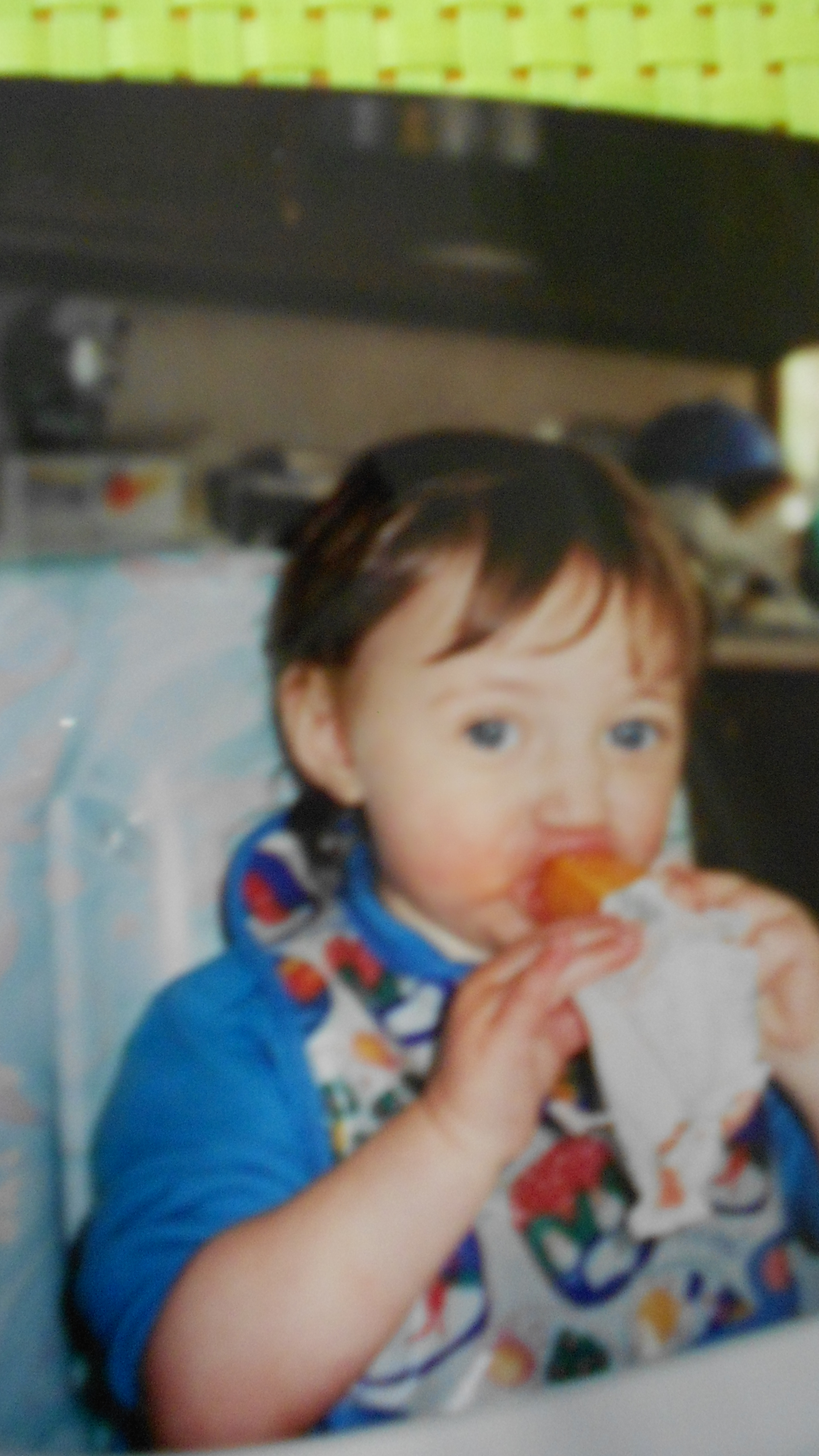
Now, any other infant would have had a meltdown tantrum at this point. Not my daughter. She simply walked over to the refrigerator, and, with her tiny hand raised above as if she was holding the torch like Lady Liberty, she patiently, and a bit more slowly, repeated
I -Pop – Peeze!
She finally got what she wanted:
Flash forward 15 years:
The other day I came home with one of those cute, personal sized seedless watermelons
I will not make that mistake again.
While it was cute as a button on the outside, inside, it was a mealy, mushy disappointment.
But it was $3. I couldn’t just toss it away. What a waste of food and money.
So, following the recipe I found on Your Kind of Salad:
I scooped out the watermelon flesh:

Pureed it in a blender

Passed the pulp through a strainer.

Then to this I added one cup of corn syrup (I know this sounds like a lot of a bad thing but the corn syrup adds a nice smooth finish to the pops) and the juice of one lime:

And poured it into the molds:

Then the hard part. You have to wait about six anguishing hours for the pops to freeze.
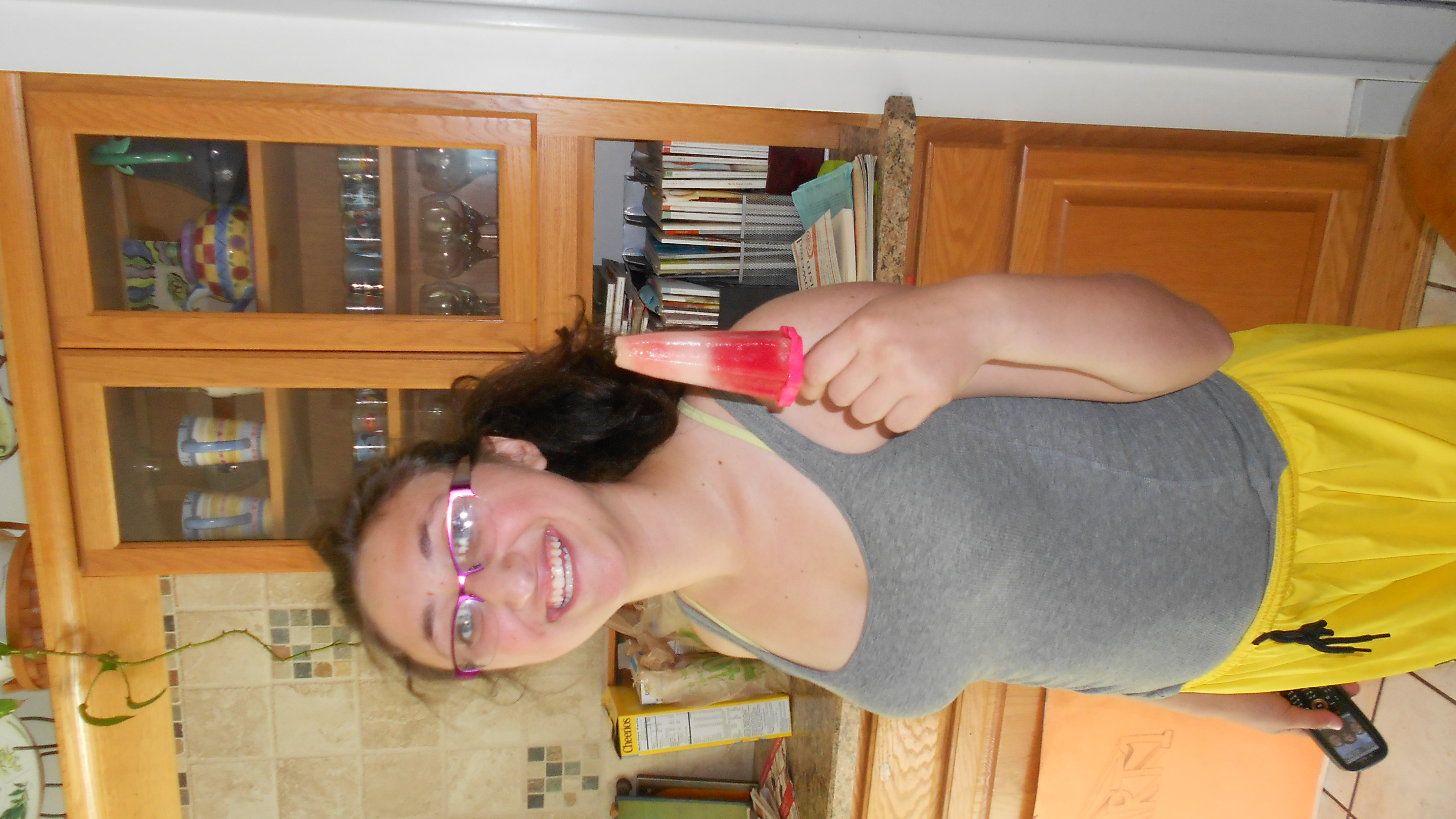
At last, they are frozen.
So, when the world hands you mushy watermelon, don’t throw it out, make ice pops!
Grow, Tomato, Grow!
Long ago, in another state, the Garden State, my neighbor Joe, a retired chain-smoking fireman, chided me as I put a tall tomato cage around the tiniest tomato seeding in my garden.
“Yeah right, like that’s gonna grow,” he said with smile as he pulled the waistline of his polyester pants over a plaid short-sleeved shirt.
Two months later, I teased him right back.
We were up to our ears in cherry tomatoes. Picked ’em by the basket. And beefsteak tomatoes too. I had so many cherry tomatoes I had to give them away, and my city-dwelling co-workers in Manhattan gladly took some of the perfectly ripened produce off my hands. And of course, I gave some to Joe and his wife Pat because I was a good sport.
This year, I could have purchased some tomato plants that already had flowers or, heaven forbid, green fruit, and stuck them into the ground in my spot in the community garden for instant gratification.
But it’s far more satisfying for me to know that from seed to ripened fruit, I grew a tomato all by myself. When you grow from seed, you can control the variety and are not at the mercy of whatever is sold at the local greenhouse or big box hardware store. It’s also a lot cheaper.
So, once again, I plant a tiny tomato seedling in the ground:

RUTGERS tomato, started from seed in my basement. It’s got a long way to go before I get a tomato.
And what did you think of the Cover of Time Magazine?

I know I am getting this out under the wire, as the sun sets into the sky, but Happy Mother’s Day to all you mothers out there. It’s the hardest job in the world and you deserved every minute of pampering, every bite of that breakfast in bed you got today.
And, you are mom enough, even if you didn’t breastfeed your child until the age of four or five.
Time Magazine has had some pretty controversial covers around Mother’s Day. I can recall one year a crying toddler hanging onto the toned, stocking and heeled leg of a presumably working mom with the headline something to the affect of “Is Motherhood Ruining Your Career?” I can’t seem to locate it, so if anyone can recall and locate the link to this article, please send it my way.
On another cover in 2004, Time Magazine did an about face, covering the other side of the coin by featuring a piece called The Case for Staying Home.
Now, this week’s cover about attachment parenting caught my eye (well, my eyes nearly popped out of my skull) when it was posted by a friend on Facebook. You must have seen this cover, the one with the almost four year old boy bellying up to the booby bar by using a chair, mother and son both with their eyes focused not on each other but on the camera lens.

I have yet to read this article about attachment parenting, but I did take the quiz to ask how much an attachment parent I am, or was, when my children were infants and I scored a 50 percent. I guess this is because I answered that yes, my babies did sleep in our bedroom and our bed, but didn’t leave room to elaborate “only sometimes and only because I was too exhausted to carry baby back to crib after he fell asleep at 3 am after nursing.’
But this photo, and the controversy that is swirling around it, made me think of the days I breastfed my children, particularly my oldest. And how this image is a perversion of the emotions I experienced when I fed my babies this way. When they were – little babies.
When my oldest child, now 15, was born, I stayed home with her for three months. In those three months, I breastfed almost exclusively. It wasn’t easy and for any mom who has chosen to feed her baby this way, you know it takes some time and practice for you and baby to get in synch.
After the initial frustration of learning how to breastfeed, nursing with my firstborn was a special bonding time, a quiet time, a time that actually forces new, exhausted mothers to sit down and be still. Not only does breastfeeding give new mothers a well-deserved opportunity to put her feet up, it also reduces one’s risk of breast cancer and helps a new mom lose that baby weight. A win-win situation.
Three months into being a mom, I went back to work, commuting three days a week to my job in Manhattan. But, because I wanted to be supermom, I still wanted to give my baby (and me) all the benefits of breastfeeding.
So, off my daughter went to a loving home-based daycare. And off I went to work, toting a breastpump on the train and through Penn Station and Midtown Manhattan.
Now, working in an office with twenty somethings who spent half their income on rent and the other on a bar tab, I was the old married lady with a baby at age 29. Definitely an oddity in the office.
I needed to pump at work at least 2 times a day. I also worked in a cube. But my co-workers were very supportive and my boss, a father of three, made sure that I had access to an empty office or conference room whenever I needed to pump.
As a master multi tasker, I made sure I was still productive during my pump “breaks.” I got adept at pumping and checking my email and with the mute button, I could still sit and listen in on conference calls and monitor my client’s press interviews.
Not that pumping did not have its pitfalls. Because, although I had access to my co-workers offices, none of the offices had doors that locked.
So, one day, even though I hung my PRIVACY PLEASE sign on the door, even though I shouted “PLEASE DON’T COME IN I NEED PRIVACY,” this did not stop one young man of about 23 from entering his bosses’ ofiice, my nursing station de la jour, and getting the shock of his life.
I don’t know what freaked him out more – the noise of the pump or the sight of, well…..
“OH MY GOD! ” he shouted. “WHAT IS THAT?? WHAT ARE YOU DOING???”
I was calm. ‘I told you not to come in,” I said. “I’m making food for my baby and I need my privacy, please close the door.”
The poor guy. He was far more embarassed than I. For as long as I worked there, he could never again look me in the eye.
Yes, there are times, whether one is a working, nursing mom, or when a crying baby needs to breasfeed, that a mom will have to nurse in public. When my first was born, my doula, or mother’s helper, not only taught and encouraged me to breastfeed, she also taught me how to cover up. Because although I know breastfeeding is completely healthy and natural, I also didn’t feel like exposing myself to the world. And, any nursing mother will tell you that nursing goes far more easier when mom and baby can find a calm quiet place away from the public.
Although pediatricians recommend that nursing a baby for 1 or even three years is natural, and in third world countries breast feeding is a necessity to stave off infant and child mortality, the call of when is a “normal” time to stop breastfeeding is up to the individual mother.
As far as my babies, once they tasted solid foods and became too distracted to nurse by the world around them, and for me, once their gummy smiles gave way to their first teeth, we both decided that our special mommy-baby time was over.
So, whether you breastfed your baby for one month or one year or three, whether you went back to work full time or stayed home and let your baby sleep in your bed, you are mom enough. Motherhood is not a competition. Nor should breastfeeding be shown in the exploitive way it did to sell some magazines.
Death of a Fish Salesman. Good-bye, Fishy.
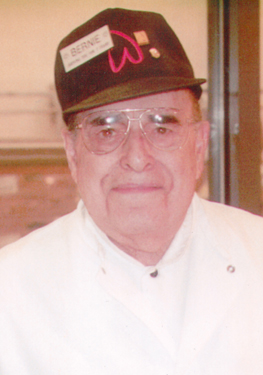
If you shopped at Pittsford Wegmans over the past 20 years or so (and if you live in Rochester, that’s most likely you) you remember his cheerful whistle.
Bernie the fish guy actually whistled while he worked, setting an example for us all to strive to be happy at one’s occupation every day. He only stopped whistling to greet you with a big hello and help you select the choicest cut of fish for whatever dinner you were planning for the night. He truly was the ambassador of the Wegmans fish department. Working at Wegmans was his second career. After owning his own fish market, he started working at Wegmans at age 71 and retired last October at age 89. He passed away this week at the age of 90.
Do you remember Bernie the Fish Guy?
Another Good Reason to Keep Kosher – “Slime” Free Meat
 Yes, Kosher meat is more expensive.
And, unless you live in an area with a good-sized Jewish population, kosher meat and kosher butchers are hard to come by.
But with this “pink slime” trending in the news, it’s reassuring to know that absolutely NO pink slime is permitted in kosher meat, according to KosherEye, a blog for foodies who also keep Kosher.
According to the blog:
Statement from OU Kosher: Kosher ground beef is made out of the kosher pieces of meat, trimmed by hand. No mechanically separated beef or pink slime is used in any OU-certified production.
The other night, I picked up a pound of kosher ground round and a pound of kosher ground lean turkey and treated my family to a slow-cooked meatloaf that I have to say was absolutely delish.
So, if you don’t want pink slime in your beef, or mechanically separated parts in your lunch or dinner, if you want chickens that are fed a grain-only diet and that are not fed any dead chicken parts, if you want a sustainable meat supply that by law must treat and slaughter its animals in the most humane way possible, you don’t have to be Jewish to buy kosher meat.
With that, I hope that there will be kosher burger joints popping up all over the nation. Then again, my cholesterol levels would be sky high if that were the case.
Sorting through cans of food at Foodlink and layoffs at Kodak
Last week, my family got a very small taste of what it would be like to live with food instability.
But not really.
Our refrigerator was on the frizz for a week because of some delays with repairs. For one week, my family had no reliable source of refrigeration. We used the snow and the sporadic cold of this very mild winter to keep our milk and produce fresh.
For a few days, it was like camping. But after a while, it was no fun having to go out into the snow and cold every time a member of the family wanted a drink of orange juice
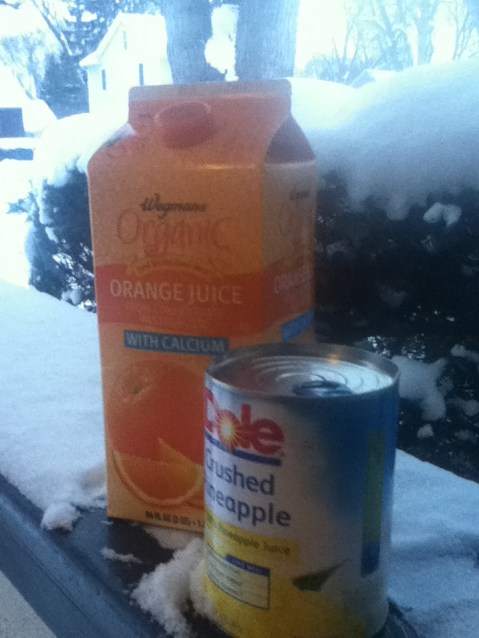
or a pat of butter.

It was demeaning and demoralizing to live like this. Milk and eggs spoiled. Lots of food had to be tossed. As bad as it was, I realized this was for my family a temporary problem.
After all, we still had money. We could keep our food stability because we could – and did- go out for every meal for a few days.
But for many in Monroe County, food instability is a very real thing.
In Monroe County, where Kodak is bankrupt and has for the last decade shed thousands of blue and white collar jobs, food instability is increasing.
Last year, The Children’s Agenda in a report called Decade in Decline that found that
- Children attending pre-K classes are on the rise
- 96 percent of the county’s children have health insurance
- the number of children found with high levels of lead in their blood dropped by 80 percent
However:
- 22 percent of the county’s children live in poverty.
- 44 percent of children in Monroe county in grades K-6 receive free and reduced lunch in public schools
- 2,494 families in the county were placed in homeless shelters in 2009, up from 1,566 in 1999
There are many in our midst who live with real food instability every day. Kids who live in homes where they may not get much on the weekends after receving food assistance at school all week.
This week, over Februrary break, my kids and I got a better understanding of what it takes to keep people out of food instability and on the road to self sufficiency by volunteering at a vast food distribution center serving the poor by distributing this food to hundreds of food pantries within 10 counties in Western New York.
Together with a few of their friends, we worked a shift at Rochester’s Foodlink in their brand new facility in the northwest part of the city. Foodlink is a food distribution center that provides food and meal assistance to agencies and food pantries in 10 counties in Western New York. The new location moved operations from four floors in a warehouse near Corn Hill to one on Mt. Read Blvd. No longer did millions of pounds of food need to be carted up and down in a 100-year-old elevator. Just across the highway from Foodlink’s new digs are the huge but emptying buildings and factories of Kodak, the company that was once the backbone of our city.
Foodlink is a great place to volunteer. In fact, thousands of people in Rochester volunteer each year to help end food instability within the 10 county area that Foodlink services. In fact, it is so good at the efficient way it mobilizes its volunteers to distribute food to the hungry and to lead the hungry and poor onto paths of nutritious self-reliance, it was named by the New York State Commission for National and Community Service to:
- help individual volunteers find service opportunities with local non-profit agencies within the region;
- support the development of an on-line statewide network of volunteer opportunities;
- measure the local impact of volunteer activity to share through a formal New York-specific study;
- deliver training and technical assistance to support local volunteer organization
This is my second time volunteering at Foodlink with my kids. The volunteer coordinators are friendly and have a great hands-on training program to teach volunteers like us how to sort through and rescue the many truckloads of food donations they receive from private and corporate donors like Wegmans Food Markets.
Some rules on sorting food:
- Food that has an expiration date that is older than six months must be disposed.
- Cans with bulges or dents with sharp edges or any dents around seams or lids must be disposed.
- No baby food can be accepted. Not even sealed and labeled. It was painful to put baby food jars and formula on the discard pile. But we were assured that is why the state has a WIC (women, infants and children) program to assist mothers with young babies.
- Nonperishable food bags with tears in an inner plastic lining must be disposed.
Finally, volunteers must be at least eight years old. This qualified my youngest, who loves sorting things in general and said he “had the best time and could sort food all day long”.
My older kids and their friends were having a good time too. How fun is taking off food from a moving conveyor belt, after all?


The hardest item I had to put on the discard pile was a torn 20 pound bag of sushi-grade rice. I knew that had to be expensive and it was probably okay. But I knew that sushi rice is not cheap and it nearly killed me to have to toss it.
“Believe me, it kills us all the time, we see food like this all the time we have to toss,” one of the workers told me.
But not all this really goes to waste. Much of the canned food is taken from its metal containers and composted and used at local farms. Food waste is also used by another local business and converted into clean-burning ethanol.
How close are we to food instability? The news of Kodak’s demise make all of us here in Rochester a bit shaky.
As a friend and I sorted food, she told me some very hard news. Within that impersonal number of 3,000 to 4,000 people to lose their jobs in the latest round of Kodak layoffs was her boyfriend. He spent most of his adult life working there.
Suddenly, the joyful energy I was feeling felt as crushed as some of the many dented cans we were tossing away.
My Life as Cosmo Kramer: Day seven of living with No Refrigerator


Kramer loved his life with no refrigerator. But he didn’t have three children to feed
“Kramer: Ahh, no, no, no. You got me all wrong buddy. I am loving this no refrigerator. You know what I discovered? I really like depriving myself of things. It’s fun. Very monastic.
George: Well what do you eat?
Kramer: It’s all fresh. Fresh fish, fresh foul, fresh fruit. I buy it, I omniga nominga, I eat it.”
Remember that episode? It was funny. But to live a life in the 21st Century with nowhere to put your milk and eggs and cheese, that’s another story.
Thanks to the wonderful folks at Sears, again, I wait for the refrigerator repairman.
For the third time. The right parts, this time, have also been waiting in my entryway for the past two days.
But still, no repairman.
I’ve gotten pretty good at working out a system though.
Every day, I buy the smallest possible container of milk.
Instead of stocking up for a whole week, I buy a maximum of 10 pieces of fruit.
It’s a good thing I live up north, because the weekend’s snowfall provided me with cold stuff to pack into my cooler.
I plot out every meal plus snacks like cheese and yogurt for the kids to take in their lunches.
I have learned that most sources of protein and calcium require refrigeration. I go buy these in small quantities each day as well.
I keep all my produce outside in my cooler. Like this:


Think about this:
How many times a day you go to your refrigerator to eat a piece of fruit, drink a glass of milk or prepare a meal?
Every time I need to do this, I need to put on my boots first and let in the cold air.
But even the Rochester cold is not cold enough to keep my strawberries from rotting or my milk from going sour after a day.
So, it’s almost 11 a.m. now. I’ve been waiting six days and .. three hours for refrigeration. It’s like waiting for Godot.
Sears, do you really think you are doing a good job by letting your customers, those who paid extra for a service contract, to live with no refrigeration for seven days?
Thank goodness red wine does not need to be chilled.
Come see the Sorry Side of SEARS: A woeful tale of customer disservice


Tailgating? No.
You tell a customer to wait around for you for four hours.
You show up even an hour later than the time window said you would be there.
No mere mortal customer can get in touch with you.
You can charge $250 for 30 minutes of work.
I get paid less than that after I’ve filed two weeks’ worth of columns.
And, as a SEARS repairman, you get paid hand over fist for your incompetency. And then, no mere mortal customer can reach you directly afterwards to complain. Man, I’m in the wrong line of work!
And the work the customer waited around for doesn’t even fix the problem.
AND, you are not even obligated to leave the customer a reachable phone number to get you back the same day. That woeful customer (that would be … me) must once again be thrown into the 1-800-MYSEARS abyss.
Because I purchased – for extra money – a SEARS Home Appliance Service Contract, my family is plunged back to the 19th Century and we have lived without refrigeration for four, going on five days. Most of my food has gone bad. Some of it is in deep freezer storage thanks to the kindness of my neighbors. The squirrels in my yard are fighting over the rest.
1-800-MY-SEARS???
My Sears? Well, you can kiss my ……
Pareve Pumpkin Pie


photo found on marthastewartliving website
Everyone in my nuclear family loves LOVES pumpkin pie. And for only the second time in 12 years, my pumpkin-pie eating little family of five will not be going over the NY Thruway and through any tunnels or bridges to New York City. Nope, as much as we love seeing the family and sitting in 10 hours of traffic, this year, we are staying put.
When you are Transplantednorth, there are some disadvantages of being a nuclear family in a town where it seems you are surrounded by friends who all have extended family in town. Come holidays like Thanksgiving, you once again become the disappearing transplant.
I’m not complaining, really. This was my choice to stay “home.” But can a place be home where there are no extended family within 300 miles? The rest of the year, Rochester indeed feels like home. Come holidays, without aunts, uncles cousins and grandparents around, it can feel like how the Ingalls family must have felt on the wild, windblown frontier.
But this is a story about pareve pumpkin pie.
One small advantage of staying put (okay my kids will think a big advantage) is that at our Thanksgiving table, we’ll have pumpkin pie.
As much as she has tried to like it, my mom does not like anything pumpkin. My kids, however, can’t get enough of the orange stuff. I put it in breads, waffles and pancakes. I even made a pumpkin challah just so I can make pumpkin challah stuffing.
But, most of you know that pumpkin pie calls for milk, cream, condensed milk, or some other dairy ingredient. This poses a challenge to Jewish families like ours who observe the dietary laws of keeping kosher.
There are ways to get around the dairy dilemma by finding pareve ingredients.
What is pareve? Not many know. It is so esoteric, the word does not appear in the WordPress spellcheck.
It’s a term meaning food that is neither meat or dairy. It’s neutral. Like Switzerland. Does it taste as creamy and delicious as real cream? No. But, I’d rather have an imitation dairy dessert any day than serving a Tofurky at my Thanksgiving feast!
Here is the recipe. I based it on a recipe used from Martha Stewart Living, I just replaced the dairy ingredients with some stuff called Coffee Rich, found in the frozen section of most grocery stores. For those of you in upstate New York, I found this chemical-laden substance at Tops, and not Wegmans this year. But I still love you, Wegmans.
All-purpose flour, for surface
- Pate Brisee for Traditional Pumpkin Pie
- 1 can (15 ounces) solid-pack pumpkin
- 3/4 cup packed light-brown sugar
- 1 tablespoon cornstarch
- 1/2 teaspoon coarse salt
- 3/4 teaspoon ground cinnamon
- 3/4 teaspoon ground ginger
- 1/4 teaspoon freshly grated nutmeg
- 1 teaspoon pure vanilla extract
- 3 large eggs
- 1 Cup Pareve Nondairy Creamer, like Coffee Rich
- Ground cloves
- Whipped cream, for serving
Directions
- Preheat oven to 375 degrees.
On a lightly floured surface, roll pate brisee disk 1/8 inch thick, then cut into a 16-inch circle. Fit circle into a 9-inch deep-dish pie dish, leaving a 1-inch overhang. Fold edges under. Shape large, loose half circles at edge of dough, then fold into a wavelike pattern to create a fluted edge. Prick bottom of dough all over with a fork. Freeze for 15 minutes.Cut a circle of parchment, at least 16 inches wide, and fit into pie shell. Fill with pie weights or dried beans. – Buy a premade Pareve piecrust. Bake until edges of crust begin to turn gold, about 15 minutes. Transfer to a wire rack, and let cool.- Meanwhile, whisk pumpkin, sugar, cornstarch, salt, cinnamon, ginger, nutmeg, vanilla, eggs, creamer, and a pinch of cloves in a large bowl.
- Reduce oven temperature to 325 degrees. Transfer pie dish to a rimmed baking sheet, and pour pumpkin mixture into cooled crust. Bake until center is set but still a bit wobbly, 50 to 55 minutes. (If crust browns too quickly, tent edges with a strip of foil folded in half lengthwise.) Let cool in pie dish on a wire rack. Refrigerate until well chilled, at least 6 hours (preferably overnight.
Happy Thanksgiving!
A lesson in hospitality
It’s been a while since I’ve had the time to write a blog post, perhaps because I’ve been a little pre-occupied. Hosting a Bar Mitzvah that includes many out of town guests becomes a four-day affair. My column, teaching and profile pieces also kept me spinning these last few weeks. So instead of my rantings, I’ll offer my son’s Bar Mitzvah speech (otherwise known as a d’var Torah – words of Torah) for this post. I am thankful that he took direction from me during the writing process. After all, what are writing/blogging moms for?
Shabbat shalom,
It has been an honor reading from the torah today. Actually, I was kind of lucky
that my parasha is Vayera. Unlike other parts in the Torah that deal with leprosy, animal sacrifices, or the appropriate punishment for stealing an ox, Vayera offers a classic narrative of stories we all know: the destruction of Sodom and Gomorrah, Abraham casting his handmaiden Hagar and their Child Ishmael into the wilderness; and finally the long-awaited birth of Isaac to Abraham and Sarah after they showed hospitality to three visiting angels.
If anything, there was too much to write about in my parasha. But I would like to
focus on two central themes: bargaining with Gd and the mitzvah of hachnasat orchim, or hospitality. These themes were repeatedly contrasted in this morning’s reading. Let’s start
withSodom and Gomorrah.
Gd calls out to Abraham on the news that He is about to destroy Sodom and Gomorrah. This
is one of several instances where Gd calls to Abraham, who then says: Heneini –
here I am. The inhabitants of these two cities are said to be so evil that a kind act such as hospitality to strangers is decreed a crime. The rabbis capture just how bad
the Sodomites were with this Midrash: The Sodomites refused to expend any of their
lavish wealth on strangers. In fact, Sodom provided only one bed for strangers;
if an unlucky traveler was too short to fit, he was stretched until he could;
if another was too tall, his legs were chopped off.
Even so, when informed of the news of the impending destruction, Abraham shows
courage and actually bargains with Gd: Finally, Abraham agreed with Gd about
the destruction when not even 10 good people could be found. Gd was pleased that Abraham bargained for the sake of his fellow human beings, even though Gd knew there were not enough good people to save Sodom andGomorrah.
This part of the parsha taught me that one should work very hard to try finding the
good in any instance or that one can find the good in any person.
But this d’var Torah is not about the evil in the world, it’s about people doing
good for others. The main message I learned from Vayera that I can apply
throughout my life is the mitzvah of hospitality. The Talmud states that
hospitality is such a great mitzvah that it is more important to show
hospitality than it is to attend classes of study or to greet Gd in prayer.
In one point in today’s Torah reading, we find Abraham sick and old, yet he is
still waiting in front of his tent to receive guests. In the distance, he sees three strangers
walking towards him. Suddenly, he moves into action. The text in the Torah
demonstrates how animated he became for the sake of greeting guests. He BOWS to
his guests, he RUNS into his house and SHOUTS to his wife Sarah,
“maheri shalosh s’eem kamah solet lushi, v’asi oogot.”
This translates into something along the lines of “Quick woman! We have guests, make
some cake!”
The words “run” and “quick” are repeated over and over as Abraham hurries to attend
to the strangers’ every need. He personally gets the whole family into the
catering business as they lavish their guests with an abundant feast.
This teaches me that although Abraham is weak and advanced in age, when he sees the
weary travelers, he suddenly finds energy in the mitzvah of welcoming guests
into his tent. Greeting guests to Abraham is more important than his own
comfort.
In another reference to hospitality, Lot, who is
living in the town of Sodom, is also greeted by angels. He also makes haste in preparing their meal.
However, he does not involve his family, and where Abraham serves his guests at
the doorway of his tent – in view of the public eye – Lot’s
hospitality is done secretly. Still, the Sodomites show their true nature and
look to punishingLot for his good deed.
Perhaps the reason why Abraham enjoyed having so many guests is because of the things
he learned from them.
Pirkei Avot asks: “Who is wise? He who learns from many is wise.”
As long as I can remember, my family participates in a chavurah every other Friday
night for Erev Shabbat. Everyone in the chavurah takes turn hosting the other
families, and we all pitch in bringing different parts of the meal. When it is
my family’s turn to host, for us kids, it’s not easy. It’s the end of a long
school week and we are tired. But, we are expected to help get the house ready
for our guests. There’s no time to sit around and watch “That 70’s Show.” We
have to rid the kitchen of any papers or any evidence that three busy children
live in the house. After sterilizing the kitchen, we have to find white
tablecloths, sort the silverware, and set up the glasses for Kiddush. But after
our guests arrive, the beautiful singing of Kabbalat Shabbat, plus the usual
ice cream for dessert makes all that work totally worth it.
Inviting guests into your home makes them feel special and more connected to the
community. In turn, perhaps the hospitality they were shown will inspire them
to extend hospitality to someone else.
Sometimes, guests can be close friends and family. Other times, guests can be complete
strangers.
I’ve learned a lot about Israelis by having teachers from Modi’in stay with us. This past Sukkot, we
opened our sukkah not only to our guest Inbar, but the other teachers who were
visiting plus their hosts. The house was full of energy and about 30 people had
a chance to eat in our Sukkah before the rain started.
Another form of hospitality is letting someone into a group. A good example of this is when you
are in school and your math teacher asks you to split up into groups of two to
work on a project. Kids, don’t wait for that fellow student that didn’t get put in a group to go through the humiliation of sitting alone in class. Go over and invite him or her into your group.
Another example of being shown hospitality by being included in a group I learned from my mitzvah
project. Over the past few months, I helped train dogs for Guiding Eyes for the Blind. The tricky thing is, I don’t have a dog.
YET!
But one puppy raiser named
Becky showed me hospitality by letting me “borrow” her dog Ben during the
class. If it wasn’t for her, I would not have gotten anything out of my mitzvah
project. She and Ben wouldn’t have progressed at a more rapid pace if I wasn’t tagging
along saying things like like “how do you hold the leash?” or “Ooops, I dropped
all the treats on the floor again.”
Guiding Eyes is an all-volunteer run foundation for people who take dogs into their homes, train
them and prepare the dogs for one day serving as a companion to a blind or
disabled person. It has been very inspiring to see how much Ben has improved in paying attention in the weeks I have worked with him.
Now that I am a Bar Mitzvah, I am honored that the entire Jewish
community is showing hospitality to me, welcoming me in as a fully participating Jewish adult. Now, if I’m home, or in Hebrew school one afternoon and there is no minyan for mincha/ma’ariv, I can be called upon to help. This will really make me feel important and part of the community.
Vayera concludes with the Akedah, the binding of Isaac. It’s hard to argue that Abraham was being
very hospitable when he obeyed Gd’s command and brought his son Isaac to Mount
Moriah to be sacrificed.
I find that strange, this is a man who bargains and with Gd to save two cities full of strangers who
are really bad people but doesn’t open his mouth in defense of his son.
I think about my own life, and situations that might happen that might somehow
relate to this, for instance: if my father ever asks me to hike up a mountain
for no apparent reason, I might buy it, but that will change when I notice a saddled donkey in the driveway.
About Me

Kreativ Blogger

Versatile Blogger Award


 Stacy Gittleman