
Feeling at Home – Xerox Rochester International Jazz Festival
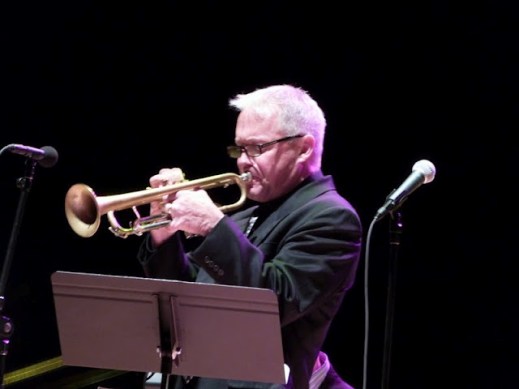
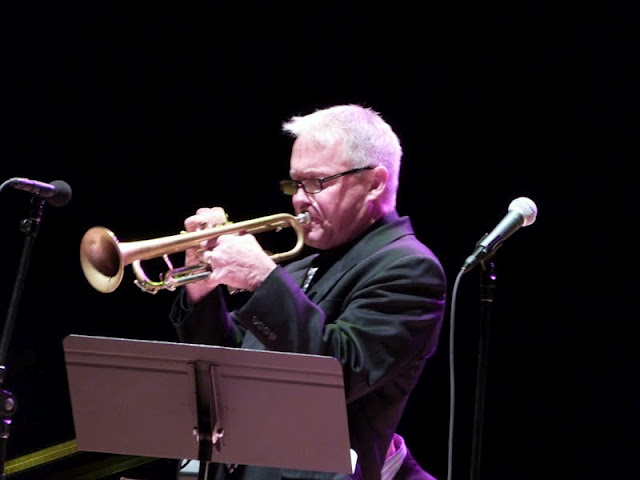
Eastman School of Music faculty member Clay Jenkins performs at a free Jazz concert at Eastman Hall (thanks, mom for taking the photos).
The Xerox Rochester International Jazz Festival, featuring headliners like Wynton Marsalis, Sonny Rollins, Bonnie Raitt, Nora Jones, and yes, even wild and crazy Guy Steve Martin and the Steep Canyon Rangers, has put Rochester, NY, on the map as one of the nation’s finest places for jazz.
Although the festival marks its 11th year, this is the first I was able to make it out. And all the tents, free music, food and festivities are 10 minutes from my house.
What’s been keeping me away? I’ve had three good reasons.
Our three children over these years have kept us plenty busy in June with evening soccer and Little League games and concerts of their own.
As we packed up our lawn chairs into the car to head for the field, my empty nested neighbor and her companion would don their festival passes and head downtown where music, paid and free, pours out of a dozen venues.
I’ll admit it, I’m not much of a soccer mom, and I was envious. I am far more at home in a crowd listening to music than I am on the sidelines of a soccer game.
As it turns out, my kids would actually rather pick up an instrument than dribble a ball down a field. Luckily, Rochester is the right town for both pursuits.
So, this year, we finally went, with all the kids. The three are all musicians in their own right.
- My older son loves to “shred it” on his electric guitar that he plays in the Twelve Corners Middle School Band. He also plays clarinet, but he’d rather play guitar any hour of the day.
- My daughter will next year play French Horn in Brighton High School’s Symphonic Band
- My younger just started piano lessons this year. His teacher has nurtured several young musicians that have already played Carnegie Hall before the age of 18.
In Brighton, a suburb of Rochester, my kids not only have an excellent academic education, but a solid musical education as well. For three years now, NAMM has chosen Brighton as one of the nation’s best communities for music education.
So, have my kids sit through 90 minutes of jazz? No problem. They have developed enough appreciation to sit and enjoy Monday’s Eastman Scholarship Concert in Kodak Hall at Eastman theatre:
I looked up at the golden ceiling
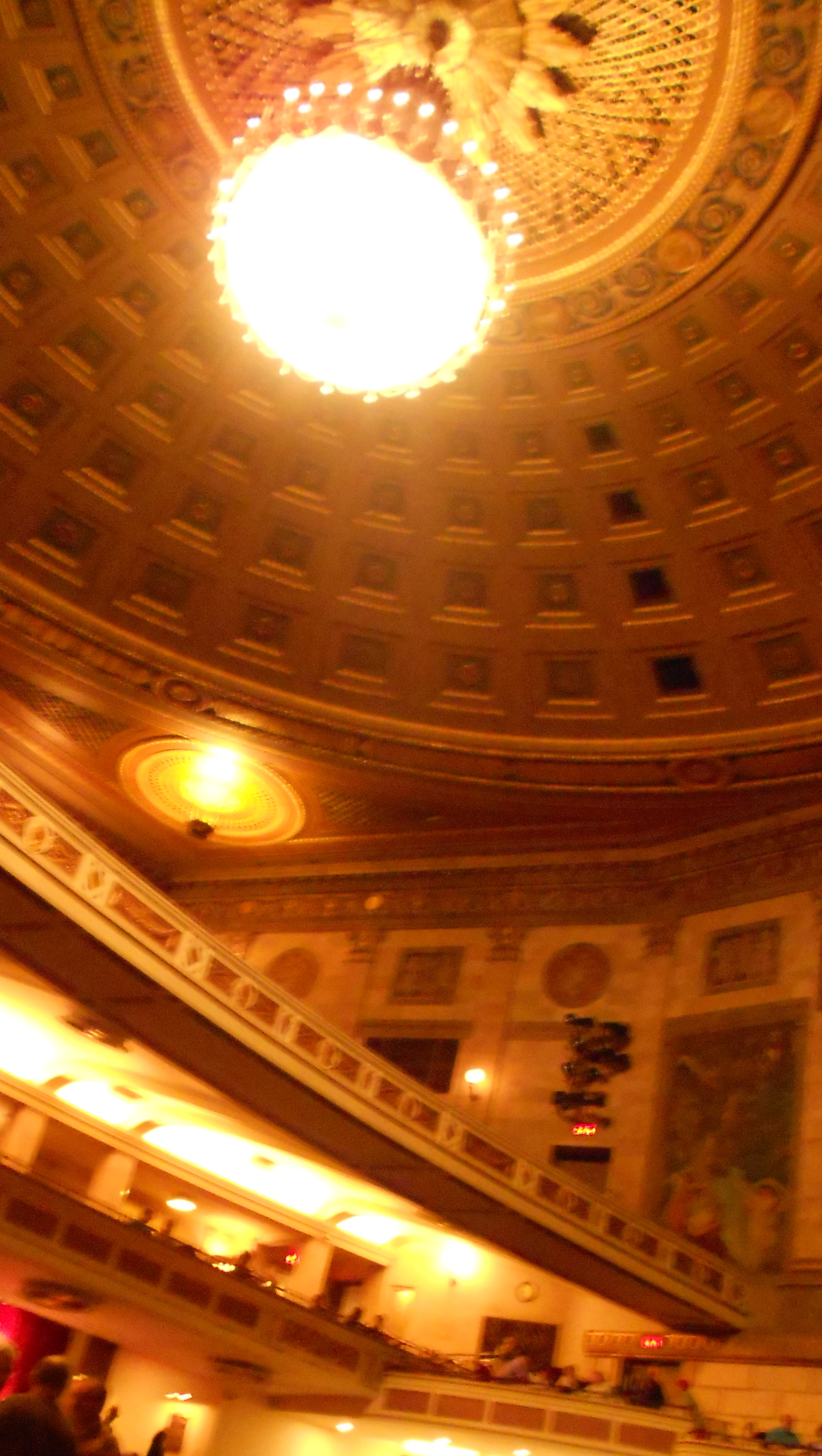
Kodak Hall at the Eastman Theater in Rochester has been the place for free jazz concerts performed by student musicians this week
knowing that my children’s’ high school graduation may take place in this great hall.
For one of the first times since moving here in 2000, I sat in this hall, for free, showing off to my parents the best Rochester has to offer, and felt I was a part of this city. Rochester, a city I barely knew anything about a decade ago, is one of the country’s best places for music.
I also feel at home here now because at the Jazz festival, as my neighbor with the festival pass says, going to the jazz festival is as much about running into people you know as it is about the music.
That night, after listening to student musicians, some who we knew personally, we ran into friends and classmates, track teammates, and band mates as we strolled along East Avenue and made our way through the tents on Gibbs Street.
Last night, husband and I were kid free. And we went back for more:
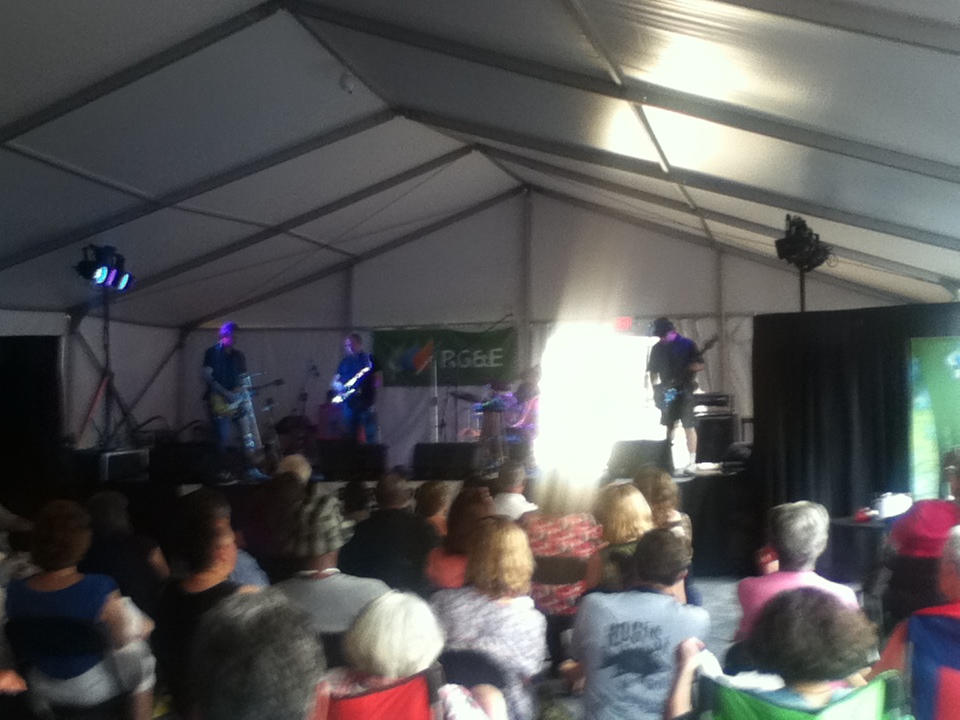
The Barrel House Blues Band performed for free at the RG&E Fusion Stage
Then, with throngs of others, we danced and sang to Toronto’s Soul Stew:

did you ever think there were this many people in Rochester who like to go out?
For a complete change of pace, when we had enough of the crowds, we ducked into an alleyway and discovered Blackdog Recording studios, where we were invited in down two flights of stairs treated to a free private concert by local pianist Mike Vadala:
Piano man Mike Vadala
Rochester, you’ve got two more nights of free music in the streets, so what are you waiting for? Go out & enjoy.
Grow, Tomato, Grow!
Long ago, in another state, the Garden State, my neighbor Joe, a retired chain-smoking fireman, chided me as I put a tall tomato cage around the tiniest tomato seeding in my garden.
“Yeah right, like that’s gonna grow,” he said with smile as he pulled the waistline of his polyester pants over a plaid short-sleeved shirt.
Two months later, I teased him right back.
We were up to our ears in cherry tomatoes. Picked ’em by the basket. And beefsteak tomatoes too. I had so many cherry tomatoes I had to give them away, and my city-dwelling co-workers in Manhattan gladly took some of the perfectly ripened produce off my hands. And of course, I gave some to Joe and his wife Pat because I was a good sport.
This year, I could have purchased some tomato plants that already had flowers or, heaven forbid, green fruit, and stuck them into the ground in my spot in the community garden for instant gratification.
But it’s far more satisfying for me to know that from seed to ripened fruit, I grew a tomato all by myself. When you grow from seed, you can control the variety and are not at the mercy of whatever is sold at the local greenhouse or big box hardware store. It’s also a lot cheaper.
So, once again, I plant a tiny tomato seedling in the ground:

RUTGERS tomato, started from seed in my basement. It’s got a long way to go before I get a tomato.
This Memorial Day, Skip the Sales. Visit a Graveyard.
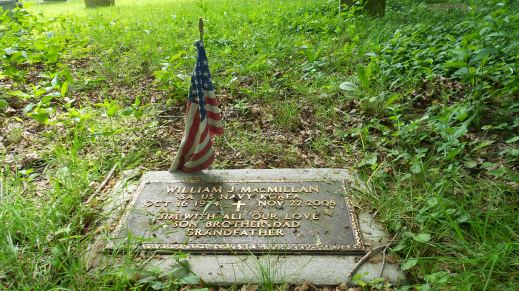
I have a Facebook friend who lives right around the corner from me. In the privacy of our own kitchens, we use Facebook all day to stave off the isolation that comes with being a freelance writer or a painter. We chat and exchange ideas and opinions, sometimes the same, sometimes different, on Facebook nearly every day but rarely get together in real life. A teacher and avid photographer as well as mother and artist, Carol blogs at watchmepaint.
This week, when Carol graciously shared my column about finding the true meaning of Memorial Day on her Facebook page, she added a comment saying she would pay her respects by visiting a little-known cemetery in Brighton where there are graves that predate the Civil War. She described where it was to me and I still could not picture how a graveyard could exist hidden away one of Rochester’s busiest highways. So, being it was a gorgeous morning in May, I posted back “Take me with you!”
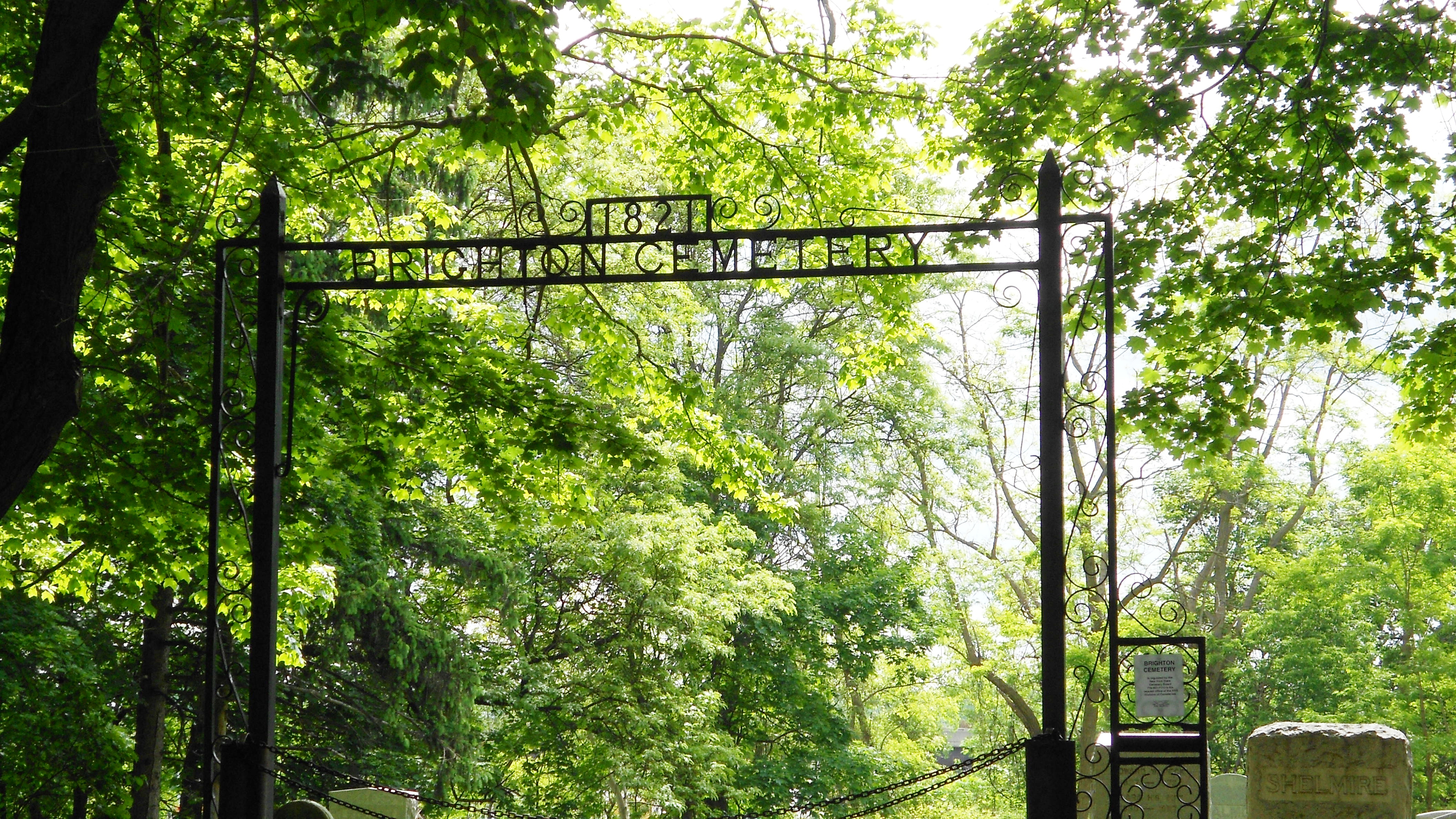
Every town has an old cemetery. The Brighton Cemetery, walking distance from our neighborhood, was founded in 1821 with some of its earliest graves dating back to 1814. Though the name served its purpose at the time, this part of Brighton was annexed to the City of Rochester in 1905. The cemetery now sits in Rochester’s 21st Ward, or for my reference point, three blocks away from the East Avenue Wegmans.
it is located on Hoyt Place off Winton Avenue:
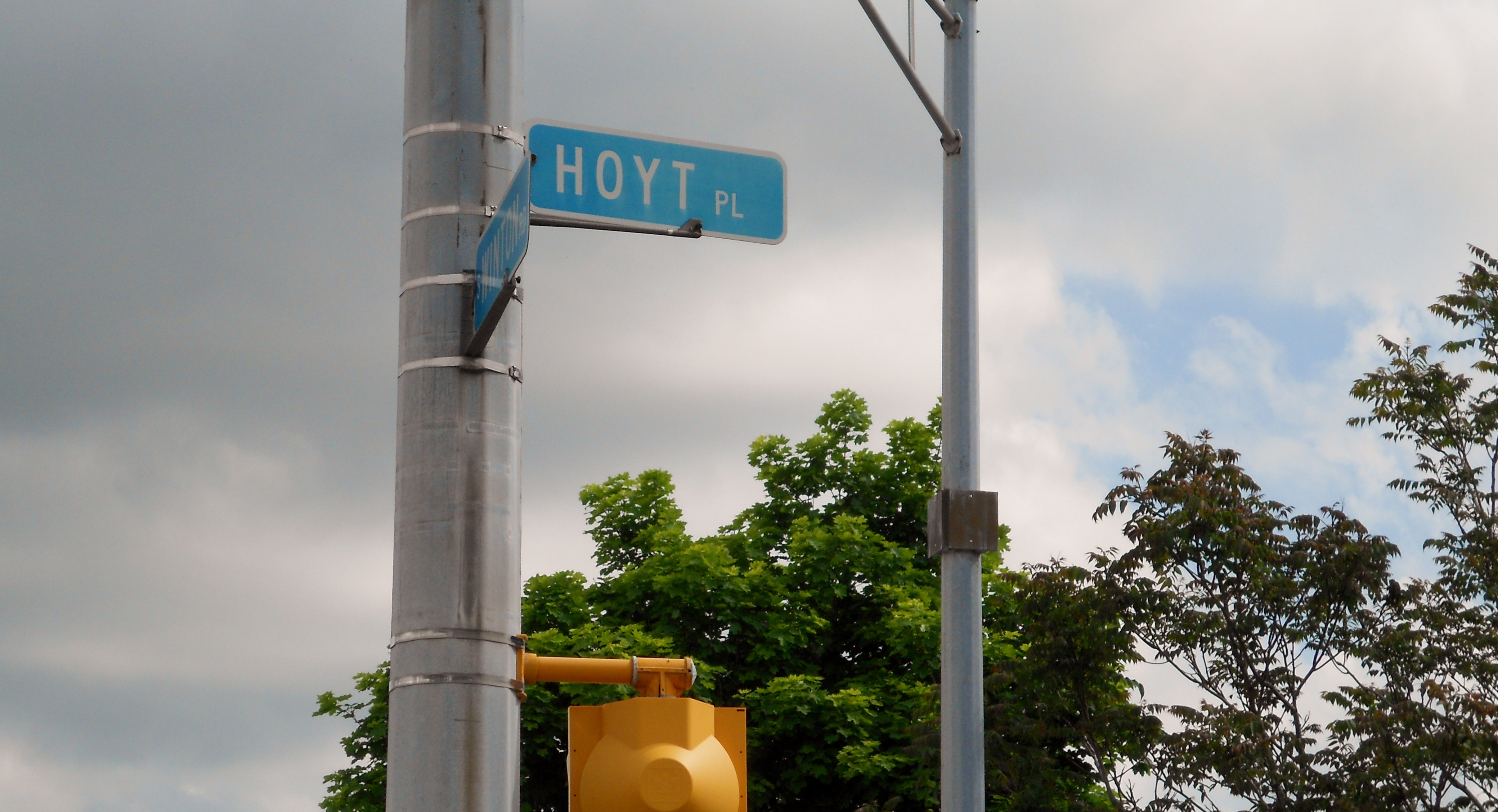
How many times have you passed this tiny street on your way to pick up some milk at Wegmans on East Ave?
This is a street I’ve driven past thousands of times without ever knowing what mysteries it contained. It is a street that time seemed to have forgotten, paved in the 1820s at the time of the building of the Erie Canal. As time passed, this part of the Erie Canal gave way to Route 490.
Tucked away into this street are centuries old mansions:
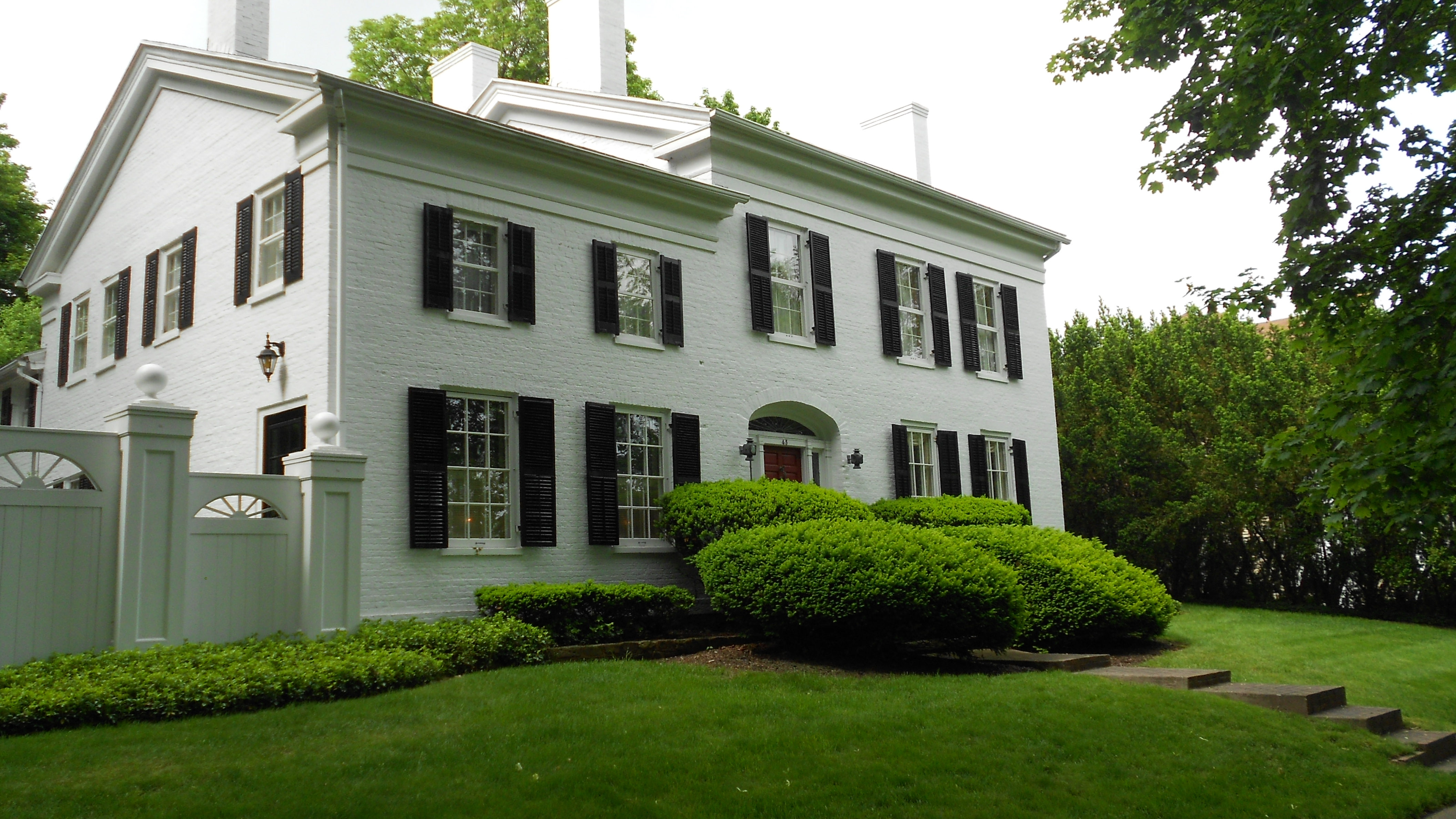
And then.. the Brighton Cemetery:
This week leading up to Memorial Day, find an old forgotten cemetery in your town. Dust off a gravestone to see who is buried there. You will be surprised to see that the many streets in your town just very well may be named for the names on the graves you find there.
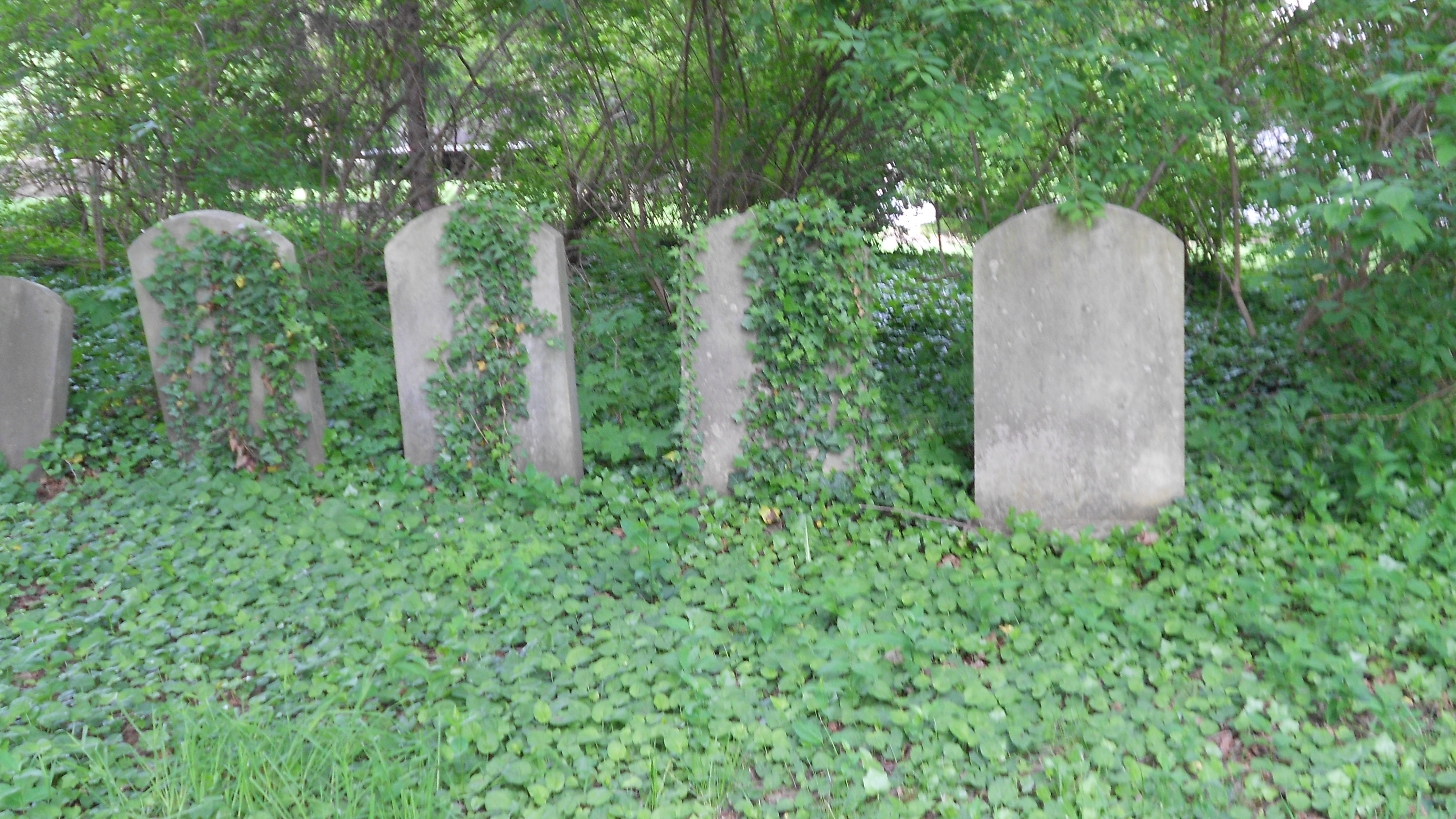

And, if you see a grave marked with a flag, take some time to care for it. If the flag has toppled over, prop it back into the ground. Brush off the grass clippings that may be clinging to the stone. Read who the person was and the wars in which he fought.

Isn’t this a far better way of observing this holiday than, say, taking advantage of a mattress sale?
Adventures in the Community Garden: Day One
This will be the year.
This is the year when I, as a gardener, who has lived for over a decade trying to eek out a ripe tomato or a proper cucumber vine in the dappled sunlight of my backyard, will finally understand what full sun means.
This is the year that this gardener becomes a farmer.
For $25, I signed on to care for a 10’x10′ foot plot of earth in The Town of Brighton’s Community Garden. I’m hoping not only to reap some great crops of vegetables and flowers for bouquets all summer, I’m also looking forward to the people I’m going to meet and the stories I will learn from them.
But when I made my first visit to the community garden, located along Westfall Road in Brighton, I wondered what I’ve gotten myself into.
This is the third or fourth season at the garden and many of the plots have been cared for by some pretty seasoned green thumbs. There are plots adorned and accessorized with fencing systems to keep out critters,
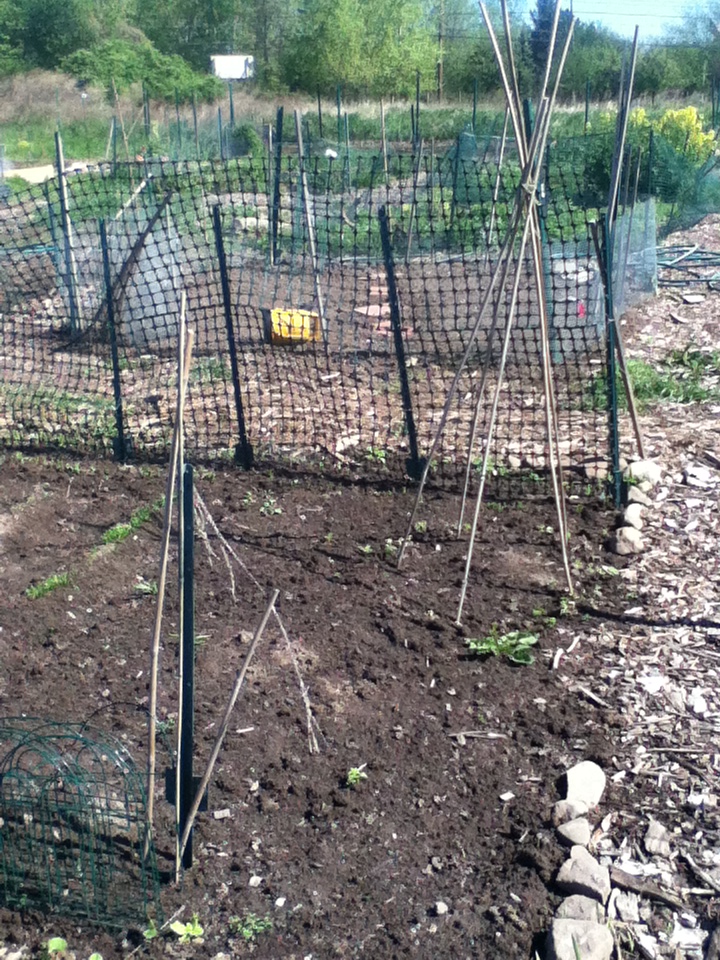
neatly divided quadrants, and well-built support systems to grow climbing bean and pea vines. There are plots that have strawberry plants and leeks sprouting up that were planted from the year before:

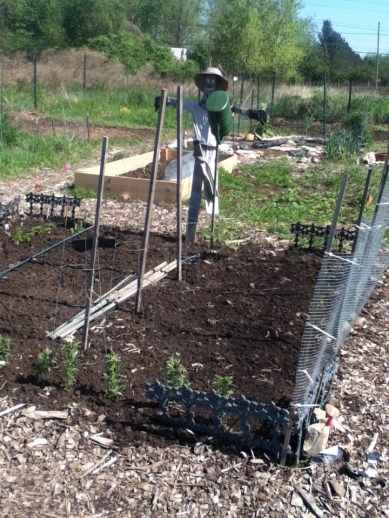
Some caring gardeners have even designed a scarecrow:
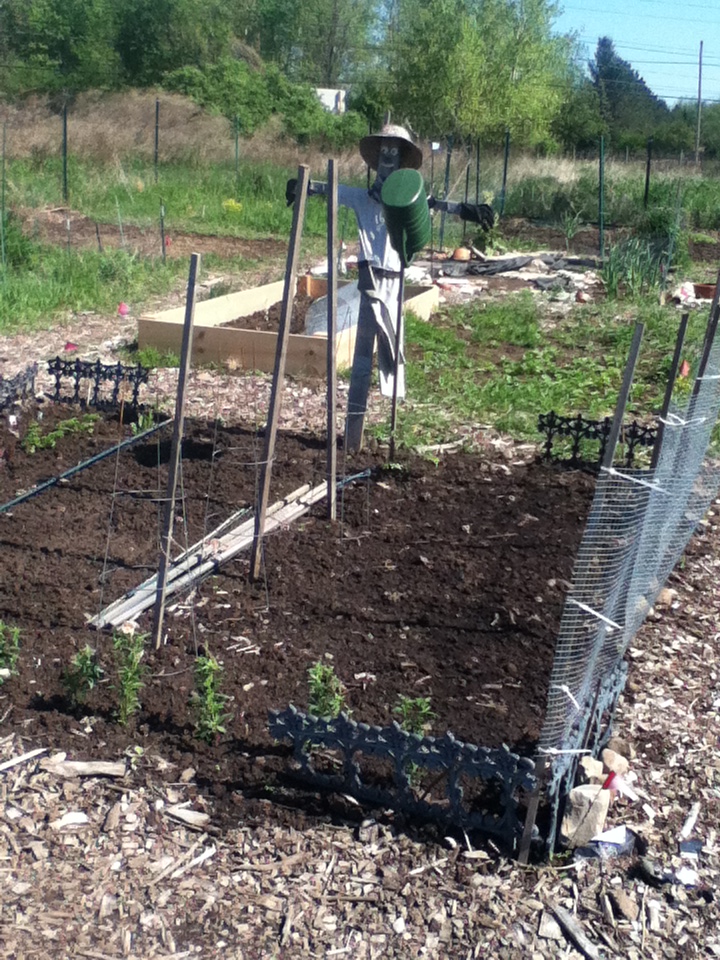
Then, I located my plot. Plot D-4:
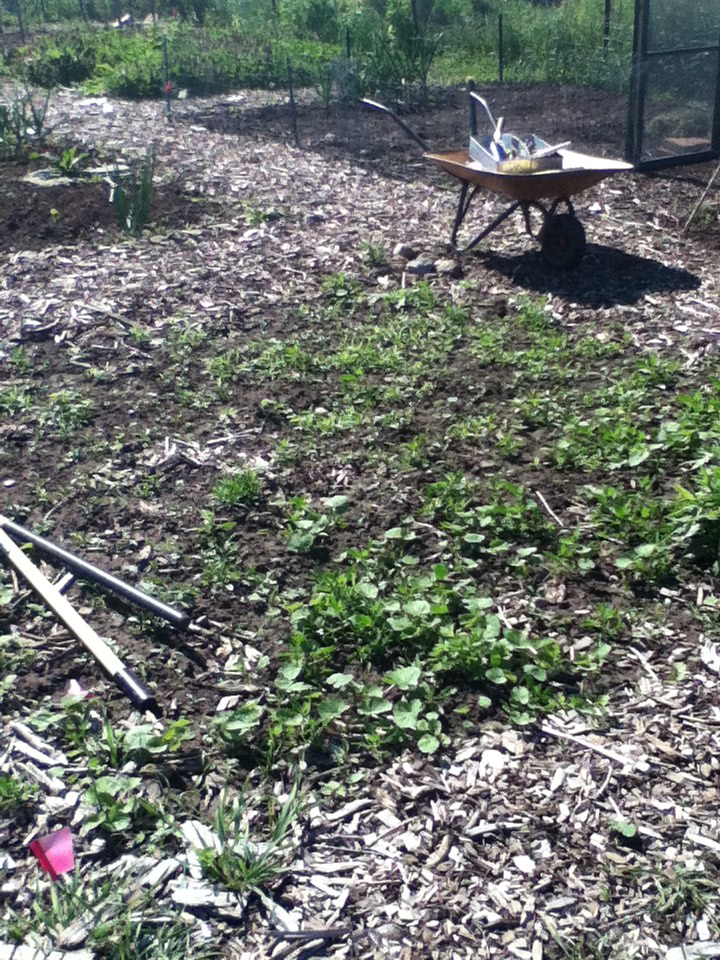
Weedy. Messy. Nothing much to look at. But, hey, I signed on to this, and this little plot of land was mine for the season so I got to work.
It took little effort to pull out the weeds from the soft, loamy soil. The most delicious feeling soil I have ever worked compared to the clay-laden soil in my backyard garden. Did I mention that my neighborhood was built on a former brick making quarry. ‘Nuf said about the quality of the soil.
But out here: The Brighton Community Garden sits on a former cow pasture that was home to a century’s worth of dairy cows. You guess it, this soil is blessed by 100 years of blessed cow poop.
I weeded and I tilled, the only sounds I heard were the swallows and red-winged blackbirds that swooped and sang overhead.
I did bring along my iPod for company and listened to music on its tiny speakers. And, even though I was alone in this sunny field, I still kept looking over my shoulder to make sure no one was going to run off with it. There are some habits from New York City that don’t die.
After a few hours, my plot looked like this:
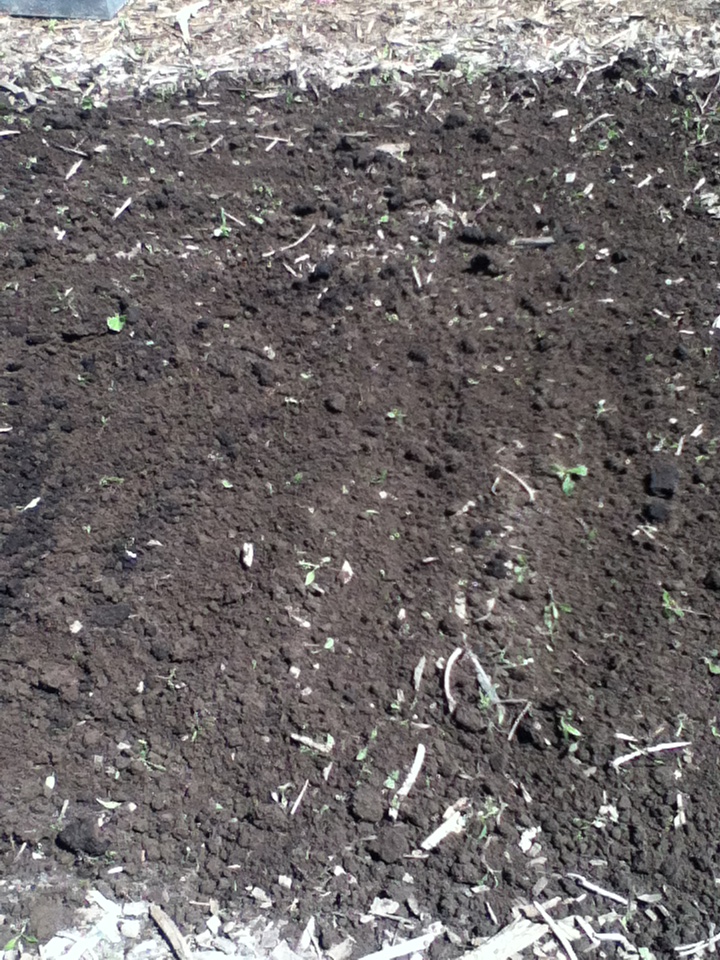
Not bad for a first day’s work.
Next up: I’ll install a fence and start planting some seeds.
Everything’s Coming Up .. too soon


This gallery contains 11 photos.
The warmth in March, and everything that goes with it is coming at us all too soon. The last few days of March have behaved normally, reminding Rochesterians what a Rochester March should really feel like. Sunny but raw. Windy and cold. But last week’s weather was the talk of the town here in Ra-cha-cha. […]
I’m Not From Here. But I’m getting There.
Last night I went to a professional women’s networking event sponsored by the Jewish Community Federation. Local TV reporter Rachel Barnhart was the guest speaker. A young journalist with great passion and conviction, she spoke of her struggles early in her career and how proud she is to be working and covering news in the town in which she was born and raised.
Here are some things I loved learning about this homegrown reporter:
- She stands by her convictions. In high school, she was suspended because she refused to stop publishing her own underground newspaper.
- After sending in her first demo tape to land a broadcasting job, a veteran in the broadcasting business “ripped her to shreds” in an interview. Instead of getting discouraged, she was thankful for the helpful criticsm, took all suggestions into consideration and moved on.
- Later in her career, she fought a non-compete clause in her contract at Channel 8 and then landed a job at WHAM, where after a year working as a web producer, she paid her dues and was back on the air for the 6 pm newscast.
- She was the first local reporter from upstate New York to scoop the story that then-Rochester mayor would run as Lieutenant Governor with Andrew Cuomo. She picked herself and a camera crew and drove through the night to be at a press conference in the NY Metro area to be the first in the Rochester area to get the story – all on a hunch.
- Even though there are bigger media markets out there, Rachel is proud to be covering her hometown because she passionately believes in its revitalization, thank you very much!
- It is with this faith in Rochester that Rachel has built quite a local following. A journalist of the digital generation, she has harnessed the power of social networking and has 7,000 Twitter followers and counting. Including yours truly.
As a transplant, one thing Ms. Bernhart said ratttled me. On bringing in talent from those who are not from the area, she said that it makes sense for the Rochester media market to hire native Rochesterians. Who better knows the area, its people than those who grew up here? Out of town editors and writers just “don’t get” Rochester.
Perhaps this is true. Rochester is a very tightly-knit town. If you have no relations here that can be traced back one or two generations, you are pretty much an outsider. I’m not the only transplant to Rochester who has felt that it is hard to break into social and professional circles that were forged in grammar school. This is a big contrast from big cities where new people come and go and work their way in all the time. Like they do in my hometown of New York City.
Is it not my fault that I needed to go with my husband to Rochester when he landed a job here? Did we need to go where he could make a living? Where we could have money for food and clothing and to send our kids to a nice summer sleep-away-camp?
True, the initial connection my family has in Rochester is this is the place where my husband found a great job. But, this connection is often not enough for us trailing spouses.
Here is how, after 12 years of living in a town other than my hometown, I know I am almost “home” both geographically and professionally:
- I don’t get lost anymore and know the difference between 390, 590 and 490.
- I’m comfortable telling people I’m “from” Rochester when away on vacation. And when I start to say, “but I’m originally from…” I stop and let it go.
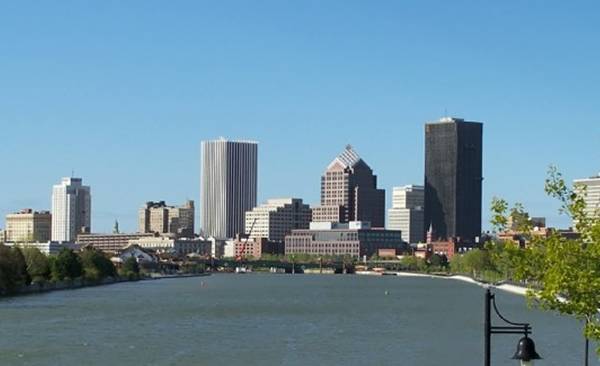
- I have grown to marvel at the clean lines of the Rochester City skyline. Sure, it’s not the New York City skyline, but it has a really cool bridge. And I personally know the civil engineer who designed it.
- My husband is home by six nearly every night. He has a 20 minute, traffic-free commute. In how many cities can you say that?
- When our friends “back home” tell us of their struggles to get their kids into the best private schools, we proudly boast about the great public schools in Rochester’s suburbs.
- I have yet to land a full-time job, but for the last two years, I have been bestowed the opportunity to meet all sorts of great interesting people through my column in the Democrat & Chronicle.
When I accepted writing this column, my editor at the time gave me some great advice: this is the chicken and waffle dinner column. It’s all about community.
This column will never win me the Pulitzer. It in no way matches the ambitions of my 22-year-old self fresh out of college. In fact, most of my journalism professors would raise their eyebrows at the stuff I write about. It’s not hard-hitting journalism. In fact, you can call it fluff, and I’d be cool with that.
However, my writing makes a difference. Greyhounds have been adopted. People have found support as they battle illnesses like cancer, Parkinson’s and Crohn’s disease because of events I’ve plugged in my column. Bikes have been donated and refurbished for the poor by local Rotary clubs and donations of food have been dropped off at area food pantries. It’s the good news column in an industry that is mostly filled with bad news.
It doesn’t really pay much monetarily. I get the payback when little old ladies stop me in synagogue or at Starbucks or in the supermarket to say how much they enjoy reading my column.
For me, that’s the time I get the feeling that I am finally home. For me, for now, that’s enough.
A Man with a Map. A Woman with a Bottle. Couple work for Rwanda’s Future.
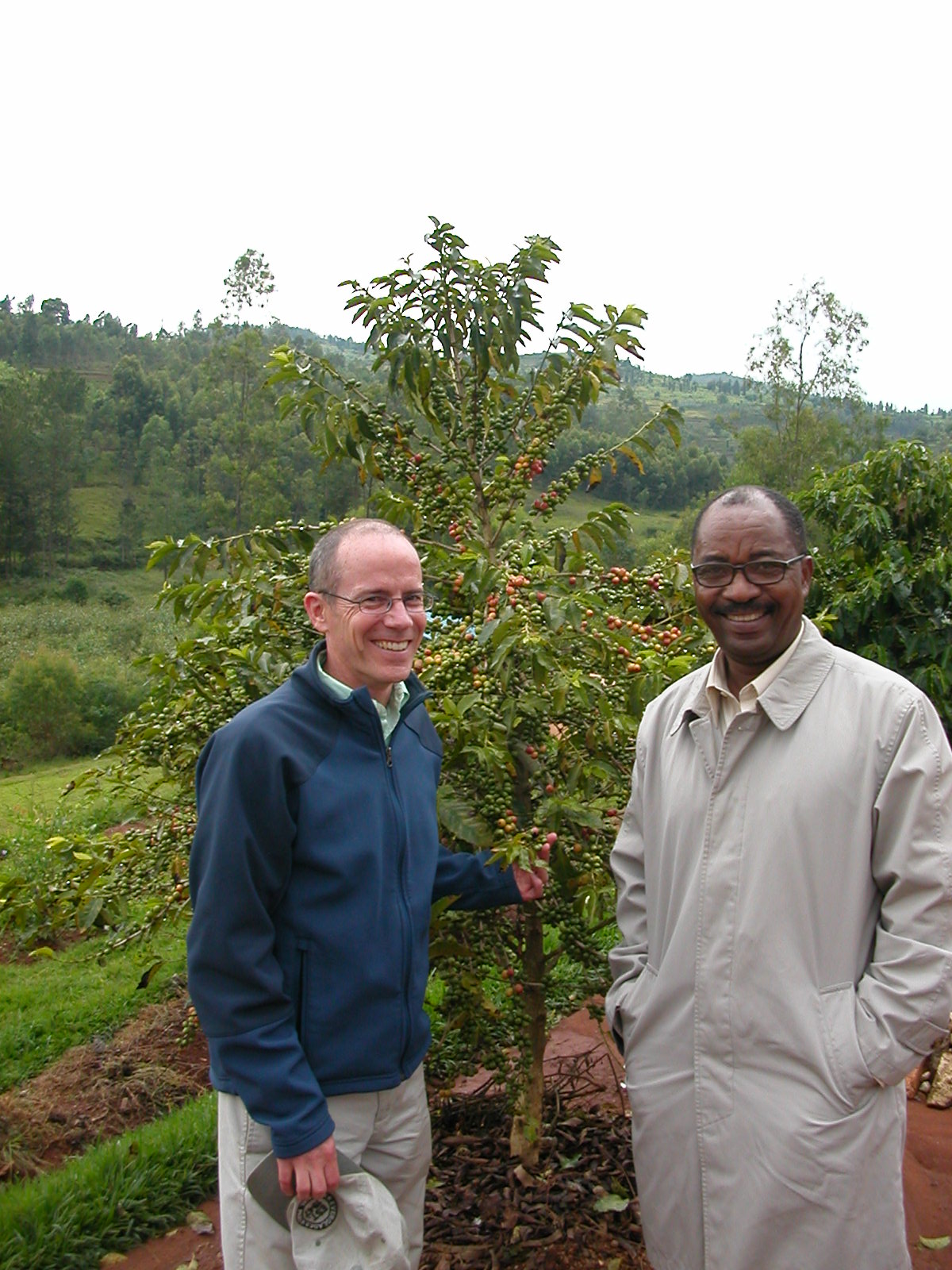
Tony Vodacek, left and, Manasse Mbonye, the provost of the University of Rwanda and a former RIT professor, inspect a coffee plant in Rwanda.
Sometimes, the constraints of print media causes editors and writers to make painful cuts to stories. I had a wonderful conversation with Ann Vodacek, my Brighton neighbor and wife of RIT professor Tony Vodacek about a simple solution that is being used to solve a pervasive problem in Rwanda – using plain water bottles to help purify drinking water with the power of the sun. For space sake, it had to be cut from the print version of my story in the Democrat & Chronicle. I thank both the Vodaceks for all their help with this piece and wish them luck as their work with Rwanda evolves.
Here is the full version of the story.
Tony Vodacek knows his way around a map.
The Brighton resident grew up in Wisconsin and spent summers navigating state and national parks on family camping trips. His wife, Ann Vodacek, describes him as a person who possesses a built-in global positioning system that comes in handy when taking family vacations with their three children in the Adirondacks.
While some people find going to new places disorienting, just hand Vodacek, a Rochester Institute of Technology associate professor, a map and he can locate his destination “in seconds.”
“I never have to ask for directions,” he said.
Throughout his life, Vodacek had an intense interest in maps and the information they reveal. This passion led him to a career in a field called remote sensing, which is the science of obtaining information about geographical areas from a distance, typically from aircraft or satellites.
Vodacek likes to keep and display maps that directly relate to his work. Posted on the door of his office at the Chester F. Carlson Center for Imaging Science at RIT is a relief map of the tiny African country of Rwanda. There are also photos from his last visit and labels from bags of coffee that represent one of Rwanda’s chief exports.
Vodacek’s friendship with former Brighton resident and RIT astrophysics professor Manasse Mbonye has evolved into a partnership between American and Rwandan academics who seek to advance this African country by providing its people with the knowledge to grow an information infrastructure and ultimately improve the way the water and land are used to create a stable economy.
Mbonye arrived in America as a Rwandan refugee child in the 1960s. After decades of living in America, he returned to Rwanda this year to accept a position as director of academics at the National University of Rwanda.
During his five visits to Rwanda — his most recent trek took place earlier this year — Vodacek met with Mbonye and many government dignitaries, and listened to their visionary optimism for Rwanda. The Rwandan people are trying to reconcile with their recent past and seek to advance this landlocked country with few natural resources by boosting its technology infrastructure and agricultural practices.
“Rwanda is striving to become self-reliant. It no longer wishes to be sustained by institutions like the World Bank. Mbonye said there is no other way for Rwanda (to succeed) except through education. The alternative to this is a dark path that has already been traversed,” said Vodacek, referring to the genocide in the mid-1990s where tribal divisions led to the deaths of nearly 1 million Rwandans.
Now, Vodacek is leading a multi-disciplinary international team of scientists and graduate students — backed with a $350,000 grant from the John D. and Catherine T. MacArthur Foundation — on a two-year survey of the Lake Kivu system in Rwanda to collect scientific measurements to learn how human activity is threatening biodiversity. Vodacek and his graduate students will study satellite data collected over 40 years to unlock the story of this lake that rests among volcanoes and a mountain gorilla reserve, a lake that one day might erupt from volcanic activity to cause a natural disaster.
“Just like meteorologists use satellite data to forecast weather changes, I use remote sensing to forecast environmental changes,” said Vodacek.
If Rwanda is going to be a technologically advanced country, it is going to need more power. This power can be found at the bottom of Lake Kivu. The lake’s depth is 1,574 feet with fresh water above and saltier, denser water resting on the bottom. The saltwater and sediment at the bottom of the lake trap large reserves of carbon dioxide and methane, sort of the way gas is trapped in an uncorked champagne bottle. For now, the waters are calm. But according to geological studies taken from layers of lake sediment, the lake is overdue for a phenomenon called “turning over.”
Geological studies have found that about every 1,000 years, underwater disruptions in the bottom of Lake Kivu — such as a volcano or an earthquake — caused the denser, gas-laden waters to rise to the surface and release large amounts of carbon dioxide and methane into the valley.
Those releases can be deadly. Vodacek pointed to an incident in Cameroon, where in 1986, a plume of carbon dioxide escaped from Lake Nios and suffocated 1,500 people while they slept.
If such a disruption would happen now, two million people living in the area would be at risk of suffocation. Possibly adding to the mix of disruption to the water is human activity like farming and deforestation. It is here where Vodacek’s research will be applied to see if human intervention might be another reason why gas pressure builds at the bottom of the lake.
Another man-made event that was evident in satellite images was the 1994 genocide. Photographs from space showed forested land in Rwanda that had nearly disappeared as fires were started and displaced people cut down wood for fuel during and after the genocide.
Whether or not human intervention will cause Lake Kivu to release noxious gasses, Vodacek did not need a satellite image to see evidence of deforestation around the lake due to farming practices and the burning of forests during Rwanda’s civil war.
As Vodacek drove along the shores of Lake Kivu, it was also easy to see just how hard it is to farm in a country that hardly has any flat land.
“People are trying to scratch out a living as subsistence farmers on deforested mountains. It looked like some of the farmland was nearly vertical in some areas,” observed Vodacek.
After decades of losing trees, the Rwandan government is studying ways to reforest its land. Remote sensing can help the country explore its options as it weighs the needs of growing food on farmed land versus protecting land and water quality by replanting trees. Should reforestation be widespread and allow for intermittent areas of farmland, or should some tracts of land be densely developed leaving other parts to turn over back to nature? Remote sensing over time can help study these scenarios and answer these questions.
“I’m excited to see what patterns and changes that will come about as Rwanda moves to reforest its land. This is all a very long term experiment and we are only at the beginning of it,” said Vodacek.
In any case, planting more native trees can only improve the quality of the water in Lake Kivu. Deforestation coupled with farming causes soil erosion, nutrient depletion and water runoff into the lake. These practices make for poor drinking water quality leading to water borne diseases especially among Rwandan’s children. It is this issue that has caught the attention of Vodacek’s wife, Ann.
A social worker by trade, Ann is in the beginning phases of working with Rwandans she has met through her husband’s work to improve drinking water by a method called Solar Water Disinfection, or SODIS. Used successfully in other countries like Kenya and India, it is a method as simple as killing harmful bacteria in drinking water by filling up plastic water bottles and leaving them to sit in the sun for six hours.
It’s that simple. The hard part, according to Ann, is gaining the trust and changing the habits of rural villagers.
Ann listened to the frustrations of a young Rwandan doctor who spent time in the United States to complete his residency.
“Rwandans who are studying medicine are trying to go back to their villages and teach mothers that it is not normal for children to suffer from swollen bellies or diarrhea. But it is going to take trust and some education for villagers to change this way of thinking,” said Ann. Improved health among Rwandan villagers can only lead to overall quality of life for the whole country, she added.
Pareve Pumpkin Pie


photo found on marthastewartliving website
Everyone in my nuclear family loves LOVES pumpkin pie. And for only the second time in 12 years, my pumpkin-pie eating little family of five will not be going over the NY Thruway and through any tunnels or bridges to New York City. Nope, as much as we love seeing the family and sitting in 10 hours of traffic, this year, we are staying put.
When you are Transplantednorth, there are some disadvantages of being a nuclear family in a town where it seems you are surrounded by friends who all have extended family in town. Come holidays like Thanksgiving, you once again become the disappearing transplant.
I’m not complaining, really. This was my choice to stay “home.” But can a place be home where there are no extended family within 300 miles? The rest of the year, Rochester indeed feels like home. Come holidays, without aunts, uncles cousins and grandparents around, it can feel like how the Ingalls family must have felt on the wild, windblown frontier.
But this is a story about pareve pumpkin pie.
One small advantage of staying put (okay my kids will think a big advantage) is that at our Thanksgiving table, we’ll have pumpkin pie.
As much as she has tried to like it, my mom does not like anything pumpkin. My kids, however, can’t get enough of the orange stuff. I put it in breads, waffles and pancakes. I even made a pumpkin challah just so I can make pumpkin challah stuffing.
But, most of you know that pumpkin pie calls for milk, cream, condensed milk, or some other dairy ingredient. This poses a challenge to Jewish families like ours who observe the dietary laws of keeping kosher.
There are ways to get around the dairy dilemma by finding pareve ingredients.
What is pareve? Not many know. It is so esoteric, the word does not appear in the WordPress spellcheck.
It’s a term meaning food that is neither meat or dairy. It’s neutral. Like Switzerland. Does it taste as creamy and delicious as real cream? No. But, I’d rather have an imitation dairy dessert any day than serving a Tofurky at my Thanksgiving feast!
Here is the recipe. I based it on a recipe used from Martha Stewart Living, I just replaced the dairy ingredients with some stuff called Coffee Rich, found in the frozen section of most grocery stores. For those of you in upstate New York, I found this chemical-laden substance at Tops, and not Wegmans this year. But I still love you, Wegmans.
All-purpose flour, for surface
- Pate Brisee for Traditional Pumpkin Pie
- 1 can (15 ounces) solid-pack pumpkin
- 3/4 cup packed light-brown sugar
- 1 tablespoon cornstarch
- 1/2 teaspoon coarse salt
- 3/4 teaspoon ground cinnamon
- 3/4 teaspoon ground ginger
- 1/4 teaspoon freshly grated nutmeg
- 1 teaspoon pure vanilla extract
- 3 large eggs
- 1 Cup Pareve Nondairy Creamer, like Coffee Rich
- Ground cloves
- Whipped cream, for serving
Directions
- Preheat oven to 375 degrees.
On a lightly floured surface, roll pate brisee disk 1/8 inch thick, then cut into a 16-inch circle. Fit circle into a 9-inch deep-dish pie dish, leaving a 1-inch overhang. Fold edges under. Shape large, loose half circles at edge of dough, then fold into a wavelike pattern to create a fluted edge. Prick bottom of dough all over with a fork. Freeze for 15 minutes.Cut a circle of parchment, at least 16 inches wide, and fit into pie shell. Fill with pie weights or dried beans. – Buy a premade Pareve piecrust. Bake until edges of crust begin to turn gold, about 15 minutes. Transfer to a wire rack, and let cool.- Meanwhile, whisk pumpkin, sugar, cornstarch, salt, cinnamon, ginger, nutmeg, vanilla, eggs, creamer, and a pinch of cloves in a large bowl.
- Reduce oven temperature to 325 degrees. Transfer pie dish to a rimmed baking sheet, and pour pumpkin mixture into cooled crust. Bake until center is set but still a bit wobbly, 50 to 55 minutes. (If crust browns too quickly, tent edges with a strip of foil folded in half lengthwise.) Let cool in pie dish on a wire rack. Refrigerate until well chilled, at least 6 hours (preferably overnight.
Happy Thanksgiving!
My name is transplantednorth and I blog for the trees
 The other morning I phoned my sister-in-law in northern New Jersey. I needed to know her Hebrew name for an honor she was receiving for the morning service at my son’s Bar Mitzvah, now only days away.
Now, I should have known this, and certainly my husband should have known his sister’s Hebrew name, but we didn’t.
I called her cell phone a few days ago after 8:45 in the morning. With four kids in school, she had to be up. She is always on the go. Instead, a very groggy voice answered.
“It’s Malka”
“Who’s Malka?”
“I am. That’s my Hebrew name.”
Oh, of course, that’s why I was calling. But why did she sound so tired?
“Why arent’ you up? Don’t you have kids to get to school?” Fool that I was, with the glorious November day outside, and the fact that Western New York again survived the latest storm to hit the east coast unscathed, I was not thinking about how bad things were back in the NYC/NJ Metro area. The now-dubbed Halloween snowstorm had turned the streets of parts of New Jersey into what looked like a war zone. With downed trees and downed power lines, it was even too dangerous to go trick-or-treating.
“I’m sleeping at a friend’s house. We have no power and no heat.”
She sounded so sad. She still had no power after two days. The kids had no school for two days straight. But the one thing that seemed to make her the saddest was:
“You should see my block. We lost so many big, beautiful trees.”
It takes decades for a tree to really mature. I know because I live on a street with huge Sugar Maples that look like this: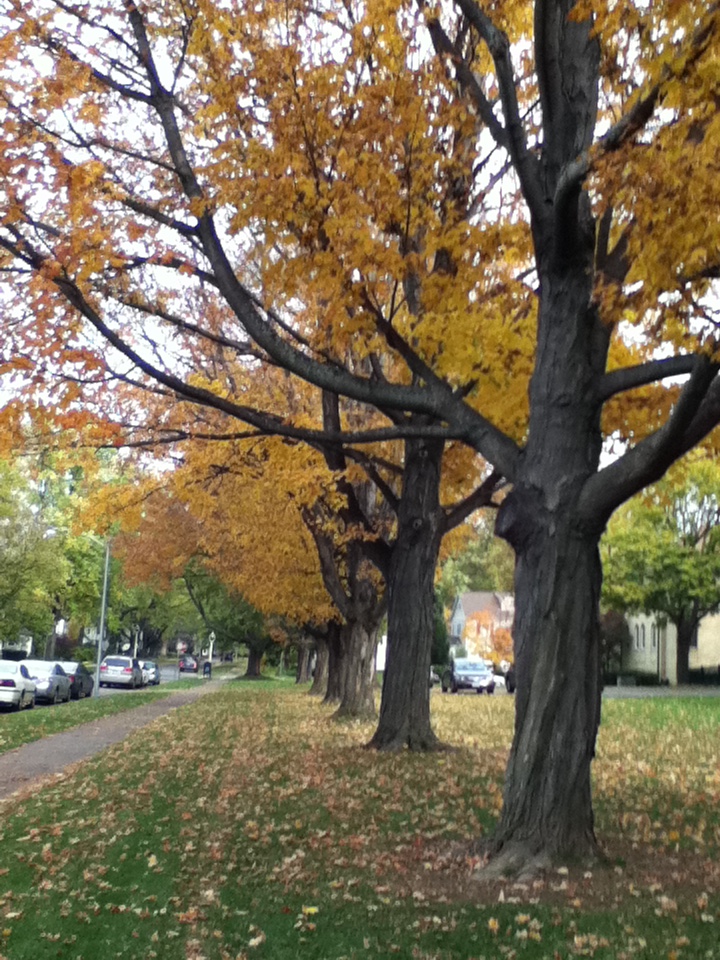
In the winter, when the snow is wet and heavy enough to put a coat of sugar on every last branch and twig, my street looks like this:
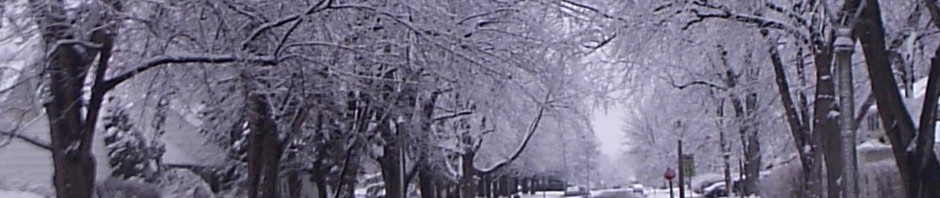
Sadly, even trees don’t last forever.
The snow-laden trees above were planted because they were fast-growing trees for Rochester’s first suburban development. They are now almost 90 years old.
Trees planted closely to houses are dangerous when they age and begin to rot from the inside out. Last weekend, our neighbors took down one of these trees. The bottom trunk was this big:
 This tree saw 90 years of changes of seasons, survived ice storms and blizzards. It saw generations of school children off on their first day of school. It was a home to birds and squirrels who played in its branches. But it lived out its days and succumbed to “crotch rot” of all things. Now, where its branches once stretched out, there is a whole punched into the sky where it once stood.
When snows fall heavy before the leaves drop, trees come down before they get a chance to live out their days. Back in New York City, Central Park lost 1,000 trees; trees that were just beginning to peak in their fall splendor of color. Trees that were planted generations ago so that we may enjoy them.
The other week, my son got a gift from a relative in honor of his Bar Mitzvah. In the true Jewish tradition, a ring of trees had been planted in his name in Israel. It’s a good thing we are headed there this winter to water them!
Now after this devistating storm that cancelled trick-or-treating and felled countless trees close to home, it seems like New York City needs new trees just as much as the land of milk and honey. The Central Park Conservancy is now asking for donations to restore its tree population.
Do you have a favorite tree? How would you feel if it were destroyed or it had to come down? Or, did you lose a tree to the Halloween storm? If so, I am sorry for your loss. Why don’t you write about it here?
Is one life worth it?
I usually don’t like when Israel is in the news. That is because US media coverage of Israel is rarely about the medical advances of Israeli doctors, or technological breakthroughs that happen in this tiny country with the world’s most high-tech startups per capita.
Coverage is usually about Occupation. Conflict. Tit-for-tat attacks and “disproportionate acts of aggression” by Israel to her neighbors, most who are hell-bent on the destruction of the only country on the planet with a Jewish majority.
So last week, when news first surfaced about Gilad Shalit, an Israeli soldier who was kidnapped in 2006 by Hamas, I immediately thought it was bad news. The person who was telling me the potentially good news was sitting in the passenger seat of my car. She was a teacher. And she had vested interest in the outcome of one of the most unprecedented prisoner exchanges in Israeli history. Because she was Israeli.
My guest was Inbar, one person in an eight-member Israeli delegation visiting Rochester area schools, both Jewish and non-Jewish, as part of the Partnership 2Gether Education Bridge program, sponsored by the Jewish Federation of Greater Rochester.
Israeli teachers and community leaders visited both religious and secular public schools such
as Scribner Elementary School in Penfield, Webster High School; and Twelve
Corners Middle School and French Road Elementary School in Brighton. Questions
from children in younger grades included what types of sports are played and
what kids wear in Israel. High school students posed more ethical questions
about religious diversity and the current prisoner swap that unfolded each day
of the Israeli’s visit.
They stayed with hosts, both Jewish and non-Jewish.
Does it shock you that Israeli Jews, like many Americans, struggle with their own Jewish identity? Is living in Israel enough for them?
The Israelis left Rochester with an enormous appreciation of the degree at which Americans tolerate one another’s different customs, religions and different levels of observance. They hopped around in our sukkahs. They attended services in our synagogues and many of them saw women participating in religious congregational life for the first time. Women here can be rabbis. Women here in America can read from and be called to the Torah for an aliyah. Then, they went shopping.
From what our Israeli guests told me, many have chosen a purely secular life, though in Israel, all Jewish holidays are national ones. Most Israelis are tired of being dictated by the religious right, which have a very strong hold on government. But, after visiting American Jews, who try to mix traditions with modernism, they want to welcome back Jewish traditions into their lives, but on their terms. As secular as they are, the lives of Israelis, including decisions made by the Israel Defense Forces, are governed by Jewish values. One of these values is the commandment of Pidyon Shvuyim, the redemption of captives.
As the week went on, the pending release of Gilad Shalit in exchange for Arabs with known blood on their hands, weighed heavily on our guest’s minds. Was it really true? Was Gilad coming home at last? And would he be released alive?
Gilad was kept in our hearts, prayers, and classrooms all week. We read from a story that Gilad wrote when he was only 11 years old. It had been illustrated and published into a book. It has been read by children the world over as a message of peace.
In the very early hours of Oct. 18, I climbed the stairs to the guest bedroom in my attic to wake Inbar with some very good news. Gilad Shalit, 25, was home and free.
Many have questioned the logic of this lopsided swap. As TV coverage streamed the news later that day at a gym where I was working out, a fitness instructor apologized if her question sounded crass, but she asked if he was worth it.
What do you think? Is one life worth saving?
About Me
Kreativ Blogger

Versatile Blogger Award


 Stacy Gittleman