
Speaking Up for Israel

Pro-Palestinian demonstrators at U-M fail to silence Jewish student
Stacy Gittleman | Contributing Writer
Expressing relief that the University of Michigan’s Central Student Government (CSG) Ethics Committee had cleared his name on Dec. 7 of charges of hate speech because he spoke out at a pro-Palestinian demonstration, Jesse Arm, a CSG student representative, said he looks forward to “getting back to work on making campus a better place for all students.”
“Freedom of speech is of critical importance, and all students should recognize that truth,” Arm told the JN shortly after the ethics committee hearing — the first time in the CSG’s history a student serving in a student governmental position had ever been brought up on an ethics violation. “I hope that, in the future, all students will be able to engage in respectful dialogue freely without fear of repercussions for their ideas,” he said.
Under the charges brought up by the pro-Palestinian group Students Allied for Freedom and Equality (SAFE), Arm faced possible removal from his student governmental seat for emotionally, but peacefully, criticizing their Nov. 19 demonstration.
The demonstration featured SAFE members costumed to look like Israeli soldiers pretending to harass others at a mock checkpoint in front of two large, wall-like signs that included a dove targeted in a rifle’s crosshairs and the words “To Exist Is To Resist.”
Arm told the JN, “I objected to the use of that phrase in particular because I believe it to be a plainly regressive way of looking at the conflict no matter what side you are on. To exist is to coexist. To exist is to dialogue. To exist is to compromise. To exist is to strive toward peace.”
The incident occurred on the same day Jewish students on campus learned of the terrorist murder of Jewish American Ezra Schwartz in Israel, though campus media reports that the timing by SAFE was a coincidence. Arm, who passed the demonstration on his way to a class, spoke out and offered his contact information to later discuss the issue, but a SAFE representative was not interested in continuing a dialogue.
The Ethics Committee reviewed the incident, which was documented in a video presented by SAFE. SAFE’S own video, however, proved that Arm acted appropriately — and it wound up supplying the evidence that exonerated him.
The Ethics Committee concluded, “Arm should not be penalized; and members of student government have the right to speak passionately … and advocate on behalf of the causes they believe in. [Arm] remained well inside his First Amendment rights and … he never attempted to speak on behalf of Central Student Government or even mentioned the governing body.”
To justify their ruling, the CSG cited Article VIII, Section 1 of the Constitution of the Student Body of the Ann Arbor Campus of the University of Michigan, which states that “no authority, academic or civil, shall infringe on a student’s freedom of speech, freedom to peacefully assemble, or freedom to demonstrate grievances.”
The Ethics Committee also stated “SAFE has the right to continue to discuss these important issues, just as Representative Arm should have the right to continue to speak freely and participate in dialogue. … This expression cannot be censored; the emotional responses that students have are real and valuable.”
‘UNFOUNDED COMPLAINT’
Leading up to the hearing, Hillel Executive Director Tilly Shames in a statement said that she had “faith in our Wolverines, and I believe our student government will see there is no substance behind this complaint and will not take action against Jesse.” She said that prior to the hearing, Alex Adler, the Michigan Hillel governing board chair, spoke at the CSG and several other students came out to support Arm against an “unfounded complaint made by students with a BDS agenda.”
Heidi Budaj, Michigan regional director of the AntiDefamation League, praised the efforts of organizations like Hillel and Chabad who have “boots on the ground” to support and advocate for Jewish students on campus. She also questioned SAFE’s motives as well as what standards SAFE felt Arm violated.
“The ADL by no means wishes to limit the right to free speech by any group,” Budaj said. “However, it is not clear as to which standards of behavior Arm is being held against.”
After the hearing, the Ethics Committee concluded that the operation rulings of the committee must be “reformed” as it was unclear as to what standards Arm should have been judged and whether or not Arm was allowed legal representation at the hearing.
According to Article VIII of the Conflicts of Interest Code, a member of the CSG may have an ethical conflict of interest of serving on the CSG if they receive money or payment from any student organization as a direct consequence of their membership in the Assembly. It also states, “No member of the Assembly possessing a conflict of interest with a student organization may participate in debate or vote on any matter regarding the organization with which there exists a conflict of interest.”
There is no language about CSG members participating, or speaking out, at a campus demonstration. Attempts to reach CSG and SAFE representatives before and after the hearing by the Detroit Jewish News went unanswered. *
It is not easy to be Jewish or pro-Israel on today’s North American college campus. This misleading, hate-filled sign put up by student activists who aim to do nothing more than demonize and delegitimize Israel’s very existence has become a cancer on the collegiate scene.
Meet Ezra Schwartz.


Meet Ezra Schwartz.
He’s eighteen and spending his gap year in Israel, just like my own children did. At least he was until yesterday. Now he’s dead.
Ezra was murdered by fanatics, on the spree of unrelenting bloodlust that’s happening right now in the Jewish State. I am troubled beyond the ability of words to express. Why aren’t the people who changed their Facebook photos to the French flag, changing it today to the Israeli flag? Changing it to Ezra’s picture? But who am I kidding? Israel isn’t France is it? No, it’s just a bunch of Jews over there and maybe, just maybe… they deserve it, right?
Every day for the past several weeks people like Ezra, who by the way, reminds me so much of my youngest son, have been murdered in Israel on an orgy of morbid extremism and spilled Jewish blood. Every time I look at…
View original post 386 more words
Mother Rachel is Crying Again: Why skimping on teaching Jewish History is a dangerous thing

When I penned this last week for the Detroit Jewish News, Joseph’s Tomb had not been set on fire by Palestinians twice. Yet. The thought of the Palestinians petitioning UNESCO that the Western Wall should be declared a Muslim holy site went beyond the pale of imagination.
But here we are. According to the world authorities, Rachel’s Tomb and the Cave of the Machpelach have no Jewish connection. Will this be enough of a shakedown to shake us out of our complacency?
On Oct. 8, The New York Times published an article that disregarded any Jewish historical claims to the Temple Mount in Jerusalem. Ask the average pre-bnei mitzvah adolescent attending a supplementary congregational Hebrew school why this is so troubling and you may get some blank stares.
In a 2007 study from the AVI CHAI foundation, one Jewish educator lamented that in the ever-shrinking hours of a child’s Jewish education, “we have lost the battle for time.” The paucity of contact hours spent at Hebrew school means that our Jewish kids are getting a minimal Jewish education. They learn to decode Hebrew enough for Hebrew prayer and bnei mitzvah preparation. Through experiential learning, they get the basics of the Jewish holiday cycle and maybe a sprinkling of Torah stories. Teachers need to accomplish this within five or less hours of weekly instruction, all the while dealing with the disruption of kids arriving late or leaving early because of extra-curricular activities.
That means teaching Jewish history – from our most ancient beginnings in Judea, through the Roman exile and all the way up to the birth of the modern State of Israel – has mostly met the chopping block. If you need evidence, visit the resource room or library of any temple or synagogue and you will see volumes of history textbooks printed in the last decade languishing on the shelves.
I speak from experience. I have taught Hebrew school in one capacity or another here in Detroit and in Western New York for 13 years. I have been trained on several curricula that attempt to infuse experiential history lessons into the classroom using both traditional and the most up-to-date methods of the Digital Age, only to scrap carefully constructed lessons for the sake of time.
As a parent, a Jewish educator, and a writer who has been observing media coverage of the Israeli-Arab conflict since college, I cannot help but notice an ominous connection between the neglect of teaching Jewish history and the rise of the distortion and demonization of Israel and of Jews in Israel, on the American campus and throughout the world.
American Jewish kids with a minimal education, or no Jewish education after their bnei mitzvah, are blindsided when they reach the college campus and do not know how to respond when confronted with organizations on college campuses calling to boycott “apartheid” Israel.
As parents and Jewish professionals, we are doing ourselves a disservice when we let our children’s Jewish education take a back seat to our many other priorities. Our children need to learn Jewish history – to see where we have come from and what past generations endured to maintain their Judaism – to shape their own Jewish identity and destiny.
This year, after much soul searching, I decided to “home Hebrew school” my own child. I do not recommend this for everyone. Ideally, Jewish learning needs to take place in a communal setting and with lively discussion. Believe me, getting your own kid to take you seriously as a teacher is no cakewalk, but with the promise of a treat after a certain amount of studying has been accomplished, we settle down and get to work.
Each time, we get through one chapter from an age-appropriate textbook. Fortunately, there are many educational resources and videos online to make ancient Jewish history come alive. Right now, we are working our way through learning about ancient Judea and the Jewish revolts after the Romans conquered Jerusalem.
Even as Israel works hard to preserve its antiquities, there are some who wish to erase them. As we sat learning the other night, an online news source reported that Palestinians had destroyed a 1,900-year-old cave in the Gush Etzion region that dated back to the Bar Kochva revolt. If you had never heard of this era in Jewish history, I encourage you to look it up.
Detroit Dreamin’ With Michael Bolton

Detroit Jewish News
October 15 • 2015
arts & life
Michael Bolton’s tribute
to our fair city premiered
with a red-carpet celebration.
Stacy Gittleman | Contributing Writer
It’s hard to believe that Grammy Award winning
recording artist Michael Bolton is from Connecticut — and not from Detroit.
During his 30-year career, Bolton has literally sung the praises of Motown all over the globe.
Now, he is so confident that this city is on the “tipping point of greatness” that he is in the
final phases of releasing a $400,000 full-length documentary he personally financed, which
previewed at an exclusive sneak peek event last week at Detroit’s Fox Theatre and was attended
by some of the city’s most prominent leaders, businesspeople and entertainers.
Bolton, 62, walked the red carpet at the Fox on Friday, Oct. 2, for the premiere of Gotta Keep
Dreamin: Detroit’s 21st Century Renaissance, drawing a crowd of several hundred, including
Detroit Mayor Mike Duggan, U.S. Sen. Debbie Stabenow and U.S. Rep. John Conyers, along
with Chris Ilitch and Quicken Loans CEO Dan Gilbert. Detroit Free Press columnist Mitch Albom emceed a panel of the film’s stars before Martha Reeves closed out the night with a surprise performance of “Ain’t No Mountain High Enough”
with Bolton.

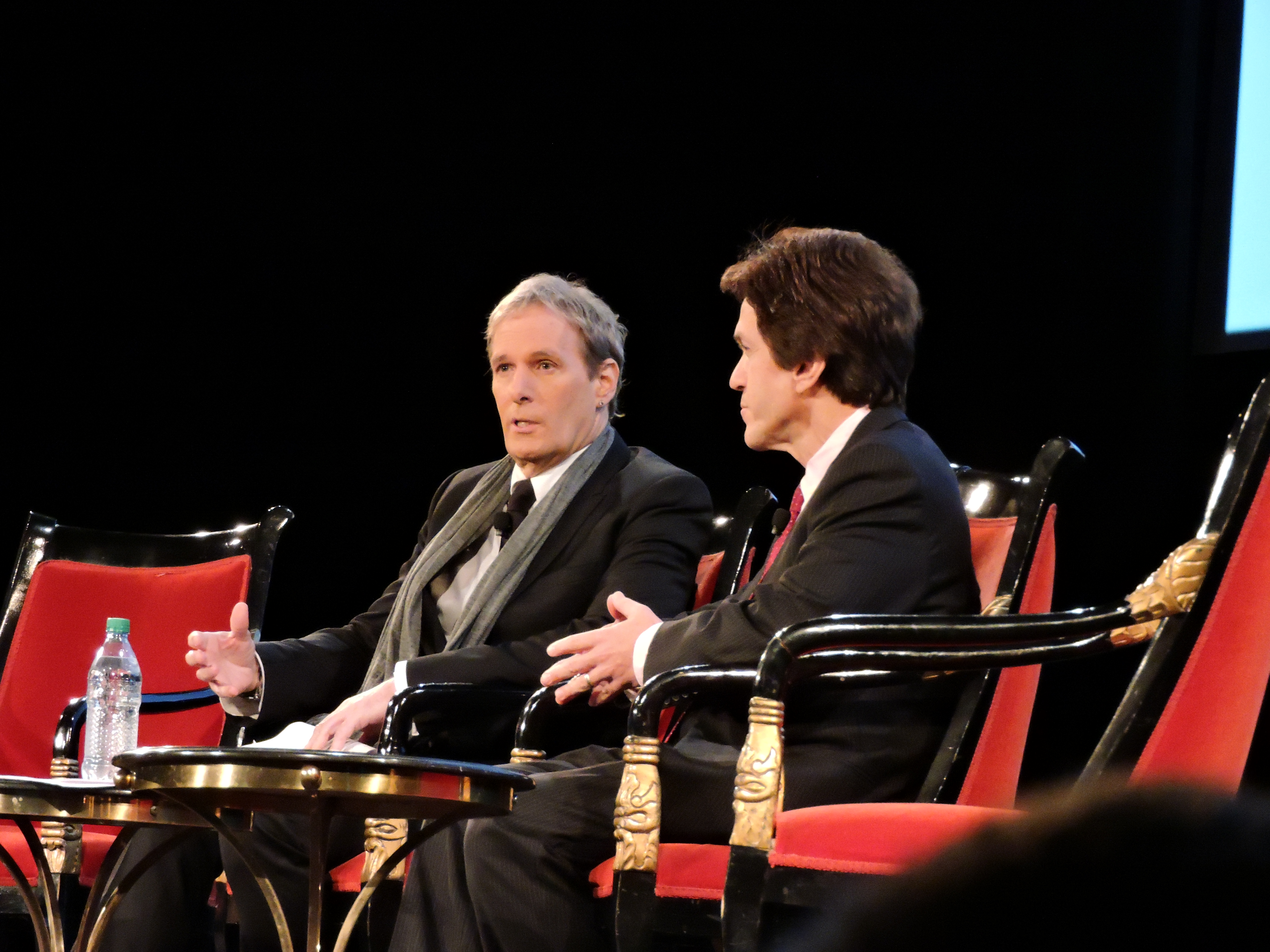

In addition to featuring Gilbert’s contributions to the city’s comeback, the movie
highlights a number of big names, including John Varvatos, Francis Ford Coppola, Alice
Cooper, Jerry Bruckheimer and more, as well as several young Jewish entrepreneurs
— such as Jacob Cohen, partner at Detroit Venture Partners, who participated in Jewish
Federation of Metropolitan Detroit’s inaugural Entrepreneurial Mission to Israel last April, and
dPOP CEO Melissa Price.
Price, who designs interior spaces for new businesses within once-decaying buildings
in Detroit’s rapidly growing downtown, spoke onstage about her recent move into a
Downtown Detroit apartment and the “endless” places to dine and explore within walking distance
of where she lives.
“There is an emerging belief system taking hold in Detroit that anything is possible,” Price
said.
Gilbert said Detroit’s history and its comeback “lies in the intersection of muscle and
brains” of its determined youthful population and the willingness of older, established businesses
to embrace and understand the culture of a digitally driven new generation.
“We can no longer operate with the old ways of thinking, that this is the way things have
always been done,” Gilbert said. “We need to build corporate cultures that attract young talent.
It is a culture that is proving that ideas, thoughts and beliefs are greater than money
when it comes to building businesses.”
Bolton, 62, was born and raised in a middle class Jewish home in 1950s New Haven, Conn.,
where he was taught by his family “not to hate,”even though his own family at times faced
discrimination as Jews. His connection to his Jewish heritage lies not in practice but in fond
memories of his Ukrainian-born grandparents, who taught him to believe in the American
dream.
“My grandparents came to America with nothing more than the confidence and belief
that they could provide a better life for their children,” Bolton said at a press conference
at the Westin Book Cadillac Detroit the day before the premiere. “That is the American
dream, and that dream is still alive right here in Detroit.”
What truly inspired Bolton to make this documentary was his lifelong love of Motown
music — he opened for Detroit’s own Bob Seger in his early years and, in 2013, he recorded an
album of Motown covers, Ain’t No Mountain High Enough. Recently, he discovered Hitsville
U.S.A., the nickname given to Motown studios’ first headquarters, and an introduction to
Gilbert by Bedrock Real Estate Services’ Detroit Ambassador Bruce Schwartz helped seal the
deal.
Bolton, who has had his share of uncomplimentary press, knows the sting of being
portrayed in a bad light by the media. His film comes on the heels of much negative national
coverage about Detroit, including the 2012 documentary Detropia, the book Detroit: The
American Autopsy by Charlie LeDuff (Penguin Books) and national coverage of the city’s 2013
bankruptcy.
“When the media wants to cover Detroit, they cannot resist the bloodiest part — the
blight and the decay — and I know how painful that can be,” Bolton said. “This film project
represents the greatness and the dignity of the people of Detroit. In the three years since I
started this project, more people with no roots in Detroit are increasingly interested in all the
good that is happening here.”
Bolton is back in Los Angeles making final edits with 2929 Entertainment to meet the
deadline to distribute the film for the 2016 film festival circuit. But this is not his last trip to
Detroit, not by a long shot.
“I do not have a kind of house-flipper, short-term relationship with Detroit,” he said. “The people I have met who helped me make this film are so inspiring. I hope this film has a long-lasting afterlife, and I intend to make it
reach as many people as possible to show off the town that keeps getting better every time I
come back.”
For Every Arab Day of Rage, I declare a Day of Hugging a Jew


Okay folks
These last 18 months or so have been rough for your friends who are Members of the Tribe.
There was last summer.
And now attacks that stab us in the back and leave us for dead.
We really thought that after the Holocaust and after the State of Israel was formed that the horrid days of the pograms and the persecution were behind us. How wrong we are.
Again we feel persecuted.
Lied about.
Vilified.
Demonized.
Mad as Hell.
Scared.
And utterly alone.
If you are not Jewish and have a Jewish friend, girfriend, boyfriend or spouse or co-worker, ask us how we are doing today.
If you are in the same town, please give us a hug.
Give us a call.
Send us a text.
An email.
Something.
Tell us, without condition, that you cannot believe the barbarism that is going on in Israel, where Jews are supposed to feel safe. Tell us that you stand strong with us and if the hatred comes here, wherever that might be in the Jewish diaspora, you will speak out for us and protect us.
Please. We need your friendship now.
Leading Prayer in a prayerful time


With the #Pope visiting the United States, and the Jewish High Holiday season in full swing, I wanted to share with you an article I wrote published in the Detroit Jewish News’ High Holiday edition.
Two days ago, my wonderful congregation spent 26 hours in intensive prayer, fasting and reflection. Prayer is hard work. It does not come easy. That is why I am thankful to those in the community – in my synagogue, and in yours, or maybe in your church, temple or mosque – who volunteer their time to learn how to lead prayer.
Have you ever led a prayer service? If so, how did you learn? Why did you decide to lead? Did it feel different than sitting in the pews? I’d love it if you comment below.
During the Middle Ages, an unknown cantor, humbled at the task of praying on behalf of the entire congregation so that God would inscribe them into the Book of Life, penned the prayer Hineini, meaning “Here I Am.”
Before the invention of the printing press, leaders of tefilot, or Jewish worship, carried the weighty responsibility of keeping an entire congregation engaged and focused.
Fast forward several centuries, and not much has changed. Although the words of the Rosh Hashanah and Yom Kippur liturgy are widely available in printed machzorim or even transmitted electronically onto large video screens, it is still the task of the leader to be the shaliach tzibbur (lit. “messenger of the community”) in shepherding today’s Jews through the most prayer-intensive time on the Jewish calendar in an increasingly secular society.
Throughout Metropolitan Detroit, many consider it an honor to volunteer leading services alongside professional clergy as an ultimate expression of contributing to the Jewish community.
Rachel Jacobson, 28, of Silver Spring, Md. each year returns to her hometown congregation of B’nei Israel in West Bloomfield to be with family and to lead various parts of services. Inspired from her years in Jerusalem learning from pioneering women leading tefilot in egalitarian congregations, she was one of the first female prayer leaders for the B’nei Israel during the high holidays.
“I never was formally trained to lead,” said Jacobson. “It is something I picked up over the years in school, at Camp Ramah, and living in many different Jewish communities. It is when I can do my best praying because I am not only responsible for my own davening, but for the congregation before me.”
Jacobson credits her singing ability to her school days performing in musicals, though it is not necessary to be able to carry a tune in order to lead tefilot. But just as in show business, services must go on, even when the prayer leader is sick.
“Sometimes I think God does not want me to daven,” Jacobson jokingly said, thinking about leading Rosh Hashanah services while fighting a cold. “It is moments like that when I really must remind myself that I am not up there (on the bimah) to sound pretty. I am an emissary of all the congregation’s tefilot to deliver them to God. That is what leading prayer is all about.”
When Clergy get sick, congregants step up
Last Rosh Hashanah, Rabbi Norman Roman of Temple Kol Ami in West Bloomfield found himself not on the bimah but in the hospital. It was then that the congregation showed its strength and proudest moments according to congregant Diane Siegel Di Vita of Northville, who helps coordinate monthly lay-led services at Kol Ami throughout the year. She said the entire executive board filled in to lead the services and deliver sermons under the facilitation of Cantor Tiffany Green. Rabbi Roman’s stepson Chad Rochkind delivered the Yom Kippur sermon.
“What happened at Kol Ami last year was very community affirming,” said Green. “It was important for our membership to see fellow members stepping up to the plate at a moment’s notice, and showed how they care for their community through their leadership,” said Green. “Leading prayers shapes and grows our small congregation. It shows that our members care about what happens here.”
In an effort to bring to his fellow congregants the meaningfulness of the season, Bruce Plisner, an active congregant at Temple Beth El in Bloomfield Hills, designed with Rabbi Mark Miller a one-hour text study for Yom Kippur afternoon that will focus on the central themes of the day: the sounds of the shofar, fasting, repentance and forgiveness.
Plisner, 68 of Farmington Hills, said that Jews for generations have recited prayers such as the Ashmamu and the Unetana Tokef but may not know their origin or significance. Through text study and rabbinical and contemporary commentaries, he hopes to enlighten the worshippers by offering them something less passive and more participatory.
“During Yom Kippur, we say certain prayers over and over again which few people understand what or why we are saying them,” said Plisner, who said he tries to get to services during the year as much as he can to usher and lead. “We thought it would be meaningful to take a different approach to reading about the prayers through rabbinical interpretation. We will also examine the tradition of fasting and through various texts, will explore who fasts and who is pardoned from fasting.”
In synagogues and temples that do not have a chazzan, rabbis such as Steven Rubenstein of Congregation Beth Ahm in West Bloomfield rely upon a deep core of capable and willing congregants to lead prayers. This year there will be some new Torah readers joining the ranks of volunteers, he said.
“Leading tefilot is a big part of our congregation’s culture,” Rubenstein said. “Leading gives people the opportunity to be invested and involved in congregational life. It makes services more enjoyable, not only for the High Holidays but throughout the entire year.”
“We Just Want To Live”

“It is very nice that you and your other American friends care about protecting the Arctic Circle and the polar bears against global warming. And I understand you want social justice and equal rights and the right to choose for a woman. Yes, all these things are very nice and good and important. But here in Israel, the first thing we need more than anything is security for us and our children. We just want to live. We want to go to sleep at night and not worry that Iran is building a nuclear bomb to shoot at us.”
I sat in my host family’s living room. On my 2008 educator mission to Israel I stayed with Keren, a teacher, her husband, Omer, a systems manager (or something like that), and their two young daughters. It was in the evening and Keren was upstairs putting the girls to bed in their two-level condo in Modi’in Israel.
Next to the girls bedroom, which they shared, was another room that many in Israel had if their home was built after a certain year. In their house, It is an inner room with thick, lined walls and no windows and closes with a thick door that shuts with a crank. one thick door that when shut,
The thing is, in Israel, space is tight. Square footage is expensive. Like, think close to Manhattan expensive. And although Israelis are not supposed to use this room for anything else but a safety shelter, it is often used as a room. For a home office. A playroom filled with colorful toys. An extra space to store like any other American needs, all the extra stuff that comes along with living in a consumerism society.
I was visiting Israel to teach Israeli kids a little bit about what it was like to be a Jew in America. But that evening, I was the one getting a lesson on the mindset of Israelis as I sat on the white couch with a glass of precious water – no ice – my feet resting on the cold tiled floor.
It was the spring of 2008. Israel was in the wake with its military action in Lebanon and Gaza after the kidnapping of three soldiers from 2006. In the United States, elections were heating up and most of America was fed up with the way things were going under the Bush Administration.
The economy was about to tank.
We were five years out of Bush’s “mission accomplished” announcement, where nothing seemed to get accomplished except hundreds of our soldiers getting killed or wounded. Where were the weapons of mass destruction? When would we ever see a troop draw down from Iraq? Afghanistan?
I was the Democratic Party’s dream voter. I stood, and still, stand for every issue on the Democratic ticket. Strict environmental regulations. Stricter gun control. Pro Choice. Fulfilling the legacy of Ted Kennedy’s call for universal health care.
When it came to Israel, I still believed that supporting Israel was a bipartisan issue. But in 2008, there started to be a shift that if you really wanted to support Israel, voting for a Democrat is not the way to go. I had been warned by friends and certain family and now, I was getting a plea from Omer.
Early every morning, Omer gets picked up outside his condo by a company bus to take them to the offices inside the Ben Gurion Airport. Except, that next week, after I headed back to the States, Omer would be heading out for a month of reserve duty, just as most Israeli men do, one month per year, until they are in their 50’s.
But back to the couch.
Omer did not belittle me for my then progressive beliefs, and said in a big country like the U.S., he could understand why people would back these issues. He did not tell me which way to vote, but told me who he hoped would win in no uncertain terms.
“I think Obama is a good man, but here in Israel, we really like McCain. We need a sheriff in the White House.”
Eight years later I have not forgotten Omer’s words. I wonder what he thinks of the United States now. Does he feel betrayal by American Jews, myself included, who vastly voted for Obama, once and even twice?
And now the Iran Nuclear agreement is up for vote in Congress.
Below, if you care to keep on reading, is my article from this week’s Detroit Jewish News covering the Washington Institute’s David Makovsky’s speech before Detroit’s Jewish community. He offered as balanced a perspective as possible on the Iran Deal. Although the Wall Street Journal contributing writer has written strongly against the deal, I learned later that his sponsors here asked him to give a balanced overview and not his own personal opinions.
I wonder why.
I woke to the news that Chuck Schumer (D-NY) made a statement today coming out against the deal.
Somewhere in Israel, I hope that this news has reached Omer, and that he is smiling with just a little bit of hope.
David Makovsky, director of the Project on the Middle East Peace Process of the Washington Institute for Near East Policy, mapped out the pros and cons of the Iran nuclear agreement to an audience of nearly 1,000 donors to the Jewish Federation of Metropolitan Detroit at Temple Beth El in Bloomfield Township on July 30.
Stressing the many questions that still remain on how the deal will be enforced should it be enacted, Makovsky spoke of the “atmosphere of anguish” going around Congress as it heads to a vote on the agreement.
He also emphasized the urgent need for cooperation between U.S. and Israeli intelligence and security departments.
Detroit’s Federation is one of only eight in the nation that have come down in the first week squarely against the agreement. Noting the size of the crowd, Federation President Larry Wolfe said this is a time of “deep concern, interest and anxiety within Detroit’s Jewish community.
“The Federation of Detroit needs to take a stand, particularly with their fellow Jews in Israel who feel abandoned and isolated, especially in light that with this deal, terrorist organizations such as Hamas and Hezbollah funded by Iran will be flush with cash,” Wolfe said.
“What is at stake is nothing less than the future for Jews here in Detroit, Israel and around the world.”
Professor Howard Lupovitch, director of the Cohn-Haddow Center for Judaic Studies, Wayne State University, served as moderator.
To illustrate the complexities of either being for or against the deal, Makovsky walked the audience through a hypothetical face-to-face meeting between Israeli Prime Minister Benjamin Netanyahu and President Barack Obama.
Makovsky outlined Obama’s reasoning why this is the “best possible deal” with Iran. It guarantees that Iran would be nuclear weapon-free for 15 years.
After that period, Iran could enrich uranium to weapons grade level within 12 months. Presently, Iran is three to four months away from this threshold.
The deal would also cut the number of Iran’s working centrifuges. According to Makovsky, Obama would argue that it is the best chance to move Iran into “inte grating itself into the global economy” for the general Iranian population who wants to become more Westernized.
In this imaginary exchange, Netanyahu would argue that the deal has not eliminated Iran’s nuclear threat but only managed it by acknowledging that, in 15 years, Iran will be treated like any other nation and there is nothing to stop Iran from “racing toward the bomb” when the deal expires.
Netanyahu would also ask why the U.S. and other countries involved in negotiations did not clearly outline a set of possible violations and penalties as a way of holding Iran accountable to the agreement.
Also, Netanyahu would ask how reasonable would it be to ask countries like China, Russia or France to “snap back” sanctions once they are entrenched with business dealings with Iran and are “lining their bank coffers with money from oil revenues?” Also troubling are the billions of dol lars of frozen assets that could flow back into Iran’s economy upon the agree ment’s enactment. If Iran’s top banks will have sanctions lifted against them within eight years under the deal, Makovsky said the nations involved need to develop a clear strategy of how to follow the money trail so it does not further fund terrorism in the “volcanic” Middle East.
In spite of the uncertainty, Makovsky offered hope in the fact that fractious Arab nations are moving closer to work with each other, united in their fear of a nuclear Iran. If the Arab nations can do this, so, too, should Israel and the United States, he concluded.
“My one plea is that the security and intelligence relationship between us needs to come together as soon as pos sible,” Makovsky said.
“With Israel now encircled by non state entities as governments around it break down, we cannot afford to wait until the next presidency or even another year to start collaborating. We no longer have the luxury to be angry with one another.”
Pothole City

Today is the day. Raise the sales tax by 1 percent to fix our roads and bridges. It baffles me each time I traverse the worst potholed intersection on Middlebelt and Maple Road and there is a sign to vote NO on Prop 1. Today, get out the vote. Vote yes for our roads and schools.


“She’s been training for this for years, and this course is as difficult as they come.”
“Wow, look how she swerves and still can maintain that SPEED and control!!”
“Oh, she is really fighting to stay on the course as she goes around that curve, it’s so difficult but she makes it look so easy.”
Have I just returned from Sochi, competing in the giant slalom?
No.
I’ve just returned from grocery shopping. In suburban Detroit. And there is a pothole that could accommodate a baby elephant on the road between my house and the dairy aisle.
To say that Michigan’s roads have a pothole problem is an understatement. We don’t really have roads here anymore. Neglect of Michigan’s roads have been decades in the making and it’s more like Michigan has miles of potholes with some bits of road holding them together.
Now, I know many of you living…
View original post 442 more words
The Very Versatile Dudu Fisher Will Perform in Detroit April 19
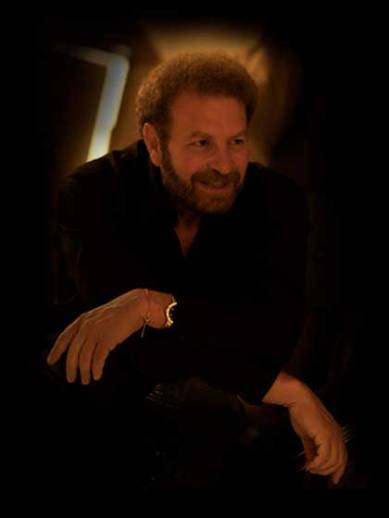
It was a bit of a challenge to pin down this world-famous Israeli entertainer, most known in America for his performances on Broadway as Jean Valjean in Les Miserables. Lessons to publicists out there: Always set up a time between your client and the reporter. Do not just give them your client’s phone number and tell the reporter to “just keep trying.” Also, make sure your client has a working cell phone with voice mail. I am just saying this as kindly as I can.
In the end, it all worked out and I got my story. Here it is, as printed in last week’s Detroit Jewish News.
The Israeli entertainer does it all — and brings it to Metro Detroit.
Stacy Gittleman Contributing Writer
According to world-renowned Israeli entertainer Dudu Fisher, no other Broadway musical — not even Fiddler on the Roof — speaks as well of the psyche of the Israeli people, with its themes of going to battle and losing loved ones in war, than Les Miserables.
On many different levels, Fisher says it translates very well to Hebrew.
“When I first heard [the song] Empty Chairs at Empty Tables, I was thinking of all my friends killed in battle,” Fisher, 64, says. “After the Israeli premiere, [producer] Cameron Mackintosh said he sensed a response from the audience that he never felt from audiences in other countries. I had to explain to him that 99 percent of the people sitting in the theater were serving in the army or have someone close serving. I told him not one of us does not know people wounded or killed during the time of Israel’s existence.”
Fisher, who tours the world sharing his love and talents for Hebrew, Yiddish and cantorial music, as well as operatic, reggae, pop and country, will perform 7:30 p.m. Sunday, April 19, at Congregation Shaarey Zedek in Southfield.
After service in the Israel Defense Forces, Fisher studied at the Tel Aviv Academy of Music and, at age 22, he became the cantor of the Great Synagogue of Tel Aviv. For three decades, his cantorial services have been sought throughout the world, from South Africa and Brazil to the United States. To date, the tenor, who speaks three languages and sings in 10, has recorded upwards of 40 albums, plus a number of children’s DVDs, teaching Jewish customs and traditions.
On a 1986 trip to London, he caught a performance of the then-new musical Les Miserables and was enamored. When news spread that a Hebrew-language Israeli production of the show was in the works, Fisher, with no theater experience, landed the leading role of Jean Valjean.
He performed for three years in Israel, plus lengthy stints on Broadway and London’s West End.
Fisher’s Hebrew performances launched him to international fame, and his 2008 PBS special Dudu Fisher: In . Concert from Israel was enormously pop ular. But performing on Broadway as an Orthodox Jew came with its challenges.
He was able to negotiate a contract for Les Miz which made him the first observant Jew on Broadway and the West End to be excused from performing Friday nights, Saturday matinees and all Jewish holi days, but his observance impeded him from landing additional roles. He wanted to audition for Phantom of the Opera and still dreams of playing Don Quixote in Man of La Mancha.
“[Observant Jews in show business] should be mentally prepared to be met with many setbacks,” he says. However, setbacks often lead to inspiration. When Fisher sings at Shaarey Zedek, he will perform songs from his 1999 autobio graphical off-Broadway musical, Never on Friday — an anecdotal work exploring the complications of his experience on Broadway as an observant Jew. The tenor also will perform pieces from his 2008 show, Jerusalem, based on a collection of songs and stories that tell the history of the ancient and holy city.
Fisher has a passion for sharing the music of what he calls “his most beloved city” with audience members Jewish and non-Jewish alike. His own father and other family members survived the Holocaust when a Christian couple hid them in a bunker in Poland.
Fisher, who wants to let his listeners know that Jerusalem is holy to all reli gions, tries to reach audiences outside the Jewish community, too — and fans in Branson, Mo. (known as the Las Vegas of the Bible Belt), welcome his annual visit.
“It is important for the State of Israel to have non-Jewish people hear the true story of Israel’s history and current issues,” he says. “Not only what they see on the news.” Dudu Fisher performs 7:30 p.m. Sunday, April 19, atCongregation Shaarey Zedekin Southfield.
Free to CSZ members;$36-$236. (248) 357-5544.
About Me
Kreativ Blogger

Versatile Blogger Award


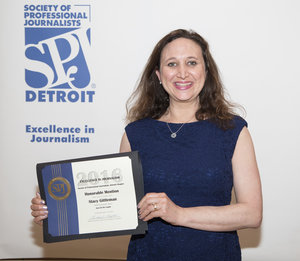
 Stacy Gittleman