
For You: I will believe in what you cannot see. I believe in Unicorns
 It has been an awful time, in a time that should feel like a time to be happy: The Jewish New Year and all the possible bounty it can hold.
This is in memory of a child of my friends. A child who even Gd seemed to cry as the heavens opened up with pouring rain to match the tears inside during the funeral.
This Obituary for Anna appeared in this week’s Detroit Jewish News. May her memory be for a blessing. May she always be a reminder to us adults of innocence, and may we try to hold onto that innocence and joy and wonder, even as sometimes cynical adults.
May her family know that, though we cannot diminish their deep sorrow, we can bear some of it, if just a tiny bit, for them, and we have strong arms to help them through the weeks and months ahead.
Anna Hendren Schwalb, five, of Ann Arbor, died October 1, 2014 as a result of injuries suffered when she was struck by a car Friday, Sept. 26, while walking home from a family Rosh Hashanah celebration.
She was the beloved daughter of Dr. Jason Schwalb and Dr. Samantha Hendren and cherished sister of Jessica Hendren Schwalb and Joseph Hendren Schwalb.
She is also survived by loving grandparents Carla Page and Robert Hendren; Rabbi J. Fredric Schwalb and Joanne Landau, and Ellen Kahne; great grandparent Sam F. Mineo; and aunts and uncles Christopher and Melinda Hendren, Micah and Katie Schwalb, Benjamin, Amit and Zhenya Schwalb. She is also survived by many loving great aunts, great uncles and cousins. She was also loved and cared for by her devoted nanny, Christina Linguidi.
The family would like to express their gratitude for the world-class care provided by the medical team at C.S. Mott Children’s Hospital in Ann Arbor
The funeral was held 10 a.m. Friday, October 3 at Beth Israel Congregation in Ann Arbor and attended by hundreds of mourners, followed by a private burial.
Anna’s golden curls and wide smile brightened every room she entered. She loved to sing and lead songs at her preschool at the Jewish community center of Ann Arbor. She was a happy participant at Tot Shabbat services at the Beth Israel Congregation in Ann Arbor. This fall, she happily adjusted to kindergarten at the Hebrew Day School of Ann Arbor. She always made sure everyone was included in playgroups. She loved her friends and upon returning from school, created paintings and drawings for her friends and family. Annie used to say that when she grew up, she wanted to be a nanny or a teacher. She loved purple and believed in unicorns.
Donations in Anna’s memory may be sent to the Hebrew Day School of Greater Ann Arbor by visiting the school website at http://www.hdsaa.org/site/giving or mail a check to Hebrew Day School of Ann Arbor; 2937 Birch Hollow Drive; Ann Arbor, MI 48108 or call (734) 971-4633.
Awash in Water – Detroit’s Jewish Community Responds to Flood

It was the flood disaster minus the hurricane. Talking to folks for my story reminded me of the frustration suffered by my parents and so many others after Sandy. I want to thank all of them for sharing their stories, and for the Jewish agencies like NECHAMA and Jewish Family Services who are working tirelessly to all people affected by this historic flood. Here is my front-page story from this week’s Detroit Jewish News.
Awash In Water
 Jewish organizations in Detroit and around the country rose to the needs of last week’s flood victims as rapidly as the waters rose in the streets and basements.
They provided hands-on assistance, from hauling out damaged carpets and soggy sofas from basements flooded with smelly sewage to offering financial assistance and loans.Congregation Sharey Zedek in Southfield had a free, warm Shabbat dinner waiting for its members tired after a week of cleaning up. In the first week of responding to Detroit’s historic flood caused by torrential rains on Aug. 11, there was no shortage of an outpouring of help to Jewish families in Ferndale, Oak Park, Pleasant Ridge and hardest-hit Huntington Woods.
By Thursday morning, Nechama, a Jewish nonprofit disaster relief agency based in Minneapolis, had boots on the ground in Detroit. They quickly collaborated with Jewish Family Service of Metropolitan Detroit as well as other area nonprofits in the general population to help the disabled, elderly homebound and economically disadvantaged in the secular and Jewish communities.
Nechama Field Operations Specialist Mark McGilvery drove through the night to arrive in Detroit the morning of Aug. 14 to mobilize a team of volunteers who could be ready to work as early as last Friday.
“We are like a Home Depot on wheels,” said McGilvery, referring to the trailers stocked with a large amount of supplies and clean-up equipment they are able to bring to populations affected by natural disasters. Nechama, Hebrew for comfort, has the capacity of training and mobilizing Jewish organizations in Detroit and around the country rose to the needs of last week’s flood victims as rapidly as the waters rose in the streets and basements.
They provided hands-on assistance, from hauling out damaged carpets and soggy sofas from basements flooded with smelly sewage to offering financial assistance and loans.
Congregation Sharey Zedek in Southfield had a free, warm Shabbat dinner waiting for its members tired after a week of cleaning up. In the first week of responding to Detroit’s historic flood caused by torrential rains on Aug. 11, there was no shortage of an outpouring of help to Jewish families in Ferndale, Oak Park, Pleasant Ridge and hardest-hit Huntington Woods.
By Thursday morning, Nechama, a Jewish nonprofit disaster relief agency based in Minneapolis, had boots on the ground in Detroit. They quickly collaborated with Jewish Family Service of Metropolitan Detroit as well as other area nonprofits in the general population to help the disabled, elderly homebound and economically disadvantaged in the secular and Jewish communities.
Nechama Field Operations Specialist Mark McGilvery drove through the night to arrive in Detroit the morning of Aug. 14 to mobilize a team of volunteers who could be ready to work as early as last Friday.
 “We are like a Home Depot on wheels,” said McGilvery, referring to the trailers stocked with a large amount of supplies and clean-up equipment they are able to bring to populations affected by natural disasters. Nechama, Hebrew for comfort, has the capacity of training and mobilizing volunteer crews as large as 100 to help with debris cleanup and tearing out drywall and waterlogged flooring materials. McGilvery said his organization expects to stay in town for at least two weeks volunteer crews as large as 100 to help with debris cleanup and tearing out drywall and waterlogged flooring materials.
McGilvery said his organization expects to stay in town for at least two weeks or maybe longer depending on the need.
“A natural disaster like this is something new to us,” said Dan Trudeau of Jewish Family Service in West Bloomfield. “We are relieved to have the expertise of an organization like Nechama that could mobilize and put together tremendous relief efforts as quickly as they did.”
Trudeau said within the first days following the flooding, JFS received phone calls from nearly 50 community members, most JFS clients, experiencing flood-related problems and requesting help cleaning out their basements flooded with sewage backups. Callers also reported loss of major appliances, furnaces and hot water heaters. Trudeau said he expects the number of incoming calls to increase.
“Our family case management supervisor said they had 10 calls in 45 minutes on Thursday afternoon,” Trudeau said. Most came from families in Oak Park and a few from Southfield and Huntington Woods.
Last week, streets in these areas were deluged with huge piles of sour-smelling debris at the ends of driveways awaiting city garbage pickup.
Rabbi To The Rescue
Rabbi Robert Gamer, also of Huntington Woods, found it a challenge to care for his congregants at Congregation Beth Shalom in Oak Park while he also cleaned his family’s flooded basement.
In the days following the storm, he spent mornings in shorts and a T-shirt ripping out basement flooring and hauling a ruined couch to the curb before changing into more rabbinical attire to comfort congregants who recently lost a loved one as he officiated at a funeral. He also spent a great amount of time reaching out to his congregants, most living in Huntington Woods.
According to Gamer, around 40 to 50 families of Beth Shalom had flooding. Prayer books in basements may have been water-damaged, so Beth Shalom is collecting prayer books to ensure they receive a proper burial in a Jewish cemetery rather than ending up in a landfill with other debris.
 “We were disappointed that some of our siddurs and mahzors were lost in the flood,” said Daniel Cherrin of Huntington Woods. “However, I am grateful to Congregation Beth Shalom and Rabbi Gamer for providing the valuable service of properly taking care of damaged prayer books. It provides a difficult but great lesson for me and my children in dealing with damaged religious items.”
Gamer said, “It has been an emotional week. It has been hard on my young children. We lost some major appliances. We lost some wedding and baby pictures of our kids; but in the end, we are fortunate. There are many much more worse off than we are.”
On Sunday afternoon, Gamer invited all to come together for a hot dog roast, right in his driveway. Beth Shalom supplied the hot dogs, drinks, chips and watermelon.
Rabbi Aaron Starr at Congregation Shaarey Zedek said 35 congregants impacted by the flood attended a Shabbat dinner at their shul. The CSZ Sisterhood as well as Quality Kosher Catering sponsored the dinner.
“Our affected congregants worked hard all week at the frustrating task of cleaning out flooded basements,” Starr said. “It was the least we could do at the end of that week to provide them with a warm Shabbat dinner that nourished both body and soul.”
Susan Kirschner, executive director of Temple Emanu-El in Oak Park, said congregants “totally stepped up to the plate” in volunteering and reaching out to fellow congregants after the flood. Congregants sponsored a free Shabbat dinner attended by 80 members.
Members also baked desserts, so much that there will be enough for Oneg Shabbat for many weeks to come. Rabbi Arturo Kalfus spent the greater part of last Friday delivering challahs to congregants most affected by the flooding.
“This flood has taught us that we need to come together when disaster strikes,” said Kirschner. She added that several rooms in the synagogue’s basements had been flooded, including a teacher resource room, but the damage had been minimal and the temple’s organ was still in working order.
And in an effort to raise awareness for relief efforts from Jewish Family Service, JN columnist and caterer Annabel Cohen set up a grill and donated 500 hot dogs to flood victims in Huntington Woods on Sunday.
Flooded homes also mean a flood of business for disaster recovery companies.
Cynthia Maritato Schick of Pleasant Ridge said she was fortunate enough to have connections to companies that do basement cleanup and flood restoration. Recovering from her third back surgery, she said it would have been impossible to do the cleanup herself. She was able to get a fast response from Absolute Services in Brighton.
“Our phone has not stopped ringing since Tuesday,” said Mindy Long, an estimator with Absolute Services, who said they had an overwhelming influx of calls and a wait list of customers that goes into the hundreds. “Just this morning, when I checked our answering machine we had 28 calls overnight.”

flooding in Huntington Woods, where 75 percent of homes had flooded basements.
Financial Aid
David Contorer, executive director of Hebrew Free Loan in Bloomfield Township, said his agency is here to help people get through “wrinkles that life throws our way.”
“In our 119 years in operation, we have never seen such an unprecedented disaster as this flood in Detroit,” Contorer said. “But Hebrew Free Loan is here to provide interest-free loans up to $7,500 to members of the Jewish community, whether you have lost your car or wish to refinish your basement.”
Those interested in applying for a loan can call Hebrew Free Loan at  (248) 723-8184Monday through Thursday or begin the application process online at http://www.hfldetroit.org.
Bat Mitzvah Plans
Overall, flood victims maintained a cheery outlook that “things could always be worse.” They know personal belongings they lost are “just stuff,” but they still are in a state of mourning for sentimental and priceless possessions that money cannot replace.
Daniella HarPaz Mechnikov of Huntington Woods was one week away from celebrating the bat mitzvah of her daughter, Pelli, when raw sewage water seeped into her family’s basement and rose to nearly 3 feet. In addition to furniture, photos and other mementoes stored in the basement were the new shoes she and her daughter were supposed to wear for the simchah.
“You know what was also floating around in the basement? My rain boots,” Mechnikov said. “I’m lucky my neighbor let me borrow his big fishing boots so I can get down there and clean.”
Though she has a rider on her homeowner’s insurance policy for sewer water damage that should cover the cost to replace her furnace and appliances, Mechnikov is uncertain when the family will have the money to restore their finished basement.
“Still, you just have to take a deep breath and put things in perspective,” Mechnikov said. “After all, I have a brother in Tel Aviv who has been running to a shelter for cover all summer. It could be worse.”
JFS is seeking donations to help families recover from the flooding. To donate, go to http://www.jfsdetroit.org/support-jfs. Donors can indicate they want to support flood relief in the comment box. Nechama is looking for donations as well as local volunteers. Call (763) 732-0610 or sign up to volunteer at www.nechama.org and click on the Detroit Area Flood Response link.
Oh There’s No Place Like Homes for Thanksgivingkah
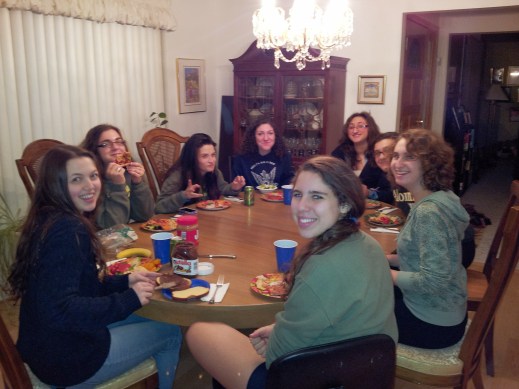
Yes. I know I really botched up the words of that song. But with the odd concurrence of Thanksgiving and the first light of Chanukah falling on the same night, and our first trip back to Rochester since departing for Detroit, my family feels like they are going through some surreal times.
Rochesterians, very well-meaning and sincere, actually said it to me:
“Welcome home!”
“Are you glad to be home?”
The word “home” was not something I expected to hear out of the mouths of my many Rochesterian friends and acquaintances I saw in the weekend leading up to Thanksgiving.
This is a homecoming of a sort. For my kids. Because after I checked off every last detail of what to pack, what to turn off and turn down in our new house. After the kids packed whatever they needed to eat and entertain themselves in the car. After the last seat belt had been clicked and the six-hour trek from Detroit to Rochester lay before us, my children said it:
“We are going home.”
Yes. Rochester is their home. Where they spent the better part of their formative years. It’s where two of three of them took their first steps and all of them lost their first teeth. It’s where their friends live who know them best. Who share some weird private jokes, shared histories, and their own strange way of talking in a fake accent.
For me, Rochester is not home. New York City is home. Or is it? I haven’t lived in the area for almost 20 years.
I am trying to make Detroit home. But it’s tough to make it home when we leave it for holidays. It’s not a home if there are no aromas of turkey and stuffing , and this year, the smell of potato latkes frying in a pan, and the sounds of grandparents, siblings and cousins hanging out in the family room. It’s just a house we live in.
Because home is where you go for the holidays. And if the majority of family do not live in your current city of residence, like the way smaller celestial bodies are drawn to larger ones in the universe, the pull is greater the other way. So home we must go.
Still, Rochester feels a lot like home now that we no longer live here. Yesterday, we spent the day in some old familiar places trying to catch up with as many people as possible. We got hugs everywhere. We are missed. And thought of. I lost track of how many hugs I gave and received. It truly was a homecoming.
But there are places you really cannot return. My youngest wanted to go into his old house. That, we told him, was off limits. He was able to peek into the downstairs family room and said he didn’t like how the new owners painted it blue.
The big kids tried to loiter in visit their old high school. To them, that was home too. They had it all planned out. They would enter the building in the morning, loaded backpacks slung on backs and blend into the stream of hundreds of other teens before the morning homeroom bell. Either in the library or cafeteria they would study and receive friends, and hugs, during their free periods.
But their old principal, who had known them since their elementary school days, apparently never forgets a face. And, knowing that these two faces had moved to Detroit, he kindly but firmly told them that new high school policy forbids non students to visit during school hours. But he gave them a valiant A for effort.
Sometimes, you really can’t go home.
It’s New to Me: A night out at Detroit’s Fox Theatre

I need to get out more often. And by that, I don’t mean dinner at the Outback and a movie at the local suburban multiplex.
I am going to put this blog post into a new I-know-you’ve-lived-here-all-your-life-but-ya’ll-it’s-all-new-to-me category. Because, I know all of you Detroiters know all about the Fox Theatre like I know about Radio City Music Hall (but hey, real New Yorkers know a trip to Radio City is just for TOURISTS).
But for me – the New Yawker newbie, a babe in the urban D woods – I am loving discovering my new city.
Last night, I had my first nighttime visit into Downtown Detroit. We were invited out by the same very interesting new friends (the ones who press their own apple cider) to a benefit to support the Jewish Association for Residential Care. The featured act: The Rascals.
You know, the Rascals:
My husband and I still don’t know how to get around downtown. ( I really don’t understand how to traverse a metropolis without a subway system.) They offered to drive. We happily accepted the ride.
Driving down highway 10 at night to downtown Detroit, you really get an understanding of just how blighted some sections have become. As you leave suburbia for downtown, the highway submerges, and what’s left of neighborhoods peek out from concrete walls that rise to the right and the left. Every now and again you get a glimpse of houses. Completely dark. What’s left of houses. What’s left of churches. And stores. And housing projects. Empty shells. Dark and lonely.
And then, reaching downtown, the lights, and life, emerges again. If just for a dozen or so square blocks that house the city’s businesses, theaters Detroit nightlife post baseball season is still trying to go on.
Though Comerica Park now stands quiet, it is lit up. Giant stone tigers roar into a post-season sky and roar into a mostly vacant parking lot. I make nice to them and promise I will come cheer for the Tigers (because they don’t play against the NY Mets) come the spring.

credit: DetroitDerek Photography
Across the street stands the glorious Fox Theatre:
 Built in the grand style of the 1920’s, when auto manufacturing was in high swing, it has a 3,600 square foot lobby and a grand auditorium that seats 5,000. And every square inch drips with restored opulence snatched from the mouths of the Blight and Decay demons that caused many of Detroit’s architectural treasures to crumble or lay in waste.
Though I wasn’t that excited to see this 60’s band, it was the venue itself – plus a fundraiser supporting independent lifestyles for adults with disabilities – that made me plunk down the cash for the tickets.
“I bet you have been craving for a night like this in the city,” my friend said as we crossed Woodward – a main thoroughfare in Detroit that is far wider than any avenue in Manhattan. Outside the theatre, a small crowd gathered and a ragged group of street musicians played and asked for change.
Oh yeah, I miss going out into a city for some nightlife. I miss packed sidewalks and even further packed subway cars. Even little Rochester had some hopping areas, some beautiful theaters, jazz spots and restaurants for entertainment.
I stepped inside the lobby. I knew I had to make my way to will call to get our tickets. I knew I should have been more friendly and engaged in conversation with new friends in the community who made their way over to say hi. But they had already been in the Fox theatre. They had lived here most of their lives. This was all new to me. And I was having trouble keeping my jaw from hanging to the floor:


The grandeur of the Fox Theater lobby made me happy and sad all at once. Happy that this gem has been restored and saved from blight and stands as a reminder of what Detroit could be again. Sad to think of all the other architectural treasures of the city – other theatres, the Central Train Station, hotels, schools, mansions, homes – that just lay in waste, I thought of the Heidelberg Art project that arsonists just burned to the ground. Again. Before I got to set eyes on it.
We spent the night listening to the Rascals play with new friends and some JARC residents, who quickly befriended us and were happy to sing and dance the evening away, even though I thought the Rascals depended very much upon their multimedia show than pandering to the crowd:


After the show, the city was dark. No bars open. No restaurants to spend our money in. Just a few lingering panhandlers and straggling musicians. So, back to suburbia we went for a late night bite to eat.
We really wanted to spend more money downtown. But there was nowhere open to spend it.
This is not the city that Never Sleeps. Not even by a long shot.

The most Interesting Teens in Detroit raise $$ and awareness for Downtown

Jonah and Sophie Erlich with the “Daven Downtown” T-shirts they are
selling to help the Isaac Agree Downtown Synagogue in Detroit. (photo credit: Detroit Jewish News)
Never underestimate the impact of a school field trip.
Last spring, Sophie Erlich, 14, of Birmingham took a trip to the Isaac Agree Downtown Synagogue with
her eighth-grade classmates from Hillel Day School in Farmington Hills. There, she learned about the synagogue’s past. There, she also became inspired about contributing to Detroit’s comeback and an urban Jewish future.
This September, Sophie, now in ninth-grade at Birmingham Groves High School, and big brother, Jonah Erlich, 16, kicked off a fundraiser for the synagogue, founded in 1921, with their “Daven Downtown” T-shirt fundraising campaign. They sold more than 35 T-shirts for $36 each on their website designed by Jonah, www.davendowntown.com/ collections. All proceeds go directly to
help the synagogue.
Throughout the whole process, which is earning them required community
service credits for school, the teens also are learning valuable lesson in keeping inventories, marketing for nonprofit organizations on social
media and running a business.
“I am very energized about the idea of Detroit coming back,” said Sophie, who has friends with older siblings who are moving into the city. “It’s where I hope to live and work when I am an adult and out of college.” Jonah echoed his sister’s sentiments.
“If more Jewish young adults move into the city, they will need a thriving synagogue within walking distance where they can pray and just hang out with other Jews,” he said. “I would be so excited to work and live in Detroit someday.”
To create the right vibe, they asked local designer Kathy Roessner to donate her time and talents to create colorful logo with a “V” in the middle. The T-shirts, printed in Troy, are available in crew and V-neck styles and come in gray and white.
To boost sales, Jonah recruited some video-savvy classmates at Frankel Jewish Academy in West Bloomfield where he is a sophomore, as well as local leaders and Detroit entrepreneurs, to film themselves around town wearing
the T-shirts. The “world’s most interesting man,” a character from a Dos Equis beer commercial, provided
inspiration for the video’s only scripted line:
“I don’t always daven. But when I do, I daven Downtown.”
Anna Kohn, the executive director of the Downtown Synagogue and one of only two paid staff members, said the excitement and entrepreneurship of the teens toward the synagogue proves that young people can make things
happen when they are passionate about a cause.
“We were looking for a way to merchandise, and they beat us to it,” she said. Kohn said she has used the logo
on the synagogue’s website at www.downtownsynagogue.org. The egalitarian Conservative synagogue’s Facebook
page has 1,000 fans. It also distributes a newsletter with a circulation of 1,600 informing congregants and the general public about weekly Shabbat services, a Thursday morning minyan and a variety of programs that provide social
outreach for Jewish urbanites and those just curious about Judaism.
The T-shirt sales have become so successful that they are on back order as the Erlich siblings, children of Craig
and Renee Erlich, wait for the next shipment. They also plan to sell the T-shirts through area synagogues and
Jewish youth groups. ■
Good-bye, blight, hello broccoli: farming in Detroit.
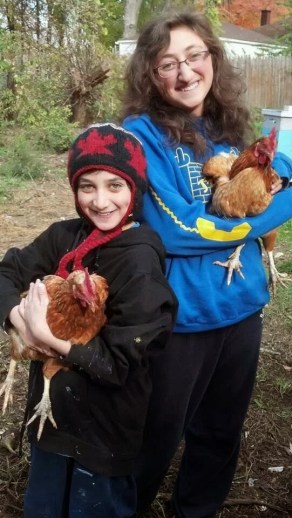

On a block in the Brightmoor neighborhood in Detroit, where houses once stood, a crop of fall vegetables grows, to be sold at the Eastern Market.
Almost six months into my family’s little “adventure” of living in the Detroit area, I finally brushed off my suburbia doldrums and became a tiny part of Detroit’s urban farming revolution.
Before my move, as I mourned my departure from the perennial garden I coaxed into existence for 13 years, and my rented plot in my town’s community garden, I really imagined myself venturing to help out in one of Detroit’s urban farms just as soon as I unpacked. I’ve been reading up on Detroit’s emergence into the urban farming scene ever since we made the decision to move. In recent news, Hantz Farms got the approval from the Detroit emergency council to grow a 140 acre forest in the middle of Detroit. That is 140 acres of land that is being put back into taxable use.
Before I got on my gardening gloves, though, I underestimated just how far my suburban home was from Detroit city lines. And I have to admit I had a biased fear for my own safety. I’d be a newbie with a New York State license plate and a GPS device clamped to my windshield driving into a blighted neighborhood. Can you think of a better target for a carjacking? Besides, I hadn’t a clue as who to contact to help out.
Getting stern warnings from neighbors and friends not to go downtown wasn’t helping matters either. Since moving here, I was told that I would love living in my suburban surroundings with its great schools, bike paths, lakes and shopping centers. I just wouldn’t go into Detroit.
Because no one goes into Detroit.
Too dangerous.
Too much crime.
So, for a while, I succumbed to these fears as an excuse for not getting my hands dirty digging in some Detroit dirt.
But wait a minute.
Didn’t I grow up in New York City? Where outsiders were afraid to ride the subway or walk in Central Park for fear of being mugged?
Haven’t I visited Israel numerous times in my life? And I made these visits during a war with Lebanon or at a time when the intifada raged in the West Bank?
From the urban energy and culture of New York City to my summer picking mangoes and tending the banana fields on a kibbutz In Israel, (a kibbutz that was on the border with Syria and Lebanon). Both these places have enriched my soul. and have made me the person I am today. Walking safely around my cul-de-sac suburban development with manicured landscaping is nice, but hardly anyone here actually has a real garden. Hey, my neighborhood association won’t even allow for the smallest of a garden shed.
Suburbia is nice but here, I don’t really feel like I’m part of the solution. Part of the farming revolution.
This weekend, I finally found the opportunity to volunteer. And who would give me that opportunity but an organization as comfortable and familiar to me as an old pair of sneakers: United Synagogue Youth.
Ahhh, my USY days. Best times of my life. It’s a good thing I now have teenagers of my own so I can relive these days again.
A big part of USY is social action, repairing the world, a Jewish value called Tikkun Olam. So when I found out that Motor City USY would be helping out downtown at Beaverland Farms in the Brightmoor neighborhood in Detroit, I jumped at the chance. Even though I’m no longer 16 but 45 and my knees don’t take too well to jumping that hard.
With my 16-year-old daughter, 10-year-old son and husband, we started off to the farm from suburbia to Detroit. The landscape became more urban, and then gritty and then plain ol’ rundown.
Nice, big homes and posh shopping plazas in my side of town gave way to smaller homes and then dilapidated structures with boarded windows and roofs halfway covered with blue tarp that were once someone’s home or still occupied with people just hanging on.
By the time we got to Five Mile and Telegraph, there weren’t too many open stores and those that were in business had big signs like LIQUOR or CHECK CASHING. Boarded up storefronts scrawled with writing like DUGGAN FOR MAYOR or WE STILL LOVE YOU, DETROIT. It was becoming more evident of the existence of what’s called the “nutritional desert here.” For the people who lived around here, where do they go to buy food, and food that is healthful? There are very few choices.
That is where the urban farms come in.
We rounded the corner of Five Mile and Beaverland Road in the Brightmoor neighborhood of Detroit. On 11 city lots once occupied by small houses that were so prevalent in this area to house blue-collar manufacturer workers and their families there is now a fruit orchard, rows of vegetables, and tilled, cleaned out land. Scott, the owner, grows the food here and sells the produce at neighborhood farmers markets, runs a CSA , and provides community and social outreach and educational programs for his neighbors and local schoolchildren.
My family got out of the car and we quickly got to work. As I promised, I made myself scarce to my teen daughter. She and my son got busy with some other teens and helped build and paint bee hives and tend to the chickens.
My husband and I worked across the street planting rows of perennial flowers that would (hopefully) survive the winter and bloom again in the spring.
All the while, neighborhood folk walked up and down the street. Some said hello. Others didn’t. I wondered, as I cleared away composted grass to plant another flower, how is this helping them? How do they feel about us strangers coming into their ‘hood and making a farm? Do they like it? What business do we have being here, in their neighborhood?
I posed these questions to Scott. He works and lives right here. With a mezzuzah posted on his front door. He said the farm is a way for people to connect. Everyone around here respects the farm. And compared to burned out buildings that invite drug dealers and prostitution, a farm is a welcome change in Brightmoor. I told him how much I’ve been wanting to help out at a farm like this. I told him I could grow seedlings of vegetables for the farm over the winter. I told him I had loads of tomato cages that are looking for a good home but will have no use in suburbia.
“Stop looking. You’ve come to the right place,” he said.
My husband and I worked side by side in the afternoon October sun. I can’t remember the last time we did any volunteer work together for a place that needed so much help and nurturing. I looked across at him, a man I met when we were 16, whom I met through United Synagogue Youth.
And now, we are married almost 20 years. Now, we planted flowers and are kids were across the street playing with chickens in one of the most dangerous neighborhoods in Detroit.
We loved every minute of it and I can’t wait to come back.
Ain’t life funny? Ain’t life grand?
Related articles


My kids’ schools have no nurse, does yours?


Who wants to pay less taxes?
Who wants the government and regulation off our backs?
Government and school payrolls are much too big, let’s stop using our taxes to pay big government salaries!
Careful what you ask for.
Do you remember the good old days when there were school nurses? In the sixth grade, my throat burned and my head ached. I was sent to the school nurse where she took my temperature, gave me some water and a throat lozenge that tasted like cherry. The cold nurses cot lined with that crinkly white medical paper was somehow a comforting place to rest as I waited for my mom to come pick me up.
In the ninth grade I passed out in hygiene class and had to be wheeled through the hallway – of course during the change of classes – to the nurse’s office. There the nurse checked my vitals, my blood pressure and my temperature, etc. and sent me on my way back to classes after she determined my cause of fainting was due to me being grossed out by the day’s lesson.
As a mother, my children made several trips to the nurse’s office in the years they were students in New York State:
- There were routine eye and hearing exams
- Lice checks when there was the monthly…. emmm, occasional outbreak in one of their classes
- When my daughter’s 2nd grade head collided with another 2nd grade head, it was the nurse’s office who called me saying I would need to take my daughter to an ENT specialist to rule out a broken nose
- My oldest son broke several body parts at school. It was a nurse who was trained to triage him and fix him up enough to make him comfortable until i could get him to the doctor’s office.
- My youngest son had an asthma plan in his old school in New York where he went to the nurse’s office each day before recess or gym to take his inhaler.
- The nurse in my youngest son’s school also extracted a tick from my son’s neck, contained it in a plastic jar for me to take to my doctor to test it for Lyme’s disease. She was my hero!
The beginning of the school year I called up to speak to the school nurse at my son’s middle school about my son’s inhaler.

This is a school where we got a note home the first day of school saying that NO child could bring in any products containing nuts because several children in the school contained a life-threatening THAT’S LIFE THREATENING peanut allergy.

Philadelphia Child Dies, No School Nurse Available
“We don’t have a nurse,” the secretary said in matter-of-fact tone.
“Excuse me?” I stammered in disbelief.
She calmly said that the school has a clinic where moms volunteer their time. Or, she, the secretary, plays the role of the nurse, distributing medication and other nursing functions. I’m sure she has time to care for our children, especially during cold and flu season, plus get all her other work done.
Really. So very comforting that is, never knew a school administrator knew how to take a kids vitals or how to treat a wound, a bone break or properly give out meds in addition to paperwork and calendar scheduling.
I shared my dismay with another school administrator, this time at my daughter’s high school.
“Oh yeah, our district hasn’t had nurses in a very long time. It’s an enormous liability.”
Yeah, do you think?
In New York, our property taxes were pretty high. In Michigan, our taxes are quite low. Our suburban streets are quite pock-marked with potholes and our schools have no nurses. And that’s the way people like it here, I guess.
Related articles
How to go to the ER as a Transplant

Thankfully. I seemed to be the only patient in the ER at Henry Ford that night.
If you live in the same town where you’ve lived all your life, chances are you have big pool of people to pull from when, upon filling out the many forms one fills out in life, you have to list an emergency contact. There are parents, siblings, your best friend from the sixth grade who you still live near enough to make power walk dates every Wednesday morning after the kids get on the bus.
By the time I left Rochester, after living there for 14 years, I finally had two friends I could count on to list in the event of an emergency. Besides my husband.
The other night, I woke up from a dream screaming. I cannot recall the dream, which is unusual for me, but I do remember thinking that I hope I didn’t wake the kids because I screamed pretty loudly. Perhaps the nightmare was my body’s defense system kicking in, because upon being awake, I noticed a strange stabbing pain in my mid back.
At this point, I was on antibiotics for a bad bladder infection. You know, the kind that makes you feel like you have to run to the bathroom every ten minutes.
(Was that TMI? If so I apologize but this detail had to be added to frame this story and my frame of mind that night.)
I tried to relax. I tried to stretch out my back with some yoga on the floor. That did nothing. The stabbing came back and it was traveling from one side to the other.
I tried to relax some more, but the pain kept coming back. It was around 2:30 a.m. Scary thoughts kept going through my mind. Like how my grandfather, at the end of his life, needed dialysis. Was I going into kidney failure? Like how my mom has a history of kidney stones. Would kidney stones be my inheritance?
And that night, I had no one to wake and share my troubles with. Because the only person you should wake with such pains and thoughts in the middle of the night is your husband.
And my husband just left for a two-week business trip to Japan.
And I had three sleeping children who had to wake in a few hours to catch the school bus.
So, what does a transplant in an emergency situation do?
They try to diagnose themselves online. THIS is bad advice, because when you try to self diagnose online, the Internet proclaims that you may die within eight hours if you do not seek medical attention.
So, I called my new medical practice, the one that has known me all the way since … last month.
Contrast this to the OBGYN my mom went to: one doc, who delivered both my brother and I. My mom was his patient for decades until the day he retired.
A sleepy doctor called me up, listened to me list my symptoms over the phone, and told me it was not out of the realm of possibility that I might have a kidney stone, and if I did, I might soon be in excruciating pain and I needed to immediately head to the nearest Emergency Room.
“Feel better,” she said as she hung up her line and went back to sleep.
Trying to find some humor in this, I thought to the Seinfeld episode where Kramer passed a kidney stone.
Once again, my life is mirroring that of Cosmo Kramer. On a sit-com, kidney stones are hilarious. In real life, even the possibility of one is no joke.
So, at this point, I really had no choice but to drive myself, in the middle of the night, to the ER.
So here is what I did, and what I can recommend to you, if you are out there somewhere in a new city and find yourself in a similar bind:
- Go with your gut. Don’t feel stupid or think you are a hypochondriac if you think you are really in need of medical attention. When you are a new transplant, you are all you have for your family. Get help.
- Use Facebook – In the months I have moved here, indeed I have met some great people. Of course, nothing substitutes the comfort level from a lifelong friendship, but I already have a feel of who would reach out to me in a crisis. I wrote a FB message to some select new and local friends telling them of my situation. I gave them my cell phone number and that of my 16-year-old daughter and asked to please keep in touch.
- Keep using Facebook. When I was waiting for test results in the ER, I had no signal for my cell phone, but I could still use Facebook to see the flood of people who responded to my first message, who called to check in on my kids, who offered me whatever I might need. Including one of my new friends who visited me at 6:15 in the morning at the hospital. Say what you want about our addiction to social media, but in a situation like this, it gave me peace of mind.
- Teach your kids to be independent – This is something you can start doing right now. So when the time comes and you have to kiss and wake your teens at 3:30 a.m. to say “Mommy has to check in to the emergency room now, please wake yourselves up, take care of yourselves and make the bus on time,” they will give you a half-awake hug and say “Don’t worry mom, we’ve got this.” I don’t know if it was those summers at sleep-away camp, or all my years of nagging, but something worked.
- Pray. Seriously. The whole ride to the ER, I talked to God and asked Him to please watch over me and my kids. Please help me get through what ever I have to get through.
When I got to the ER, I felt like my prayers were somewhat answered. The ER was EMPTY. No one in the waiting room. I got triaged by a very nice nurse, was whisked into my own room, examined by a nurse and a doctor, had a CT and the results from my CT, all in the span of 4 hours. If you have ever been treated at an ER, you know this is neck-breaking fast.
So?
In the end, my pain was NOT a kidney stone, but just residual pain from my bladder infection. But the doctor said I did the right thing by listening to the signals my body was giving me.
In the end, my friends here asked me why. Why didn’t I call them to take me to the ER? Why didn’t I call to have someone stay with my kids? Why? Because I know you are busy with lives of your own: kids, jobs. Because, maybe I’m not yet ready to try the strength of these limbs on these sapling friendships just planted two months ago.
In the end, I got home to see my kids out the door for school. They were dressed, brushed, fed, and packed their lunches. Their world went on without me. The sky did not fall because I wasn’t there one morning of their lives.
I hope you never have to go through the same scare I did when you are the new person in town. But know you can get through it too.
Related articles

When I get to Detroit, I’m shopping here
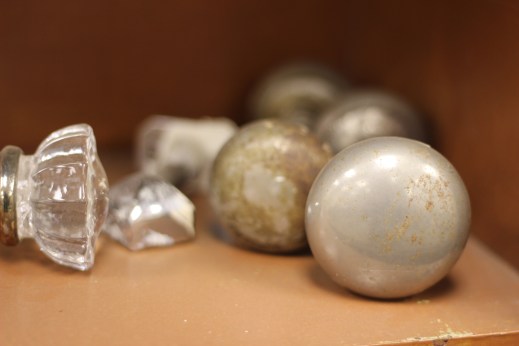
We found that house! Still, I will miss the oldness of my old house. So that’s why, on a whim and a search, I found a great blog www.reclaimingdetroit.org
Not only can those old glass doorknobs and beautiful old hardwoods be found here, lovingly rescued from crumbling buildings, but the organization provides much needed jobs and training to Detroit’s population.
I’m putting this on my list of places to check out just as soon as the last box is unpacked:
Photo Challenge: Home

Hmmm. Home. The WordPress photo challenge: Home could not have come at a better time in my life, a more doubtful time in my life.
After all, I started this blog, transplantednorth, feeling like a transplant who was uprooted from my hometown. It’s only now, as my family prepares to move again, am I understanding that I have been home for quite sometime in Rochester.
What is home?
Is it where you grew up?
Is it where your kids grew up?
Is it wherever you happen to lay your head down at night?
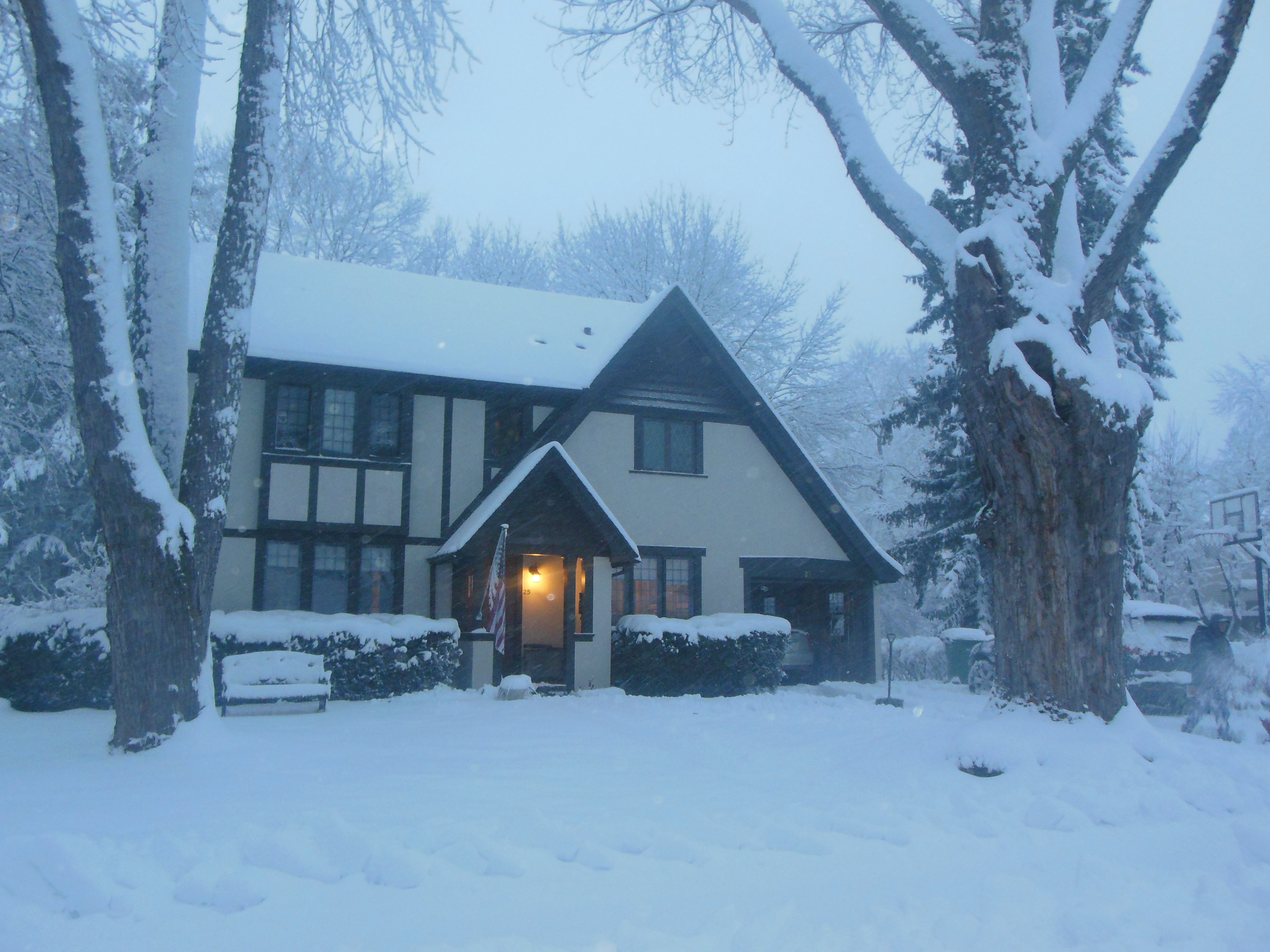
this is a good home. The new owners will be very lucky.
This is a photo of our current home, in all its Rochester snow-covered glory.
But it won’t be our home for much longer.
I don’t know what my new home will look like.
I don’t yet know nor can I visualize the surrounding neighborhood or town of the home of our very near future.
So folks, I guess you can say my blog will become a bit more bleak from here on in as we start to say goodbye to all my kids know as home.
I am hoping to pick up again, to be more cheerful and a return to my more optimistic self once in Detroit
I
find
a
new
home.
About Me

Kreativ Blogger

Versatile Blogger Award


 Stacy Gittleman