
Conform or be cast inside out – – A rant on School dress codes

 The other night, we had a family outing to a very large fair. The kids rode on typical fair rides that spin you around and hurl you upside down into the air after eating typical fair fare like corn dogs and fried dough.
I am not a big ride person. At all. But I do like to people watch at carnivals and fairs. I like to see what people are wearing, or what they are not wearing enough of so everyone can see the writings or etchings that cover their arms and legs in the form of a tattoo.
At least, under those summer carnival lights, there is still somewhere left on earth for self-expression.
Today, my 5th grader came home from school. His shirt was inside out.
Did I miss the note that today in school was inside out day? It’s late May. I’m kind of done with checking homework, checking notes.
No. A teacher in school made him turn it inside out.
Why?
The shirt was “too religious.”
The shirt in question said: “I rocked out at xxxxxx’s Bar Mitzvah” It was black and had a guitar emblem on it hand designed by my daughter artist-in-residence. You would think that an art teacher would have admired the shirt for its individuality. But no, she in front of the whole class made my son wear his shirt inside out for the rest of the day. No one had paid any mind to my son’s shirt until he was asked to turn it inside out.
The shirt was leftover from his brother’s Bar Mitzvah.
From three years ago.
You can blame me, teach, because he has so many of that shirt in his drawers and there was probably no other shirts left because I’m a bit behind on the laundry.
Initially, I became furious that my son could not wear anything “religious.” Would a Christian kid be asked to remove a cross? A Muslim kid remove her hajib? God in heaven, I hope not.
So I called the school with my concern and calmly (okay, NOT calmly) explained the situation.
“Oh yes, kids are not supposed to wear shirts they get from Bar or Bat Mitzvahs. It makes other kids feel …. bad.”
Sorry, but I guess I never got that memo either. Because my son, and his brother and sisters, have tons of T-shirts from Bar Mitzvahs. And sports teams. And youth group weekend retreats.
In fact, if it weren’t for all those shirts they received when they worked the Bar/Bat Mitzvah circuit, why, they may have not had any clothing that school year at all!
Giving out T-shirts, or for those high-end B’nei Mitzvah parties, sweatshirts (!) has been the popular party favor for decades.
The school’s rationale is that these types of Bar/Bat mitzvah T-shirts distract the student from their academics. The school’s rationale is that this rule is there to protect the uninvited from feeling excluded.
Let’s examine how other items of clothing, or any other actions we do, may make people feel excluded. If we are really going to take inclusiveness to the highest level, perhaps school boards should consider banning the following items of apparel:
Sports or athletic clothing: Lots of kids wear varsity clothing and some may even have varsity letters. This may make the non-athletes around them feel sad or unsatisfied with themselves.
Concert T-Shirts – I remember in high school the kids who spent all their money, or got money from their parents to go the hottest tours and they would wear their T-shirts that they bought from that concert that very next day. I remember thinking how much I too would have loved to see that band and then …. I got over it.
Vacation T-Shirts: When kids from families who can afford plane tickets during peak vacation time return from Florida or their time share in the Caribbean, it makes the white, pale pasty kids who didn’t escape to somewhere warm feel very excluded.
Designer clothing – My son speaks of a classmate who he swears gets a new pair of $200 sneakers every other week. That could make anyone -ANYONE – who is not a Joneses – feel excluded.
I presented these ideas to the principal when he called me back. I asked him if, during the months of October through December, if he could make sure that there would be no showing of anything red and green, or that no one in school wears Christmas lights or ornaments as necklaces or earrings, or that no one be allowed after Christmas to wear any sweaters with reindeer or candy canes or snowflakes or fir trees on them.
Absurd? Well, it might – MIGHT – make a tiny part of the school population feel – excluded.
I asked him how much longer he wanted to continue this ridiculous conversation with me. But if the ridiculous rule were not there, we would not be having this ridiculous conversation.
Want to see the dress code rules? Here they are. Please see if you see any mention of Bar/Bat Mitzvah or any party swag in here:
14. STUDENT DRESS
District students are expected to dress, groom, and attire themselves in a manner that is not
potentially dangerous, does not distract others or disrupt education, and does not convey a
message contrary to District policy. The following are examples of dress, grooming, and attire
that may violate District policy. This should not be considered an exclusive list.
Potentially Dangerous Items:
Chains, pointed rings, metal spikes, clothing or attire restricting physical movement,
etc.
Distracting or Disruptive Items:
Clothing that exposes or draws unusual attention to breasts, buttocks, or
genitals; styles that expose undergarments; bizarre clothing, grooming or attire that
focuses attention on a student or group of students at the expense of learning, such as
nightwear or beachwear, etc. Students must wear shoes.
Contrary to District Policy:
Clothing that advertises or promotes smoking, alcohol, or the illegal use of drugs;
clothing reasonably likely to be perceived as promoting racial, ethnic, or religious
discrimination or intolerance; clothing reasonably likely to be perceived as advertising
or promoting illegal behavior; clothing reasonably likely to be perceived as obscene,
lewd, vulgar, or plainly offensive, etc.
What are we doing when we have rules that go to the extremes to coddle the middle schoolers feelings?
We do our kids no favors by not teaching them to start developing a tough skin and not to feel disappointment. Yes, have a tender heart, but start thickening that skin by age 12 or 13. So it won’t hurt so badly the first time you get rejected. By a college. Or a boy. Or a job. With that tough skin, you know it will hurt for a little. And then, you’ll go on.
Know now, starting in middle school, that even the most seemingly popular kids are frightfully insecure, and all you need in life is a few good true friends.
You don’t need everyone to be your friend. But you need to find that bunch of friends who will include you for YOU. Not because you are going to have the fanciest Bar Mitzvah in town and give out the best T-shirts.
Better to learn in middle school, that no, you won’t get invited to every party. You may or may not go to prom. But you’ll know the kids who did, because guess what, in HIGH SCHOOL, along with that expensive prom ticket, guess what you get to wear Monday in school?
A sweatshirt. Saying you went to prom.

Paying that tuition for the Elite Private University: Will it really open more doors?


 For those of you following my posts on college and college visits, thank you for your public and private comments. I hope this post will resonate with many of you and spark even more debate and discussion, so load up my comment box.
After our visits to Case Western Reserve, Carnegie Mellon University and the University of Pittsburgh, my house became somewhat of a house divided. The heated discussion perhaps at this point of the game was maybe pointless. We were at the beginning phases of the college search. My daughter has high grades but had yet to take those multiple college entrance exams. She hadn’t even applied.
But what if she applies to places like CMU, or my husband’s alma matter, an Ivy League institution, and gets in? My mother-in-law (don’t worry, she never reads my blog) has this crazy idea that my daughter should apply to Yale because they have a fantastic graphic and visual arts program. With tuition at these colleges averaging around $64,000 a year, for a field that is super competitive and mostly employed by freelancers who have to pay their own way for health insurance and retirement funds, I hope that my mother-in-law has a huge college fund set aside for her grandchildren that she has not yet told us about.
Granted, private universities have large endowments and are more likely to bestow deserving students with a generous financial aid package. Let’s look at CMU’s 2012-2013 financial aid profile:
Nearly 70 percent of incoming freshman applied for financial aid and of that group, 77 percent of them were found to have financial need and were awarded an average financial aid package of $35,000 per year.
That same week we visited Pittsburgh-area colleges, the New York Times published a troubling article that said that the elite colleges were becoming even more elite. This might be in part because of the new common application process, where students can fill out online a common application, tweak it just a bit according to each school’s requirements, and with a click – and an extra fee per college – can apply to numerous colleges all at once.
The article stated “….Deluged by more applications than ever, the most selective colleges are, inevitably, rejecting a vast majority, including legions of students they once would have accepted. Admissions directors at these institutions say that most of the students they turn down are such strong candidates that many are indistinguishable from those who get in.”
This article, plus the media coverage that has been pointing to a troubling trend for years that college debt is crushing a generation who can’t find work outside of becoming a barista at Starbucks upon graduation, made me pose the question to my husband – is that private university price tag truly worth it. Isn’t it fiscally responsible to get a great education at a quality state school over an expensive private school?
One take on that outlook is this: When looking at job applicants fresh out of school, those with the Ivy League or private colleges get looked at first, and those graduating from a state school have a greater chance of being overlooked.
For those of you who are graduates of a public state university, like me, that answer can really sting.
I posed this question and put it up for debate on my Facebook status. Got a slew of comments.
Some, who were Ivy League graduates in their 40’s, wondered if they would be accepted by their alma mater if they applied today. A fine arts graduate from CMU said she was accepted based on her portfolio and that parents need to “chill out.” There are “best schools” out there as far as status, but there is a school out there for every student which will serve them the best, and that may not necessarily be an Ivy League school.
Graduates of public state schools stood proudly by their alma mater and said from a regional standpoint, companies know the reputation of state schools in their area. Many managers are, in fact, products of those state schools. However, the grooming and the connections one gets at an Ivy League are clear advantages, some said.
So, there is no clear and dry answer.
My husband and I were still mulling this debate over when we went for breakfast at Pamela’s, in the lovely Shadyside neighborhood in Pittsburgh. As if by some cosmic fate in the academic universe, an older couple was watching us from a nearby table. They were admiring our three children as they wolfed down their pancakes and waffles and listened to our conversation about getting into college.
As it turned out, the gentleman was a mathematics professor at the University of Pittsburgh.
“Listen to me. Don’t waste your money if you have a great in-state public university at your doorstep.”
Which we do.
“I’ve seen so many kids burn out at places like CMU in the undergrad years. The University of Pittsburgh is a fine, fine university. Don’t go into debt,” he said, then turned to my oldest. “If you want the elite private school status, wait for graduate school, where if you get in, they will most likely pay your way through grants and scholarships.”
And with that, he paid his bill and the couple bid us a good day and good luck.
The issue: still up for debate. And I welcome your comments.
Campus Visits and test-taking angst: University of Pittsburgh


“Oh, crap mom, they are everywhere!”
My daughter and I were stopped at a red light, on her way to her A.C.T. tutorial class, and there they were. In perfect order on the license plate of the car in front of us.
A.C.T.
It does seem that letters and acronyms are all that is on my high school junior’s mind.
A.P.
A.C.T.
S.A.T.
Around my town, you can see her peers in places like Starbucks and Panera accompanied by a private tutor and hunched over one of those mammoth ACT prep books.
Taking the tests costs money.
Hiring a private tutor or taking a private class costs LOTS of money – try like $90 an hour.
Times like this, I often think of that movie Race to Nowhere. It’s becoming a race to empty our bank account in the name of college admissions. Taking admissions tests and studying for them is all that really occupies my daughter’s existence. She asks how long going out do dinner will take if it means she will be separated from her study guide. And she really doesn’t part from it because it comes along wherever she goes. She went to prom with a boy the other night. It surprised me that she did not take it along in the limo.
And when you finally get to college….
My daughter, visiting a friend who was showing her around his new surroundings at the University of Pittsburgh, told her “no one here cares what you got on any of those tests.”
This blog post is a long overdue follow-up to my post on our visit to Carnegie Mellon University. At CMU, my daughter sensed just how intense a campus atmosphere could be as the students there were in the midst of cramming for finals.
Just across the river, at the neighboring University of Pittsburgh, the atmosphere seemed livelier. And happier. Yet still very competitive. According to about.com, The University of Pittsburgh often ranks among the top 20 public universities in the U.S., and its strong research programs have earned it membership in the exclusive Association of American Universities. Pitt also can boast of a chapter of Phi Beta Kappa. In athletics, the Pitt Panthers compete in the NCAA Division I Atlantic Coast Conference.
Unlike the dimmed dreary lecture hall at Carnegie Mellon, prospective students to the University of Pittsburgh started their tour at an information session in the in a massive historic building of Alumni Hall. The interior was decked out with balloons and music and the smells of fresh-baked cookies and popcorn wafted from the main salon, where Pitt seniors were collecting their caps and gowns and other graduation mementos at a pre-graduation reception.
Our admissions official was a young African American man in a cardigan sweater. He was a recent Pitt graduate who was in the process of applying to law school. He told the prospectives that during his time at Pitt, he changed his mind on what he wanted to study several times, from business, to engineering, and, he said, and I quote,
“to worry my parents, I once even thought of becoming a writer!”
His advice: Unless you have your heart on becoming an engineer or you absolutely know you are going to medical school, keep a decision on a choosing a major fluid and take a course load from Pitt’s multiple major offerings. At Pitt’s Dietrich School of Arts and Sciences, one can wait until the end of their sophomore year to declare a major.
And as far as acceptance rates at Pitt?
As it stands, Pitt in 2012 had an acceptance rate of 56.1 percent. Admissions officers are looking for the following ACT breakdown from applicants:
- ACT Composite: 25 / 30
- ACT English: 25 / 32
- ACT Math: 25 / 31
- ACT Writing: 8 / 9
However, our admissions rep stressed that test scores and grades of B’s and A’s were just one part of what they were looking for in a prospective freshman. They wanted to see a well-rounded student taking vigorous courses. They wanted to see a students’ involvement in their community and leadership positions they took at school. And then he said the words I was longing to hear: better to get a high B or low A in an advanced course than all A’s in less challenging classes.
After the informational tour, we met our Pittsburgh Pathfinder. He led us on an hour tour across campus, highlighted by a visit to the Cathedral of Learning, the undergraduate library, open nearly 24 hours a day and seven days a week, the quad of freshman dorms, and the dining halls. He even told us in confidence, even though his official job was to tell us to buy books at the campus bookstore, the best place to rent textbooks for the semester. For that, I gave him a stellar grade on his evaluation.
And, we even got a few Pitt T-shirts for free from the guy selling T-shirts on the corner from our fearless Pathfinder. Apparently, he has some kind of deal going with the guy:

No T-shirts were handed out at CMU.
Best of all, my daughter got an unofficial, insider perspective on campus life from a friend who was finishing up his freshman year:

He has loved his first year of Pitt, both academically and socially. He loves the urban atmosphere of being on a campus in a big city.
After our visit, my daughter can see herself applying to school in Pittsburgh. She could see herself taking classes either at CMU or Pitt. And, for a break, she can see herself going for a run (with a friend of course, not alone!) in beautiful Schenley Park.
 I could see her going here because it would give me a chance to visit my Pittsburgh cousins more often.
What is not to love about Pittsburgh?
Then again, there is the whole in-state out-of-state tuition factor which weighs heavily on most admissions decisions. Out-of-state tuition is nearly double. At this point, she had yet to visit one of the best state schools in the nation, in her own state, just 40 minutes down a potholed highway to Ann Arbor.
But that visit, I will leave for another post.
Related articles
- Pittsburgh’s economy has gained from high-skilled immigrants (post-gazette.com)
- The value of campus visits: Questions are answered and connections are made (simplygreater.org)
- What to Expect From Your 17-year-old: The CMU campus visit (stacylynngittleman.com)
What to Expect From Your 17-year-old: The CMU campus visit


This gallery contains 3 photos.
It’s been a long time since I picked up one of those “What to Expect” books that were regarded by my generation as the bibles of those early years of motherhood. The “What to Expect” series either offered us soothing advice; or made us feel woefully inadequate in our parenting skills from pregnancy all the way through […]


Detroit’s oldest Holocaust Survivor, 101, Shares Story For Future generations


It really is eerie.
As the unrest and violence continues in the Ukraine, once again, Jews are the scapegoats caught in the crossfire.
Last week, though it was a “prank” by pro-Russian supporters in the Ukraine, Jews were handed out leaflets that they must register their names and property holdings with the government.
Last week, just as this week, a synagogue in the Ukraine was firebombed. Not just vandalized. Firebombed.
This is why “Never Forget” must not just be uttered or whispered in a prayer but be a call to action.
I am sure that Henry Upfall would agree. Here is his story.
In the weeks leading up to his 101st birthday on April 14, Henry Upfall was hoping to start a men’s poker night at Meer Apartments in West Bloomfield, where he lives. Just returning from spending the winter at his condominium in Florida, he missed his regular poker game at the clubhouse, and the ladies at Meer won’t deal the men into their game.
According to his devoted daughter, Dina Pinsky of Bloomfield Hills, Upfall believes in living in the present by making new friends and maintaining close family ties. Pinsky adorns his apartment with plenty of family photos of Upfall’s late wife, Dora, their children, six grandchildren and eight great-grandchildren.
His daughter said living in the present — loving life, surrounding themselves with family, friends and many social gatherings — was the way her parents coped with the very dark past of surviving the Holocaust.
At 101, Upfall is Metro Detroit‘s oldest living Holocaust survivor. Like many children and grandchildren of Holocaust
Like many second and third generation survivors, Pinsky is in a race against time to preserve her loved one’s stories for the coming generations.
“As a kid, my brother Yale and I remember lots of laughter and joking around,” Pinsky said. “We heard stories of Europe in bits and pieces. We knew there were subjects that were off-limits; we just didn’t go there because it caused my parents too much pain.”
Stephen Goldman, executive director at the Holocaust Memorial Center (HMC) in Farmington Hills, said that in the immediate years after the Holocaust, many parents were afraid to tell and children were afraid to ask about the horrors of the Holocaust. As time passed, more survivors began to tell their stories. They must be told and recorded to preserve their memory, he said. “As survivors age, it becomes more urgent for us to preserve their stories,” Goldman said.
“If we don’t capture their memories now, they will be lost to the ages.”
Upfall’s story, retold here, was pieced together from a recent interview at his apartment and a 2006 video testimony he gave at the HMC. There, Upfall’s account, along with 500 additional area survivors, are recorded with attention to the most accurate detail.
Henry Upfall was born Gedalye Augustowski on April 14, 1913. As a child, he grew up in a comfortable and “cosmopolitan” household in Warsaw with his mother, sister and maternal grandparents. His parents divorced and his father left to settle in Detroit in the 1920s.
He was an athletic teenager and an avid boxer. For a time, he traveled from town to town competing in boxing tournaments, where he eventually suffered an injury to his right eye causing permanent blindness in it. When retelling even a few sentences of his story, that eye swells shut under the weight of its tears.
“We had good lives,” Upfall said. “We were well dressed. My sister never left the apartment without a fine hat on her head.”
In 1938, Upfall met his future wife, Dora Rajf, through one of her six brothers. After a year of courting, the two set a wedding date for Sept. 6, 1939. Through the help of their families, they purchased a small building where they would work as a barber and a beautician and live in the apartment upstairs.
Coming Of War
Then, in September of 1939, the Nazis invaded Poland.
Upfall, like all other able-bodied young Polish men, was ordered at age 26 to the border at Bialystok in an attempt to thwart the Nazi invasion. Two months later, Upfall returned to Warsaw and reunited with Dora.
In just those short months away, Upfall recalls the shock of seeing a change in Dora’s physical state and the destruction in the city.
“I didn’t recognize her,” Upfall said. “In only two months, her face was so drawn, so black from the soot of the bombings.”
On Nov. 6, 1939, Upfall and Dora broke the 7 p.m. curfew imposed on all Warsaw Jews to sneak away to the rabbi’s study at Nozyk Synagogue. There, with no guests or witnesses, a rabbi married them in a secret ceremony. An engagement photo and a ketubah bearing the date and their names, survives to this day, lovingly preserved in a frame in Upfall’s apartment.
“There were just the rabbi, Dora and I,” Upfall tearfully recalled. The two fled that evening from Warsaw and headed back to Bialystok, walking the whole way at night, hiding by day in the woods and in barns. Upfall still has painful regrets about leaving his sister, grandparents and mother. That next year, in the fall of 1940, the Nazis ordered all Jews into the Warsaw Ghetto.
“He just had no idea how bad things were going to get,” Pinsky said.
After making it back to Bialystok, he and Dora were arrested and sent to Posolek, a Russian labor camp near the town of Vologda in White Russia to work harvesting trees in the forest. Conditions were harsh. There was little food and only straw to sleep on in the barracks.
Upfall, raised in an Orthodox home, recalls feigning illness and fever with some other men in the camp so they would not have to work on Yom Kippur. Though they were under the watchful eye of Russian guards, somehow Henry and Dora escaped through a passage in the forest. After traveling, they were reunited with Dora’s parents in Vitebsk in Belarus.
For a while, they lived in relative peace. Henry worked as a barber and the couple had a child, Yale, born in 1941. Shortly after Yale was born, Upfall’s family again uprooted as Soviet forces evacuated civilians to Tashkent, capital of Uzbekistan. Here Soviet authorities demanded that civilians acquire Russian passports. Refusing to get a passport because he knew it meant he would be forced into the army, Upfall was imprisoned. Dora begged for his release under the condition that he would take a passport.
Sure enough, within days of accepting a Russian passport, Upfall was drafted into the army and put onto a train headed for the frontline of the war.
“I remember sitting next to another Jewish guy named Moskowitz,” Upfall said. “In Yiddish, he joked with me, ‘They are sending us to the slaughterhouse.’ So, when the train stopped at a station, I said I was getting off to get a hot drink. At the station, there was stopped another train going west. I got on it and deserted the Russian army. I never saw Moskowitz again.”
Somehow, he made his way to Jambul, Kazakhstan, where he was reunited with his family. They remained there until the end of the war.
Post-War Life
When the war ended, Upfall, his wife and son went back to Poland, first to Kracow, then Warsaw, where they were spirited out of Poland by Betar, the Revisionist Zionist youth movement, and taken to Vienna, Austria. Dina was born in Vienna in 1947. From there they went to a displaced persons camp, Munchenberg, in Germany.
In 1949, the family immigrated to the United States, joining his father in Detroit. After receiving his license, he operated a barber shop. He became a U.S. citizen and changed his name to Henry in 1954. Upfall said it is important to tell stories like his for the future because “people who are free do not understand how we endured what we went through during the Holocaust.”
“The Jewish nation is strong,” Upfall said. “We have to stick together no matter what. As long as we have places like America and Israel, a Jew will never have to ask again ‘vu ahin zol ikh geyn’ (Where can I go?)”
No Joke: Our campus visit to Cleveland’s Case Western Reserve University


I don’t understand why Cleveland is the butt of so many jokes.
In our sports-obsessed culture, perhaps it is the lackluster record of their teams as to why the rest of the nation picks on Cleveland.
Even the Case Western Reserve University admissions representative, a native New Yorker who spotted my husband’s Mets cap, worked in a jab about Cleveland as he touched upon Cleveland’s cultural and sports offerings at our information session.
“Another big plus about attending Case Western – when your hometown team comes to town to play against a Cleveland team, there is a good chance you’ll get to see them win!”
There we were, the five of us, at my daughter’s first campus visit.
Most prospective students came with one parent. My daughter had her whole entourage. For the most part, her little brothers were good sports. Lesson learned: Next campus trip, we just bring the kid closest to college age.
At the information session, about 20 prospective students awkwardly sat among their parents. Most of the students were from Michigan. All were asked to introduce themselves, what they were interested in studying, where they lived, and one interesting thing that makes them unique.
My daughter, the lone student who declared an interest in studying science AND art, declared that her talent for drawing made her unique.
My freshman son, mistaken for a prospective student, joked that his one interesting quality was that people frequently thought he was older than his actual age.
Jokes aside, Case Western Reserve is a highly competitive university known for its science, engineering, social work, and medical schools. The Huffington Post calls it the “Geek-centric” up and coming school to watch because it encourages students to be interdisciplinary researchers and creative thinkers and problem solvers.
Before releasing us to our student tour guides, the admissions counselor gave us a thorough presentation on Case Western’s place in college rankings.
- In their rankings, U.S. News & World report ranks it No. 37 among 280 national universities.
- Case Western Reserve University was also ranked No. 27 on U.S. News and World Report’s Best Values charts.
- Its medical school is ranked 12 in the nation
- The school encourages interdisciplinary coursework across 200 academic programs
- There is a 9:1 student/faculty ratio, meaning that students get many opportunities for individual attention from professors.
- Undergraduate acceptance rates for the 2011- 2012 stand at 51 percent.
You can get all these stats on a website. But what you won’t get unless you visit a campus is the feel of the campus, the buzz of the students as they walk, bike or skateboard by as they switch classes. You won’t get a chance to peek into a class in session.
Case Western Reserve is located in Cleveland’s University Circle neighborhood, putting it within walking distance to about five museums, parks, art galleries, restaurants, and lots of commercial and retail development that will only add to the university’s offerings in years to come. During our visit, our family became enchanted with the area’s parks and charming neighborhoods. We stopped into a small art gallery where the owner, upon learning my daughter was interested in studying art, asked if she might be available for a summer internship.
Wandering around the campus and its surroundings is an important part of the campus visit. Outside of the academic rigors, the student has to ask themselves: can I picture myself living here day after day, for at least four years?
An “online visit” to a campus website is a poor substitute for a walk through the campus, eating a meal at a student union or peeking into a lecture hall when a class is in session.
One can even get a feel, or have what they learned at a campus information session, reaffirmed over a bowl of linguine.
That evening after the tour,we went out to eat at an unpretentious but very popular Italian restaurant. Seated near us was a large group of students with an older, bearded gentleman at the head of the table, presumably their professor. I hushed my family so I could overhear the conversation at the table. Indeed, the gentleman was their professor, and the group was enjoying a meal before taking in the Cleveland Orchestra, which plays at a hall right on the campus. Student tickets to the Cleveland Orchestra are only $12, and if you are a Case Western student, going to the symphony tops the lists of things to do before graduation.
There was a steady light drizzle as our student tour guide walked us through some academic buildings, dorm quads with washing machines that TEXTED you when your load was done (!!!) and the student union.
This is pretty typical on a college tour: visitors will first sign in at the admissions office, usually housed in a stately old building with gleaming hardwood floors. An admissions representative will give a talk and present a polished video of current students and alumni before releasing you to a student tour guide, most likely on a work-study program.
For my middle child, a ninth grader, tagging along on a campus tour with big sister hopefully got him thinking of what campus he could see himself on after high school.
I watched them walk ahead with the student tour guide as I hung back with the rest of the parents. I watched my daughter tell my son I wish I had started visiting colleges when I was YOUR age.
One final word of advice from our tour guide as he made his obligatory plug for us to give him a good score on the feedback card back at admissions: Never overlook the colleges closest to your hometown. Our guide was a native of Cleveland, and he never imagined himself winding up at Case Western Reserve. But he did, and is happy about his decision.
Next up: Our visit to Carnegie Mellon and the University of Pittsburgh.
Rite of Passage: The college tour blog posts

Howdy, people!
Yes, it’s been ages since I have written a post. But this blog post will be merely a placeholder to say, come back, I promise, I will have something to say of what my life has been like over the past few weeks.
Most of what has been occupying my family’s time is the college search for our oldest child.
This spring “break,” the family took a most unusual road trip. It did not involve going back to our hometowns. It did not involve sleeping in our childhood bedrooms and seeing extended families.
It was all about visiting colleges.
In the next few blog posts, I will be sharing our experiences of our visits to Case Western Reserve University in Cleveland, and in Pittsburgh, the contrasts between Carnegie Mellon University and the University of Pittsburgh. And, because we live in southeast Michigan, this series would not be complete without our visit to the University of Michigan in Ann Arbor.
In the next few blog posts, I will be discussing my impressions of the presentations given by each schools’ admission departments, what you can learn on an official college tour, and what you can further learn from taking a real-live student to lunch. I will also write about the “vibe” of each campus and the surrounding cultural aspects of each town.
I will also be writing about the issue of early admission, and how the Ivies and other prestigious universities continue to become even more selective in their admission process.
At that post, I would like hear from you, dear readers on the worth of a college education received at an Ivy League or other prestigious schools. Is it worth the high cost of tuition if it will open up doors for the student at the onset of graduation? Is it better to get an undergraduate education at a good public state college and then gain the prestige of attending an Ivy League for graduate school? These questions are in hot contention right now and I would love for you to chime off on that post.
So, stay tuned right here, and I promise I’ll be cranking these posts out in the days to come. And, if you are also in this stage of life with your children, feel free to comment on each post on your college searches.
A Man named Winter Eases the Pain of Winter Mourners in Detroit Cemetery


Joe Winter
makes sure Ryan Unatin’s
headstone is clear each Valentine’s Day.
pation caring for cemetery grounds “just as
interesting as any other landscaping position.”
Easing The Pain
Joe Winter maintains Beth El cemetery
with compassion in every season.
| Stacy Gittleman
| Special to the Jewish News
Winter, especially the record-breaking one Detroit just endured, can be isolating and depressing. It is harder still for those observing an anniversary of a loved one’s death to visit their grave in a snow-covered cemetery.
Fittingly so, a man named Joe Winter, caretaker at Beth El Memorial Park in Livonia, eases the sorrow of the mourner bymaking sure that certain graves and the paths leading to them are cleared of snow.
For almost three decades, Winter, 56, has cared for the cemetery and lived in a house just outside the ground Joe Winter where he and his wife, Claudia, raised their four children.
Trained as a horticulturist, Winter always enjoyed working outside and saw his occupation as a peaceful one. He started out as a groundskeeper at Gethsemane Cemetery in Detroit and then became superintendent of the Beth El Memorial Park in 1985.
Growing up, his children never thought the location of their house was odd.
“They always just considered it as one quiet backyard. I’d let them ride their bikes
on the paths after the gates had closed for the day,” he said.
As superintendent of the cemetery, Winter’s responsibilities include keeping in daily contact with local rabbis and funeral directors to schedule burials. He also is the cemetery’s main record keeper.
The cemetery is open every day from morning until 5 p.m., except Saturday. If a mourner needs to linger a bit after 5 p.m., he says he does not mind keeping the cemetery gates open a bit longer.
As the weather warms, Winter and his staff keep the lawns mowed and the bushes trimmed. He provides a supply of American
flags come Memorial Day weekend and makes sure they stay up on each grave until Flag Day on June 14.
“Of all the mourners, the toughest ones to see when they come here are the parents of
young children,” Winter said. He recalled a woman who lost a young son and visited the
grave nearly every day for eight years.
“Joe Winter deals with human beings during the most vulnerable moments of their
lives,” said Rabbi Daniel Syme of Temple Beth El of Bloomfield Hills. Syme, who has
worked with Winter for 17 years, said overseeing a cemetery is a job that not many can
emotionally withstand.
“He supports all who come to the cemetery at a time when they are looking for
kindness, when their own inner coping resources are not there,” Syme said.
One such person Winter has comforted in his work is Julie Unatin of Huntington
Woods.
On Valentine’s Day, Feb. 14, 2000, Unatin gave birth to a son, Ryan. Five days later,
baby Ryan died. What should have been the happiest of days for her, husband, Brian,
and their two daughters turned out to be the worst.
In March of that same year, Unatin, a teacher consultant for the blind for the
Oakland Intermediate School District, learned that another co-worker, Kate
Salathiel, also had lost a child. The deaths of their children have created a special bond between the two women.
Each winter, they support each other as they visit their children’s gravesites in different
cemeteries — not on the anniversary of their death, but on the day they were born.
Expecting her arrival at Beth El Memorial Park, Winter clears a path to Ryan’s grave
in advance of her visit. Winter also makes sure that any snow is brushed away from the
gravestone.
“Every year I know what I will find,” Unatin said. “A beautiful stone that has been
dusted and cleared; sprinkled with 14 years’ worth of small tokens. Without even being
asked, Joe makes my unbearable Valentine’s Day a bit more bearable.”
How to Stand Up to BDS at U of M tonight, even if You’re not a Wolverine.
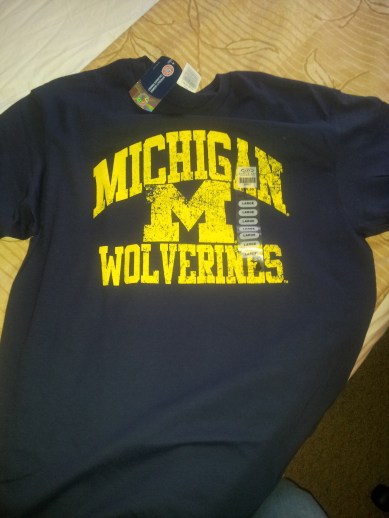
Let’s get something straight.
The anti-Israel “Boycott Divest Sanctions” movement hitting campuses across the globe is nothing more than a new fangled incarnation of simple Jew hatred.
In advance of tonight’s Central Student Government hearing tonight to reconsider its decision to table a vote to approve a resolution asking the University of Michigan boycott and divest from academic and business dealings with Israel, the Jewish Federation of Metropolitan Detroit sent out the following email:
|
|
To Our Friends and Supporters: As you may know, the Central Student Government (CSG) at U of M last week rejected an anti-Israel divestment resolution. However, due to pressure from an anti-Israel campus group, CSG will reconsider the resolution at its meeting tonight. We want to bring you up to date on developments surrounding this resolution and how you can best support efforts to convince the CSG to sustain its initial rejection of it. Federation and JCRC work continuously to advance the interests of both Israel and the Jewish campus communities. Tilly Shames, the Executive Director of U of M Hillel, serves as our agencies’ eyes and ears on campus and has been keeping us well-informed on developments related to this proposed resolution. With her many years of experience fighting anti-Israel activities on campus, she knows what tactics work and don’t work with college students. Her most important advice is to ensure that it is students who remain most visible and vocal in the fight against the resolution. CSG is an organization of students serving the needs and wishes of students, and is not likely swayed by older adults, especially if they are not part of the campus community. Rather than show up at tonight’s meeting with calls or demands that CSG again reject the anti-Israel resolution, the most effective way you can affect the vote is to contact the university administration asking that it issue a statement calling for its rejection and expressing concern on how the issue is polarizing the campus. You can do this by emailing U of M President Mary Sue Coleman at presoff@umich.edu or calling her office at (734) 764-6270. Your contact will be most effective if you convey your message respectfully.
Please know that the BDS activists have been threatening and intimidating Jewish students at the University of Michigan. BDS is nothing more than intellectually disguising age-old Jew hatred in the name of “human rights.” if you are at a loss of words at what to write to President Coleman, I suggest you may want to take an excerpt from LA radio commentator Ben Shapiro‘s statement at a similar hearing at UCLA, where they voted against the resolution 7-5. Here is the full transcript of his statement:
Please do not be silent. Please write the UM president at presoff@umich.edu and stand for Israel, the only democracy in the Middle East which supports freedom of religion, gay rights, educational opportunities for women, and freeedom of expression, |
||||||


About Me
Kreativ Blogger

Versatile Blogger Award


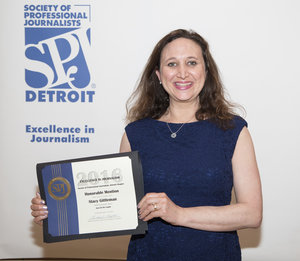
 Stacy Gittleman