




Archive | Family Life RSS for this section

Photo Challenge: A Day in the life

WordPress asked us bloggers for an in the moment day in the life photo challenge. I am sure That others will post about their day on a safari or exploring  some Eastern European hamlets. I wish I could offer a post as exciting. But, here is an honest glimse of my life from yesterday. The last […]

The Moving Blues

bluesThis week is my husband’s final week in town. Next week begins his new beginning in Detroit but the beginning of my family’s long drawn out departure from Rochester as we yet again become transplants.

The sentence I have repeated hundreds of times to well-meaning family, friends, and acquaintances is finally here:

“Craig moves in March, I stay through June.”  ‘

March is tomorrow.

As the move to Detroit moves closer, uncertainty clogs my brain and there are daily reminders that we are leaving Rochester. We know what we have here, we don’t know what we are getting there. It’s that simple.

But then my nine-year-old taught me a valuable lesson. However small, finding one certainty, one thing that will be a known each day might make this whole transplant thing a bit easier.

On a drive to school the other day, my youngest declared he did not like his current room. It was boring.

And he might be right on this one. His room was never intended to be a kids’ bedroom but a spare guest bedroom. It remains the same since we moved in 13 years ago, way before he was a glimmer in our eye.

It is beige.  It is very plain.

But (AND PAY ATTENTION POTENTIAL HOME BUYERS) it is brightly lit, private, and has its own bathroom and a huge closet.

He continued to petition his case for a more exciting room in our future unknown home from the back seat.

“My room is really boring, mom, so I am excited to get a new room when we move that is NOT beige. And I want my room to be blue.”

“But there are so many kinds of blues, how will you know which one to pick?” I asked from the front seat.

“I don’t want aquamarine, or turquoise, or teal. Just original, plain blue. Like the blue in a Crayola box, the kind with only 8 crayons.”

And there you have it. One bit of certainty in this very uncertain time.

My son’s new room in our new house in our new town

will be

Blue

Photo Challenge: Home

Hmmm. Home. The WordPress photo challenge: Home could not have come at a better time in my life, a more doubtful time in my life.

After all, I started this blog, transplantednorth, feeling like a transplant who was uprooted from my hometown. It’s only now, as my family prepares to move again, am I understanding that I have been home for quite sometime in Rochester.

What is home?

Is it where you grew up?

Is it where your kids grew up?

Is it wherever you happen to lay your head down at night?

this is a good home. The new owners will be very lucky.

this is a good home. The new owners will be very lucky.

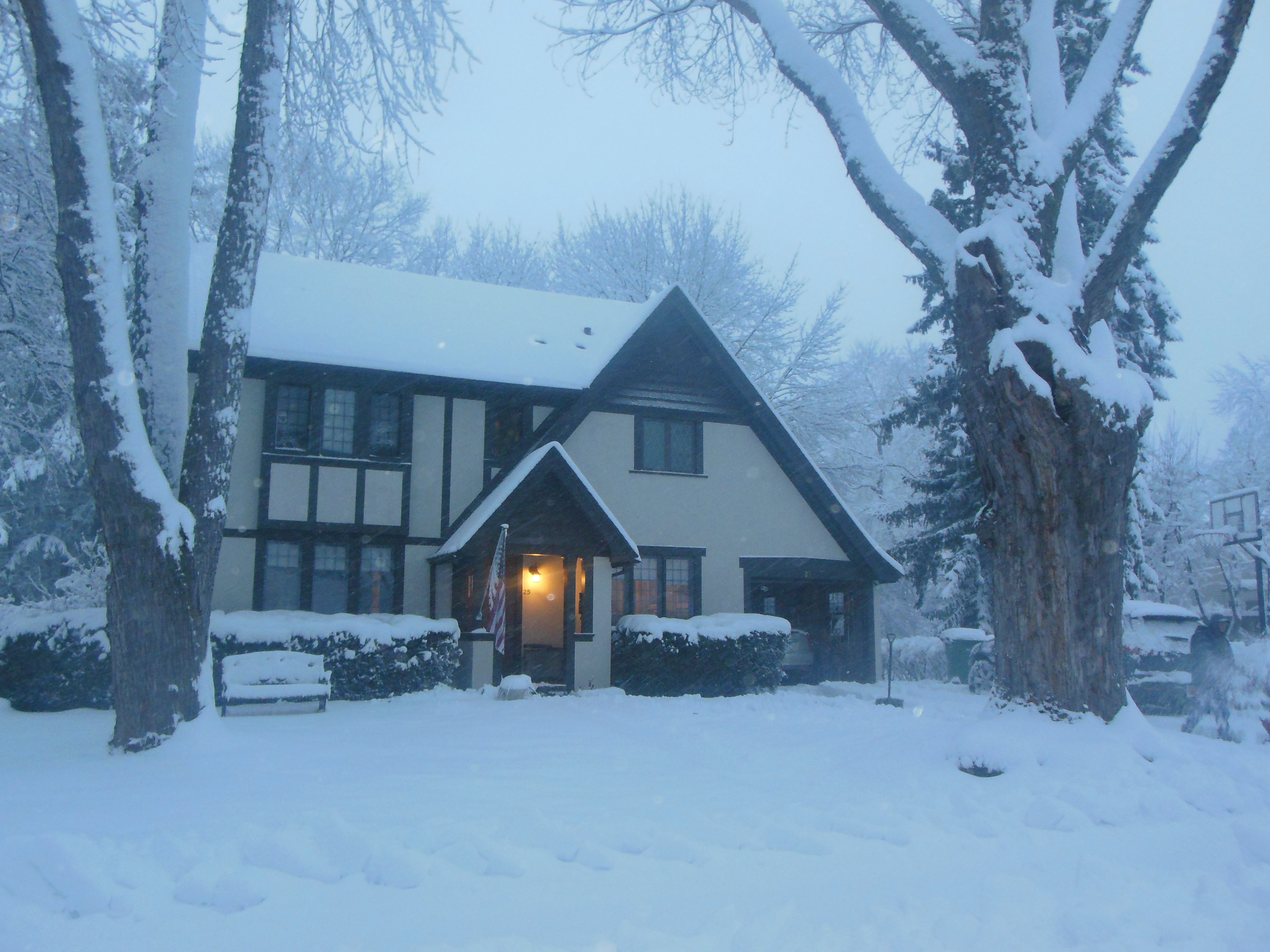
This is a photo of our current home, in all its Rochester snow-covered glory.

But it won’t be our home for much longer.

I don’t know what my new home will look like.

I don’t yet know nor can I visualize the surrounding neighborhood or town of the home of our very near future.

So folks, I guess you can say my blog will become a bit more bleak from here on in as we start to say goodbye to all my kids know as home.

I am hoping to pick up again, to be more cheerful and a return to my more optimistic self once in Detroit

I

find

a

new

home.

The Blessing of Better

tra la la feedle dee dee have a heart-shaped balloon!

It’s been a while since I’ve blogged.

Then again, it’s been a while since I’ve stayed up past 7 p.m.

Unlike in previous years, where February was our sick month, someone one way or the other in my house was sick from December 31 all the way through January 28.

It started with New Year’s Eve.

My daughter was coughing and sneezing. Then her head ached. I could not find the working thermometer (that expensive Braun ear thermometer I purchased when the kids were babies fell into an open toilet bowl and as a result was thrown away years ago), but with my keen sensory skills, I would say she had about 101.

She knew that her planned sleep-over invitees would not be happening, but please can everyone just come over and she would stay upstairs?

After all, New Year’s Eve 2012 put the close on the last full year we would spend in this house. Everything from now on would be the last, including our last New Year’s Eve get together with our local Rochester friends.

But with flu in the house, I completely understood why everyone stayed away.

All the champagne, cheese, chips, dips, and finger food appetizers (including Mac & Cheese balls! I mean, can anything sound more tempting than Mac & Cheese balls??) I purchased for a small New Year’s get together would have to wait for another time.

My daughter’s flu-like symptoms lasted into the first week of school. As soon as she was better and returned, it was my oldest son who missed a week of school with a sore throat, a seal-like cough, and a headache that wouldn’t quit.

Finally, my youngest was the next victim of the flu and was out for nearly a week. A high fever and a bad cough were the symptoms of his misery.

I have to admit that he DID briefly return to school one evening, thanks to the magic of Advil, to perform in his chorus concert.

The show must go on, right? And again, it is one of his first and last concerts in our current hometown.

Next, it was my turn.

I often encourage my children to take turns in sharing things. This was a turn I would rather have been left out of.

My flu symptoms – both occasions, were  sandwiched with the mother of all sinus infections.

I had completely lost my sense of smell for about a week. Do you know how much pleasure the human being gets from their sense of smell?

smell1

The aroma of coffee, of fresh herbs, steaming soup, freshly baked bread,  lavender-scented candles and vanilla scented body lotion completely evaded me.

A whole head of garlic? In desperation, I cut one in half and inhaled.

NOTHING was getting through my schnozzola. Nothing.

I suspect that even if I had to change a diaper, I would be spared the stench.

“Inhale some red pepper flakes!” My son dared me.  “It will be painful, but it WILL clear you right out!”

I turned down his dare. I may have been desperate, but I’m not a 14-year-old boy.

When my fever went away, and thanks to some more OTC drugs, 100 cups of tea, and my new favorite toy (a Homedics humidifier) my sinuses cleared and I was feeling better.

But the tiredness and the cough only lifted completely in the last 48 hours.

After a month of being sick (and mind you, I know the flu is NOTHING in the face of other serious illnesses,)  there is the blessing of

better.

People’s first response when you are sick is always “Feel better!”

So, if you are sick with this year’s miserable flu, and you are reading this, I sincerely wish that you feel better.

You will get better soon. When your head is congested and you can’t even smell the strongest head of raw garlic, know that soon you WILL FEEL BETTER!

Not tomorrow, but soon you, will be better.

Better in the way that you can stay up past 6:30.

Better in the way where you can return to work with renewed energy and without the guilt of knowing you are infecting your co-workers.

Better in the way that you can return to exercising and actually feel energized and not exhausted.

But in the meantime, I leave you this song from The Hostile Hospital, a book in the kids cult classic books, Book the Eighth in  A Series of Unfortunate Events  by Lemony Snicket:

Helping out, Part I: Guyon Rescue, Staten Island

with wreckage in the backround, Sandy relief workers wrapped Christmas presents in this tent.

with wreckage in the background, Sandy relief workers from Guyon Rescue in Staten Island wrapped Christmas presents in this tent. My parents house, my childhood house, is just on the other side of this field.

Over my Christmas vacation, I spent hours on a cold floor in Staten Island rolling black plastic contractor bags into bundles of ten.

On my knees, I wrestled  with the bags as a camper would a slippery sleeping bag and secured them together with a rubber band. Though this job seemed minor and menial in the scope of helping in the wake of Hurricane Sandy, to someone else who needed those bags to clean up whatever was left of their house, it might mean a lot.

As I worked, a steady stream of volunteers flitted in an out, stocking shelves as well as dropping off supplies. One woman who seemed somewhat in charge said she had volunteered at the Post every single day since the storm hit. Other shelters were closing on the Island and this leading volunteer feared that already, the rest of the world was forgetting what happened here.

She’s the one who needed those contractor bags bundled.

And she needed me to divide up other supplies like steel wool pads with those tiny pods of dish soap.

And she had socks that needed sorting and baby food inspected for expiration dates. My three kids got on that job.

At Guyon Rescue, there is no need for volunteers to make a reservation.  There are no shifts. No training videos or marketing messages like other food pantries where my family has volunteered. You just show up and say you want to help. And they put you right to work.

Guyon Rescue is not a shelter, exactly. No one sleeps there. But to the many neighbors in this devastated area of Staten Island, Guyon Rescue has become a vital resource for short-term help since Hurricane Sandy.

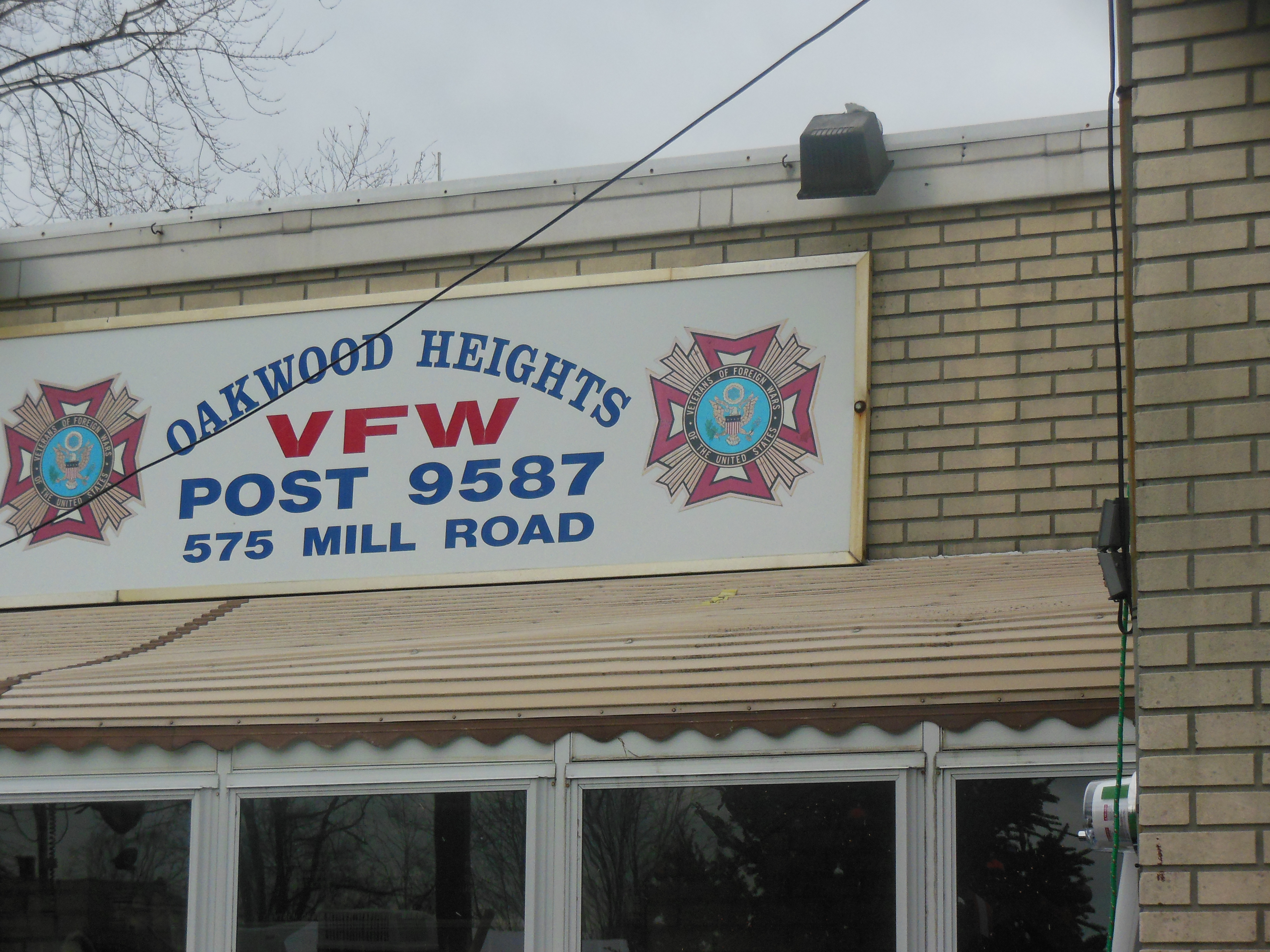
Guyon Rescue is an all-volunteer grassroots network of workers and donors that have set up camp in a VFW Lodge around the corner from my childhood home, across the street from so many homes damaged and destroyed. Two months after the storm, you would not believe how people are still living unless you walk the streets here for yourself.

The lodge where I went to Brownie meetings has become Guyon Rescue, a grassroots organization that collects and distributes necessities for Sandy victims on Staten Island.

My husband and I also worked outside. With numbed fingers, we scrubbed out a donated refrigerator until the shelves were clean enough to eat from.  We dried off equipment and supplies in a make-shift outdoor kitchen sheltered only by a tattered, tarp roof. Many of those preparing meals lived in the neighborhood and could tell stories of the storm surge. Of how many feet of water was in their basement. Or up to the ground floor. In the aisles of the food pantry, one woman collecting goods after she showed her FEMA card at the door told me how she swam out of her houseSandy12 134

It was Christmas Day, and soon, many who still had no power – or were camped out in cars near the remains of their property – would be coming to the post for a hot lunch.

Sandy12 135

At night, just a quarter mile from Guyon Rescue,  my husband and I slept in my parent’s basement on an air mattress.  It’s been two months since the storm and the basement looks back to normal. Except they lost most of their furniture when it became flooded with nearly four feet of water.

Now,  don’t you go taking out any tiny violins for me or my family. We are the lucky ones.

Over my Christmas vacation to New York city, I also saw the Scream,
Sandy12 018

and Starry Night

Sandy12 012and still-life paintings from Cezanne.

We dined on the finest hot dogs and kinishes a New York City street vendor could offer.

Sandy12 006

And of course, we visited the tree in Rockefeller Center.

Sandy12 023

But if you ask me what was the best – the BEST part of my Christmas vacation back to New York City, it was volunteering with the good people at Guyon Rescue.

Want to make a difference in Staten Island with Guyon Rescue? Keep updated by following them on Facebook here. Because the recovery is not over.

In Staten Island, it’s only getting started.

The Last Post from the Brighton Community Garden

Now that December is here, this post about wrapping things up in my little spot in the Brighton Community Garden is way overdue. But I must write this final post as a conclusion to the unforgettable experience it has been digging, weeding, watering and reaping alongside my fellow Brighton  neighbors.

My neighbors and I have shared watering and weeding responsibilities through a hot dry summer. Our tomato patches bursting with more than one family could possibly consume, we’ve traded beefsteaks for exotic varieties such as the green-striped zebra or tiny yellow jelly bean.

Sue Gardiner-Smith, the manager of the garden, made sure that we kept up with our commitments to clear the common paths of weeds and not let our own plots get too overgrown (that meant taming my wild pumpkin vines!) In return, she gave me carte blanche to take as much Swiss Chard as I could cut from her never-ending crop of the green leafy stuff.

My garden experience ended on Veteran’s Day. The kids had the day off. First, we paid a visit to the brand new Veteran’s Memorial sculpture, just next door to the garden:

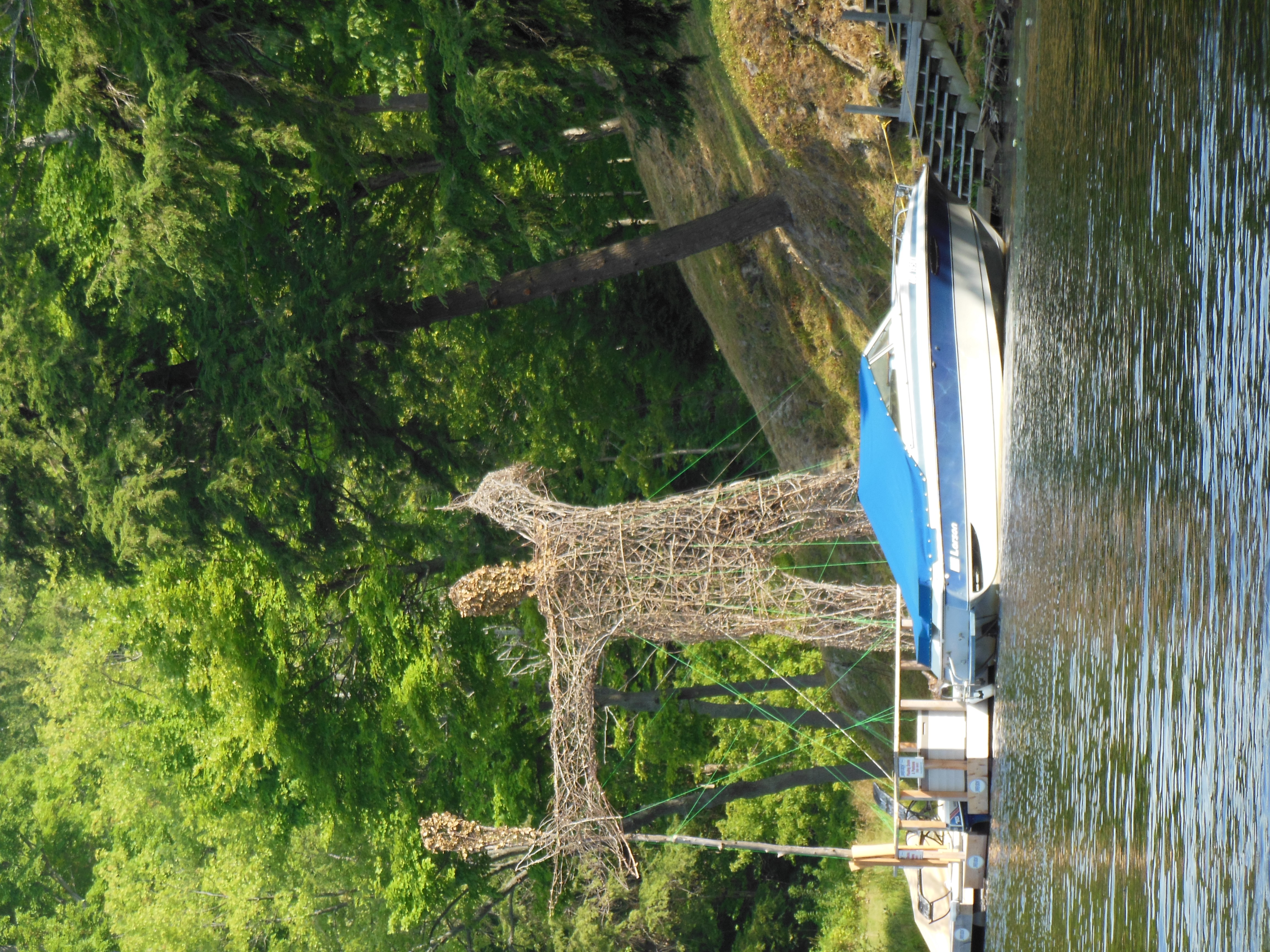
The talons and feathered legs of the Eagle sculpture at the new Brighton Veteran's Memorial.

The talons and feathered legs of the Eagle sculpture at the new Brighton Veteran’s Memorial.

Then, we got to work. We pulled out the last of the vegetation, blackened and dead as a result of a hard killing frost that descended over Rochester a night or two before:

DSCN1964

We pulled up the fencing and the poles ( the boys had to have a stick fight with them atop the compost heap, of course):

DSCN1966

Harvested our last pumpkins and carrots, and finally, chopped down the remains of that sunflower that grew to be about 10 feet tall.

DSCN1965

Putting this garden to bed would be the first of many lasts for me in Rochester.

Like clearing out this garden, I’m literally pulling up my roots again. Rochester may not be my hometown, but it is for my kids.

When I cleared the last weeds with my kids, I  knew I would never garden here again.

In the end, the plot looked just as it did back in March. You would never knew how it was covered with tomato, bean, pumpkin and flowers just weeks before.

In the end, the plot looked just as it did back in March. You would never knew how it was covered with tomato, bean, pumpkin and flowers just weeks before.

I would not be putting down my $25 deposit to renew my lease on this 10’x10′ piece of land that gave me so much delight. Next spring,  this plot will be cared by someone else.

Next spring, I’ll be well on my way to finding our next home, and hopefully our next garden somewhere in Michigan.

Mr. Paladino moves to Panama: Transplantednorth’s first guest blogger

Sometimes, one has to make a big move, say, relocation for a job.

Here is a guest post from a man who took a chance with his wife and son to live in a new place simply because it was the place they wanted to be.

I’m off this weekend to check out the next potential chapter of my family’s life in the Detroit, Michigan area. While I’m away, I’m letting an old friend hold down the fort here at transplantednorth.

I met Chris in college at the Daily Targum, the daily student-run newspaper at Rutgers University. I wrote copy while he was either shooting photos or developing them in a darkroom. Though our paths did not cross until college, we also both grew up on Staten Island.

I haven’t seen Chris since those college days, but we’ve kept in touch thanks to the miracle of Facebook. Since our college days, Chris worked for 12 years as a fundraiser and spokesperson for the American Red Cross, being the spokesperson for major disasters such as the TWA flight 800 and other air crashes, several dozen major hurricanes, tornados and floods, the Kosovo crisis, the 1999 Turkish earthquake and many others.

 After leaving the Red Cross, Chris moved into private business in sales and business development and acquisition.  In 2010 Chris led a group of investors in the acquisition and restructuring of Chesapeake Bay Roasting Company in Crofton, Maryland, where they produce a premium coffee that is also the most sustainable coffee you can buy.  From the custom-built roaster that uses 78% less energy and packaging manufactured entirely from recyclable materials to the “H2O Initiative” which commits 2% of coffee sales (not profits) to organizations that help protect and restore the watershed, Chesapeake Bay Roasting Company coffees make a great cup while making local communities better places to live, work and play.

 Now semi-retired and living with his wife and son in Panama, Chris keeps his hands in some charitable organizations with a mission for sustainability, including raising hundreds of thousands of dollars for EarthEcho International (EEI), an organizaiton  founded by naturalists Philippe and Alexandra Cousteau. 

He and his family relocated to Panama City, Panama in the summer of 2012 to give his son an international high school experience and explore life and business opportunities in a booming Latin American culture.

Here is his story of being a transplant. What is yours? 

Three months ago my wife, 14 year son and I picked up and moved from Silver Spring, Maryland to Panama City, Panama – after just six whirlwind months from coming up with the idea to execution. We’ve always been a little impetuous, but this one was our biggest idea yet!

We actually made the move because we wanted to, not because of work or family.  The idea of “slowing down” while giving my son the chance to go through high school in an international environment was one we all thought shouldn’t be missed.

We knew we were moving to a completely new environment that operates in a language we don’t speak, but it was still a major shock once we arrived.

No matter how much you prepare yourself, stepping off the plane without a return ticket and realizing you actually live here is something you really can’t understand until you do it.

I went from feeling like a confident and successful entrepreneur to someone who struggled to set up the basics for his family.  I just wasn’t ready for how difficult it would be to get cell phones and internet service, satellite TV, and an account wit the electric company.

Even though I learned to drive in New York City, I was completely unprepared for the insanity of Panama City roads and the aggressiveness of the drivers.  Traffic signals are truly suggestions, and a road is any place you can drive your vehicle – shoulders, medians, even grassy strips.

three months into the adventure I’m starting to see the challenges as opportunities.  The Latin attitude of “mañana” is actually a great way to live if you can embrace it.  Panamanians truly “work to live,” as opposed to the American attitude of “live to work.”  I never really though that was how we were living our lives back in the States, but now that we’ve lived someplace else for a while we’ve realized just how much our American lives were defined by what we did for a living, and how much time and energy we devoted to it.

We’re really starting to have a lot of fun, from visiting the Panama Canal (how in the world did they build that thing 100 years ago?!?)

to trying to figure out what all those guys standing on the side of the road are doing (relieving themselves in the grass – why actually find a rest room?).  And there have been plenty of humorous moments as we learn Spanish. (Text messaging is huge here; for weeks I kept asking my wife, “what the hell does ‘jajaja’ mean?”  Must have read it 20 times before I pronounced it in Español – hahaha!)

We’ve also tried to find a way to make a difference in our new home country, and we’ve “adopted” a home for abused and abandoned girls. We’re leading a campaign to raise the funds to rebuild the roof, electric and plumbing.  It’s been a moving experience (you can read more about the project at http://www.panamahogar.org).

Now that we’ve been here for three months, I’m realizing most of life here isn’t better or worse – it’s just different.  Embrace the change – which was the whole reason we made the move in the first place – and life in another country can be a really fantastic experience.

To Plant or to uproot? That is the question.

Brace yourselves, my dear blog devotees (mom, you already know)

but this blog is about to get a whole lot darker.

Scarier.

And that’s not even because Halloween is coming.

The universe has thrown my family a curve ball and the research facility where my husband works, the whole reason why we were plunked down in Rochester, is closing.

Once again, we are faced with the possibility of becoming

tranplants

The next few days and weeks will be hard. Getting transplanted has many implications, big and small, on almost every facet of one’s life.

Take my passion for gardening, for example.

For nearly 13 years, I have continually worked in the gardens around my house. I’ve battled invasive creeping ivy; clearing it out to create a shade garden of hosta and ferns  and Solomon Seal in my back garden.

I had yews removed to create a perennial garden in one of the only truly sunny spots on our property. Over the years, I’ve planted peony, roses, lavender, and countless other varieties.

After over a decade, the garden is finally looking established.

And now, I guess I’ll have to leave it all behind.

So, faced with the very real possibility of moving. what do I do now with the crocus and tulip bulbs I bought

BEFORE?

Before we got the news that has pulled the rug out from my family’s feet?

Do I plant bulbs this fall that I may not get to see bloom in the spring?

I know that as my family faces the monumental “ifs” of moving, the subject of some stupid bulbs may seem – stupid. But at this point of the transplanting game, it’s about all I can handle.

About 11 years ago, in another event that changed EVERYONE’s lives forever, I had similar thoughts about bulbs.

We were all still reeling from the 9/11 terrorist attacks. In October, the War on Terror had begun with strikes in Afghanistan. There were reports of anthrax being spread through the mail. Remember how everyone was stocking up on bottled water and duct tape in case of a dirty bomb? Or a bio weapon of mass destruction?

No one knew what was coming next.

That fall, I watched and listened to way too many grim reports from the media.  It left me in a serious blue funk.

So, I planted bulbs. They gave me hope, they gave me some sense of control of what I could be certain of for the following spring.

So now, in this one miniscule detail in the mountain of details one faces on the prospect of moving, I’ve got two bags of bulbs.

I can plant them for either me, if we stay here, or the new owners of my house.

Or, I can give them away to friends for them to enjoy.

If you knew you wouldn’t be around the same town to see your garden in the spring, what would you do?

Fairport Community Rallies around Coach. My Interview with Gary Brown.

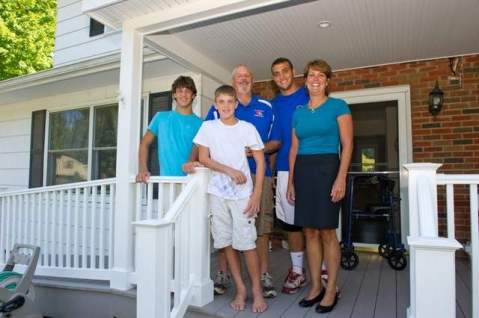
A Few posts back, I wrote about my wondering around Fairport, asking random people in the village about which local folks would make a good story and my brother calling me crazy for doing so. Well, if I didn’t wander around aimlessly, I wouldn’t have found a flyer about a golf benefit for Coach Gary Brown. And I wouldn’t have had the honor and the opportunity to meet this wonderful and brave family facing an incurable disease. Fairport Football coach Gary Brown, center, with his family, from left, Mackenzie, 17; Mike, 12; Max, 19; and his wife, Mary, at their Fairport home. Community support helped build the handicapped-accessible porch.

garybrownFairport Football coach Gary Brown, center, with his family, from left, Mackenzie, 17; Mike, 12; Max, 19; and his wife, Mary, at their Fairport home. Community support helped build the handicapped-accessible porch. / KATE MELTON
Written by
Stacy Gittleman

Get to know Gary Brown

Profession: Field manager at RG&E.
Family: Wife of 21 years, Mary. Sons Max, 19; Mackenzie, 17; and Michael, 12. Mother-in-law, Rita Clark.
Hobbies: Boating, fishing, hunting.
Brown’s advice for living every day:Make someone laugh. Give 110 percent to family and community. Banish the phrase “I can’t.”
What: 15th annual Fairport Football Alumni Association “Gary Brown Red Raider” Golf Classic.
When: 8:30 to 11:30 a.m. Sunday, Sept. 9.
Where: Victor Hills Golf Club, 1450 Brace Rd, Victor.
Information: Sponsorships $100. Portions of the proceeds will go to the Gary Brown Foundation for MSA Inc. For sponsorship opportunities and more information, contact Don Santini at (585) 223-1274.

When Gary “Brownie” Brown played center for the Fairport Raiders in the 1970s, his coach Don Santini took notice of how his enthusiasm and determination would unite the team at game time.

Santini again drew upon these traits decades later when he asked the 1977 Fairport High School graduate back to help coach the team as a volunteer.

In 2003, Brown, a field manager for RG&E, completed the New York State High School Coaching Certification program and joined the coaching team for the Raiders.

Santini, who retired from coaching after leading the Raiders from 1975-92, describes Brown as “a doer.”

When Santini’s widowed sister-in-law needed her house painted, Brown organized a crew of friends and students to get the job done. Brown in 2007 started an alumni fundraiser to sell bricks to create a “Walk of Pride” walkway on campus to benefit the football team and raise scholarship money for Fairport graduates.

For seven seasons, Brown taught students what it takes to be successful on the field. He helped them build speed, coordination and balance.

But starting in 2009, Brown noticed some troubling symptoms in his own physical condition.

He often felt dizzy and had trouble keeping his own balance. He could not run as fast as he did in previous years.

After tests and doctors’ visits that came up empty and just days after his oldest son Max graduated Fairport High School in June 2011, Brown was diagnosed by a doctor in Michigan with a rare, degenerative disease called Multiple System Atrophy, or MSA.

MSA is a progressive and incurable neurological disorder that impairs the body’s involuntary (autonomic) functions, including blood pressure, heart rate, bladder function and digestion. The Parkinson’s disease-like symptoms, such as slowness of movement, muscle rigidity and poor balance, affects 15 out of 100,000 people nationwide.

“This has been very stressful on all of us,” Brown said in slurred speech — another symptom of the disease. He noted that his wife, Mary, and sons attend weekly counseling sessions with a therapist. There is also a counselor available to Max as he attends classes at State University College at Cortland.

Through therapy, the Browns have come to a realization that they can’t go through this alone. But with the outpouring of the Fairport community, they won’t have to.

In January, Santini and other close friends of Brown established the nonprofit Gary Brown Foundation for MSA. Money from the foundation will be used to help the family with medical and counseling costs, raise awareness about the disease and offer support to others in Rochester struck by this disease. So far, just two others with MSA in the Rochester area have contacted the foundation.

The first fundraiser held back in January drew 900 Brown fans out to roast the coach and bid on silent auction items. It raised $58,000. The next, a golf tournament sponsored by the Fairport Football Alumni Association, will be held 8:30 to 11:30 a.m. Sunday, Sept. 9, at Victor Hills Golf Club, 1450 Brace Road, Victor. In addition to funding athletic scholarships at Fairport High School, a “significant portion” of the money raised will benefit the Brown Foundation, said Santini.

Funds from this foundation have enabled Brown to enjoy the company of family and friends on a porch with a handicapped-accessible ramp.

Brown thanks local contractors like Westwood Development for donating their labor to build the porch as well as a handicapped-accessible bathroom and bedroom on the ground floor of their house. Bristol’s Garden Center also donated materials for landscaping.

The foundation also paid for a golf cart that Brown uses to drive to the school to watch football practices and games. Though he is no longer coaching, Santini said his reputation still carries on and he gets a warm welcome from the kids.

“Fairport Raiders past and present, and even little siblings not yet in high school, will come over to shake Brown’s hand,” said Santini.

Mary, who describes herself as a “Buffalo girl,” can understand why people like her husband want to spend all their lives in Fairport. She has been “blown away” at the support the community has bestowed upon her family.

“If I pick up the phone to one person for help, I get 10 responses,” she said, referring to her neighbors who have prepared meals for nearly a year and helped care for their sons while Brown travels to Michigan for treatments.

The prognosis is grim. Doctors have given Brown a life expectancy of four years. But Brown knows he will be in good hands. In 2007, Mary received her master’s in nurse practitioning at the University ofRochester, long before Brown became ill.

“You know what (the late) Steve Jobs said, how you can only connect the dots in life when you are looking backwards? I truly believe that. I truly believe there are no coincidences in this life.”

“No, you may NOT tip, Young Man!” And other things heard and seen in a Canoe in Muskoka

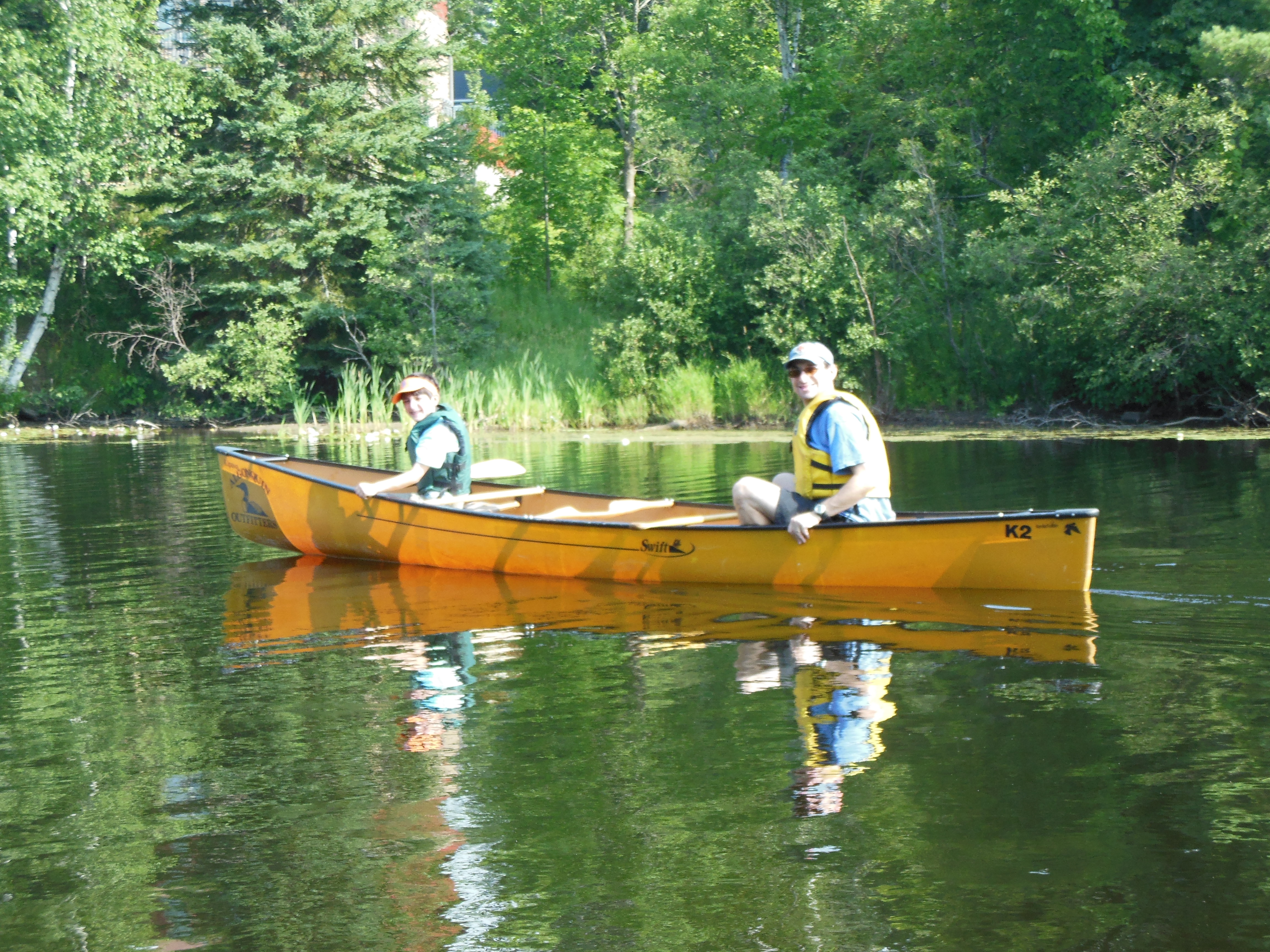
With absolute awkwardness, I got in the canoe, rented from Algonquin Outfitters in Huntsville, at the front. I don’t remember canoes being so wobbly, probably because I hadn’t been in one in at least 20 years.

“Are you sure that this canoe isn’t extra narrow?” I called back to my teen son.

My son climbed into the canoe with ease. The one who earned his golden oar after canoeing for five summers straight at camp. I let him take the back.

It was the last morning together with the boys. It had been a blessing in disguise that we couldn’t drop them off for Session II of the summer at Camp Ramah in Canada as early as we planned. That way, we had this one more adventure before we dropped them off for a whole month at camp.

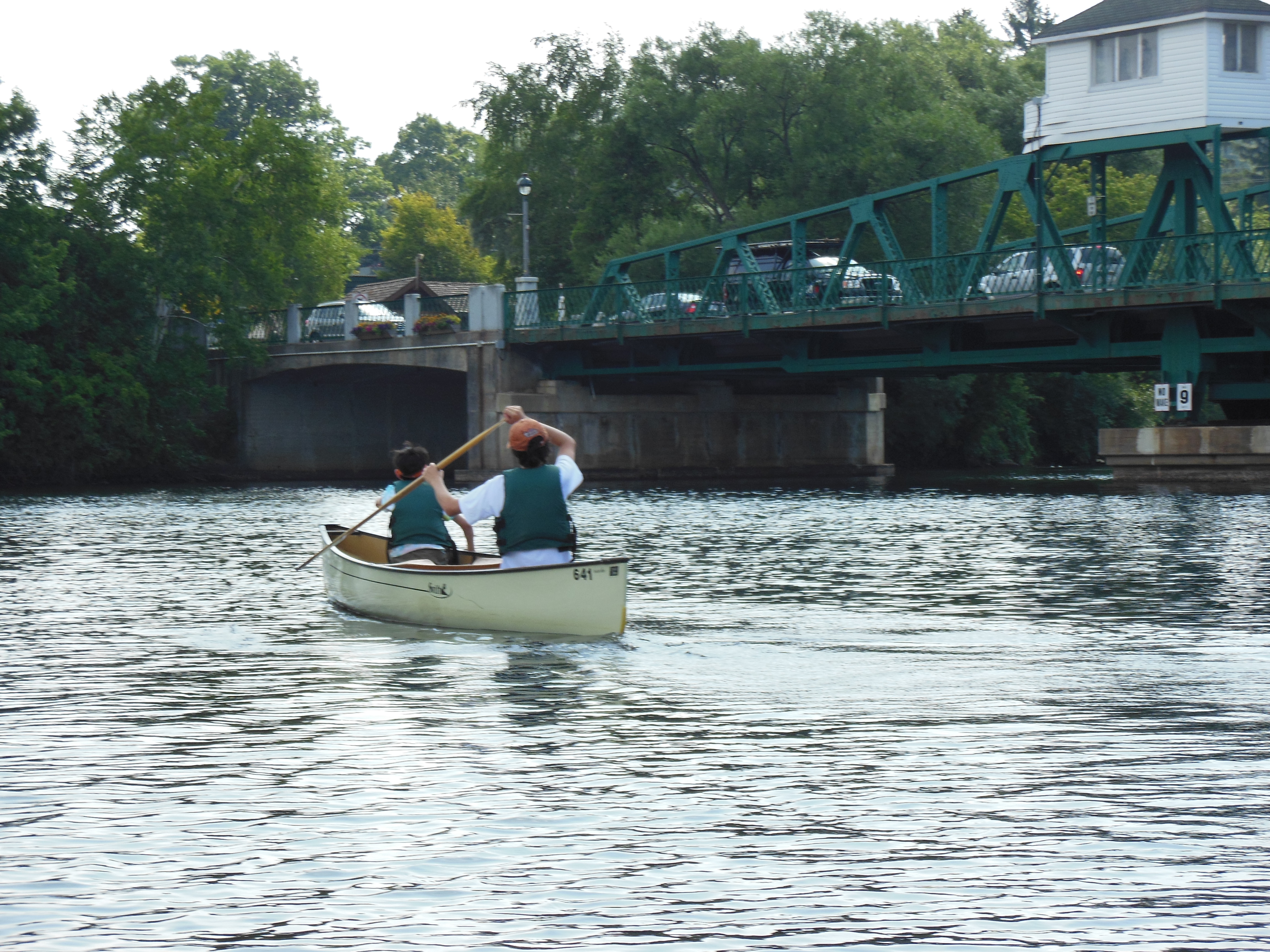
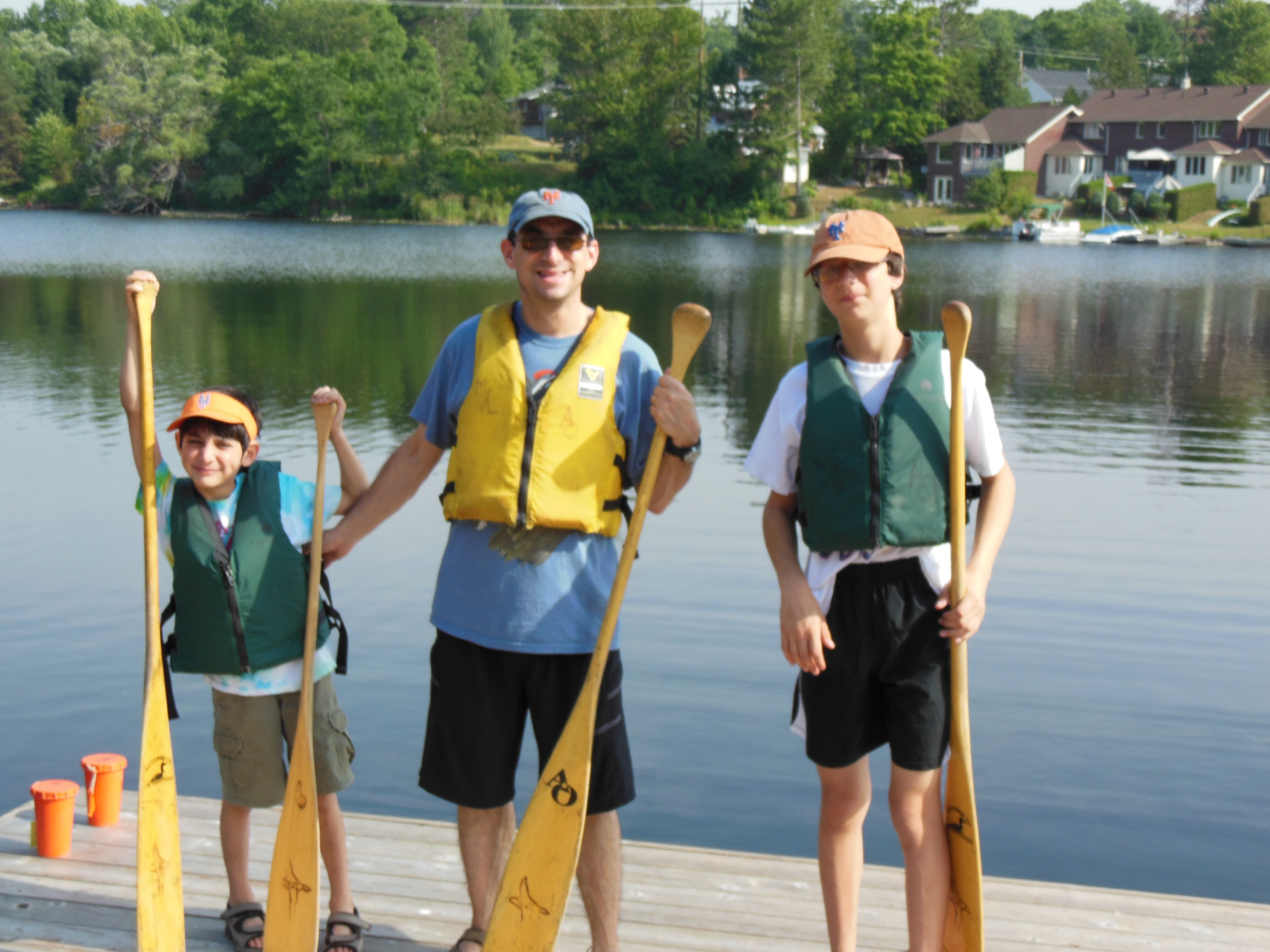
On the first half of our trip, we divided the boys per canoe: My husband and younger son, 8 in one, and myself and my 13-year-old in another. That worked well. My husband and my teen took control, telling the less experienced rowers (my youngest and I) which side to paddle, and actually how to paddle.

Before  that morning’s canoe ride  with my 13-year-old son, I did not know there was such a thing as a C stroke or a J stroke. To me, it was all one thing, put your oar on the left side or the right, put it deep in the water, and pull back. I also did not know that, several times a week at camp, my son would wake up extra early to go canoeing with a small group of campers. Imagine that, a teen getting up extra early, when at home on vacation, I can barely get him out of bed by 10.

He said at camp he also played his guitar in a canoe.

He also told me one of his most spiritual moments at camp was when he and his other campers brought their prayer books and conducted morning services on the canoe.

Prayer books. On a canoe?

Clearly, the campers knew there were times for tipping the canoe, and other times, carrying precious cargo, times to keep the canoe perfectly balanced.

We rowed along a calm lake that had many inlets and narrow passages, so much that it seemed to have a current like a river. We passed quaint houses with well cared for and decorated docks.

We passed under a freight train bridge where a man working on the rails shouted greetings (and advice) to us from above. (You’ll just have to use your imagination here. I didn’t photograph him. Taking pictures, managing an oar,and trying not to tip over proved to be very challenging!) 

“Great day for a canoe ride, Ay? You should steer a little away from the side, Ay? I say, Ay, I think you’re headed for a rock, steer clear, Ay?”

Was my ineptitude that apparent? All those “ays.” I definitely knew I was in Canada.

Things were going well until, exploring the second half of the lake,  my older son insisted we switch. My son wanted to take his little brother under his wing and show him the ropes of rowing. He offered the argument that his edah (Hebrew for group) of campers never socialized with my son’s age group on waterfront activities and this would be his only chance to have some brother bonding on a boat.

Begrudgingly, (but I knew it was a bad idea) we agreed.

First, they got stuck going around a curve in a bramble of branches.

Then, they kept turning in circles as they got stuck in a current.

My older son overestimated my younger’s experience with the  oar. In his mind, he had to be an expert by now. After all, little brother had been canoeing for  an entire hour with dad. It was a lesson in brother bonding, and resisting the urge to throw little brother overboard.

Now that I was in the canoe with my husband, I wasn’t doing much better. Apparently, sitting in the front of the canoe, I pull my oar out of  the water way too fast and was splashing my husband at every stroke. He was clearly the one in charge in this canoe, the backseat rower.

“Stop splashing me, please! ”

“Three more strokes on your left, please!”

When I was in the canoe with my son, his main suggestion to me:

“Mom, just sit there and let me do the rowing. We’ll be better off that way.”

I did do some rowing, at my insistence. I needed the workout. Was it my fault I didnt’ spend five summers learning how to canoe as a child?  Also, my son didn’t complain that I was getting him was wet when I oared in his canoe! Getting wet was half the fun, just as long as we didn’t tip. Actually, in the heat, I wouldn’t have minded getting tipped, except I had a new camera on board.

Finally, at a private cottage dock with a little white dog barking at us the  whole time, we regrouped and switched back to our original rowing arrangements.

Rowing taught  us several things. For one, when you are in a boat with someone, squabbling just makes you go around in circles. To get anywhere, you both have to paddle in perfect harmony.