
Friday Photos: Rochester Starring as New York City in Spiderman 2


This gallery contains 6 photos.
Rochester is now starring as the stunt double for New York City in Spiderman 2. And it’s making some Rochesterians as mad as the Incredible Hulk
Got a Garden? Let me live horticulturally through you this spring!
This is going to be a weird spring.
For 13 winters something has been growing in my basement.
Now don’t be frightened, especially if you are a potential buyer of my house.
The things that grew were my seedlings. All through the winter. Under grow lights set under timers.
Trays and trays of seedlings growing in plantable peat pots.
Annuals. Perennials. And Herbs.
All legal herbs, that is.
From the tiny seedlings grew the fully grown plants that populated my garden each year.



But this spring, the spring of transition, the only thing I’ve planted has been this:

The only gardening I’ve done is the kind where you weed while kneeling on a gardening pad and watch the bulbs you’ve planted from previous years emerge from the ground.
So, this gardener without a garden needs your help.
Won’t you write to me with your gardening plans – especially if you live in my current town of Rochester, or better yet, if you live in Detroit, tell me what the gardening scene is like in the motor city. Write to me where you find my contact information and I will feature you as a guest blogger right here.
So, get your green thumbs out of the dirt and onto that keyboard and write me!
Photo Challenge: A Day in the life

This gallery contains 11 photos.
WordPress asked us bloggers for an in the moment day in the life photo challenge. I am sure That others will post about their day on a safari or exploring some Eastern European hamlets. I wish I could offer a post as exciting. But, here is an honest glimse of my life from yesterday. The last […]
Swan Song, House Hunt

 On my latest trip to Wegmans, my shopper’s club card failed to scan after many attempts to swipe it though the machine. It seems I have used this card so many times I’ve worn it down. Now, if a girl’s Wegmans shoppers club card no longer functions, I guess that’s another sign that it’s time for me to leave town.
Here is my final column in the Democrat & Chronicle. Thank you to all the readers, including the cashiers at Wegmans who recognized me with my groceries, who all made me feel like a celebrity.
Tomorrow, we head to Detroit for a “vacation” of looking at houses that are already pending a sale, houses that just went on the market only days ago.
Maybe at least this time, we won’t get a flat tire on the way.
Never underestimate the power of a smile. If you attended a CenterStage show at the Jewish Community Center of Greater Rochester in Brighton, Cora Holliday’s smile from the box office booth was almost as unforgettable as the performance.
For the last several years, Cora was box office manager for the theater. When she sold me tickets to shows, we always chatted about how rehearsals were going and how excited she was for opening night as she browsed her computer screen to find me the best available seats.
“Even if you came to just one play at the JCC, you would remember Cora. She just had that way about her that made everyone feel special in her presence,” said Ralph Meranto, director of JCC CenterStage.
Behind that smile, Cora was fighting diabetes, a battle she succumbed to on March 13. She was 50. Even after having her second leg amputated, Cora’s positive attitude never faltered as she planned to soon be driving and yes, dancing on her prosthetic legs. The JCC in January held a fundraiser in her honor to offset her medical bills and to retrofit her car.
A celebration of her life is planned for 7 p.m. Wednesday, April 3, at the Jewish Community Center, 1200 Edgewood Ave., Brighton. Donations in her memory can be made to the JCC or the National Kidney Foundation, 15 Prince St, Rochester, NY 14607.
Thanks to all who shared stories
Goodbyes are tough. I have been dreading writing this final column for weeks now, but it is time for me to focus on my family and our big move to Detroit.
To all the readers and all who made my job so easy by pitching me story ideas over the last three years, I thank you. I especially want to thank the Democrat and Chronicle for helping me find my voice in reporting on all the local heroes in our midst. It gave me such a sense of connection and belonging in Rochester to know that this column helped raise funds and awareness for so many of the causes that you support. It truly has been a privilege to write it each and every week.
I will be sticking around for a few more months, so say hello if we bump into one another in the Pittsford Wegmans. You also can follow my Motor City musings and adventures at my blog atwww.stacylynngittleman.com or @slgittleman on Twitter.
Starting next week, please welcome Missy Rosenberry to this column.
A graduate of Cornell University, Missy has lived in the Penfield/Webster area with her husband and three children for 11 years. In addition to writing this column, she is a teaching assistant for the Webster School district and a part-time karate instructor. Please send her the latest happenings in your town to missyblog@gmail.com.
As for me, it is time to plan my life’s next chapter. Once I get to Detroit, I hope to find a writing gig as good as this one.
I also look forward to making many new friends in a city poised for an economic and cultural renaissance.
I hope to take part in Detroit’s gardening movement as it sets to turn its urban blight into the world’s largest urban farm.
And when new friends ask me where I am from, after living here for 13 years, I have earned the right to proudly declare, “I am from Rochester!”
Helping Out: Part II: Staten Island Bernikow JCC


from Rochester to Staten Island, all the donations made it down safely. My family with David Sorkin, exec director of the Bernikow JCC, Staten Island
A few weeks back, I wrote the first part of helping out back in Staten Island
I called it Part I which means, of course, there will be at least a sequel.
Well, it’s been a rough few weeks healthwise in our household so my apologies for the hold up on Part II.
It turns out that my synagogue’s education director in Rochester is childhood friends with David Sorkin, the executive director of the JCC in Staten Island. Our synagogue was collecting donations for Sandy victims in Staten Island. Their only problem: how were they going to deliver the goods?
So, in addition to helping out the fine volunteers at Guyon Rescue, with the help of my husband’s colleagues at General Motors, we borrowed the biggest Suburban you’d ever lay your eyes on and filled it with the gently used and new toys, books, art supplies and toiletries to be distributed through the Bernikow Jewish Community Center of Staten Island.
When I returned home to Rochester, Temple Beth El received the following letter from the JCC in thanks for our donation:
Dear Families of Temple Beth El,
Thank you very much for the toys, books, games and gifts that you collected for the children of our community who have suffered great losses from Hurricane Sandy. Also, special thanks to Stacy Gittleman and family for delivering supplies to the JCC.
As fate would have it, we received a call on Monday morning from a day care center that experienced damage from the storm and they were seeking replacement supplies. In addition, we sent some of the supplies to one of the shelters that are housing families. They were setting up a play room for the children, and your donations helped to create a warm and welcoming space in an otherwise bare and sterile environment. Some of these same children received the cards that were made by the children at your school.
Most of all, we must tell you that your acts of kindness will be remembered by all involved long after these families return to their homes and their lives get back to normal. …..
Thank you again to all my Rochester friends, neighbors and congregants who filled bins and my garage with donations that we brought down to Staten Island. I just wanted to share this letter with you to know how much it was appreciated.
My Sandy Project for Staten Island
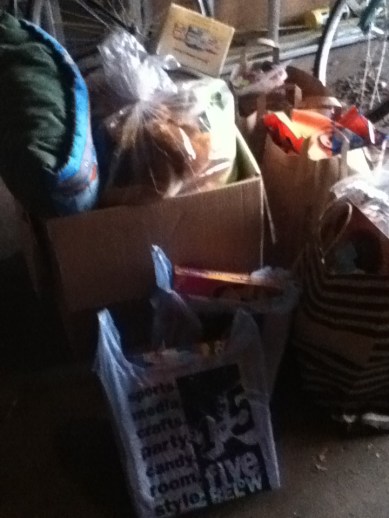
![IMG_0764[1]](https://stacylynngittleman.com/wp-content/uploads/2012/12/img_07641.jpg?w=479) Kids love their stuff. Their toys, their blankies, books and games.
Kids love their stuff. Their toys, their blankies, books and games.
Imagine being a kid, who, on top of losing all your favorite stuff, you’ve lost your home too.
Imagine being a mom trying to cope with all that loss. And at the same time, trying to get through all that red tape of filing claims with insurance companies and FEMA.
A few small things, delivered from up north, just might brighten your day. Even if it’s just a new bottle of berry red nail polish.
A few weeks ago, Susan Bernstein, Director of Education for Temple Beth El in Rochester, told me she had been in touch with an old friend in Staten Island. That friend, David Sorkin, happens to be Director of the Bernikow Jewish Community Center in Staten Island.
The two are collecting “stuff” – books, toys, crafts, games, and other small luxuries – for those who have lost everything on Staten Island. The “stuff” will be distributed to hundreds of clients of the JCC now living in shelters throughout Staten Island. These families, some of them living on the brink of poverty even before the storm, just need some sense of normalcy. It’s not much. Toys, books and beauty products may be just a small diversion as these families grapple with long-term struggle of rebuilding their lives and homes.
The only challenge – Rochester and Staten Island are about 350 miles apart.
Susan then asked my husband and I if we had room in our car to drive the donations to Staten Island.
Now, packing a family of five for a car trip is no small task. The family SUV will be crammed with suitcases, bookbags, snacks for the road, and don’t forget my son’s guitar. Then, there are those growing bodies that used to fit so compactly in an infant seat. Those ever-growing lanky teen and tween legs have taken up the room we once used to stow away all the extras.
No, I have no room in my car. But I’ll happily take all the stuff anyway. Happily.
There is all the room in my heart for my ravished hometown, Staten Island. I have seen the photos and have been following any speck of news from my hometown.
I can’t wait to go home. I know that seeing the devastation with my own eyes is going to be really hard.
In my phone conversation with Sorkin, he asked me to imagine a 4-foot storm surge reaching all the way up to Hylan Blvd. My brain just can’t process. All those businesses, many of them still not up and running.
Since Sandy hit, all I have wanted to do was go home and help.
So, I thank Susan for getting this project started with the JCC of Staten Island. I thank my rabbi, Sara Friedson-King, for letting me make an appeal to the congregation during Shabbat morning services. And I thank my Temple Beth El family for all the donations that will truly make someone’s day a bit brighter.
So far, in addition to the donations in the above photo, there is also an entire barrel of donations waiting for me at synagogue.
I’m putting a hitch on the family car. Renting a U-Haul. Where there is a will there is a way.
Staten Island, don’t worry, I’m coming home to help.
Sculptor Susan Ferrari Rowley goes in New Directions with Minimalism

4-2-2, Susan Ferrari Rowley, photo courtesy of AXOM Gallery
Here is my article on Susan Ferrari Rowley’s Rochester exhibit which ran in the November 11, 2012 Living Section of the Democrat 7 Chronicle:
In the male-dominated world of art, it’s tough to be a woman sculptor. Women artists seldom get the space they deserve in the pages of an Art History 101 textbook.
The exclusion of works by women is further evidenced in the inventory of American museums, where only about 5 percent of museum collections include works by women artists, according to the Museum of Women in the Arts in Washington, D.C. An even smaller percentage include sculptures by women.
That is why Robin Muto, who is the co-curator of one of Rochester’s newer galleries, AXOM Gallery & Exhibition Space, jumped at the opportunity to show the work of Rochester-based minimalist sculptor Susan Ferrari Rowley in an exhibit specifically designed for the studio’s airy, high-ceilinged space.
“New Directions,” on exhibit at AXOM, 176 Anderson Ave., through Saturday, offers the viewer a range of human emotions in stark white fabrics, stretched and sewn onto soldered aluminum frames. The works will head to New York City’s OK Harris gallery in December.
Contrast in form
“New Directions” reveals Rowley’s current migration from creating larger outdoor and public sculptures to works scaled for private residences. Asymmetric pieces likeInseparable, Centered and Off-Balance exude an edgy tension as they balance precariously on pedestals Rowley custom designed to be just big enough for their footprint.
The “living on the edge” quality of these smaller works also suggests anatomical elements of a body, legs and arms. A calming, translucent glow that seems to start from within the sculptures hints at an inner soul.
Rowley’s sculptures are a contrast of materials and moods. They are large and imposing, yet they invite the viewer to come closer. Through cloth and metal and angular and curved lines, the exhibit of about a dozen abstract pieces can be experienced by stepping around, over and through them.
Outside the main gallery is the story of the art through photos of Rowley making them in her Scottsville studio.
The dominating work in “New Directions” is 4-2-2, a 10-foot composition of three geometric forms. This construct of three white, billowy shapes gives off a peaceful, translucent glow made possible by the carefully placed overhead track lighting. At the same time, three enormous metal poles that extend from the floor to the 14-foot ceiling impale the composition. The very moment of this piercing appears to be captured within the tension of the cloth.
Though abstract and stark in composition, 4-2-2 was created out of a very human emotion: the heartbreak of impending loss. Rowley says it was inspired by the death of her dog Tu-Tu (pronounced tiyu-tiyu), who was a loyal companion for almost 14 years.
Rowley melds techniques like sewing, traditionally regarded as a feminine skill that she learned from her grandmother, with the more masculine crafts of soldering metal and machine tooling. The combined media make each sculpture confrontational in its large scale, yet lightweight and vulnerable in overall appearance.
“I like to work in opposites,” says Rowley, associate professor of fine arts at Monroe Community College. “Metal is hard, and poly fiber fabric is soft. There are male and female qualities, a vulnerability yet strength in my work that are emotions I needed to embrace in my own life as I evolved as an artist.”
A cause in jewelry
“New Directions” also includes Angular Extremes, wearable bracelet art that is the result of Rowley’s tenacious three-year campaign to convince American machine tooling factories and other manufacturers that they can make art and jewelry.
The aluminum bracelets are cast in a Milwaukee factory that did not think they were cut out to manufacture jewelry until Rowley talked them into it. The bracelets are shipped to Rochester, where another company provides the black-and-white nickel color coating.
She then designs the boxes, made from post-consumer recycled materials, with New York’s Jamestown Container.
It is a company where her late mother-in-law spent most of her working life. The label for the packaging was produced by another American company.
These bracelets are also part of the AXOM exhibit and available for purchase at Shop One2 Gallery on the Rochester Institute of Technology campus and the Memorial Art Gallery Store.
Influences on work
Growing up on Long Island, Rowley developed an appreciation for the arts by making treks into New York City. She found art in museums, but also in the windows of Macy’s or in the hand-drawn fashion advertisements in the Sunday New York Times.
On a sixth-grade field trip to the Museum of Modern Art, Rowley fell for a sculpture of abstract feminist sculptor Louise Nevelson. Rowley had found her calling.
“I remember on the train ride home thinking, ‘Making sculptures and placing them on pedestals, that’s what I want to do with my life!’ ” she says.
Later in graduate school, Rowley wanted to find additional 20th century female sculptors to emulate. She had studied the work of Constantin Brancusi and Marcel Duchamp. Then she found fiberglass artist Eva Hesse and sculptor and printmaker Nancy Graves.
“When I read about their lives and how they struggled as women sculptors, their drive inspired me. I knew if I was driven, I would be OK,” Rowley says. “I had to live up to my potential; I had to produce and show as a woman sculptor.”
More than 30 years into her career, Rowley still possesses that drive. She sometimes works alone in her studio. Sometimes she is “making it happen” on group collaborations. In 2004, she proved to be a quick study on zoning and construction codes when she designed relief art for noise-barrier panels placed along Rochester’s western highways for the New York Department of Transportation.
Rowley also made a suspended sculpture for the set of Garth Fagan’sLight Night and Melanin.
The diversification of work, trying to make it fit in several situations, is what she tries to impart to her MCC students, says Rowley, who received the 2011 SUNY Chancellor’s Award of Excellence in Scholarship and Creative Activities.
“I tell my students that our brains have tremendous capacity to diversify,” she says. “Artists today have to have communication and business skills as well as artistic talents, especially when they are commissioned on a piece and will need to work with those with non-artistic backgrounds.”

In Memory of Teacher, Artist and Musician Daniel Lempert

A little over a year ago, I had the pleasure of writing a story about the father-in-law of a very good friend. At the time, Mr. Lempert, a longtime Brighton resident, was mourning the death of his beloved wife Ruth, an artist and writer in her own rite.
Now, Daniel has also passed on and was given a burial with a full military honor. I was so honored to have written down his story in his final year on this earth. May his memory be for a blessing.
This was published last November in the Democrat & Chronicle:
It is said that a picture paints one thousand words. When Daniel Lempert completes a painting, he wants its viewers to hear music as well.
“I paint what I feel. As a musician, I feel the rhythms and chords of music,” said Lempert in his Brighton home, which is adorned with paintings he started creating in his 40’s.
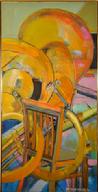
Now, at 87, the retired music teacher claims to have painted hundreds of works. The paintings above his mantelpiece are filled with intersecting multicolored lines to represent the textures of a jazz improvisation. Other abstract works include pieces of sheet music or actual workings of old instruments layered on top of brightly colored shapes.
Lempert also paints local landscapes such as the lakeshores of Mendon Ponds and Lake Ontario. He does not bring his oils or canvas out to the scene, but rather paints from his mind’s eye. His works are the stuff of memory. That way, his emotions shape the outcome and look of the final painting.
His beloved wife Ruth, who passed away on Oct. 1 at 81, inspired his artistry through their 58-year marriage. “Ruth really pushed me with my art. I had teachers back in grade school that said I was no good at it. If it weren’t for my wife, I never would have painted,” he said.
When he was a music teacher in the East Rochester school district, Lempert came home from work one day quite upset that the custodial staff had left his music room a cluttered jumble of desks and chairs in efforts to empty out another classroom.
“I told this to Ruth and she said, ‘Why don’t you paint it?’” So he did. The result is one of Lempert’s earliest works: a jumble of chairs and desks in an abstract composition, and painted between the furniture is a sousaphone. It remains one of Lempert’s favorite pieces.
It was Ruth who bought her husband his first set of oil paints in 1968. The University of Rochester alumna and author of the 2008 memoir “Fish, Faith and Family,”also encouraged her husband to take art lessons at this time at the Memorial Art Gallery, where he has been taking classes since 1976.
Like his paintings, the photographs in Lempert’s home also tell stories. One is a black-and-white snapshot of Lempert as a young man with a head of thick wavy black hair playing trumpet in front of a tent.
After high school, Lempert enlisted in the U.S. Army during WWII. He finished basic training in North Carolina and was about to get shipped overseas when opportunity came knocking. The army needed a stateside trumpet player. He auditioned before a group of officers. He still remembers playing the “Carnival of Venice,” a folk song that most known as the melody for “My Hat it has Three Corners.”
The complexity of the trumpet solos won the approval of his commanders. Instead of going off to battle, Lempert stayed in North Carolina for the war’s duration playing reverie in the morning and taps each evening.
“The trumpet saved my life,” he said.
Lempert’s son David recalls how his dad had three jobs when he was growing up: He was a school music teacher, a private tutor on Saturdays, and a big band player late at night. “He would teach during the day, head to a club around 10 in the evening, come home at 3 in the morning and then get up to teach. He was tired but he loved it,” said David Lempert.
The talent for the arts runs in the Lempert family gene pool. His late daughter Judith earned a degree in fine arts from RIT. Judith’s daughter Rebecca Zaretsky is now studying art at Wheelock College in Boston. Lempert still practices for up to two hours a day every day. The only time he stopped playing was for a brief time after Ruth passed away.
His advice to young musicians and artists: “If art and music are a part of you, you must keep practicing your craft.”
Getting to Know Daniel Lempert
Age: 87
Education: Graduate of Fredonia Music School and Columbia University
Occupation: 37 years as music teacher in East Rochester. Retired in 1984
Hobbies: Painting. Trumpet player in Jack Allen’s Big Band
A Woman with Roots Firmly Planted in the Good Food Movement
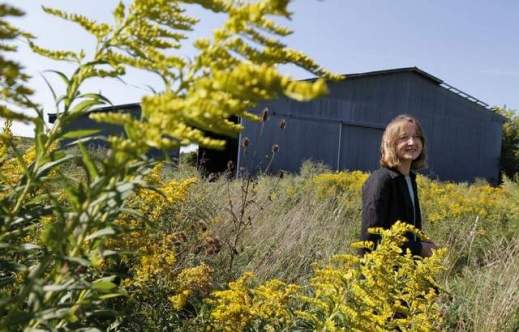
Sue Gardner Smith, manager of the Brighton and South Wedge farmers markets, stands with a old abandoned barn along Westfall Road in Brighton. The barn is part of a site proposed as the Brighton Farm and Farmers Market expansion and renovation project. / SHAWN DOWD//staff photographer
Perhaps it is no coincidence that a woman with a surname derived from an old French word meaning “gardener” would become a grass-roots champion of the sustainable and organic food movement in Brighton.
With humble determination, Sue Gardner Smith turned her activism into a career in managing farmers markets — first in the South Wedge neighborhood of the city and now in Brighton.
Gardner Smith was the oldest of seven children growing up on a 70-acre farm in Wayne County that had been in her family for a century. She remembers walking through its cherry orchards with her father and tending to the family garden with her mother and siblings.
Being the oldest in a large family, Gardner Smith developed the nurturing traits of a “mother hen” by cooking meals and caring for her younger siblings. In her early culinary experimentation, some dishes were tastier than others. Even into adulthood, she still gets teased by her siblings at her first attempts in the kitchen.
“When I was nine, I came up with a dish called chipped beef on toast. It was wretched. … I have to say that my cooking and tastes have improved vastly since then,” said Gardner Smith, who now prefers making dishes like ricotta cheese and onions stuffed into Swiss chard leaves she grows at her 10-foot by 10-foot plot in the Brighton community garden, a project also under her charge.
In her experiences of living in cities abroad and in the United States, nothing unites people more than food. She has shopped for fresh produce in the open-air markets and dined in the cafes in the plazas of Brussels. In London, there was the tavern and pub culture, “neutral” places where local neighbors could gather for a meal and a drink at the end of the day.
During her 15 years living in the San Francisco Bay area, she visited restaurants like Chez Panisse and markets such as the Berkeley Bowl, where the air buzzed with a sense of what she called “food energy.”
“It’s not just about eating. It’s how people gather at markets to socialize and catch up with neighbors as they shop. It’s the sounds of local musicians playing among the produce stands. I have long felt that Brighton should have this kind of gathering place, and I’m glad to watch its success,” she said.
Since 2008, the market held each Sunday in the Brighton High School parking lot from May through October is a testament of Brighton’s desire for high-quality and locally grown food. One thing Gardner Smith admits is that from a short-term perspective, eating organic and local is a bit costlier. Also, a recent Stanford University study recently concluded that organic food is no more nutritional than conventionally grown food.
However, she believes these factors will not curb the organic, locavore trend. This is because people are starting to put values on reducing their carbon footprint and the use of harmful pesticides, and developing a direct and trusting relationship between the grower and the producer at local markets.
“The study missed the point and had too narrow a focus. When you buy local and organic, you develop a sense of trust with the farmer, and you are also helping to support the local economy,” she said.
In addition to buying locally produced food, Brighton residents also expressed a desire to get their own hands dirty in avegetable garden of their own. In 2009, the creation of a community garden in Brighton seemed like the next step.
“It seemed like an obvious sister project to the market,” said Gardner Smith, who with a committee helped build a fence and a gate system around 100 10-foot by 10-foot plots on Westfall Road by the historic Groos house. Outside of a few stubborn groundhogs that managed to breach the fence, Brighton residents have enjoyed the bounty of their harvests.
Now that the shorter days and cooler nights of autumn are here, it is time for Gardner Smith and the other Brighton gardeners to put their plots to rest for the winter. But that doesn’t mean that plans for coming years will be put into hibernation.
Her ambitions for future years include using funds from a $250,000 state grant awarded to the town to preserve a farmhouse, a barn and some of the farmland on Westfall Road. The proposed project aims to create a permanent location for the farmers market and an expansion to the community garden with educational opportunities for schoolchildren to learn more about agriculture.
“Not only is my job rewarding, it’s also a lot of fun. I’ve met so many wonderful people in Brighton who are committed to this meaningful work that really has made a difference.”
Indeed, Sue Gardner Smith’s name suits her well.
A Confession, For the Sin of Being Distracted

This is the solemn 10 days of Awe, days of reflection that start at the Jewish New Year and end at the last blast of the Shofar at the conclusion of the Yom Kippur Fast.
Over and over, Jews on Yom Kippur in synagogues and gatherings throughout the world stand together and recite a litany of transgressions – in Hebrew alphabetical order – as they softly pat their heart with a fist. A sample of them go like this:
For the sin which we have committed before You under duress or willingly.
And for the sin which we have committed before You by hard-heartedness.
For the sin which we have committed before You inadvertently.
And for the sin which we have committed before You with an utterance of the lips.
For the sin which we have committed before You with immorality.
And for the sin which we have committed before You openly or secretly.
For the sin which we have committed before You with knowledge and with deceit.
And for the sin which we have committed before You through speech.
For the sin which we have committed before You by deceiving a fellowman.
Perhaps the biggest transgression of our modern age is the sin of being distracted by a screen.
Even now, as I type this, I’m staring at a screen. I should be kissing my youngest good night. Or tending to another child’s homework.
Perhaps the biggest transgression of digital distraction is texting behind the wheel.
According to a recent article in Rochester’s Democrat & Chronicle, Rochestarians are some of the most distracted while driving bunch of people in the nation.
If I can confess: No, I don’t have a bluetooth. Yes, I make non-hands free calls when driving.
But only if I have a number programmed into my contacts.
And only if I have to call my husband during harried after school pick up times.
And even then, I place the phone on my dashboard or on my lap and use the speaker feature.
And sometimes, if I hear an old “new wave” song on the radio from the 1980’s, I click the info button, and just for a split second, peek and see who the artist was. Oh yes, OMD, I thought it was OMD.
OMG, I’m sorry I have been distracted.
But never, never will I answer a call when I’m driving, nor will I ever make or read a text.
NEVER.
You see it all the time. The distraction of couples looking at screens instead of looking at each other in the evening at the dinner table.
The distraction of a cell phone going off or someone texting even in houses of worship.
The other day I was walking home and saw a car lingering for a very long time at a stop sign.
Now, I was crossing the street and I needed to know what this driver would so so I could safely cross.
After about two minutes, when this driver was still at the stop sign, I crossed and peeked into the driver’s seat. There she was, oblivious to the world, texting on her smart phone.
I stared at her and she STILL didn’t notice me.
So oblivious this woman was behind the wheel, she didn’t even notice me creeping up behind her to snap this photo on my phone:
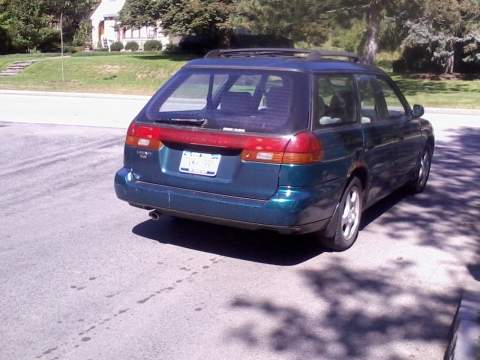
- Please, for your sake and mine and the WORLD, don’t text behind the wheel.
On this eve of Yom Kippur, I pledge to do this one change in myself, to be less distracted from my family.
In a nod to D&C Columnist Pam Sherman, I too recently lost my iThing. I just can’t find it. At first I felt lost without it. But, now, I feel liberated. Maybe I’ll find it someday. Or get a new one after saving up. But for now, I’m dealing with the sin of being forgetful and scatterbrained and repenting by trying to live a more mindful, in the moment life.
For those of you who are fasting, I hope you make it a meaningful one.
About Me

Kreativ Blogger

Versatile Blogger Award


 Stacy Gittleman