
Celebrate Life (and a good bike ride) with an Ice Wine Slushie

Along the wine trail on Niagara-on-the-Lake is the Ice House.
We were biking along for about 11 miles along the Niagara River and we passed the Ice House. We vowed to go to the ice house on our way back after our furthest point, which involved going down, and then back up, a very big hill, just before we reached the Queenston-Lewiston Bridge.
That way, the Ice Wine Slushie would have been something well-earned on a hot July day.
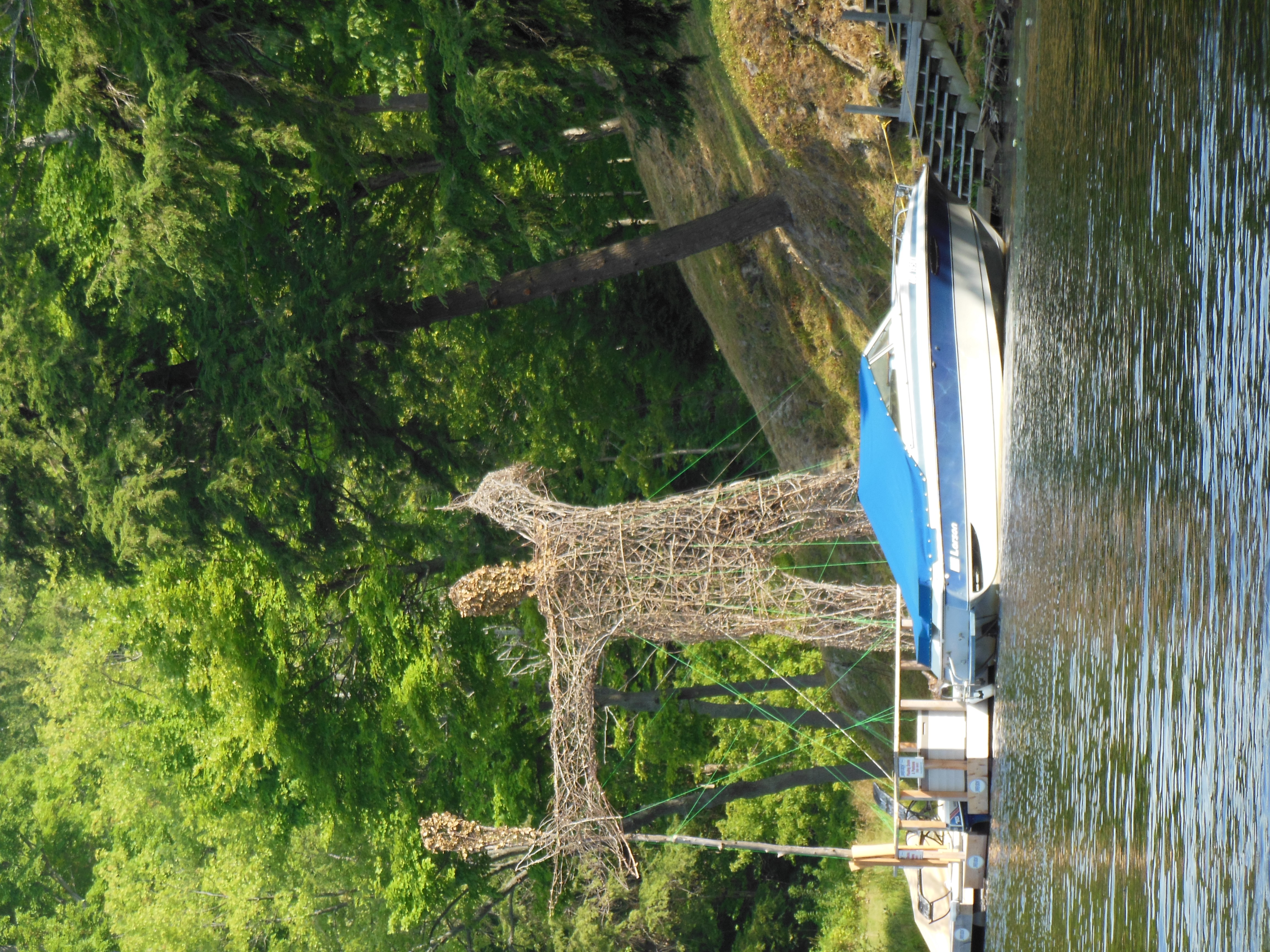
First, the Ice House is set on a beautiful vineyard. Okay art history buffs, what artist do these photos remind you:

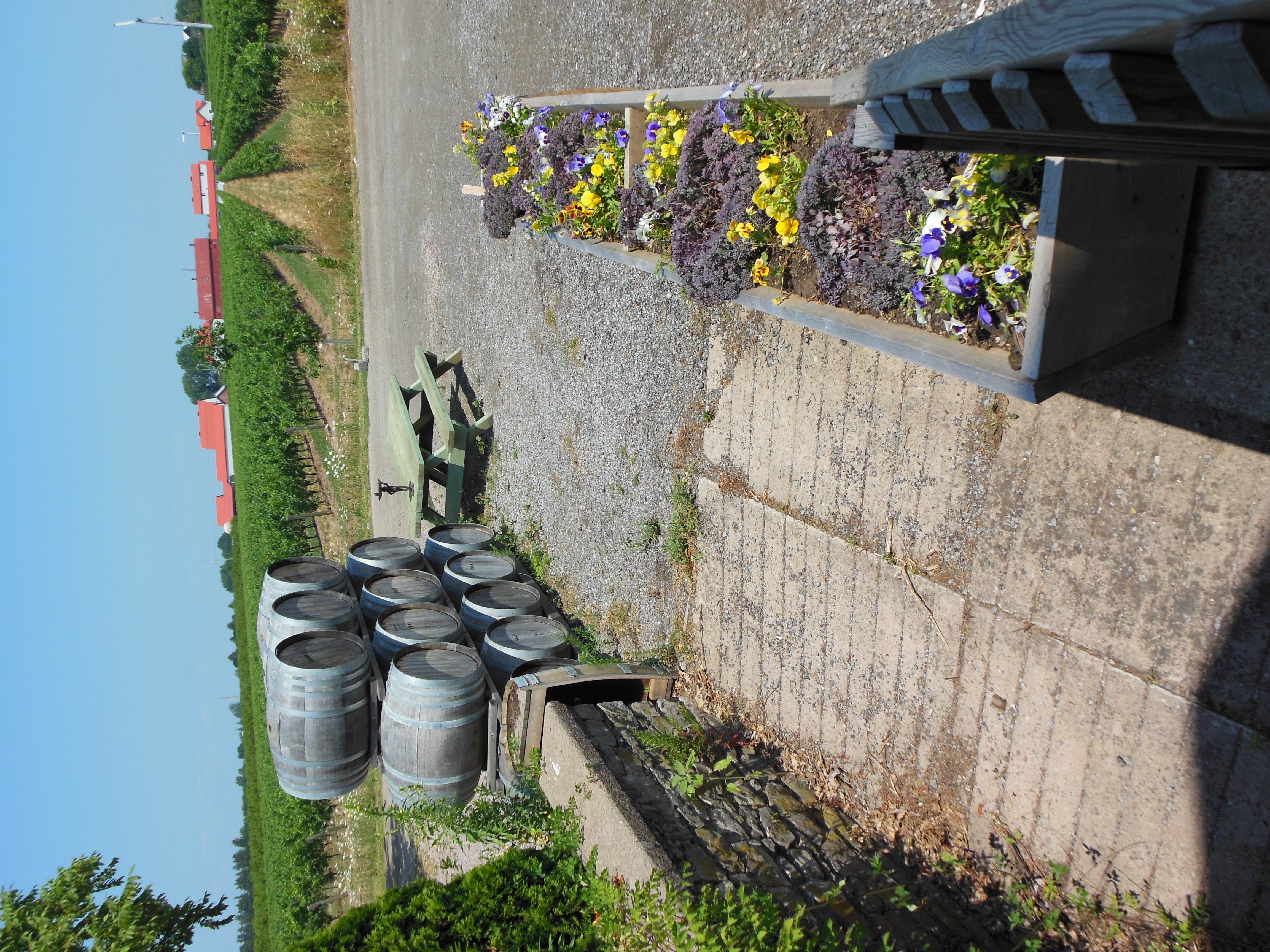
We locked up our bikes, hugged the Ice House Polar bear for luck:

and went inside to learn about how ice wine is produced. Actually, because we live in the Finger Lakes New York region, we have knowledge of ice wine, but it’s worth learning – and tasting – more than once.
Ice wine is growing in popularity and the Finger Lakes and the Ontario wine region produce the highest number of award-winning ice wines in the world. Wineries in colder regions take advantage of frigid temperatures by leaving grapes on the vine in the winter, and then quickly harvest and crush them while the grapes are completely frozen. This concentrates the flavor into a sweet but not syrupy wine that is not just for dessert but can be paired with food. I’m not going to botch up the facts of how it is produced, and why it is more expensive than other wines, you can read about that here.
Here is a photo of an Ice House employee bottling the micro batches of wine produced at the winery:

But now, to the Ice Slushie.
Now forgive me, but being the typical American girl that I am, this is what came to my mind when our inn proprietor first informed us of the Ice Wine Slushie:

I know, right? Unnatural colors. Big – at least 16 ounces. So how am I supposed to drink something made out of a concentrated wine THAT size and get back on my bike?
But no. In reality, the ice wine slushie, a 3-oz. drink was just enough to refresh and not intoxicate. For $10, my husband and I shared three different types of ice wine, paired with different snacks like chocolate, pretzels, and spicy wasabi peas to bring out their different flavors.
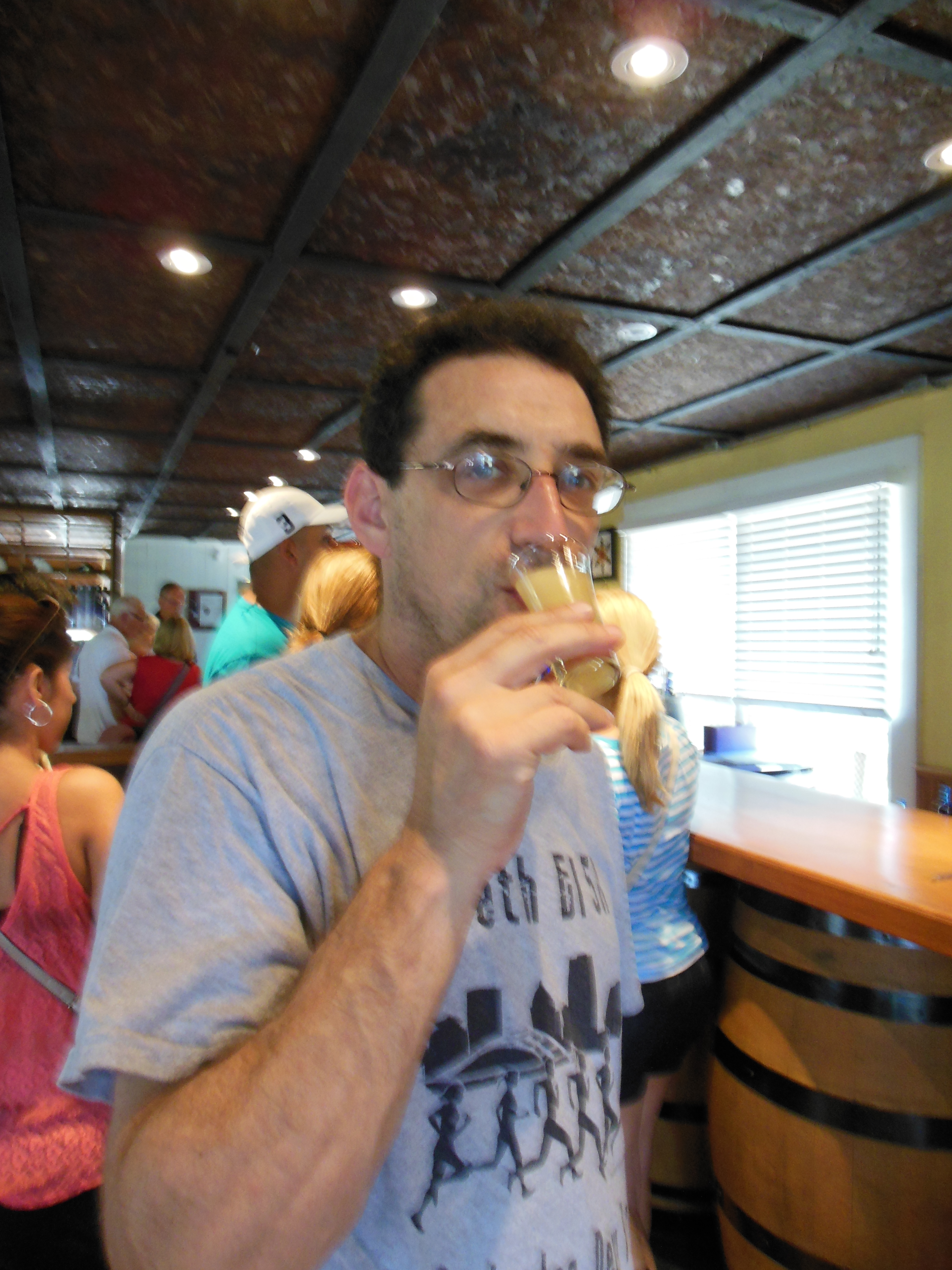
No, we did not plunk down the $50-75 for a bottle of ice wine. But the tasting, and the slushie, made this the most memorable stops on our day of biking and tasting. And in the future, if we have something special to celebrate, we’ll be sure to pick up a bottle.
Weekly Photo Challenge: Wrong
As the Commercial goes, everyone loves Marineland.
Everyone but me. I think it’s WRONG.
This blog post was inspired by the blog Platform 9 3/4 after the blogger’s visit to the very sad and neglected animals in “The Guindy National Park” in Chennai, India. The blogger was outraged at the sorry conditions where the animals lived, the weak looking monkeys and birds kept in small cages, unable to fly.
I felt the same sad way when I visited Niagara Falls’ biggest attraction, Marineland.
Marineland, famed for its 450 foot Skyscreamer ride, can’t decide whether it is a zoo, an aquarium, or an amusement park. Maybe it should skip the first two and stick to the rides.
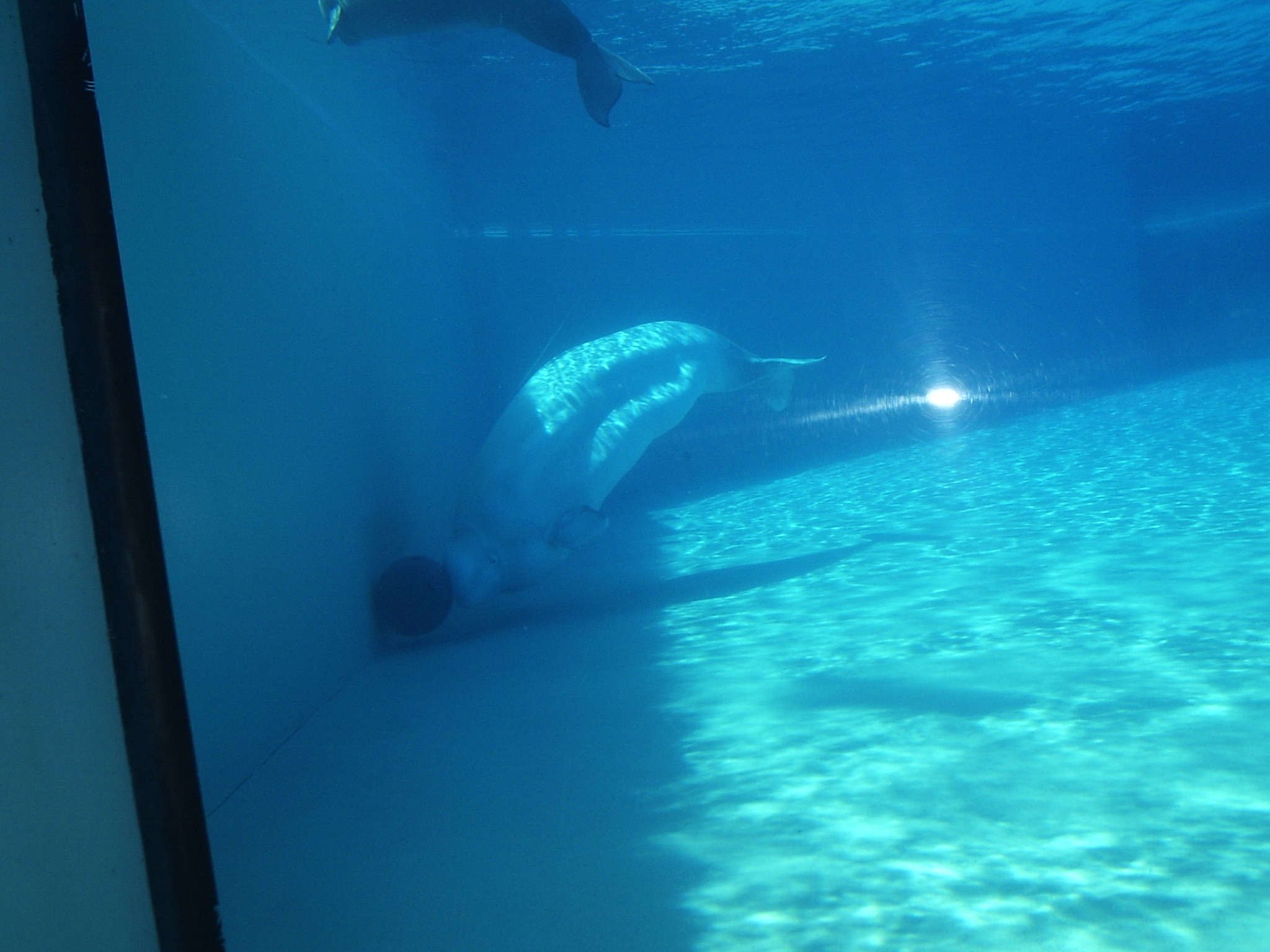
The park has a lot of marine life but clearly they are exploited for the entertainment and not an educational value. When we visited the beluga tank, for example, it was small and bare inside, with one small ball for the belugas to play with. There was no visible literature about how beluga populations have been hurt by whaling, fishing, and motor boats.
That is why I posted this picture in the photo challenge: wrong.
Niagara-on-the Lake: Where to Stay, Where to Peddle, Where to Sip, Where to Sleep

Upon check-out at Niagara-on-the-Lake’s Antique Slumber Inn, after a great breakfast of freshly cut fruit, homemade blueberry muffins and French toast, I was asked to sign the guest book that sat on an — antique — desk.
I flipped through the pages to see what other guests wrote. Our proprietor Cathy, a native of Niagara on the Lake said, “you’ll find many folks from Rochester in there, it seems like we get a visitor from Rochester nearly every week.”
And why not?
Niagara-on-the-Lake (on Lake Ontario,Canada, that is) is 100 miles from Rochester, NY , but it feels at some times as if you have gone abroad. Canada is another country, after all. You need your passport to get there. In Canada, where people say “aye” instead of “huh?” in conversation, things are measured in metrics, you will find a wine country that rivals Napa or Sonoma.
First, where we stayed
The Antique Slumber Inn has been in the same family for five generations. While the house itself is 130 years old, inside it was gutted and completely new, you could still smell the newness of the paint.

The bedroom we stayed in had a cathedral ceiling, an octagon window and our own bathroom – all bright, clean and new. The location was right off the main strip but close enough that , once we parked our car, we didn’t drive it for our entire stay, chosing to walk or bike everywhere we needed to go.
At breakfast, we chatted with a young couple from Luxembourg. They were touring around New York and Canada and we asked them where they had been. As it turns out, on their visit to New York City, they went to the same Yankee game my parents attended, left at the very same time at the sixth inning as the skies opened and thunder roared.
Of course, I asked what else they saw and where they ate, and — if they had any good pizza.
They said that the pizza was very disappointing. I asked them, how could this be, disappointing pizza in Manhattan? Until they told me the only pizza they ate was

Completely mortified, I apologized to them whole heartedly.
As a New Yorker, my heart went out to them. I still think of them now, the poor young couple from Luxembourg who think that Sbarros is New York Pizza.
After consoling the folks from Luxembourg, we were on our way to rent bikes. Bike rentals in town go for about $50 a day, but at our B&B, Cathy rented them out for a nominal fee of $5, just enough for their upkeep. She also gave us coupons at selected wineries for tastings. We first peddled into town to stop to buy some sunglasses at the apothecary.
Downtown
In the heart of downtown, Niagara-on-the-Lake can make the visitor also feel like they are back in time. There are Victorian bed-and-breakfasts with vast porches, streets lined with gardens
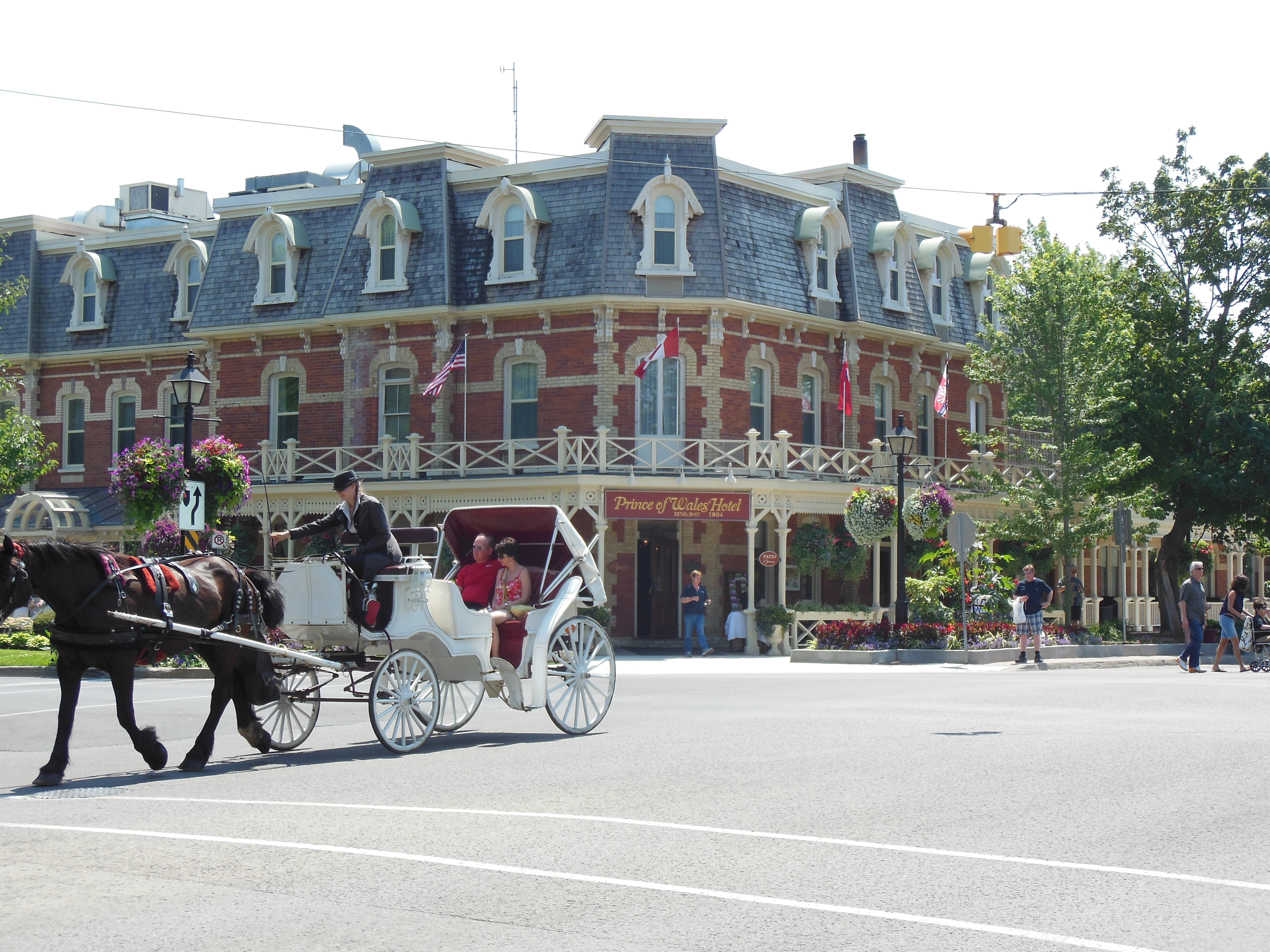
There are even ladies on their way to tea after taking in a play from the Bernard Shaw Festival walking with gloves and parasols:

Where we sipped
The wine trail is clearly mapped out with signs bearing a grape logo. Some of our route took us along the Niagara River. Other parts took us along long straight roads called “lines” that went out into the vineyards and orchards.

After we cycled across town and through the Commons, our first stop on our bikes as we traversed the trail along the Niagara River was Riverview Cellars, where our pourer Greg did an impressive job of switching back from English to French as he poured for us and a couple from Quebec.
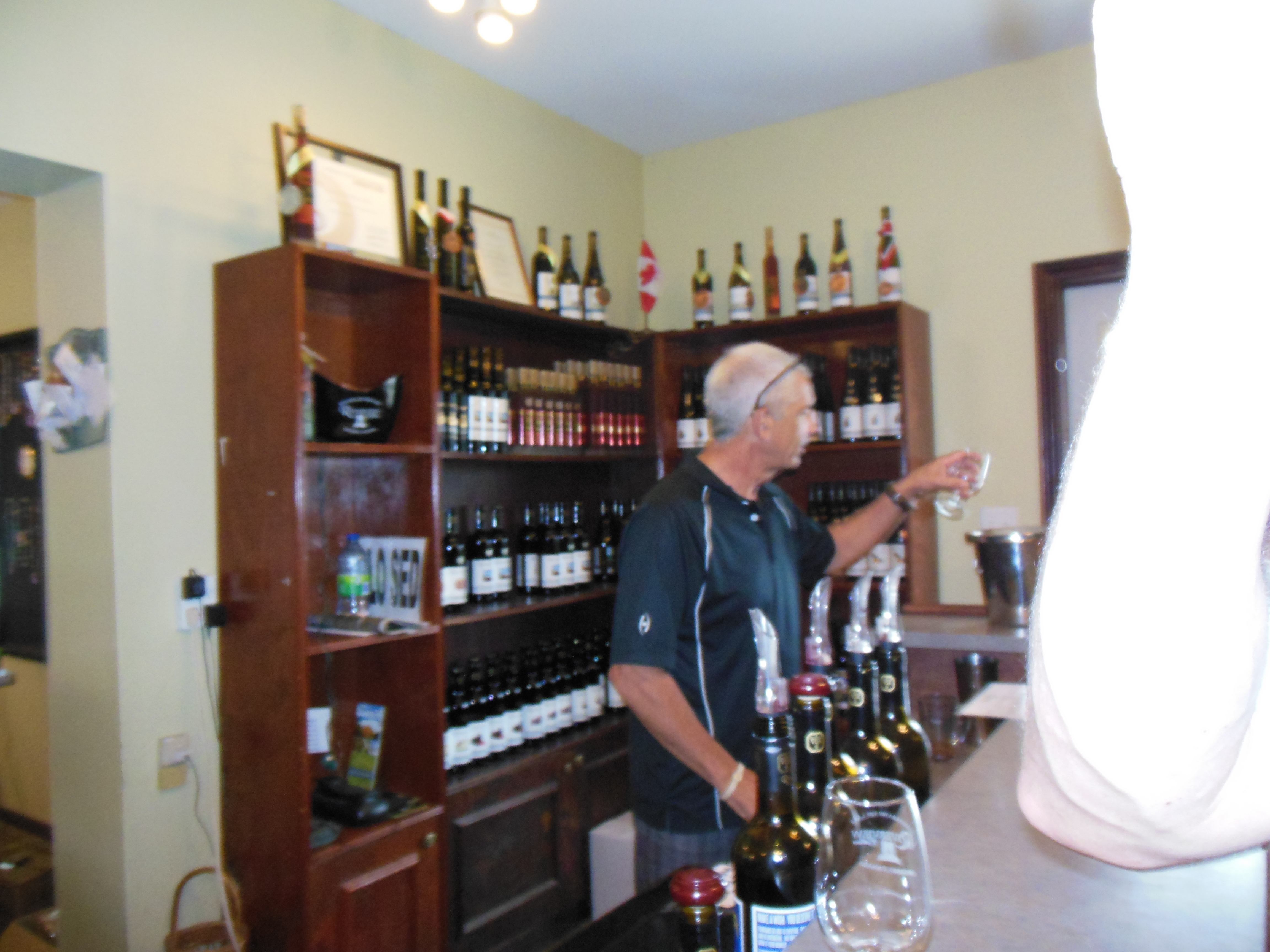
This was our first stop on a WHOLE day of biking and sipping, so Craig took notes on which wine we liked from which winery. Copious notes. The Pino Grigio was a safe choice, but the Reisling and Cabernet, which had hints of leather (so we were told. Yes, it did taste like leather, but that’ what made it taste good) had much more character, and they were our favorites here.
We tried ice wine at Reif, a winery specializing in German varieties of grapes.

And then did more tasting at the Frog Pond, an organic winery:
 I was really routing for the wine here. They use no pesticides on their grapes, rather they rely on a bird they imported from Africa that roam free in the vineyards to gobble up the pests. But really, this was the poorest tasting wine we sipped all day. It’s a new venture so maybe they’ll get it right in a few years.
In all, we peddled over 20 miles and sipped from seven wineries.
Be advised, that if you bike and taste, there are police on bikes to check the sobriety of bikers along the wine trail. After my fifth winery, located out on the “lines” – that’s way out in the vineyards, where each “line” road is separated by a square kilometer of vineyard – I was less interested in wine and more interested in water.
So I stopped to get wet by one of the many irrigation devices that sprayed plumes of water into the parched vineyards.
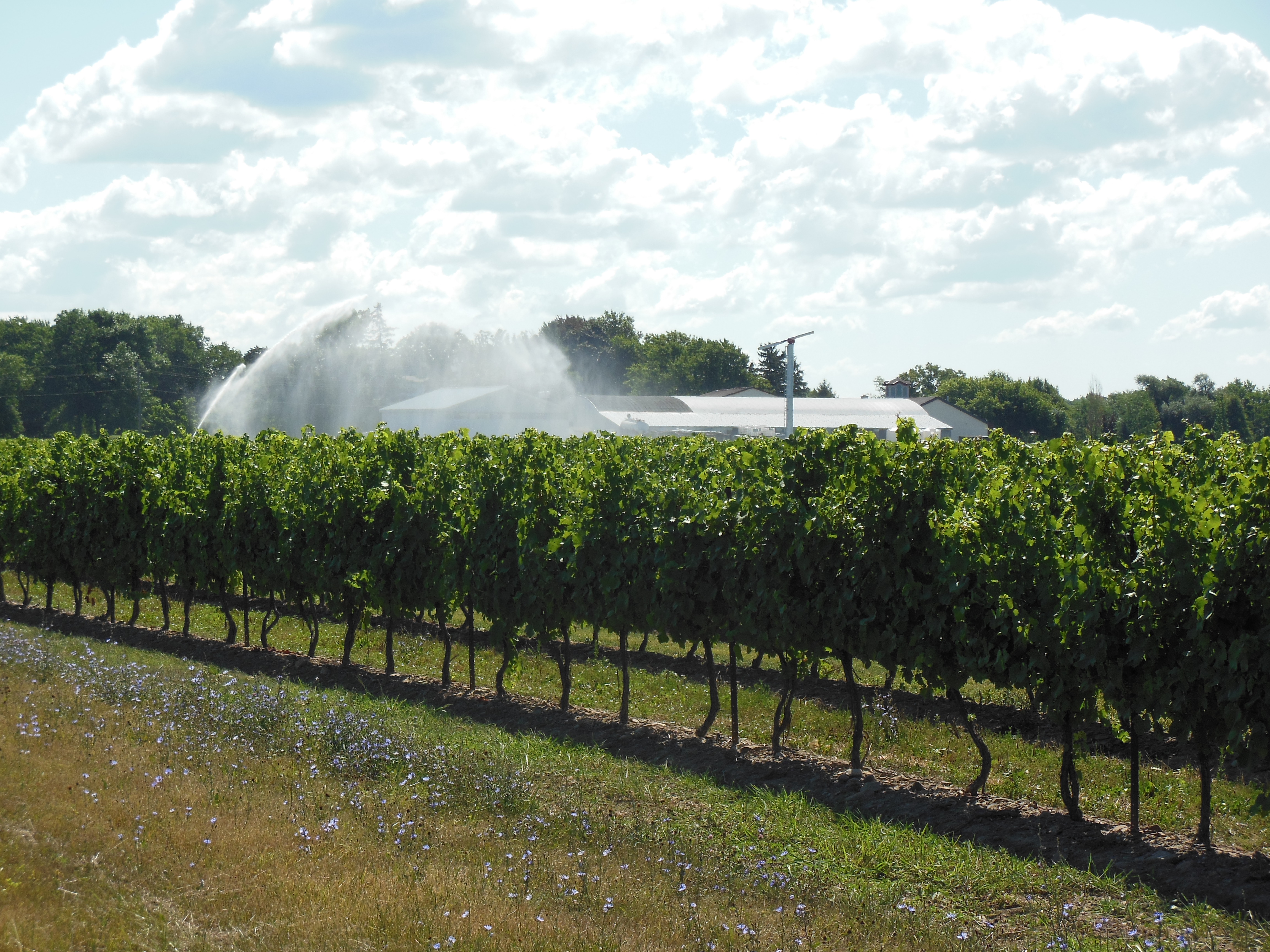
After a 20 mile bike ride, it was great to get back to our inn and rest in the hot tub.
But I still haven’t told you about the Ice Wine slushies. Yes. Ice. Wine. Slushies. I’ll save that for a later post.
I’m not Crazy, I’m Just Trying to Find Stories!
I’ve had lots of free time on my hands this month as my kids are all (I mean all three!) away at summer camp and my husband, well, he still has to work so we can eat and have a roof over our heads.
Me, I’ve had time to explore and actually wander around the outlying towns I cover instead of just “visit” the towns on the Internet through municipal webpages.
Sure, there is lots of information about events, festivals and programs online, but there is no substitute for hitting the pavement and asking around.
On such a visit to Fairport, I took a break, sat by the Erie Canal and called my brother in New Jersey.
He asked what I was up to.
“Oh, I need to write a profile story about a person from a town I really know very few people, so I’m walking around this cute little village called Fairport. I’m stopping into the library and local shops and saying hello and asking people for ideas.”
He paused. He chuckled. Then he began to speak. When my brother speaks, he has no filter. At least not with his sister.
“You’re going around ASKING random people if they have ideas for you? You know who does that? CRAZY PEOPLE!!”
Perhaps. Perhaps the unstructured time of summer has driven me mad. But just wandering around I gathered the following for story ideas:
- A beauty shop that carries only sustainable products and is one of the only salons in the country that has a state of the art ventilation system that is constantly bringing in fresh air to protect the health of clients and employees. They also collect food for the local food pantry and portions of their profits go to a well project in Uganda.
- An upcoming music festival
- An ice cream shop owned by a Xerox manager called the Moonlight Creamery that has special wine-food-ice cream pairing events and crazy flavors like oatmeal ice cream.
- Most of all, I found a golf fund-raiser to raise money for a Fairport football coach battling a degenerative neuro muscular disease. The minute I saw it, I said, THAT’s my story.
But, I can’t wander around all the time, people. I need your help.
I need for you to tell me about great little shops on the east side of Rochester that have great shop owners with interesting lives.
I need to know what organizations you’re giving your time to and what events that are coming up that go with your cause.
I need to know about the issues in your town you care about, how you are getting involved and how others can do the same.
Fall is coming. I’m nearing the end of my story idea rope and I can’t wander around the streets in the cold of February. Send me your best ideas NOW!
Weekly Photo Challenge: Growth
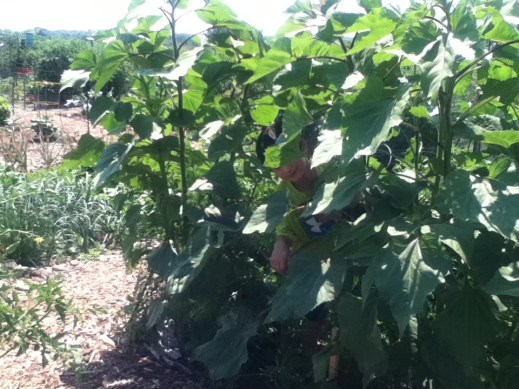

This week’s photo challenge was an easy one.
These are sunflowers in my spot in the Brighton Community Garden. Just 10 weeks ago, they were seeds in a packet.
Hiding in all this growth is my youngest child, my baby. I know every parent says this, but I can’t believe how much he’s grown, and how much he will grow and change after his first summer at sleep-away camp.
“No, you may NOT tip, Young Man!” And other things heard and seen in a Canoe in Muskoka

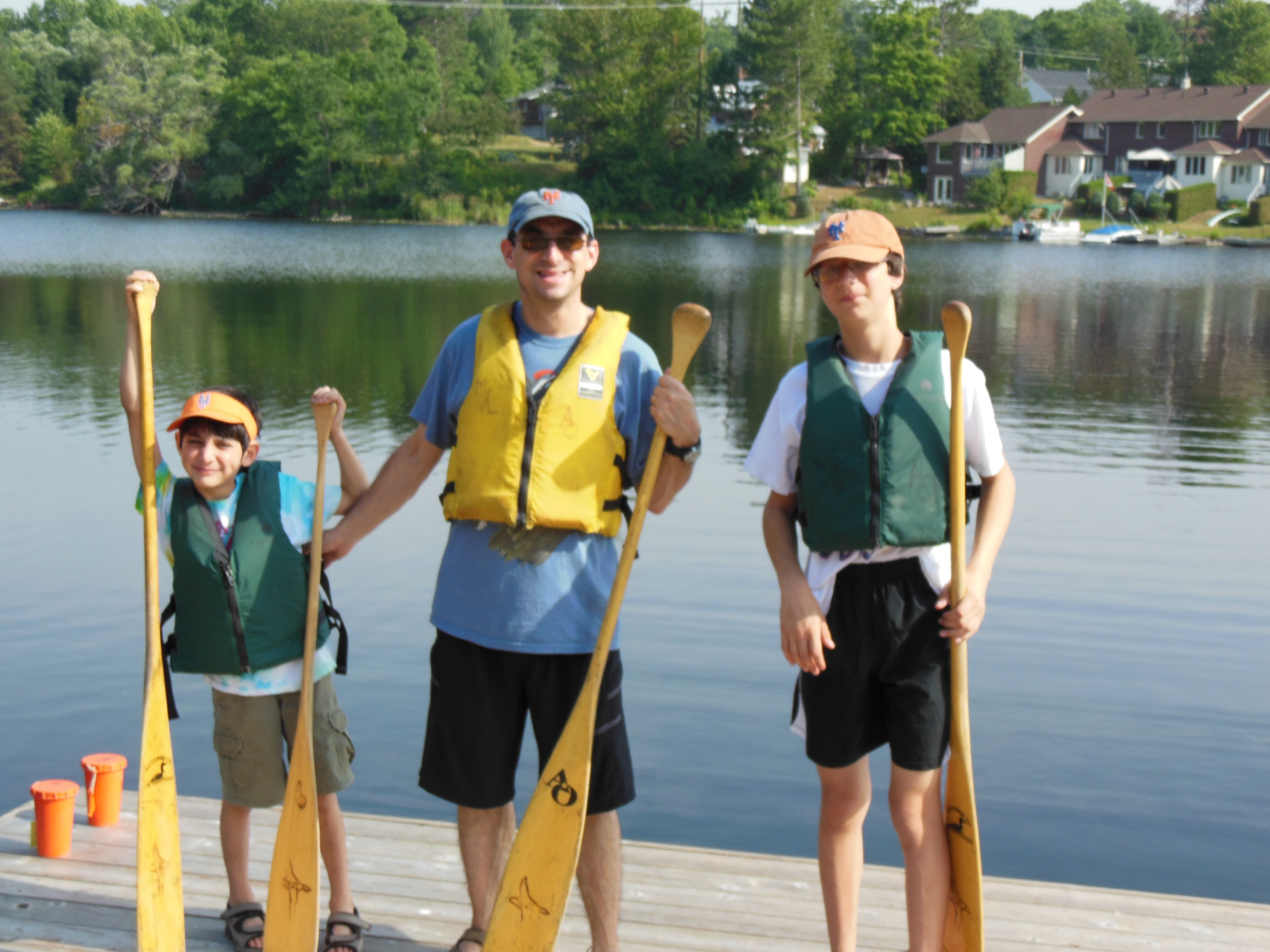
With absolute awkwardness, I got in the canoe, rented from Algonquin Outfitters in Huntsville, at the front. I don’t remember canoes being so wobbly, probably because I hadn’t been in one in at least 20 years.
“Are you sure that this canoe isn’t extra narrow?” I called back to my teen son.
My son climbed into the canoe with ease. The one who earned his golden oar after canoeing for five summers straight at camp. I let him take the back.
It was the last morning together with the boys. It had been a blessing in disguise that we couldn’t drop them off for Session II of the summer at Camp Ramah in Canada as early as we planned. That way, we had this one more adventure before we dropped them off for a whole month at camp.
On the first half of our trip, we divided the boys per canoe: My husband and younger son, 8 in one, and myself and my 13-year-old in another. That worked well. My husband and my teen took control, telling the less experienced rowers (my youngest and I) which side to paddle, and actually how to paddle.
Before that morning’s canoe ride with my 13-year-old son, I did not know there was such a thing as a C stroke or a J stroke. To me, it was all one thing, put your oar on the left side or the right, put it deep in the water, and pull back. I also did not know that, several times a week at camp, my son would wake up extra early to go canoeing with a small group of campers. Imagine that, a teen getting up extra early, when at home on vacation, I can barely get him out of bed by 10.
He said at camp he also played his guitar in a canoe.
He also told me one of his most spiritual moments at camp was when he and his other campers brought their prayer books and conducted morning services on the canoe.
Prayer books. On a canoe?
Clearly, the campers knew there were times for tipping the canoe, and other times, carrying precious cargo, times to keep the canoe perfectly balanced.
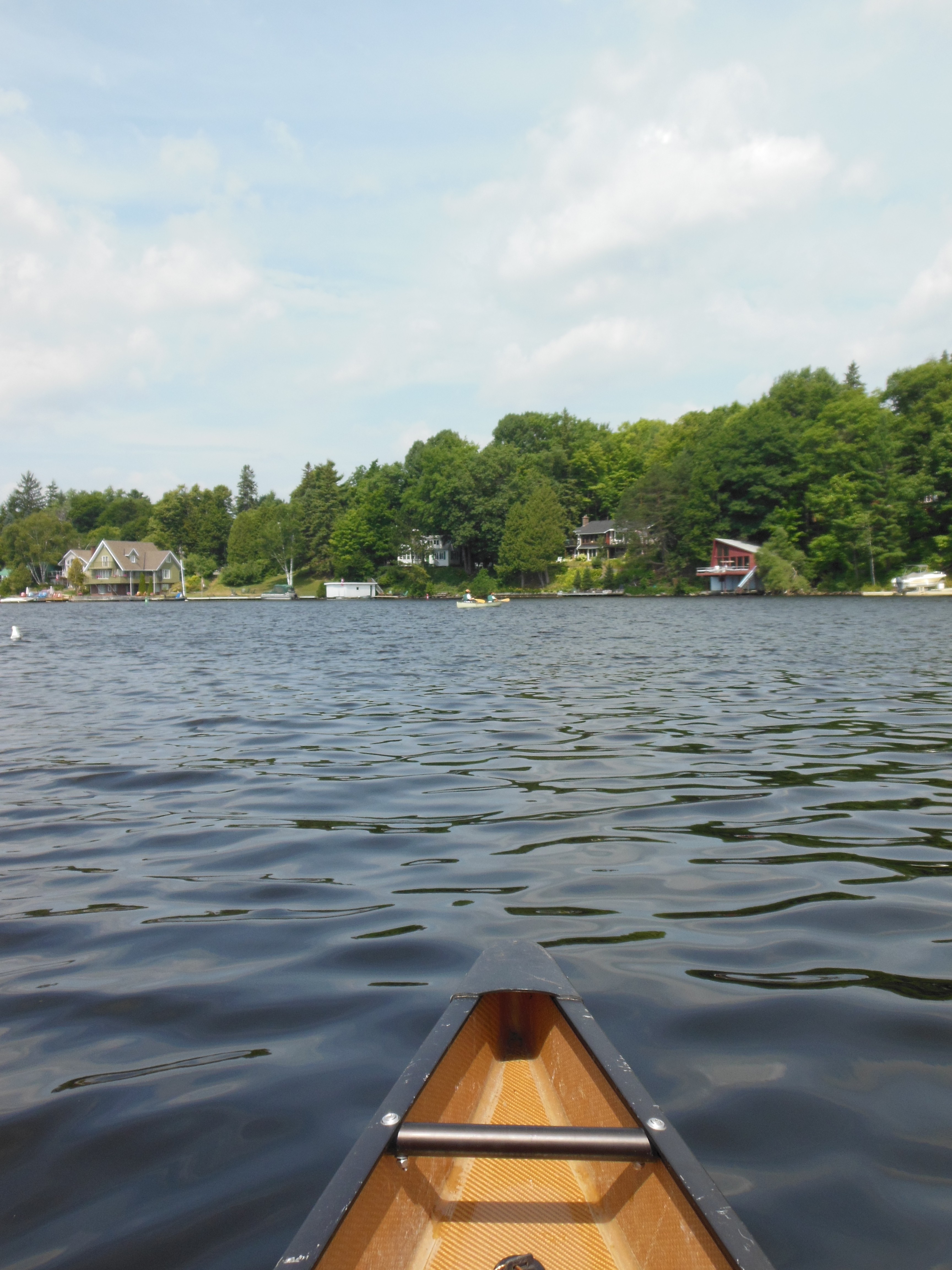
We rowed along a calm lake that had many inlets and narrow passages, so much that it seemed to have a current like a river. We passed quaint houses with well cared for and decorated docks.


We passed under a freight train bridge where a man working on the rails shouted greetings (and advice) to us from above. (You’ll just have to use your imagination here. I didn’t photograph him. Taking pictures, managing an oar,and trying not to tip over proved to be very challenging!)
“Great day for a canoe ride, Ay? You should steer a little away from the side, Ay? I say, Ay, I think you’re headed for a rock, steer clear, Ay?”
Was my ineptitude that apparent? All those “ays.” I definitely knew I was in Canada.
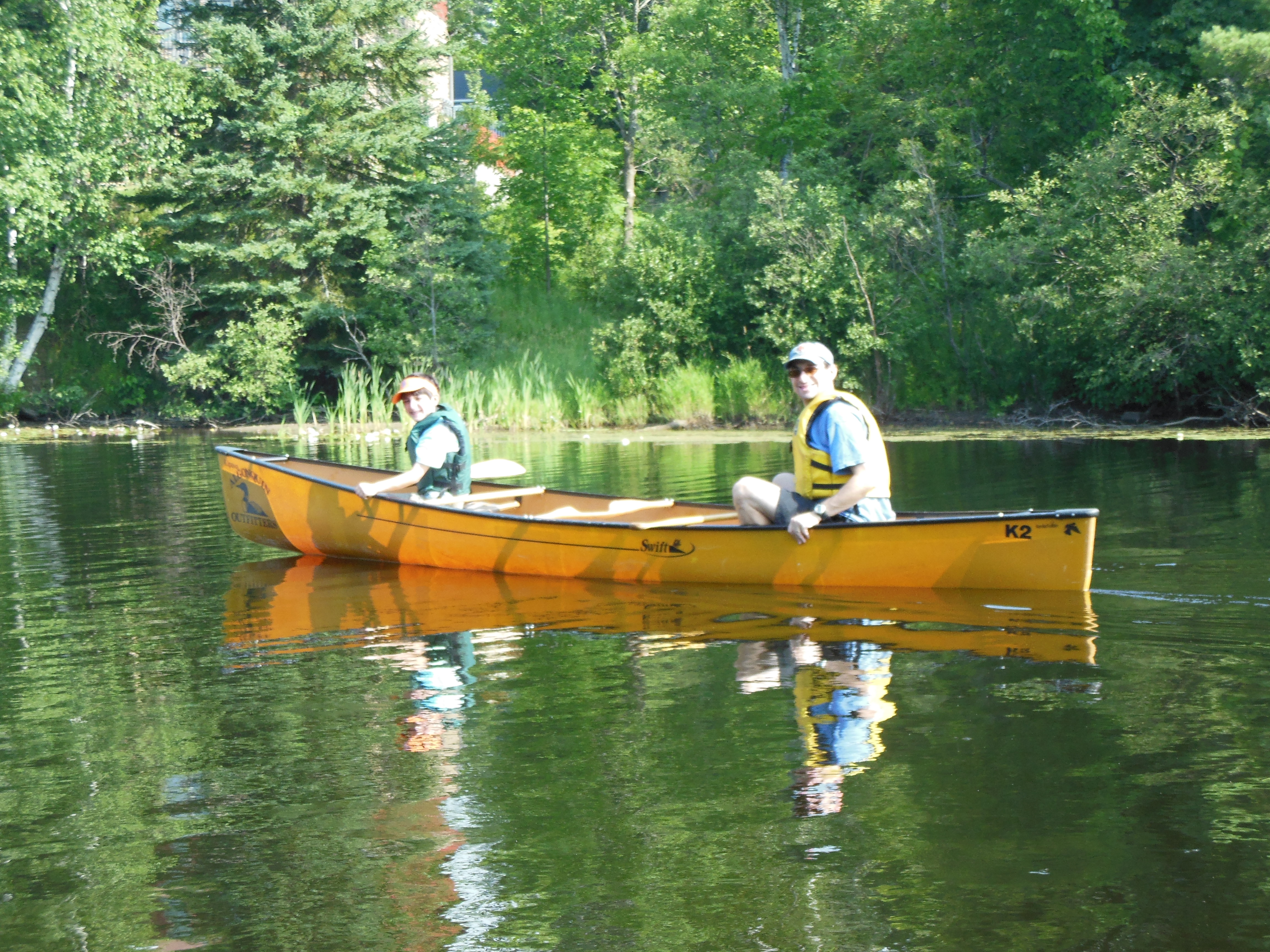
Things were going well until, exploring the second half of the lake, my older son insisted we switch. My son wanted to take his little brother under his wing and show him the ropes of rowing. He offered the argument that his edah (Hebrew for group) of campers never socialized with my son’s age group on waterfront activities and this would be his only chance to have some brother bonding on a boat.
Begrudgingly, (but I knew it was a bad idea) we agreed.
First, they got stuck going around a curve in a bramble of branches.
Then, they kept turning in circles as they got stuck in a current.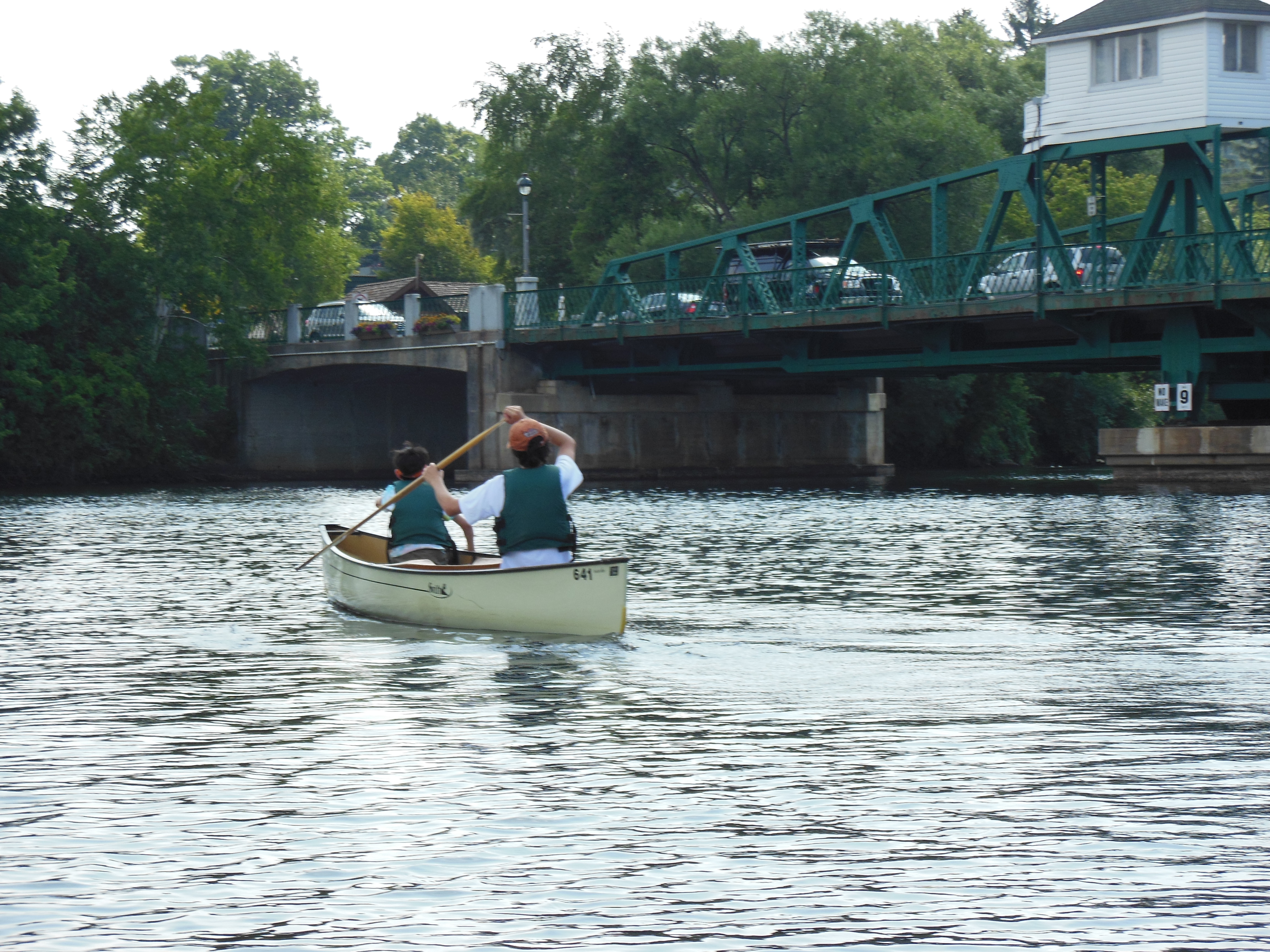
My older son overestimated my younger’s experience with the oar. In his mind, he had to be an expert by now. After all, little brother had been canoeing for an entire hour with dad. It was a lesson in brother bonding, and resisting the urge to throw little brother overboard.
Now that I was in the canoe with my husband, I wasn’t doing much better. Apparently, sitting in the front of the canoe, I pull my oar out of the water way too fast and was splashing my husband at every stroke. He was clearly the one in charge in this canoe, the backseat rower.
“Stop splashing me, please! ”
“Three more strokes on your left, please!”
When I was in the canoe with my son, his main suggestion to me:
“Mom, just sit there and let me do the rowing. We’ll be better off that way.”
I did do some rowing, at my insistence. I needed the workout. Was it my fault I didnt’ spend five summers learning how to canoe as a child? Also, my son didn’t complain that I was getting him was wet when I oared in his canoe! Getting wet was half the fun, just as long as we didn’t tip. Actually, in the heat, I wouldn’t have minded getting tipped, except I had a new camera on board.
Finally, at a private cottage dock with a little white dog barking at us the whole time, we regrouped and switched back to our original rowing arrangements.
Rowing taught us several things. For one, when you are in a boat with someone, squabbling just makes you go around in circles. To get anywhere, you both have to paddle in perfect harmony.
Mayim Bialik on Tu B’Av, the Jewish Holiday of Love.
It’s August. The air is heavy and the cicadas of high summer are chirping loudly in the trees.
It’s this time of year, long ago, that I met my b’shert, my intended, at camp. I was (badly) playing tennis and some girls he knew from his synagogue introduced me to him. He chased after every tennis ball I missed, and there were a lot.
In honor of Tu b’Av (meaning the 15 of Av), TV star and Modern Orthodox Jew Mayim Bialik explains how she met her b’shert.
What was the very moment you met yours?
Whatever your faith, I hope this day brings extra luck to you and perhaps today, you will also meet the love of your life.
An Interview with inspiring artist Sarah Wisbey, inspired by my daughter, the artist

This is a self-portrait of my daughter

This is a self-portrait of graphic artist Sarah Wisbey:

One day, visited
in her high school visual arts class to share with them her experiences as a professional graphic artist.
That prompted my daughter to ask me something very unusual.
She wanted to accompany me on my next trip to the grocery store.
She was not necessarily going with me to help me pick out groceries, she was there to look at art.
Once inside our supermarket, Wegman’s food markets, she could not wait to go visit the pasta aisle.
My daughter was downright giddy
“Mom, today in art class, I met the woman who drew the illustrations on these red boxes!”

She then pulled me over to the coffee aisle pointing out other packages that Sarah Wisbey illustrated.
Later that month my daughter interviewed Sarah and how she got started in her career in graphic design. Sarah also took the time to look at some of my daugher’s most recent compositions.
So, when I needed to write a feature about a prominent person from Brighton, I knew just the person to profile.
Here is my piece in the D&C about Wisbey. Thought it would be best to keep it here on my blog, for you never know when the links will go dead.
Thank you again Sarah for, inspiring my daughter, and your time for developing this piece:
It’s not often that an artist cooks the subject she is painting, especially when the artist does not like to cook. However, when Wegmans Food Markets hired Brighton resident Sarah Wisbey to work on the packaging for their pasta line, the freelance illustrator wanted to perfectly capture the shape of spaghetti, the color of a campanelle and the texture of tortellini.
Shortly after she took the job, she found herself at the supermarket with 20 different boxes of pasta in her shopping cart.
“The cashier wondered why I was buying so much pasta. My children wondered why they were waking to the smell of cooked pasta every morning,” said Wisbey.
Overall, Wisbey illustrated 27 different kinds of pasta — from egg noodles to frozen ravioli. Her colorful illustrations are also on the labels that entice Wegmans shoppers to try flavors of coffee like orange cappuccino, raspberry hazelnut or crème brulee.
Wisbey saturates her illustrations with color, playful black lines and gaps of white space that suggest a sparkling light. Her food illustrations, like the label for the orange cappuccino, emit a tempting juicy quality that seems to drip off the packaging.
Wisbey jokingly blames her less-than-perfect visual depth perception for her flat illustrations. Since her earliest explorations in art, her style has been shaped from the books she read in the children’s sections of bookstores and libraries. She was drawn to the vibrant, simple lines and collage work of Eric Carle and later, Fauvist painters such as Henri Matisse and Paul Gauguin.
When she started out as an artist, Wisbey attempted to capture Carle’s watercolor collage technique, though she admitted the result was “messy, tedious and frustrating.”
“Watercolor can be unpredictable. One wrong brushstroke and everything can turn out looking like mud,” she said.
The “aha” moment came when Wisbey realized she could achieve the look of the collage by painting swaths of color onto single sheets of paper, which she scans into her Mac computer and manipulates in Adobe Photoshop.
“In Photoshop, I can easily tweak the colors, cut and paste shapes and manipulate them into the ideal composition. The white gaps are just as important to me as the color. This gives my illustrations a light, airy feel,” she said.
But it takes more than talent to make it as an artist.
She said to be successful as a graphic artist as opposed to a fine artist, one must think of a project from a collaborative rather than an individual standpoint.
“The difference between being a fine artist and a graphic artist is that you are creating not just for yourself but for a client. You must know their parameters and expectations.”
She credits her ability to work on a team to her 11 years of experience at Rochester’s Icon Graphics. There, she learned the business side of art, the importance of sticking to a deadline and how to effectively collaborate.
It’s been four years since Wisbey embarked on her own freelance illustration business. When Wisbey was commissioned by Wegmans to work with their in-house design team for the supermarket’s pasta line, the red color of the box, the style of lettering and even the illustrated steam were already in place. She was strictly charged with designing the look of each variety of pasta.
“Wegmans has a style that really meshes with mine. They put a high value on illustration. I love that they give me a basic direction on a project and just let me run with it,” she said.
Her advice to those seeking a creative career is to become immersed in any artistic resources available. College students and recent graduates should get as much paid and unpaid experience as possible. Most importantly, just keep creating.
“Draw every day just for yourself. That’s how you will develop your own style. The creative process is a way of life.”
An Ode to 24 Manor Rd North

My husband’s parents are about to become transplantedsouth.
This weekend, in the on-and-off rain, my in-laws had a yard sale in attempts to sell off the last possessions they did not want to take with them to Florida.
I got a call from my mother-in-law, asking me one last time if we wanted to take a few last things:
The antique 1920’s style school desk, complete with an inkwell, that resided in my husband’s childhood room.
The orange and brown stoneware dishes that she used each year for Passover.
Though both these things had great sentimental value, they were remnants of a house that was being left behind, and they just had no place in our present lives. My heart said yes, but my brain said no. We had taken all we were going to take that could fit into our current home. The rest, would just have to live on in memories and in lots of photos.
I’ve been visiting the house at 24 Manor Road North, on a huge one-acre lot, long before I was married. I started going there as a teenager, not long after I met the man who would be my husband at a camping retreat at Camp Ramah in the Berkshires.
In fact, many of you reading this may have also shared great memories at 24 Manor Road N. long before we became the grownups we are today.
24 Manor Road North was host to our youth group’s student board retreat weekend.

United Synagogue Youth members of METNY region gathering at my in-laws for a weekend of studying, learning and hanging out – 40 of them with three bathrooms. My husband was editor of the yearbook that year and we found this copy (where I scanned in this page) in his childhood room.
I never attended one of these weekends (I lived on the other island, Staten Island) but I have heard they were legendary.
40 teens in one house for an entire weekend.
Can you imagine?
Later, 24 Manor Road N. was home to many “next to New Year’s” parties in honor of my husband’s January 3 birthday.

Craig is wearing a red striped shirt I got him for his 16th birthday. He still has it.
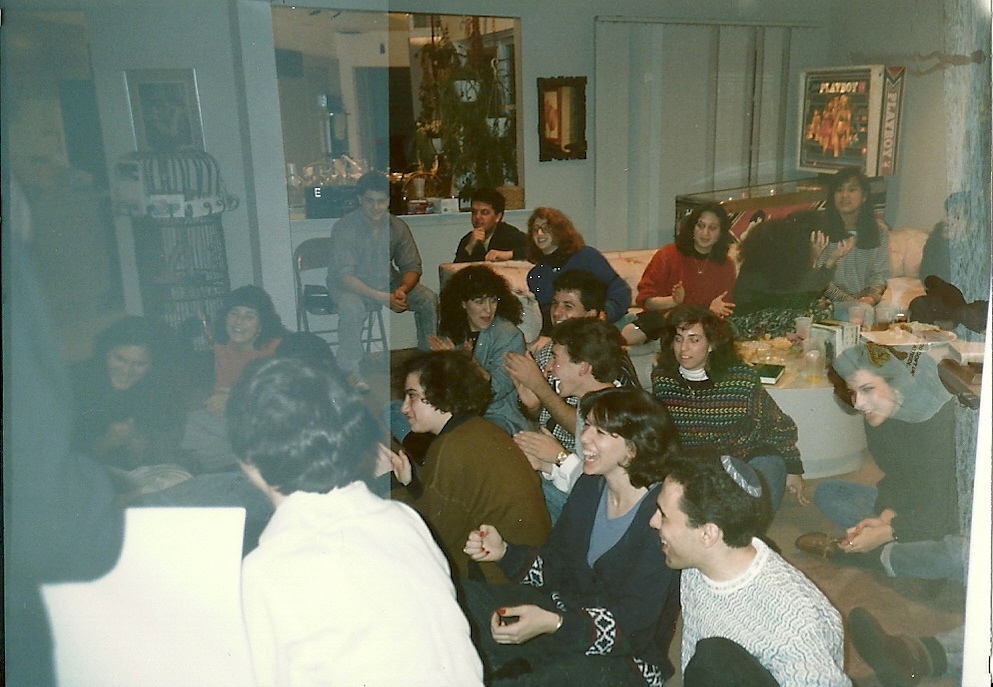 That’s how I came to know the house, long before Craig and I were even dating or married. Long before our kids, and his sisters’ kids came along.

Now, after over 40 years of living in Long Island, my in-laws are packing up and heading to their dream retirement home along a golf course in … you guessed it – Boca Raton, Fla.
During these past four decades, they worked hard, raised four children and have done their share of babysitting over 14 grandchildren. They have rightfully and healthfully reached this well-deserved phase in their lives. I am genuinely happy for them. For the grown children however, we are left with that bittersweet realization that you can never go home again.
On our last trip to the house I took lots of photos of parts of the house that I have known forever, and now would never see again.
Like the enormous hedges that seemed to swallow the house with each passing year:
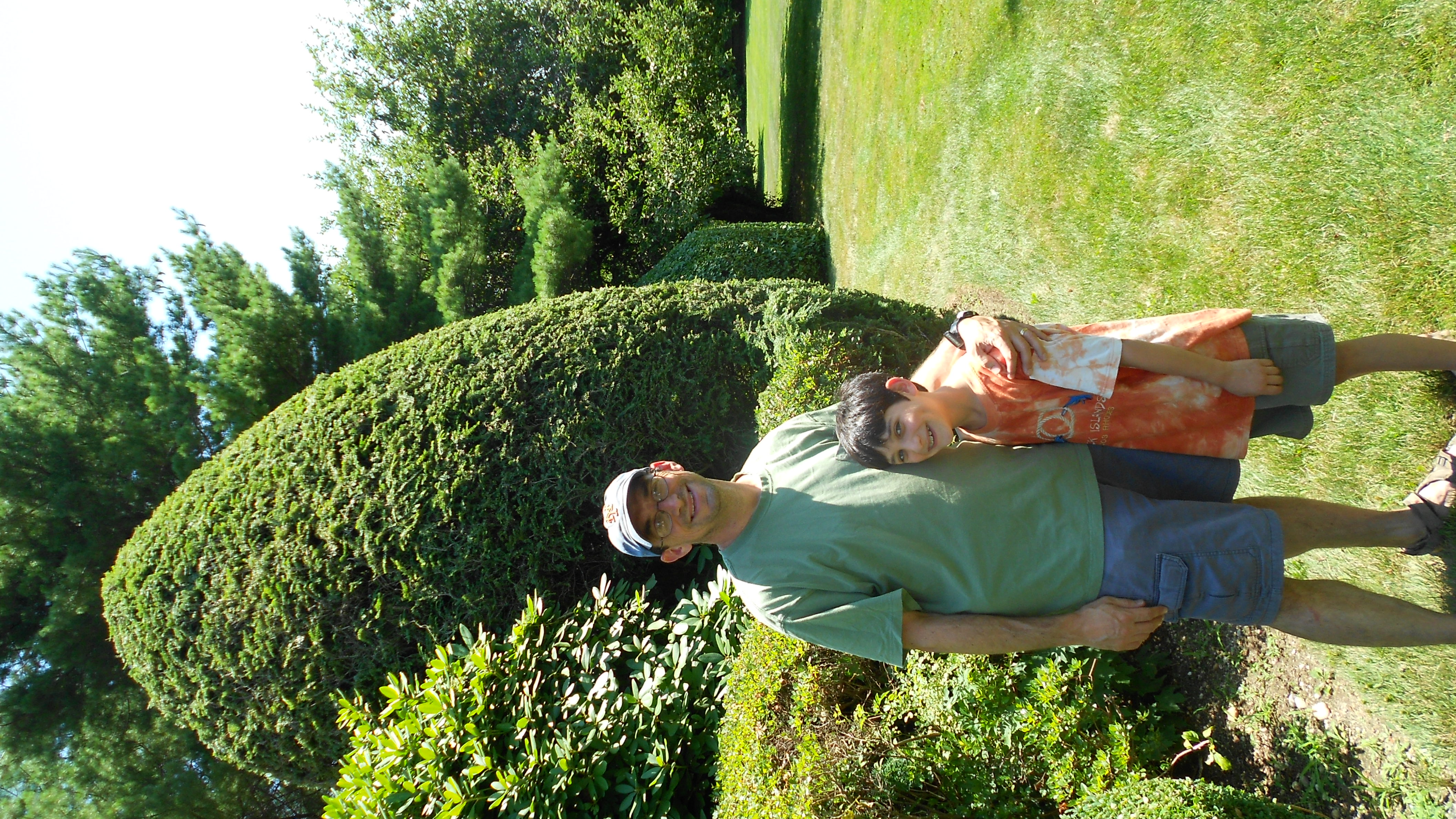
serious shrubbery made some great games of hide and seek for the grandchildren
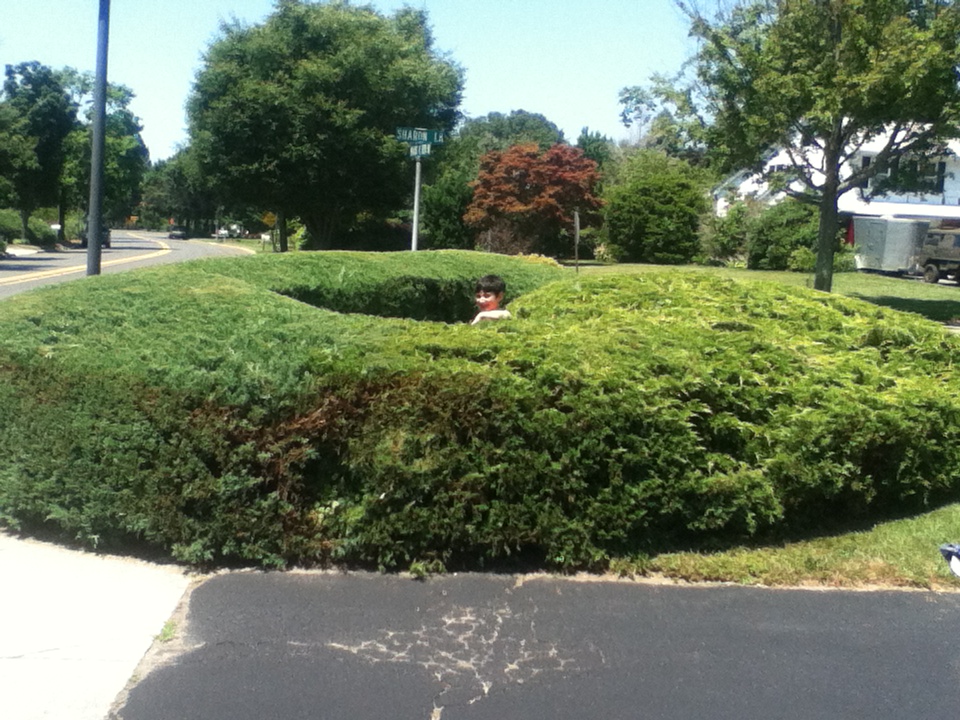
I also took some photos of parts of the house you were NOT allowed to see until you were no longer considered a guest but a part of the family. Like the upstairs “kids” bathroom that my husband shared with his three sisters, the one with the whale mirror:

And then, when you were REALLY family, you could go in the basement. On our last day at the house, we went downstairs to the basement, already filling with boxes, where my father-in-law asked if we wanted to take some paintings he created long ago

Not bad! reminds me of a Cezanne
We also found remnants from the family business, Fairyland Amusement Park in Brooklyn, that was in my husband’s family for three generations:
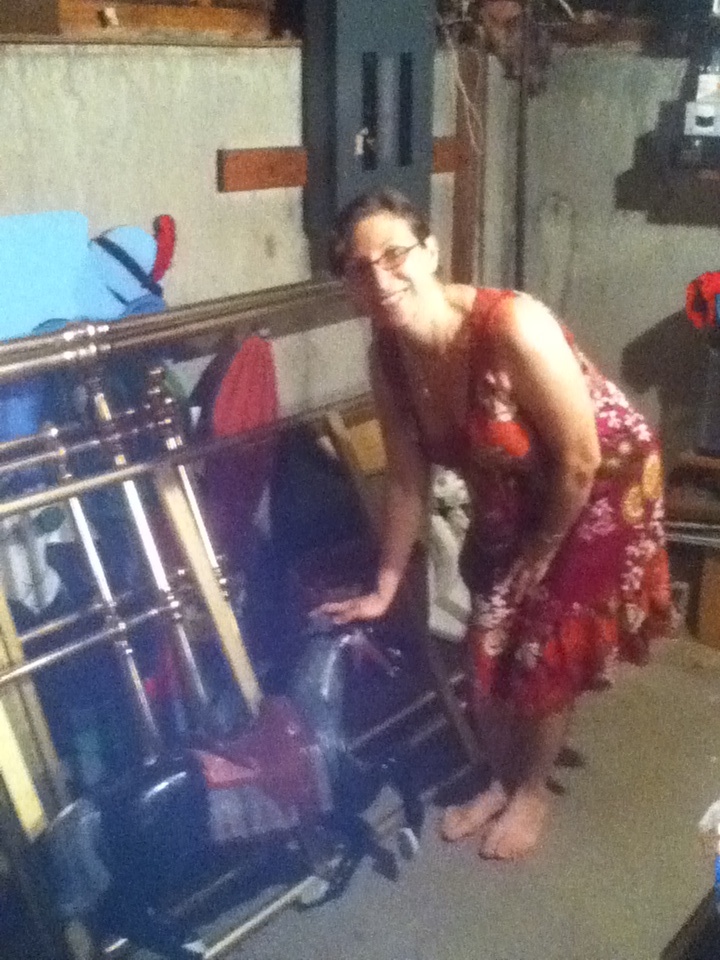
my sister-in-law petting a carousel pony, that’s smurfette I think behind the bars of an old brass bed.
This move has been over a year in the making, and selling the house was tough in the Long Island housing market. To sell the house, little bits of its personality were smoothed over, creating a clean slate for the minds of potential homebuyers.
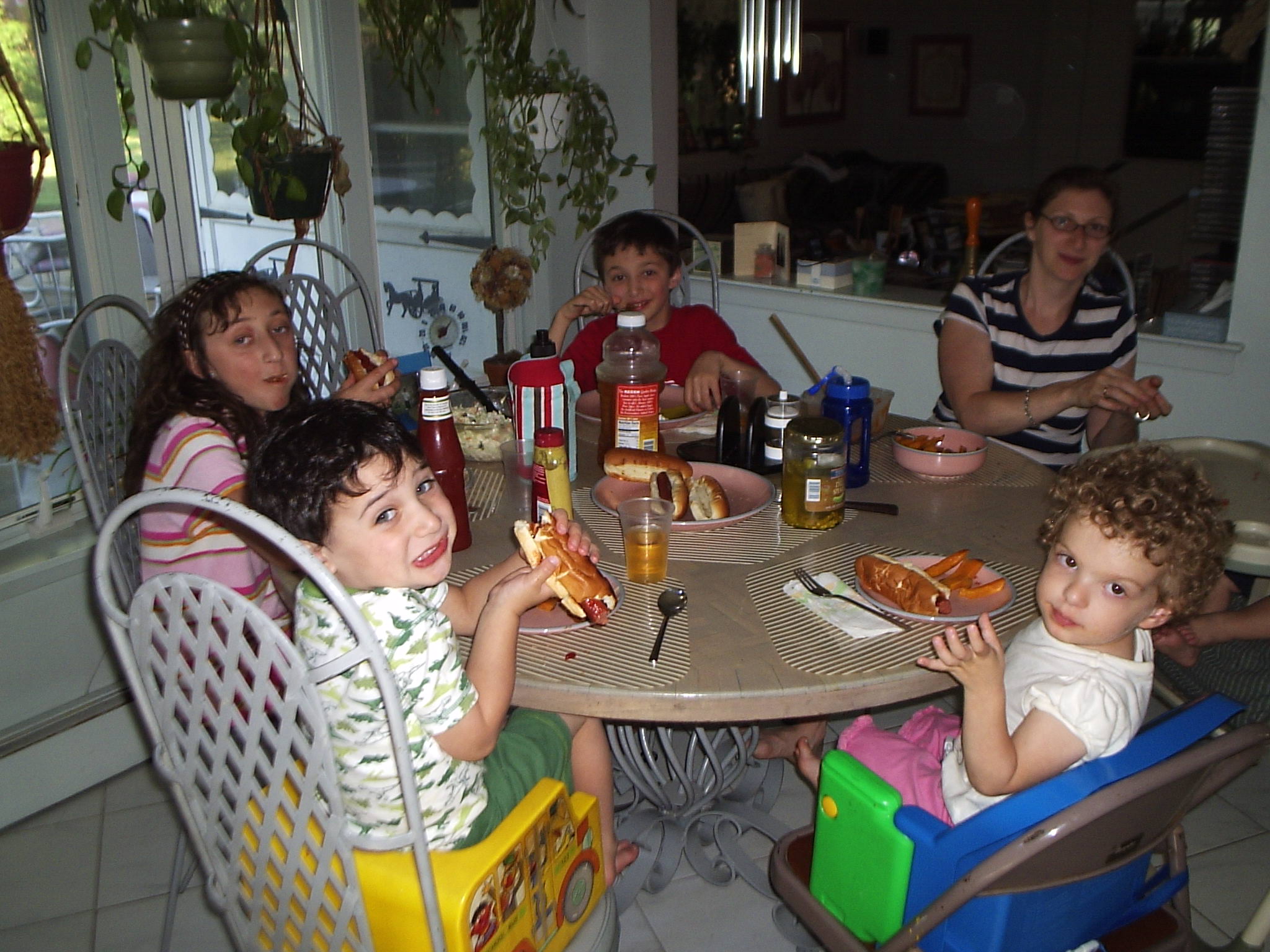
With each visit over the last year, the house felt less like the home I’ve visited since I was 16. Gone from the kitchen were the dozens of hanging plants, some living, some just hanging on, that was known as the “jungle” and where, in rounds, children and grandchildren had breakfasts or July 4 hot dogs after cousin sleepovers:
Gone from the stairwell were the photos of my sisters-in-law as kids and collages of grandchildren.
Gone were the artful silver and mauve squiggles that my father-in-law painted on the kitchen walls.
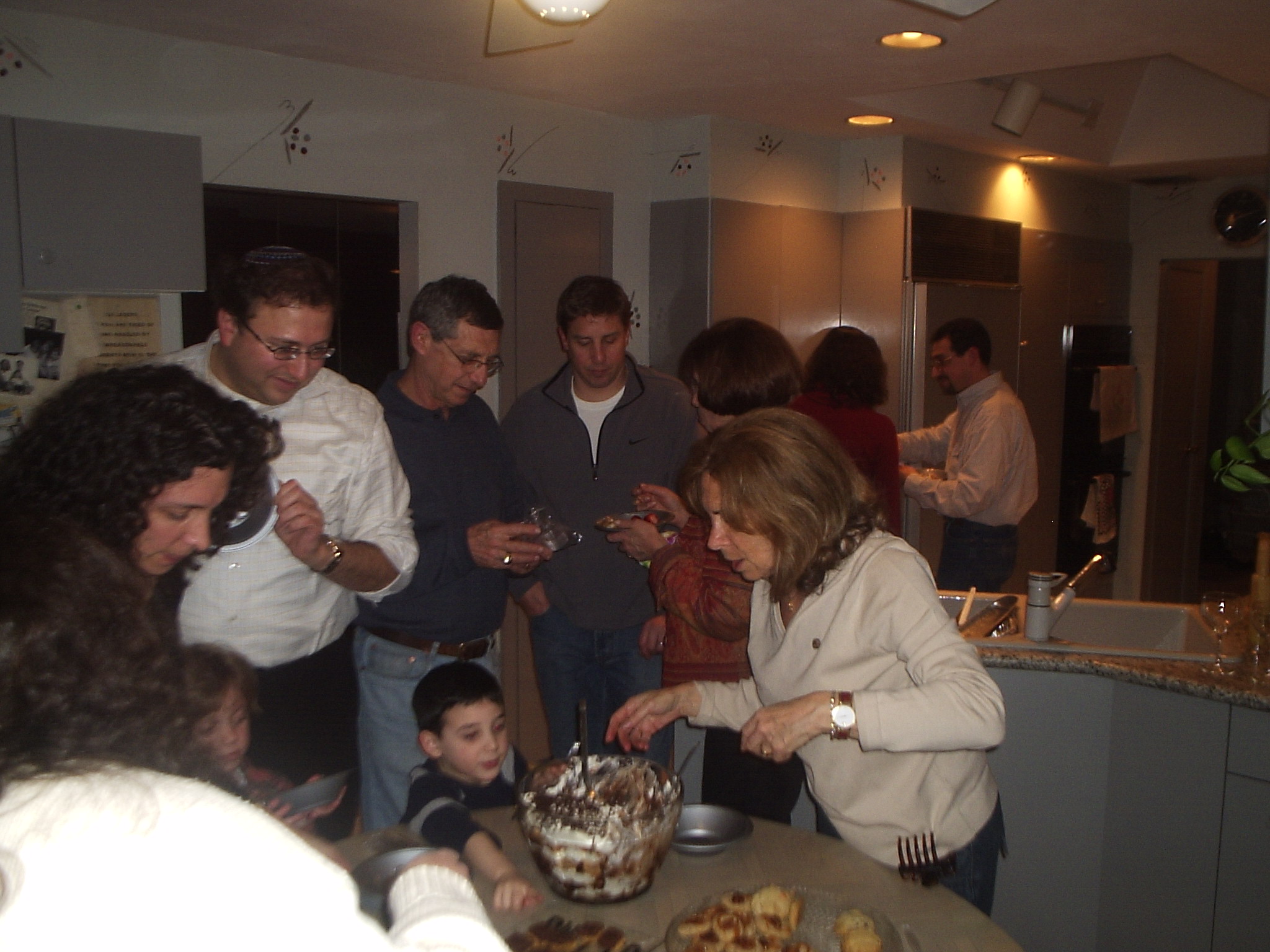
Everything felt neutral. Beige. Only one room, the dining room where we had so many holiday dinners, maintained its burgundy hue.

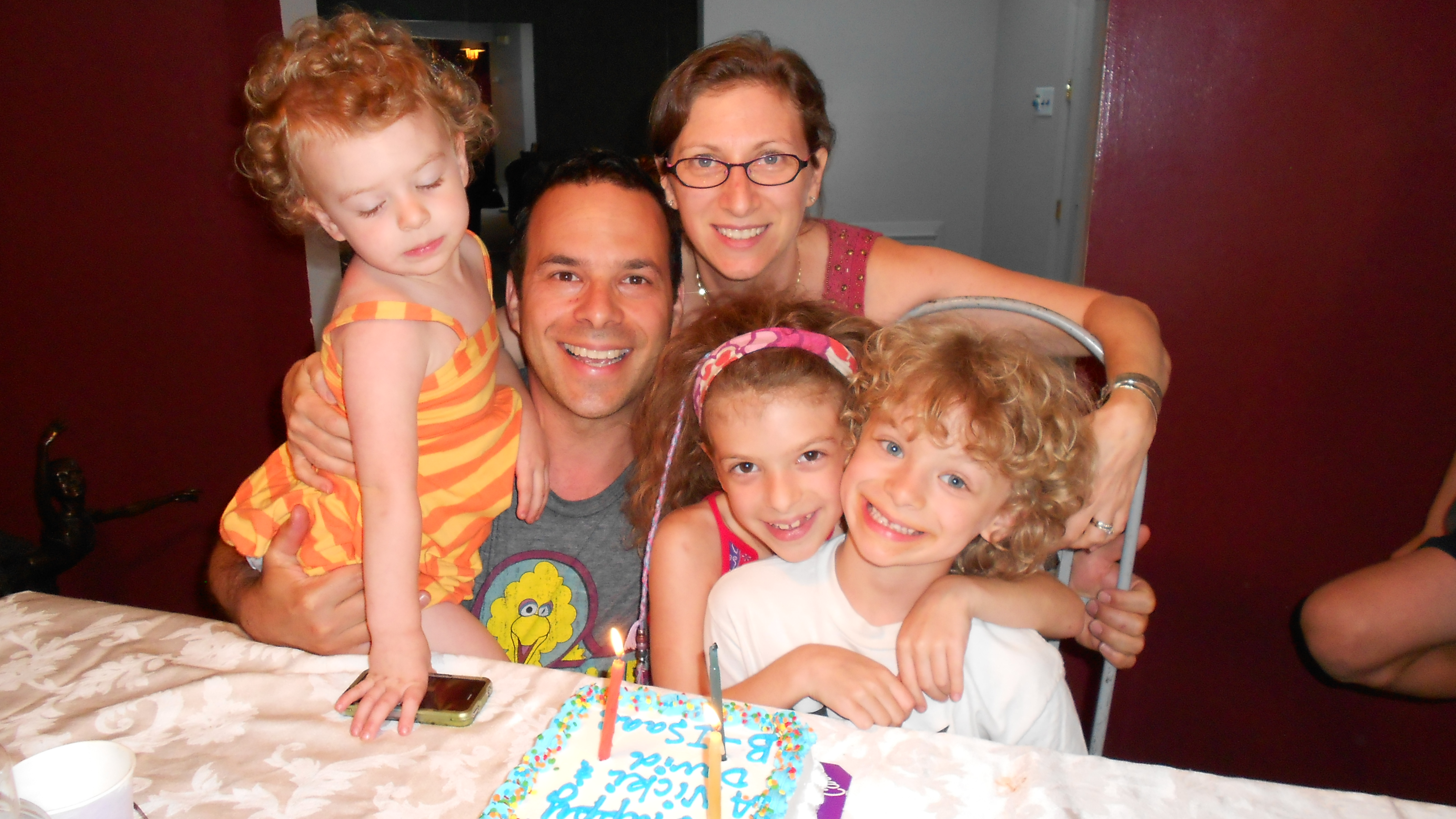
On my husband’s last day in his boyhood home earlier this month, I didn’t rush him out despite the seven- hour drive ahead of us back up to Rochester. He watched one last Wimbledon tennis match with his parents on the big sectional couch where the family and many friends logged in thousands of hours of hanging out.
In the end, we had many great memories at 24 Manor Road North. (Feel free to add your own memories, family, in the comments box.)
We’ll just have to make new ones in Florida.
Especially over February break.
Muskoka & Camp Ramah — It’s worth the schlep


When people ask me where I send my kids to camp, I tell them I send them to Camp Ramah.
Now, when you live in a town where traveling even 30 minutes to get somewhere seems like traveling to another planet (and I’m guilty of this as well), they then reply, Oh, the Camp Ramah in Toronto.
And then I say, “Nooo, it’s actually two and a half hours further. North of Toronto. In a region called Muskoka.”
The response I hear is: Isn’t that far?
And truthfully, Yes.
Yes. It’s very far.
Yes, I send my kids for a month, and now for my oldest two months, six hours away. Many see this as a sign of bad parenting. Many cannot fathom why we’d want to get rid of our kids for a month or even two. But, I have a friend who has five boys. Once, when we ran into each other grocery shopping, she spoke to me about the beauty of summer camp.
“Everyone for one time a year gets to live in their own space. It’s really very healthy.”
I’ll remember this produce aisle advice forever.
To get to camp, they travel across an international border and this requires they all need passports. But that means they are truly away from home, broadening their horizons and meeting kids from many countries and cities who are all bound together by a common heritage and a way of observing this heritage.
This is what I keep reminding myself in the hours my husband and I find ourselves in bumper-to-bumper traffic on our way to visitors day.
The first time I drove up to Muskoka, what surprised me most of all was the traffic. I mean, I can accept traffic in the New York Metro area, but traffic in Canada?
Yes, this is my American arrogance shining right through, because I never imagined such a huge population can exist North of the United States.
In reality, the Toronto-Muskoka corridor is packed. If you want to put it in terms of an SAT verbal analogy question, then Muskoka is to Toronto as the Jersey Shore is to the New York Tri State area.
So, picture yourself on the Garden State Parkway on a Friday or a Saturday and you now completely have an understanding of the traffic scene of “cottage country.”
Except, instead of terms like the GSP, you have roads that start with “the”.
The 400.
The 407.
And at last, The 11.
On the 11, suddenly the traffic opens up, and you find yourself on a road that ambles along sparkling lakes and pine forests. A road that’s dotted with honky tonk motels and camper parks, kayak rental places, and fruit stands. And you know you’re almost there.
So, getting back to the “why.” Why do we schlep all the way to Muskoka to send our kids to camp? Why do we send our kids so far away when there are closer camps from which to choose?
For many reasons.
Friendship and Kehilah Kedosha (holy community) It’s the smile on the kids faces that I see on nearly every photo that is posted on the camp website. The photos where nearly 600 children, freshly showered and dressed and arms linked, make their way down to the waterfront for another Shabbat service, that gets me every time. I know that we are doing right by our children for parting with them for a summer of this:

 My children are developing deep friendships and in turn, we are also making friendships with the families of these children, all within the framework of an immersive Jewish education program that is nearly impossible to duplicate outside of camp (but I keep trying).
Inclusion: When we arrived at camp for visitor’s day, the very first child my 15-year-old daughter talked about and wanted us to meet was her new friend Julie:
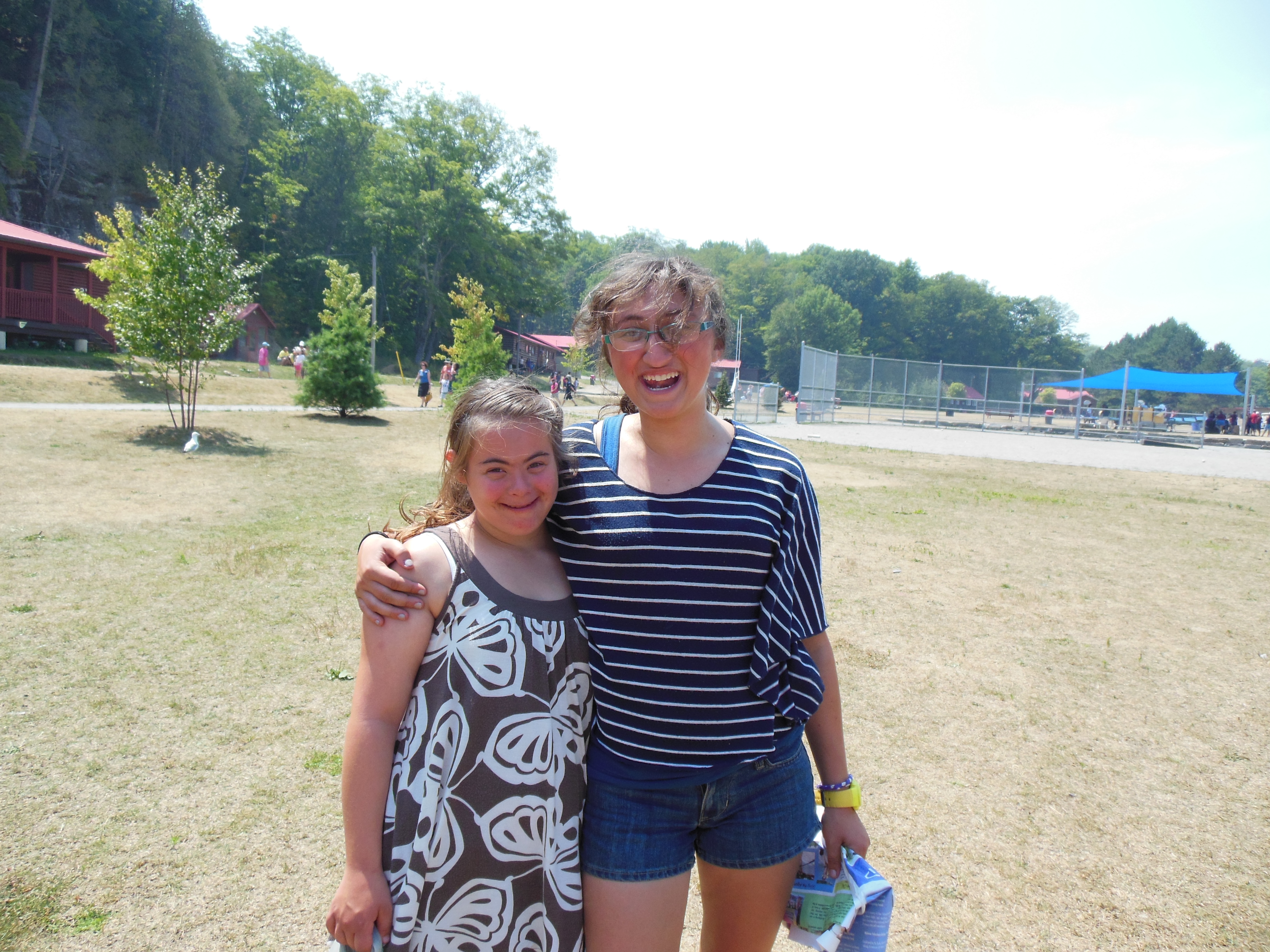
Julie, who has Down’s Syndrome, is participating in Camp Ramah’s Tikvah program. Each day, Jolie meets with Julie to tutor her in Hebrew and through these lessons a friendship has blossomed. I am sure the girls will keep in touch long after camp is over.
Family – In truth, campers, and in turn their families, become one extended family. But I have actually reconnected with extended family members on my grandmother’s side that before our Camp Ramah years, I have not seen in decades. Now, the great-grandchildren of my grandmother and her eldest sister attend the same camp. We stay in touch during the year over Facebook and we’ve got plans to visit them in Pittsburgh at the end of the summer.
New Hobbies: Because of his summers canoeing and kayaking in Skeleton Lake, I got into a canoe with my son with confidence. I sat in the front of the wobbly canoe, knowing he would be the one to give me direction on how to stroke and where to steer the boat:


My daughter also took up a hobby, making her own boat in woodshop:
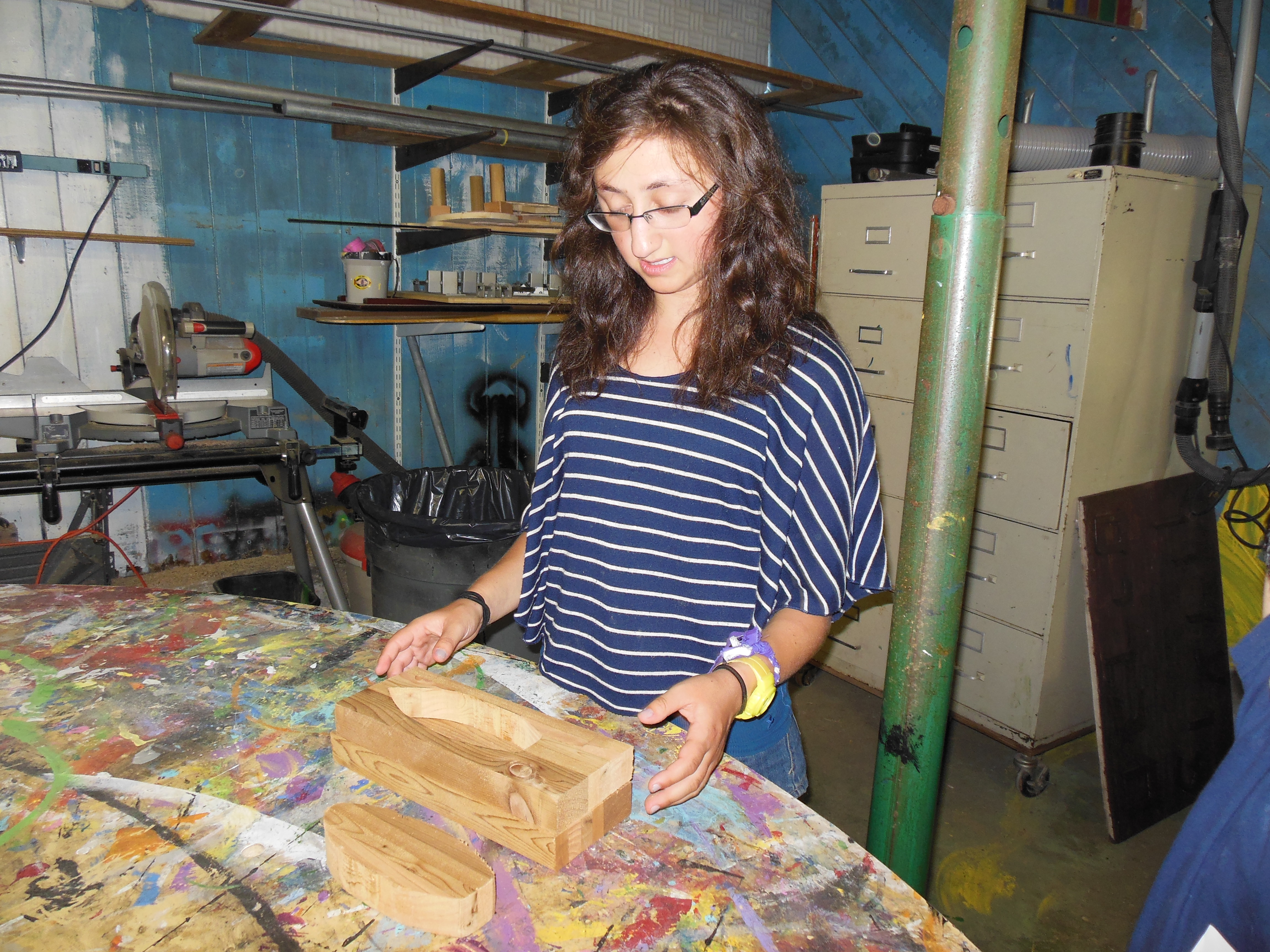
She also painted the sets for and was one of the angels in “Beauty School Dropout” in the Camp Ramah production of Grease.
And all plays at camp Ramah – the lines and the songs – are performed in Hebrew.
I don’t know how to sing “Beauty School Dropout” in Hebrew just now, but I bet my daughter will teach me when she gets home.
Finally, off camp, there is the town of Huntsville with the world’s most amazing candy store and ice creamery, great restaurants, art galleries inside and out,
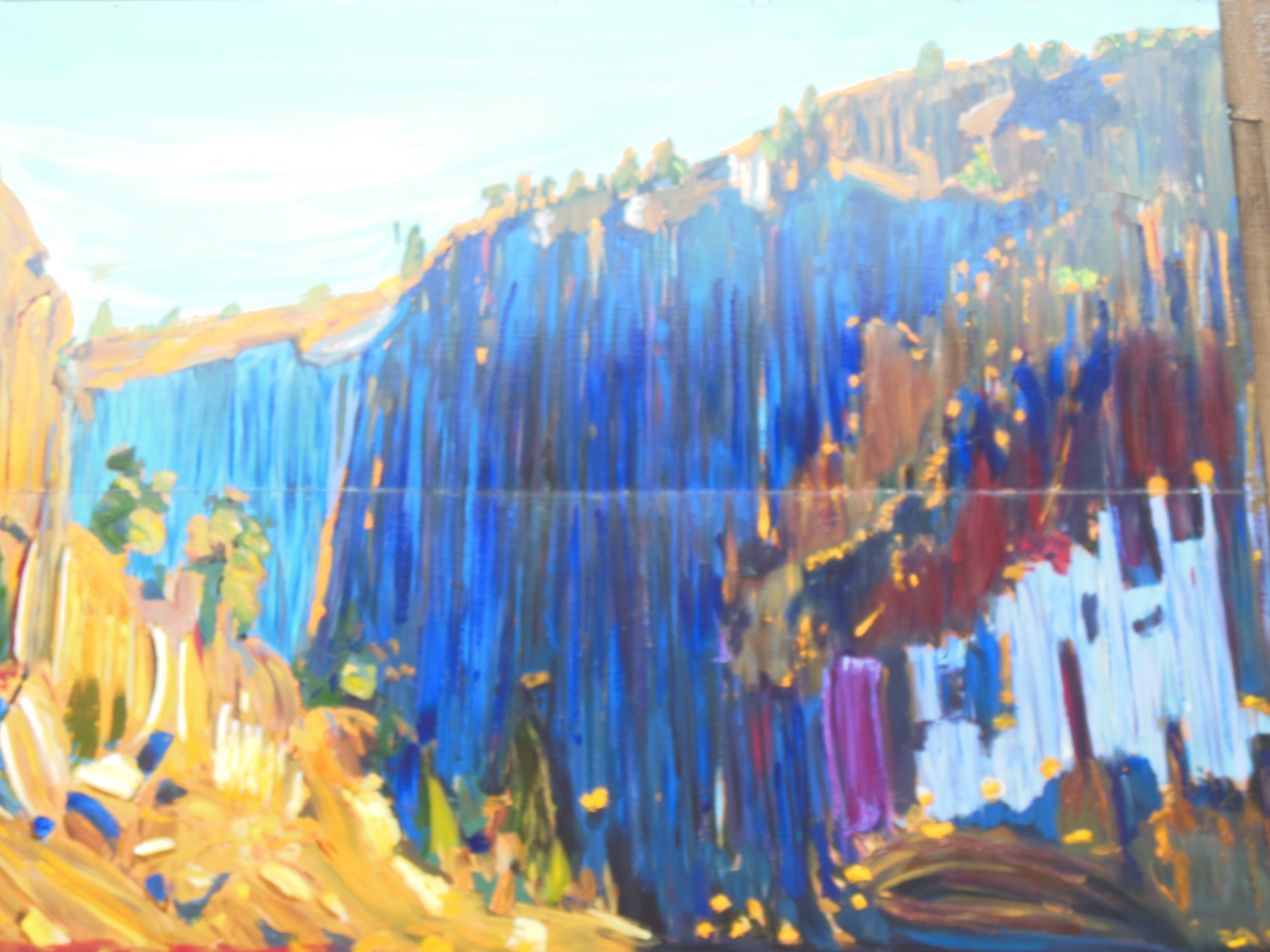
and nearby Arrowhead Provincial Park where you can swim in a pristine lake, hike to a waterfall and climb in and see fish swimming around you in the current:

And, at night there is darkness. A rarity in our increasingly lit up world, the skies are dark enough to see THOUSANDS of stars, and even spot a fast-moving satellite:

Really, there are stars in this photo. If you don’t believe me, you’ll just have to go up there for yourself. I’ll even tell you which field to stargaze.
So, we’re back. I try not to think about how far away my kids are, kind of how an extreme rock climber just keeps looking up and doesn’t think how high off the ground they are. But we are happy in our space, and they are happy in theirs.
And the schlep is completely worth it.
About Me

Kreativ Blogger

Versatile Blogger Award


 Stacy Gittleman